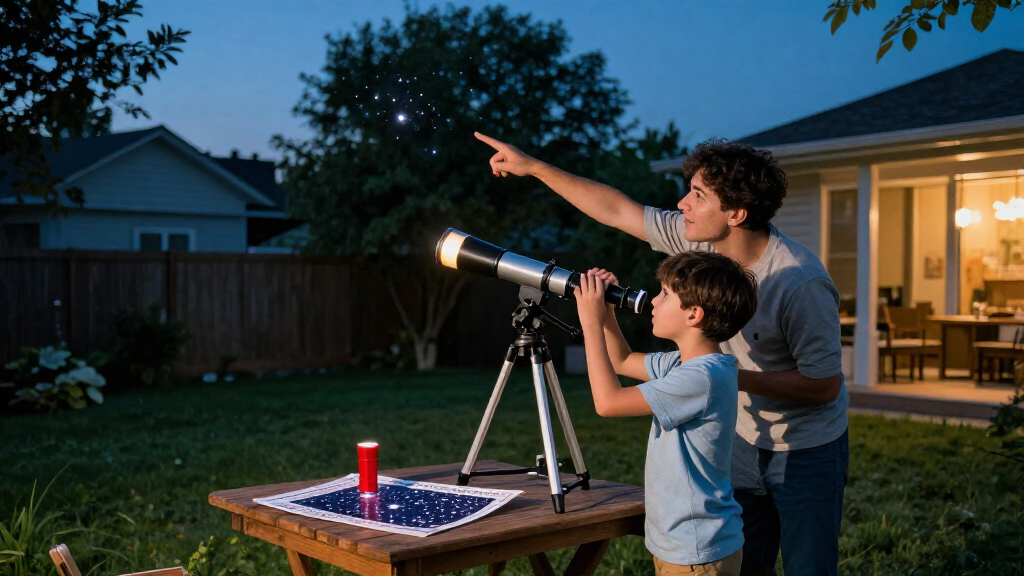

For most first-time stargazers, I’d start with the Celestron StarSense Explorer LT 114AZ: its larger reflector aperture and phone-guided sky navigation offer more room to grow than the small refractors here. The Celestron Travel Scope 70 is a stronger fit if portability matters most, while a 90mm refractor such as the WOSPO or HUGERSTAR can gather more light without requiring reflector alignment. The main tradeoff is between aperture and ease of setup: larger optics can show more, but a shaky tripod or confusing controls can make observing frustrating. Phone adapters and screens add convenience, though they do not improve the telescope’s optical performance. Read on for my full comparison, buying advice, and picks for different first-telescope needs.

Prime made for students and young adults
- Fast, free delivery for dorm and study essentials
- Prime Video and Amazon Music included
- Member-only deals
Key Takeaways
- The StarSense Explorer LT 114AZ stands apart because it combines the roundup’s largest stated aperture with phone-assisted object locating; its reflector design needs more care than a simple refractor.
- Aperture matters more than advertised magnification. The 70mm and 80mm models are better judged by their light-gathering ability, optics, and mount stability than by claims such as 150x or 180x.
- The 90mm refractors offer a middle ground between compact 70mm scopes and the larger reflector, but their longer tubes and tripods can be less convenient to carry and steady.
- The Celestron Travel Scope 70 prioritizes portability with its backpack, while its 70mm aperture makes it a better match for bright targets than faint deep-sky objects.
- Included phone accessories are not a substitute for a capable mount. Across the lineup, stable aiming and a comfortable setup matter more to a beginner’s observing sessions than extra digital features.


| beginner telescopes for stargazing | Telescope type | Focal length | Eyepieces | Aperture |
|---|---|---|---|---|
| YUANZIMOO 80mm Aperture | Refractor | 500 mm | 10 mm and 25 mm | — |
| WOSPO 90mm Aperture Refractor | Refractor | 600 mm | 10 mm and 25 mm | 90 mm |
| 70mm Refractor Telescope with | Refractor | 300 mm | 20 mm and 6 mm | — |
| Gskyer 70mm Refractor Telescop | Refractor | 400 mm | 25 mm (16×) and 10 mm (40×) | — |
| XLQFLP 70mm Refractor Telescop | Refractor | 300 mm | H20 mm, H12 mm, and H6 mm | — |
| Koolpte 80mm Aperture | Refractor | 600 mm | 25 mm and 10 mm | 80 mm |
| Celestron Travel Scope 70mm Po | Refractor | 400 mm | 20 mm and 10 mm | 70 mm |
| 90mm Refractor Telescope with | Refractor | — | 25 mm and 10 mm | 90 mm |
| 70mm Refractor Telescope with | Refractor | 400 mm | — | 70 mm |
| Uonol 90mm Aperture Refractor | Refractor | 800 mm | 25 mm and 10 mm | 90 mm |
| 70mm Aperture 500mm Focal Leng | Refractor | 500 mm | H20mm, H12mm, H6mm | 70 mm |
| Fuoibl 70mm Refracting Telesco | Refracting | 300 mm | 6 mm and 20 mm | 70 mm |
| Celestron StarSense Explorer L | Newtonian reflector | 1000 mm | 10 mm and 25 mm | 114 mm (4.5 in) |
| ToyerBee 70mm Refractor Telesc | Refractor | 300 mm | 20 mm and 6 mm | 70 mm |
| HUGERSTAR 90mm Aperture Refrac | Refractor | 800 mm | 10 mm and 25 mm | 90 mm |
More Details on Our Top Picks
YUANZIMOO 80mm Aperture, 500mm Refractor Telescope with Tripod and Smartphone Adapter
The YUANZIMOO balances a useful 80mm aperture with a 500mm focal length, making it a flexible starting point for lunar viewing and daytime subjects. Its aperture is larger than the 70mm options from Gskyer and XLQFLP, which gives it an advantage for gathering light, while its shorter tube is less specialized for high magnification than the 90mm WOSPO. Two eyepieces and a 3× Barlow offer a broad stated range, but the upper end depends on stacking the Barlow and should not be mistaken for equally sharp views at every setting. The smartphone adapter and adjustable tripod add useful beginner-friendly extras. Manual focusing and a basic altazimuth mount still mean users must learn to adjust and guide the telescope themselves.
Pros:- 80mm objective lens gathers more light than the 70mm apertures in the Gskyer and XLQFLP models.
- Two eyepieces and a 3× Barlow provide several magnification combinations.
- Adjustable tripod and altazimuth movement support flexible positioning.
- Includes a smartphone adapter and carrying bag.
Cons:- Manual focus and manual mount movement require practice to keep targets centered.
- The 150× upper magnification figure relies on the included Barlow and may not deliver the clearest view.
- The stated tripod height range may not suit every seated or standing observer.
Best for: First-time stargazers who want a general-purpose telescope with more aperture than a typical 70mm starter model and a phone adapter for casual snapshots.
Not ideal for: Buyers who want effortless tracking or consistently detailed views at the maximum advertised magnification; focusing and target movement require hands-on adjustment.
- Telescope type:Refractor
- Objective aperture:80 mm
- Focal length:500 mm
- Magnification range:20×–150×
- Eyepieces:10 mm and 25 mm
- Optics coating:Fully multi-coated
- Mount and focus:Altazimuth; manual focus
- Tripod height:Approximately 20–50 inches
- Included accessories:Smartphone adapter, carrying bag, finder scope, diagonal, and 3× Barlow lens
Our verdict“Choose the YUANZIMOO for a balanced beginner setup with more light gathering than the 70mm picks, provided you are comfortable focusing and tracking by hand.”
WOSPO 90mm Aperture Refractor Telescope with Adjustable Tripod
Among these five, the WOSPO has the largest stated aperture, at 90mm, giving it the strongest light-gathering case for lunar observing and brighter celestial targets. Compared with the YUANZIMOO’s 80mm objective, that extra aperture is its clearest advantage; its 600mm focal length also favors a more zoomed-in starting view than the short 300mm XLQFLP. The included 45° diagonal presents upright images, a practical benefit when switching between the sky and landscapes. A phone adapter, case, adjustable tripod, and two-year warranty round out a substantial beginner package. The tradeoff is a 29–49-inch tripod range and manual focusing, so it is less appealing if you need a taller observing position or want tracking to happen automatically.
Pros:- 90mm aperture is the largest among the five reviewed models.
- 600mm focal length gives a more zoomed-in view than the 300mm XLQFLP and 70mm refractor.
- 45° diagonal provides upright images for easier terrestrial viewing.
- Includes a phone adapter, carrying case, and two-year warranty.
Cons:- Manual focusing and altazimuth movement require active adjustment.
- Tripod height is limited to 29–49 inches.
- The stated 180× maximum uses the 3× Barlow and may be difficult to use steadily.
Best for: Beginners prioritizing a larger aperture for Moon and bright-object observing who also want to use the telescope for terrestrial viewing.
Not ideal for: Observers seeking a very compact setup, a tall tripod, or automatic target tracking; the tripod is limited in height and the mount is manually guided.
- Telescope type:Refractor
- Aperture:90 mm
- Focal length:600 mm
- Magnification:24×–180× with 3× Barlow lens
- Eyepieces:10 mm and 25 mm
- Finderscope:3×24
- Mount and focus:Altazimuth; manual focus
- Tripod height:29–49 inches
- Included accessories:45° diagonal mirror, phone adapter, carrying case, and 3× Barlow lens
Our verdict“Pick the WOSPO if aperture and mixed sky-and-land use matter more than compactness or a taller tripod.”
70mm Refractor Telescope with Phone Adapter, 15x–150x Magnification
This 70mm refractor is the most phone-focused option here: its adapter and wireless remote let beginners attempt snapshots without touching the phone during exposure. That convenience distinguishes it from the XLQFLP, which includes a phone adapter but no listed remote. Its 300mm focal length and 70mm aperture make it a compact, wide-field style of starter scope, better suited to locating the Moon and scanning scenery than to sustained high-power planetary viewing. The included 20mm and 6mm eyepieces, erecting eyepiece, and Barlow create several configurations, though the advertised 150× ceiling is ambitious for this aperture and short focal length. The finder’s inverted image can also slow initial aiming, and the light tripod-and-mount setup may make high-magnification tracking harder.
Pros:- Wireless remote helps reduce phone movement when taking pictures.
- Short 300mm optical tube is convenient for casual viewing and transport.
- Includes 20mm and 6mm eyepieces, an erecting eyepiece, and a 3× Barlow.
- Fully multi-coated optics and a 5×24 finder are included.
Cons:- The finder scope shows an inverted image, which may complicate aiming for beginners.
- High magnification can make manual tracking less steady.
- The 150× maximum is a stated range rather than a guarantee of clear, usable views.
Best for: Beginners who want a short-tube telescope for casual lunar viewing and smartphone snapshots, especially those who value a wireless shutter remote.
Not ideal for: Buyers focused on steady high-magnification planetary observing or anyone who wants a finder that presents an upright image.
- Telescope type:Refractor
- Objective aperture:70 mm
- Focal length:300 mm
- Magnification range:15×–150×
- Eyepieces:20 mm and 6 mm
- Additional lenses:1.5× erecting eyepiece and 3× Barlow lens
- Finderscope:5×24; inverted image
- Optics and focus:Fully multi-coated optical glass; manual focus
- Included accessories:Tripod, smartphone adapter, and wireless remote
Our verdict“Choose this model over the XLQFLP if a wireless phone remote matters more than a simpler finder experience.”
Gskyer 70mm Refractor Telescope with Carry Bag, Smartphone Adapter, and Wireless Remote
The Gskyer is the portability pick: a 70mm refractor with a 400mm focal length, carry bag, and smartphone accessories makes a more travel-ready package than the larger-aperture WOSPO. Its focal length is also longer than the 300mm models from XLQFLP and the phone-focused 70mm refractor, giving it a somewhat more zoomed-in starting view while remaining compact. The 48° erecting BAK4 prism supports upright terrestrial viewing, and the 25mm and 10mm eyepieces provide straightforward starting magnifications. A 3× Barlow extends the stated maximum to 120×, but the 70mm aperture and manually guided mount make that upper setting less practical for steady views. This is a better fit for casual travel and mixed daytime use than for buyers seeking the most light gathering.
Pros:- Carry bag supports storage and transport.
- 400mm focal length is longer than the 300mm XLQFLP and phone-focused 70mm model.
- Erecting BAK4 prism presents upright images for terrestrial use.
- Includes smartphone adapter and wireless camera remote.
Cons:- 70mm aperture gathers less light than the 80mm YUANZIMOO and 90mm WOSPO.
- Manual focusing and mount movement make target tracking hands-on.
- The 120× maximum depends on the Barlow and may be difficult to use steadily.
Best for: Families and beginners who want a portable telescope kit for occasional Moon viewing, nature observation, and phone photography.
Not ideal for: Stargazers who prioritize aperture or stable high-magnification views; the 70mm objective and manual mount place limits on both.
- Telescope type:Refractor
- Objective aperture:70 mm
- Focal length:400 mm
- Focal ratio:f/5.7
- Eyepieces:25 mm (16×) and 10 mm (40×)
- Barlow and stated maximum:3× Barlow; 120× maximum magnification
- Finderscope:5×24 with crosshair lines
- Prism and mount:48° erecting BAK4 prism; altazimuth mount
- Included accessories:Carry bag, smartphone adapter, and wireless camera remote
Our verdict“The Gskyer makes the most sense for buyers who value a carry-ready, dual-purpose kit over a larger aperture.”
XLQFLP 70mm Refractor Telescope for Kids and Adults
The XLQFLP suits beginners who want a straightforward accessory set without a phone remote or carrying case to manage. Its 70mm aperture and 300mm focal length put it in the same compact class as the phone-focused 70mm model, but this telescope supplies three eyepieces and two Barlow lenses rather than a wireless remote. That offers more combinations for experimenting with magnification, although the listed lenses do not make every high-power setting equally useful. A tool-free setup and adjustable aluminum tripod keep the first session accessible, while the 5×24 straight-through finder gives a direct aiming method. It may take practice to align that finder, and the short focal length is better for broad, casual views than for making small planetary details easy to see. The WOSPO is a stronger alternative for aperture-led observing.
Pros:- Three eyepieces provide more starting options than the two-eyepiece Gskyer kit.
- Includes both 1.5× and 3× Barlow lenses.
- Tool-free setup and adjustable aluminum tripod suit new users.
- Smartphone adapter supports casual photo and video attempts.
Cons:- The 70mm aperture gathers less light than the 80mm YUANZIMOO and 90mm WOSPO.
- Straight-through finderscope alignment may take practice.
- Manual focus and mount movement require the user to track targets by hand.
Best for: Families or first-time users who want a basic refractor with several eyepieces and Barlow options for learning how magnification changes a view.
Not ideal for: Buyers who want a larger aperture, an easy-to-align finder, or phone photography controls such as the wireless remote included with the other 70mm phone-focused model.
- Model:F30070M
- Telescope type:Refractor
- Objective aperture:70 mm
- Focal length:300 mm
- Eyepieces:H20 mm, H12 mm, and H6 mm
- Barlow lenses:1.5× and 3×
- Finderscope:5×24 straight-through with crosshairs
- Mount and focus:Altazimuth; manual focus
- Tripod and coating:Adjustable aluminum alloy tripod; fully coated lenses
Our verdict“Pick the XLQFLP as a basic learning set if you value extra eyepiece and Barlow combinations more than a larger aperture or phone remote.”
Koolpte 80mm Aperture, 600mm AZ Refractor Telescope for Beginners
The Koolpte 80mm is a good fit for beginners who want a capable starter refractor without choosing accessories one by one. Its 80mm aperture gathers more light than the 70mm Celestron Travel Scope, while the 25mm and 10mm eyepieces provide a straightforward way to switch between wider and closer views. The included 3× Barlow, finder scope, smartphone adapter, and carrying bag make the kit versatile for backyard sessions and travel. Tool-free setup also lowers the barrier for a first observing night. The tradeoff is manual focusing and a relatively modest 600mm focal length; the higher stated magnifications require the Barlow and may not deliver useful detail in every condition. Choose this over the Celestron for the larger aperture, but choose the Travel Scope if packability matters more.
Pros:- 80mm aperture offers more light-gathering capacity than the 70mm Celestron Travel Scope.
- Two eyepieces and a 3× Barlow provide multiple magnification options.
- Smartphone adapter, wireless remote, finder scope, and carrying bag are included.
- Tool-free setup makes it more approachable for a first telescope.
Cons:- Manual focusing and an altazimuth mount require hands-on adjustments while observing.
- The higher magnification figures depend on the Barlow and may be less practical than the lower-power views.
Best for: First-time backyard observers who want an 80mm aperture, several included accessories, and a kit that can also be carried to darker skies.
Not ideal for: Beginners who want a long focal length for higher-power lunar viewing or prefer a telescope with powered tracking rather than manual aiming and focusing.
- Telescope type:Refractor
- Aperture:80 mm
- Focal length:600 mm
- Focal ratio:f/6.7
- Mount:Altazimuth
- Eyepieces:25 mm and 10 mm
- Included Barlow lens:3×
- Finderscope:5×24
- Focus type:Manual
Our verdict“Choose the Koolpte if you want a well-accessorized 80mm starter refractor; pick the Celestron Travel Scope instead if lighter travel is your priority.”
Celestron Travel Scope 70mm Portable Refractor Telescope with Backpack
The Celestron Travel Scope 70 puts portability ahead of aperture, making it a sensible choice for beginners who want one telescope for the Moon, casual skywatching, and daytime scenery. Its padded backpack and tool-free setup make carrying and getting started simpler than with the larger Koolpte 80mm, while the full-height tripod avoids the very low observing position common with compact travel setups. Two eyepieces, a star diagonal, and a finderscope give new users the basics without a complicated accessory list. The compromise is its 70mm aperture: compared with the 90mm refractors in this roundup, it has less light-gathering capacity and may show less detail on faint or small targets. Its manual focus and altazimuth mount also require hands-on aiming. Pick it for portability, not maximum observing reach.
Pros:- Padded backpack makes the telescope and accessories easier to transport and store.
- Tool-free setup is approachable for beginners and travel use.
- Full-height tripod supports a more natural viewing position than a compact tabletop setup.
- Includes two eyepieces, a finderscope, and a star diagonal for both sky and terrestrial viewing.
Cons:- 70mm aperture gathers less light than the 80mm Koolpte and 90mm Uonol.
- Manual focus and manual altazimuth aiming require adjustment by the observer.
Best for: Beginners who want a lightweight telescope they can carry on trips and use for both casual astronomy and terrestrial views.
Not ideal for: Observers focused on extracting more detail from dimmer celestial targets, who would benefit more from a 90mm model such as the Uonol.
- Telescope type:Refractor
- Aperture:70 mm
- Focal length:400 mm
- Mount:Altazimuth
- Eyepieces:20 mm and 10 mm
- Field of view:1.43 degrees
- Focus type:Manual
- Setup:Tool-free
- Included accessories:Full-height tripod, finderscope, star diagonal, padded backpack, Starry Night software download
Our verdict“Choose the Travel Scope 70 if carrying convenience and daytime versatility matter more than the extra light-gathering capacity of a larger refractor.”
90mm Refractor Telescope with Adjustable 24×–180× Magnification
With a 90mm aperture and an erect-image diagonal, this refractor is the most natural pick here for beginners who want to switch between night-sky observing and distant daytime scenery. The larger aperture gives it more light-gathering capacity than the 70mm Celestron Travel Scope, while its 2-degree field of view and 25mm eyepiece support broad views before moving to the 10mm eyepiece for a closer look. A carrying case and smartphone adapter add practical flexibility. The advertised range reaches 180× with the Barlow, but that upper end is not a guarantee of sharp views; conditions and telescope stability matter, and manual focusing remains part of the process. Compared with the longer-focal-length Uonol 90mm, this model emphasizes a wider stated field and an upright image, rather than higher listed magnification.
Pros:- 90mm aperture offers greater light-gathering capacity than the 70mm Celestron Travel Scope.
- Erect-image diagonal supports terrestrial viewing as well as astronomy.
- Two eyepieces and a 3× Barlow allow changes in magnification.
- Carrying case and smartphone adapter support transport and casual image capture.
Cons:- Manual focus and manual altazimuth movement require active adjustments.
- The 180× maximum is condition-dependent and may be less useful than the advertised range suggests.
- The 29–49-inch tripod height may not suit every observing position.
Best for: Beginners who want a 90mm refractor for both astronomical viewing and upright terrestrial observation, with a case and phone adapter included.
Not ideal for: Buyers who want to rely on very high magnification for planetary detail or prefer assisted focusing and tracking.
- Telescope type:Refractor
- Aperture:90 mm
- Magnification range:24×–180×
- Eyepieces:25 mm and 10 mm
- Barlow lens:3×
- Mount:Altazimuth
- Field of view:2 degrees
- Diagonal:48° erect-image diagonal
- Tripod height:29–49 inches
Our verdict“Choose this 90mm model if you want one beginner telescope for upright scenery and stargazing, rather than prioritizing the Uonol’s longer focal length.”
70mm Refractor Telescope with 4.5-Inch LCD Display
This 70mm refractor takes a different approach from the eyepiece-first telescopes in this roundup: its 4.5-inch LCD lets beginners view and record without looking through an eyepiece or attaching a phone. The built-in camera captures up to 48MP photos and 1080p video, which can make sharing lunar views easier than with the Celestron Travel Scope, whose listed accessories focus on optical viewing and portability. The included 25mm eyepiece still provides a conventional viewing option. Its 70mm aperture and 400mm focal length are best matched to lunar observation, though, so it is less versatile for exploring a broader range of celestial targets than the 90mm refractors. A memory card is not included, and manual focus remains necessary. This is a specialized beginner pick for screen viewing and capture, not the strongest all-around observing choice.
Pros:- Built-in LCD offers a viewing option beyond the optical eyepiece.
- Captures photos up to 48MP and video at 1080p without requiring a smartphone.
- Rechargeable battery supports portable use.
- Adjustable metal tripod and wireless remote are included.
Cons:- 70mm aperture and stated lunar focus make it less suited to broader deep-sky observing than the 90mm refractors.
- A memory card is required for expanded storage and is sold separately.
- Manual focus still requires hands-on adjustment.
Best for: Families and beginners who want to view the Moon on a built-in screen and save photos or video without using a smartphone.
Not ideal for: New astronomers seeking a more versatile telescope for a wider range of night-sky targets, or anyone who expects included expandable storage.
- Telescope type:Refractor
- Aperture:70 mm
- Focal length:400 mm
- Focal ratio:f/5.6
- Display:4.5-inch LCD
- Optical eyepiece:25 mm; 16× magnification
- Photo and video resolution:Up to 48MP photos; 1080p video
- Battery:2000 mAh rechargeable; up to 4.5 hours
- Supported memory card:Up to 128 GB; card sold separately
Our verdict“Choose this model if screen-based lunar viewing and built-in recording are your priorities; choose the Celestron Travel Scope for a more conventional portable telescope.”
Uonol 90mm Aperture Refractor Telescope, 800mm Focal Length
The Uonol 90mm pairs the larger aperture of the other 90mm refractors with an 800mm focal length, making it the most natural choice in this batch for beginners who want to prioritize closer views of the Moon and planets. Its 25mm and 10mm eyepieces, 3× Barlow, and 5×24 finder give new observers a useful range of options for finding and viewing targets. Against the 90mm model with the erect-image diagonal, the Uonol offers a longer focal length and a stated range reaching 240×, but gives up that model’s clear terrestrial-viewing emphasis. High magnification is not automatically useful: seeing conditions, alignment, and tripod stability can limit detail. The tripod also tops out at 43.3 inches, which may feel short for standing observers. Pick it for lunar-focused reach, not effortless setup or guaranteed high-power views.
Pros:- 90mm aperture and 800mm focal length suit closer views of bright celestial targets.
- Two eyepieces, a 3× Barlow, and a 5×24 finder provide useful starter accessories.
- Altazimuth tripod moves horizontally and vertically for manual aiming.
- Smartphone adapter and carrying bag support casual image capture and transport.
Cons:- The 240× upper magnification may be difficult to use effectively depending on conditions and stability.
- Tripod height stops at 43.3 inches, limiting comfort for some standing observers.
- Manual aiming and focusing require practice.
Best for: Beginners who mainly observe the Moon and planets and want a 90mm refractor with a longer focal length and multiple eyepiece options.
Not ideal for: Users who need a taller tripod, prioritize upright daytime scenery, or expect the advertised 240× setting to perform well in all conditions.
- Telescope type:Refractor
- Aperture:90 mm
- Focal length:800 mm
- Magnification range:32×–240×
- Eyepieces:25 mm and 10 mm
- Barlow lens:3×
- Finderscope:5×24
- Mount:Altazimuth
- Tripod height:19.7–43.3 inches
Our verdict“Choose the Uonol if a longer-focal-length 90mm refractor for lunar and planetary viewing is your priority, and skip it if you need a taller or more scenery-focused setup.”
70mm Aperture 500mm Focal Length Refractor Telescope with Smartphone Adapter
This Vvnonix pairs a 70mm aperture with a 500mm focal length, giving beginners a more versatile starting point than the shorter 300mm Fuoibl BY-001. Its three eyepieces and two Barlow lenses offer several viewing combinations, while the backpack and 1.95kg weight suit observers who want to carry a setup to a darker spot. A moon filter and smartphone adapter add useful extras for lunar viewing and casual phone photography. The tradeoff is that more included optics do not guarantee better views: the supplied Huygens eyepieces are basic, and the manual altazimuth mount still needs hand adjustment and tracking. Choose it over the ToyerBee if portability and longer focal length matter more than a star chart and stated lifetime maintenance.
Pros:- 70mm aperture and multi-coated glass optics are suited to beginner lunar and bright-object viewing.
- 500mm focal length is longer than the 300mm Fuoibl and ToyerBee models.
- Three eyepieces, two Barlow lenses, and a moon filter provide multiple setup options.
- Backpack, tripod, and 1.95kg weight support transport and storage.
Cons:- Included Huygens eyepieces may feel basic compared with better-quality eyepiece designs.
- Manual focus and altazimuth aiming require hands-on adjustment and tracking.
Best for: Beginners who want a portable telescope for Moon viewing, casual stargazing, and daytime scenery, with several included eyepiece options.
Not ideal for: Buyers seeking refined eyepieces, automated tracking, or a phone-guided sky app; this model has basic Huygens eyepieces and a manual mount.
- Telescope type:Refractor
- Aperture:70 mm
- Focal length:500 mm
- Optics:Multi-coated glass
- Eyepieces:H20mm, H12mm, H6mm
- Barlow lenses:3× and 1.5×
- Mount:Altazimuth
- Weight:1.95 kg
- Included accessories:5×24 finder scope, moon filter, smartphone adapter, tripod, backpack
Our verdict“Pick the Vvnonix if you want a portable 500mm beginner refractor with a broad accessory set, and skip it if better eyepieces or guided tracking are priorities.”
Fuoibl 70mm Refracting Telescope with Phone Adapter
The Fuoibl BY-001 is a straightforward starter for families introducing children to the Moon and bright sky objects. Its 70mm aperture matches several beginner refractors here, but its 300mm focal length makes it shorter than the Vvnonix 500mm model and the ToyerBee HT001, both listed at 300mm as well. The supplied phone holder and wireless remote make casual sharing easier, while the tripod adjusts up to 45 inches for different viewing heights. The stated 15×–150× range offers flexibility, though high magnification depends on conditions and does not replace a stable mount. A drawback for newcomers is the inverted finderscope image, which can make aiming less intuitive; manual focus also calls for practice. It is a simpler choice than the app-guided Celestron StarSense Explorer LT 114AZ, but lacks that model’s guided target finding and larger aperture.
Pros:- 70mm aperture and fully multi-coated optics provide a suitable entry point for bright celestial targets.
- Phone holder and wireless remote support casual photography without touching the phone during capture.
- Adjustable tripod reaches up to 45 inches.
- Includes two eyepieces, a 3× Barlow lens, and a 5×24 finderscope.
Cons:- The finderscope shows an inverted image, which can complicate aiming for a first-time user.
- Its 300mm focal length is shorter than the Vvnonix 500mm option.
- Manual focusing and tracking require hands-on adjustment.
Best for: Families with children aged 8–12 who want a basic refractor for supervised Moon viewing, backyard observing, and phone snapshots.
Not ideal for: Beginners who want app-guided target finding or an easy-to-interpret finder; the finder image is inverted and the mount is manual.
- Telescope type:Refracting
- Aperture:70 mm
- Focal length:300 mm
- Magnification range:15×–150×
- Optics:Fully multi-coated
- Eyepieces:6 mm and 20 mm
- Mount:Altazimuth
- Tripod height:Adjustable up to 45 inches
- Included accessories:3× Barlow lens, 5×24 finderscope, smartphone holder, wireless remote
Our verdict“Choose the Fuoibl for a family’s first simple refractor and phone-photo setup, but favor the Celestron if guided sky navigation matters more than a compact kit.”
Celestron StarSense Explorer LT 114AZ Newtonian Reflector Telescope
The Celestron stands apart from the small refractors in this group by combining a 114mm Newtonian reflector with a smartphone app that identifies the sky and guides users toward targets. That aperture is substantially larger than the 70mm Fuoibl and ToyerBee, giving this model a stronger case for observing dimmer objects such as nebulae and galaxies, not just the Moon and bright planets. Its slow-motion altitude adjustment also helps beginners make controlled tracking corrections by hand. The tradeoff is a more involved setup than a compact refractor, and the app’s guidance depends on having a compatible phone. It is not automated tracking: the mount remains manual, so the observer still moves the telescope to follow objects. Choose it over the Vvnonix when target-finding help and aperture matter more than a carry backpack and lightweight refractor format.
Pros:- 114mm aperture is larger than the 70mm apertures of the Fuoibl and ToyerBee refractors.
- StarSense smartphone guidance helps users locate celestial targets.
- Slow-motion altitude adjustment supports more controlled manual tracking.
- Includes a full-height tripod, red dot finder, smartphone dock, and two eyepieces.
Cons:- Guided sky-finding features require a compatible smartphone.
- Manual altazimuth operation means users must move and track the telescope themselves.
- A Newtonian reflector setup is less compact than the small refractors in this roundup.
Best for: Beginners ready to learn the night sky who have a compatible smartphone and want help locating a wider range of celestial objects.
Not ideal for: Buyers who want a light, grab-and-go refractor, lack a compatible smartphone, or expect the telescope to track targets automatically.
- Telescope type:Newtonian reflector
- Aperture:114 mm (4.5 in)
- Focal length:1000 mm
- Mount:Manual altazimuth
- Eyepieces:10 mm and 25 mm
- Field of view:2.04 degrees
- Finderscope:Reflex red dot
- Mirror coating:Aluminum and SiO₂
- Smartphone compatibility:Most modern smartphones; Android 12 or later and iOS 18 or later
Our verdict“Choose the Celestron if learning to locate more than bright objects is your priority and you have a compatible phone; skip it for a simpler portable refractor.”
ToyerBee 70mm Refractor Telescope with Phone Adapter and Tripod
The ToyerBee HT001 suits beginners who want a short, simple refractor for bright targets and daytime scenery, with a phone adapter and remote ready for casual photos. Its 70mm aperture and 300mm focal length match the Fuoibl BY-001, so the main distinction is the included star chart and quick, tool-free setup rather than a stronger view. The 20mm and 6mm eyepieces plus a 3× Barlow give newcomers ways to change magnification, but the stated 15×–150× range should not be read as a promise of equally useful views at every setting. Compared with the Vvnonix, ToyerBee gives up the longer 500mm focal length and backpack, but adds a star chart and states lifetime maintenance. Manual focus remains part of the learning curve, and the nonstandard battery may be inconvenient if the remote or included accessory needs replacement.
Pros:- Fully multi-coated optics and a 70mm aperture suit bright celestial and landscape viewing.
- Star chart and tool-free setup help newcomers get started without an app.
- Phone adapter and wireless camera remote support casual imaging.
- Includes 20mm and 6mm eyepieces and a 3× Barlow lens.
Cons:- Its 300mm focal length is shorter than the Vvnonix 500mm model.
- Manual focus requires user adjustment.
- The listed battery is nonstandard, which may make replacement less convenient.
Best for: New observers who want an uncomplicated 70mm telescope for bright objects, daytime viewing, and occasional smartphone photos.
Not ideal for: Buyers seeking a longer focal length for more magnification options, a portable backpack kit, or a phone-guided sky-finding app.
- Telescope type:Refractor
- Aperture:70 mm
- Focal length:300 mm
- Magnification:15×–150×
- Optics:Fully multi-coated
- Eyepieces:20 mm and 6 mm
- Mount:Not specified
- Weight:3.5 lb
- Included accessories:3× Barlow lens, 5×24 finderscope, tripod, phone adapter, wireless remote, star chart
Our verdict“Pick the ToyerBee for a simple phone-ready starter with a star chart, but choose the Vvnonix if longer focal length and a backpack matter more.”
HUGERSTAR 90mm Aperture Refractor Telescope, 800mm Focal Length, with Tripod, Moon Filter, Smartphone Adapter, and Carrying Bag
Among the refractors in this batch, the HUGERSTAR offers the largest stated aperture at 90mm and a longer 800mm focal length. That makes it a better fit than the 70mm Fuoibl and ToyerBee for beginners who want to focus on the Moon, planets, and other bright targets, while its fully multi-coated lenses, moon filter, and 10mm and 25mm eyepieces make the kit ready for varied sessions. The longer tube is less convenient to carry than the Vvnonix’s 50cm optical tube and backpack-friendly package, and the tripod adjusts only from 28.7 to 46.4 inches. Its listed 32×–240× range describes possible combinations, not guaranteed sharp views at every magnification. Manual focusing and altazimuth tracking remain hands-on, so this is a more capable optical starting point, not an automated one.
Pros:- 90mm aperture is larger than the 70mm apertures of the Fuoibl and ToyerBee.
- 800mm focal length and included eyepieces support a range of bright-object viewing setups.
- Moon filter, smartphone adapter, carrying bag, and accessory tray are included.
- Stainless steel tripod adjusts from 28.7 to 46.4 inches.
Cons:- The 80cm optical tube is less compact than the Vvnonix’s 50cm tube.
- Manual focusing and altazimuth tracking require hands-on operation.
- The tripod’s height range may not suit every observing position.
Best for: Beginners prioritizing a larger-aperture refractor for the Moon and bright planets, with room for different eyepiece and Barlow combinations.
Not ideal for: Travel-focused buyers or observers who need automated tracking; its 80cm tube and manual altazimuth mount favor stationary use.
- Telescope type:Refractor
- Aperture:90 mm
- Focal length:800 mm
- Focal ratio:f/8.89
- Magnification range:32×–240×
- Eyepieces:10 mm and 25 mm
- Mount:Altazimuth
- Tripod height:28.7–46.4 inches
- Included accessories:3× Barlow lens, 5×24 straight-through finder, moon filter, smartphone adapter, carrying bag
Our verdict“Choose the HUGERSTAR if a larger aperture and longer focal length matter more than compact travel or app-guided target finding.”
How We Picked
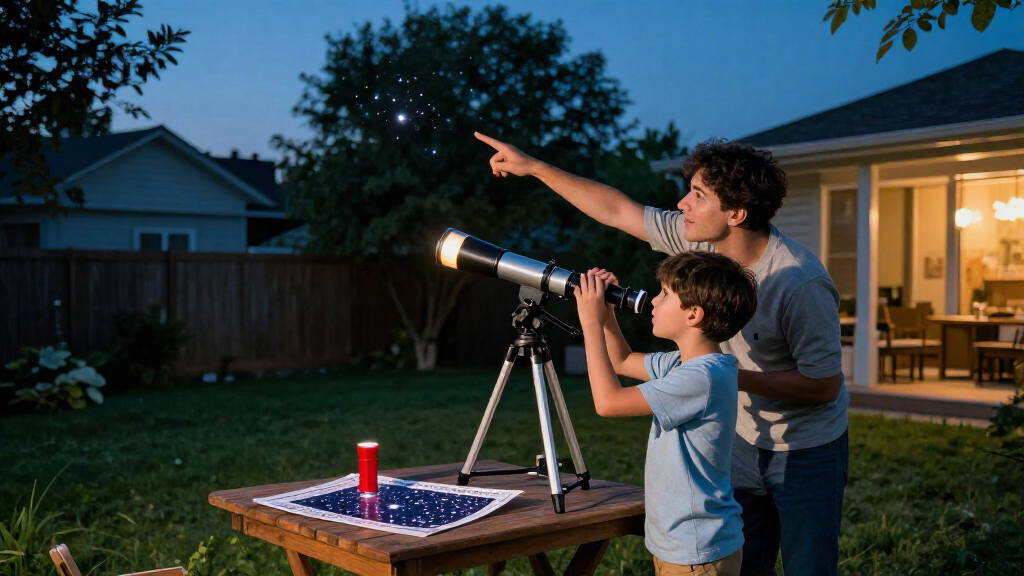
I compared these 15 telescopes as first instruments for visual stargazing, focusing on whether a beginner can set them up, aim them, and use them comfortably on common targets such as the Moon, bright planets, and star clusters. The main criteria were stated aperture and optical design, mount and tripod usability, portability, finder or phone-guidance features, and the practical value of included accessories. I treated magnification claims cautiously: a high number alone does not show how much detail an instrument can resolve, and useful magnification depends on the optics, atmosphere, and mount.
The ranking favors scopes that balance useful light gathering with manageable setup and clear paths to finding objects. The StarSense Explorer LT 114AZ leads for its aperture and guided navigation, while compact 70mm refractors rank higher for buyers who value simple transport over reach. The 80mm and 90mm refractors sit between those priorities. Models with similar apertures are differentiated by their stated focal lengths, portability, and included features, not by assuming unverified differences in optical quality. I also account for tradeoffs: a screen or phone adapter may help with framing, but cannot compensate for unstable support or limited aperture.
| beginner telescopes for stargazing | Telescope type | Mount |
|---|---|---|
| YUANZIMOO 80mm Aperture | Refractor | — |
| WOSPO 90mm Aperture Refractor | Refractor | — |
| 70mm Refractor Telescope with | Refractor | — |
| Gskyer 70mm Refractor Telescop | Refractor | — |
| XLQFLP 70mm Refractor Telescop | Refractor | — |
| Koolpte 80mm Aperture | Refractor | Altazimuth |
| Celestron Travel Scope 70mm Po | Refractor | Altazimuth |
| 90mm Refractor Telescope with | Refractor | Altazimuth |
| 70mm Refractor Telescope with | Refractor | — |
| Uonol 90mm Aperture Refractor | Refractor | Altazimuth |
| 70mm Aperture 500mm Focal Leng | Refractor | Altazimuth |
| Fuoibl 70mm Refracting Telesco | Refracting | Altazimuth |
| Celestron StarSense Explorer L | Newtonian reflector | Manual altazimuth |
| ToyerBee 70mm Refractor Telesc | Refractor | Not specified |
| HUGERSTAR 90mm Aperture Refrac | Refractor | Altazimuth |
Factors to Consider When Choosing Beginner Telescopes For Stargazing
Before choosing a telescope, I’d match the instrument to where and how you plan to observe. A scope that stays steady on a balcony or travels easily to a dark site can be more useful than a larger one that is awkward to set up. These factors help separate genuine observing advantages from add-ons that mainly change convenience.
Choose Aperture for the Targets You Want to See
Aperture is the diameter of the telescope’s main lens or mirror, and it affects how much light the instrument can collect. A 70mm scope can give beginners rewarding views of the Moon and other bright objects, while larger apertures generally offer more potential for detail and dimmer targets. That does not mean every larger telescope is automatically the better purchase: optical quality, collimation, and a steady mount also shape the view. A common mistake is to choose by a dramatic magnification claim instead of aperture and overall usability. If you mostly want the Moon, portability may matter more than moving from 70mm to 90mm. If you hope to explore more targets over time, consider the extra setup demands of a larger instrument.
Match the Optical Design to Your Patience and Routine
Refractors use lenses and are generally straightforward to use, making them appealing for a first telescope that needs little routine adjustment. Reflectors use mirrors and can deliver more aperture for their size, but may need occasional collimation, or mirror alignment, to keep views sharp. That maintenance is manageable for many owners, yet it can be an unwelcome surprise for someone who wants to unpack and observe immediately. Refractors can also show color fringing on bright objects, depending on their design and quality. Think about whether you enjoy learning basic equipment care or prefer simpler day-to-day operation. Choosing the style that fits your routine can matter more than a small difference in stated focal length.
Treat the Mount as Part of the Telescope
A telescope’s mount determines how easily it points and how long the view stays still after you touch the controls. At high magnification, even slight tripod vibration can make focusing and tracking frustrating. A tall, adjustable tripod may sound convenient, but a lightweight design can wobble on uneven ground or in wind. Before buying, check whether the mount offers smooth movement and whether the legs can be set securely at a comfortable viewing height. Beginners often blame the optics when the real obstacle is an unstable support. For observing from a deck or pavement, a compact, firm setup may be more useful than extra height.
Prioritize Finding Targets Over Maximum Magnification
Many first-time observers spend more time searching than viewing, especially when a telescope has a narrow field of view. A finder, clear setup instructions, or phone-assisted navigation can shorten that learning curve, though each approach has different demands. Phone guidance depends on battery life, a correctly aligned device, and a clear view of the sky; a basic finder avoids screen use but still takes practice. A built-in display may make sharing or framing easier, but it does not increase the telescope’s ability to resolve detail. I’d choose a finding aid that fits how you like to observe rather than paying attention to the biggest magnification number. Learning a few bright constellations also makes any telescope easier to use.
Balance Portability Against Reach
Compact telescopes are easier to store and take to darker locations, where the sky itself can improve views of faint objects. Larger or longer-tube models may be less convenient to carry, and their size can make a lightweight tripod feel less steady. Consider the full packed setup, including the tripod, accessories, and any case, rather than the optical tube alone. If the telescope will mostly stay at home, a backpack may add little value; if you plan to travel, it can help protect and organize the equipment. Avoid assuming that a travel-friendly scope will show every target well. The best choice depends on whether you observe often from one spot or make portability part of the hobby.
Pay for Useful Optics Before Extra Accessories
Phone adapters, remote shutters, filters, and cases can improve convenience, but they do not all affect the view through the eyepiece. A phone adapter is useful for experimenting with Moon photography, while a case can make storage and transport easier. A Moon filter reduces brightness, but it is not a replacement for choosing sensible magnification or observing when the Moon is higher in the sky. Beginners can end up with a bundle of accessories before learning which ones they will use. I’d first look for sound optics, a usable mount, and suitable eyepieces, then treat extras as tie-breakers between otherwise similar models. This approach can prevent accessory lists from distracting from the telescope’s core performance.
Frequently Asked Questions
Should I choose a 90mm refractor or the 114mm StarSense reflector as my first telescope?
I’d choose the StarSense Explorer LT 114AZ if you want more aperture and guided help locating objects, and are comfortable learning basic reflector care. Its mirror design may need collimation, so it is not the most hands-off option. A 90mm refractor is a better match if you prefer a simpler lens-based setup and want to avoid mirror alignment. Neither aperture guarantees a sharp view if the mount is unstable or the sky conditions are poor. Let your tolerance for setup and maintenance decide the tie.
Can a 70mm telescope show planets, or should I start with a larger model?
A 70mm telescope can show the Moon in useful detail and reveal bright planets as small disks, though the amount of visible detail is limited. A larger aperture can offer more potential, but atmospheric turbulence, focus, and mount steadiness also affect planetary views. Do not assume a scope advertised at 150x or more will provide clear images at that magnification. For a first telescope aimed at bright targets and easy transport, 70mm can be a reasonable starting point. Choose a larger model if you want more light gathering and accept added bulk or setup demands.
Does a phone adapter help me find stars or take good telescope photos?
A phone adapter holds a camera over the eyepiece and can help capture basic images, particularly of the Moon. It does not make the telescope brighter or sharper, and lining up the phone camera can take patience. For locating objects, an adapter is different from a phone-guided navigation system: it supports imaging, while guidance software helps identify where to point. A steady mount is important for both tasks because small movements can disrupt framing. If photography is your main goal, check how securely the phone attaches and keep expectations modest for faint objects.
Is a telescope with a screen better for a beginner than an optical eyepiece?
A screen can make viewing more social and may help someone who finds eyepiece positioning uncomfortable. It also adds another component to power, set up, and protect, and the screen’s presence does not tell you how capable the optics are. An optical eyepiece gives a direct view without relying on electronics, but takes practice to position your eye comfortably. If you want a shared display, the 70mm model with an LCD may suit that preference. If your priority is learning the sky and seeing detail, compare aperture, optics, and mount quality first.
What should I upgrade first if my beginner telescope feels frustrating to use?
Identify the source of the problem before buying accessories. If the view shakes, a firmer observing surface or more stable support may help more than a new eyepiece. If you struggle to find targets, practice with a sky map or improve the finder setup before chasing higher magnification. If objects look dim, check that you are observing from a dark location and that the target is appropriate for your telescope’s aperture. A reflector owner may need to check collimation, while a refractor owner may benefit from careful focusing and a sensible eyepiece choice. Solving one specific obstacle is usually more useful than adding several accessories at once.
Conclusion
For the strongest all-around mix of aperture and object-finding help, I’d pick the Celestron StarSense Explorer LT 114AZ as best overall, especially for a beginner willing to learn reflector care. The Celestron Travel Scope 70 is my best value-style choice for buyers who put portability and a simple travel setup ahead of faint-target reach. For a more capable refractor route, the 90mm models are the premium-minded options in this lineup, with the WOSPO offering a straightforward adjustable-tripod setup and the HUGERSTAR adding a broader accessory bundle. The most beginner-friendly choice depends on the learner: a simple 70mm refractor suits someone who wants an uncomplicated first view, while StarSense suits someone who wants help finding objects. For families or shared viewing, the LCD-equipped 70mm model is the specific-use pick; for trips, the Travel Scope’s backpack gives it the clearest portability advantage. Choose by your observing location and appetite for setup, not by the largest magnification claim.