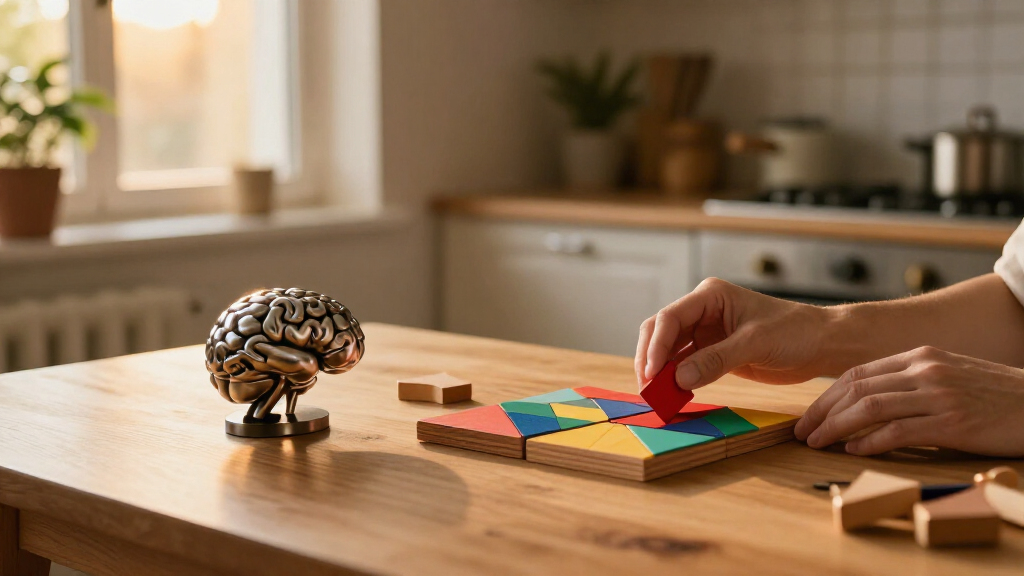
Educational STEM puzzles for adults range from quick logic challenges to hands-on builds that teach spatial reasoning, sequencing, and mechanical problem-solving. I’d choose The Genius Square as the best overall pick for repeatable solo or two-player challenges, while the ROKR Marble Night City stands out for a more involved mechanical build and Kanoodle Genius for compact, portable logic play. The main tradeoffs are challenge depth versus setup time, reusable play versus a one-time build, and adult-level difficulty versus family-friendly accessibility. Read on for the full breakdown of all 15 options and how I’d match them to different puzzle goals.

Prime made for students and young adults
- Fast, free delivery for dorm and study essentials
- Prime Video and Amazon Music included
- Member-only deals
Key Takeaways
- The Genius Square has the clearest fit for recurring play because it supports both solo and two-player challenges, unlike kits centered on assembly or a finite set of physical pieces.
- ROKR Marble Night City and the ROKR Space Shuttle offer a different kind of STEM activity: following a build sequence and assembling a display piece rather than solving many short puzzles.
- Kanoodle and Kanoodle Genius are the compact logic picks, while their smaller format makes them less suited to buyers who want substantial construction or a group activity.
- The wooden tangram options overlap in core shape-fitting skills; piece count and puzzle format matter more than the word “STEM” when choosing between them.
- Several products are marketed for children or all ages, so adult buyers should check challenge progression and puzzle variety rather than assuming an age-inclusive label means adult-level difficulty.
| 4-Pack Wooden Puzzle Brain Teasers – 3D Logic Toys for Kids and Teens |  | Best for Tactile Disassembly Challenges | Material: Wood | Puzzle count: 4 | Puzzle type: Disentanglement | VIEW LATEST PRICE | See Our Full Breakdown |
| ROKR Marble Night City 3D Wooden Marble Run Puzzle Kit |  | Best for Extended STEM Building | Brand: ROKR | Model: LGA01 Marble Night City | Material: Wood | VIEW LATEST PRICE | See Our Full Breakdown |
| LEZHI Metal Wire Brain Teaser Puzzles, Set of 16 |  | Best for Puzzle Variety | Brand: LEZHI | Material: Metal | Puzzle type: Disentanglement | VIEW LATEST PRICE | See Our Full Breakdown |
| TOSY Magnet Pyramid Stone, 12-Piece Magnetic Puzzle |  | Best for Open-Ended Shape Exploration | Brand: TOSY | Pieces: 12 | Magnets: 243 | VIEW LATEST PRICE | See Our Full Breakdown |
| KINGOU Wooden Hexagon Tangram Puzzle |  | Best for Pattern and Geometry Practice | Material: Wood | Finish: Water-based paint | Shape: Hexagonal | VIEW LATEST PRICE | See Our Full Breakdown |
| Educational Insights Kanoodle Brain Teaser Puzzle |  | Best Overall for Challenge Variety | Brand: Educational Insights | Puzzle challenges: 228 | Puzzle formats: 2D and 3D | VIEW LATEST PRICE | See Our Full Breakdown |
| Wooden Hexagon Montessori Tangram Puzzle, STEM Brain Teaser for All Ages |  | Best Wooden Pick for Shape Reasoning | Brand: Skrtuan | Material: Wood | Piece count: 16 pieces and 1 board | VIEW LATEST PRICE | See Our Full Breakdown |
| Educational Insights Kanoodle Genius Puzzle Game |  | Best Compact Puzzle for Travel | Brand: Educational Insights | Puzzle challenges: 202 | Puzzle types: 2D and 3D | VIEW LATEST PRICE | See Our Full Breakdown |
| 2-Pack Logic Puzzle Brain Teaser Game with 88 Challenges |  | Best for Paired or Classroom Practice | Brand: specheer | Material: Plastic | Number of packs: 2 | VIEW LATEST PRICE | See Our Full Breakdown |
| Wooden Russian Block and Hexagon Puzzle Set, 2 Pack |  | Best Wooden Variety Set | Brand: Kiouposy | Material: Basswood and wood | Number of puzzles: 2 | VIEW LATEST PRICE | See Our Full Breakdown |
| ROKR Space Shuttle 3D Wooden Puzzle with LED Launch Sequence |  | Best for Engineering-Minded Builders | Brand: ROKR | Piece count: 446 | Material: Laser-cut wood | VIEW LATEST PRICE | See Our Full Breakdown |
| AHYUAN 3D Wooden T-Shaped Brain Teaser Puzzle, 54 Pieces |  | Best Compact Spatial Challenge | Material: Basswood | Paint: Water-based | Piece count: 54 | VIEW LATEST PRICE | See Our Full Breakdown |
| Coogam 40-Piece Wooden Tangram Puzzle |  | Best for Casual Geometry Practice | Material: Basswood | Pieces: 40 wooden blocks | Included components: Wooden blocks and board | VIEW LATEST PRICE | See Our Full Breakdown |
| Foldology Origami Puzzle Game – Brain Teasers for Kids & Adults, Ages 10+ |  | Best Portable Puzzle Collection | Brand: Foldology | Included challenges: 100 origami puzzles | Difficulty levels: 5 | VIEW LATEST PRICE | See Our Full Breakdown |
| The Genius Square STEM Puzzle Game for 1–2 Players, Ages 6 and Up |  | Best for Competitive and Repeatable Solving | Brand: The Happy Puzzle Company | Players: 1–2 | Recommended age: 6 years and up | VIEW LATEST PRICE | See Our Full Breakdown |
| educational STEM puzzles for adult | Material | Recommended age | Brand | Dimensions |
|---|---|---|---|---|
| 4-Pack Wooden Puzzle Brain Tea | Wood | 13 years and up | — | 4.5 × 4.5 × 4.5 cm |
| ROKR Marble Night City 3D Wood | Wood | 14 years and up | ROKR | 12 × 9 × 2 inches |
| LEZHI Metal Wire Brain Teaser | Metal | 6 years and up | LEZHI | 2.4 × 2.4 × 2.4 inches |
| TOSY Magnet Pyramid Stone | Plastic | 6 years and up | TOSY | — |
| KINGOU Wooden Hexagon Tangram | Wood | 13 years and up | — | 5.5 × 4.8 inches |
| Educational Insights Kanoodle | Plastic | 7 years and up | Educational Insights | — |
| Wooden Hexagon Montessori Tang | Wood | — | Skrtuan | — |
| Educational Insights Kanoodle | Plastic | 8 years and up | Educational Insights | — |
| 2-Pack Logic Puzzle Brain Teas | Plastic | 3 years and up | specheer | — |
| Wooden Russian Block and Hexag | Basswood and wood | — | Kiouposy | 10.6 x 7 inches |
| ROKR Space Shuttle 3D Wooden P | Laser-cut wood | 14 years and up | ROKR | 9.8 × 7.72 × 10.71 inches |
| AHYUAN 3D Wooden T-Shaped Brai | Basswood | 6 years and up | — | 2.8 × 2.8 × 2.8 inches |
| Coogam 40-Piece Wooden Tangram | Basswood | 36 months and up | — | — |
| Foldology Origami Puzzle Game | Paper | — | Foldology | 5 × 5 inches |
| The Genius Square STEM Puzzle | — | 6 years and up | The Happy Puzzle Company | 7 × 7 inches |
More Details on Our Top Picks
4-Pack Wooden Puzzle Brain Teasers – 3D Logic Toys for Kids and Teens
I’d choose this set for adults who want hands-on spatial reasoning in short sessions rather than a long construction project. Its four wooden puzzles ask the solver to take apart and rebuild cube-shaped forms, so the learning comes from testing sequences and noticing how pieces interlock. Compared with the ROKR Marble Night City, this set needs no extended assembly and is much easier to pack away; it also offers more variety than the single hexagonal pattern format of the KINGOU Tangram. The tradeoff is limited progression detail: the listing gives no challenge guide or puzzle-specific difficulty scale, so experienced puzzlers may solve the set quickly. Its compact pieces also call for careful storage, and the puzzles are designed for one person at a time.
Pros:- Four separate puzzles provide more variety than a single-form brain teaser
- Wooden construction gives the pieces a tactile, solid feel
- Compact format is easy to store and transport
- Manual disassembly and reassembly exercise logical sequencing and spatial reasoning
Cons:- No listed instructions or difficulty progression to guide solvers
- Small pieces can be misplaced, especially when used away from home
- Single-player tabletop format offers little collaborative play
Best for: Adults who prefer compact, tactile logic challenges they can pick up between tasks or take on a trip
Not ideal for: Builders seeking a long, guided STEM project or players who want a documented sequence of increasingly difficult challenges
- Material:Wood
- Puzzle count:4
- Puzzle type:Disentanglement
- Recommended age:13 years and up
- Skill level:All
- Players:1
- Dimensions:4.5 × 4.5 × 4.5 cm
- Weight:350 g
Our verdict“Pick this four-puzzle set for portable, hands-on spatial challenges, but choose the ROKR kit if you want a more involved build with a visible mechanical result.”
ROKR Marble Night City 3D Wooden Marble Run Puzzle Kit
For an adult who wants a project as much as a puzzle, I’d rank the ROKR Marble Night City above the smaller tabletop brain teasers. Its 294-piece build combines a hand-cranked gear lift with visible marble routes, making the finished model a working demonstration of gears, gravity, and motion, not just a solved shape. Acrylic sections let the movement remain visible, while the four-puzzle wooden set and LEZHI wire puzzles are quicker to start but don’t produce a comparable mechanical display. That extra payoff requires patience: assembly is estimated at about seven hours, and the kit is described as advanced. It suits focused solo building better than casual, ready-to-play puzzling; buyers who want a challenge they can finish in a few minutes should choose one of the simpler options.
Pros:- Crank-driven gear lift shows how a mechanism moves marbles upward
- Acrylic sections make the marble paths visible during operation
- 294-piece assembly provides a substantial, sustained building challenge
- Illustrated instructions and a spare-parts sheet are included
Cons:- Assembly takes about seven hours, making it a poor fit for short puzzle sessions
- Advanced build demands more patience and attention than the wooden or wire brain teasers
- The completed model needs display space
Best for: Adults who enjoy detailed, multi-hour builds and want a display model that visibly demonstrates mechanical motion
Not ideal for: People seeking an immediately playable puzzle, a short activity, or a build with a beginner-level time commitment
- Brand:ROKR
- Model:LGA01 Marble Night City
- Material:Wood
- Pieces:294
- Marbles:10
- Assembly time:About 7 hours
- Dimensions:12 × 9 × 2 inches
- Recommended age:14 years and up
- Warranty:90 days against manufacturer defects
Our verdict“Choose this kit if you want a long, mechanical STEM build with a working marble-run payoff rather than a quick standalone logic puzzle.”
LEZHI Metal Wire Brain Teaser Puzzles, Set of 16
I’d steer adults who like trying many small logic problems toward this 16-puzzle wire set. Each challenge centers on disentangling metal forms, giving the collection a broader set of individual starting points than the four wooden cube puzzles. That variety makes it useful for sampling different manipulation problems, though the beginner skill label suggests it may not satisfy someone seeking the sustained difficulty of the ROKR Marble Night City build. The metal construction is described as resistant to bending and breaking, but the pieces remain small and easy to lose. It is also a solo tabletop activity, rather than a shared race or collaborative construction project. I’d pick it for an adult who values quick, repeatable challenges; I’d skip it if a single puzzle with deeper mechanical learning is the priority.
Pros:- Sixteen different puzzles offer more challenge variety than a small multi-puzzle set
- Metal construction is described as resistant to bending and breaking
- Compact tabletop format is suitable for brief solo sessions
- Disentanglement challenges exercise logical thinking and finger dexterity
Cons:- Small pieces are easy to misplace
- Beginner skill level may limit appeal for experienced puzzle solvers
- Designed for one player, with no shared play mode listed
Best for: Adults who want a collection of short, beginner-level disentanglement challenges for solo tabletop sessions
Not ideal for: Experienced puzzlers looking for a documented advanced progression, or buyers who want a collaborative game or large-scale build
- Brand:LEZHI
- Material:Metal
- Puzzle type:Disentanglement
- Number of puzzles:16
- Recommended age:6 years and up
- Skill level:Beginner
- Players:1
- Dimensions:2.4 × 2.4 × 2.4 inches
- Warranty:1 year against manufacturer defects
Our verdict“Choose this set for a wide assortment of short wire puzzles, but look to the ROKR kit for a deeper, longer STEM challenge.”
TOSY Magnet Pyramid Stone, 12-Piece Magnetic Puzzle
This is the lineup’s most open-ended option: I’d choose the TOSY Magnet Pyramid Stone for adults who like experimenting with shapes rather than finding one correct assembly. Twelve magnetic pieces can be rearranged into different structures, shifting the challenge toward spatial exploration and creative construction. That makes it less prescriptive than the KINGOU tangram, which has a defined set of wooden blocks and pattern-making focus, and less mechanically instructive than the ROKR marble run. The spinner, booklet, and online ideas offer starting points, though the product description does not specify a structured difficulty path. Its magnetic handling makes rebuilding easy, but the small piece count may feel limited to solvers who want many distinct puzzles. It is also listed for indoor use only.
Pros:- Magnetic pieces can be rearranged into a range of shapes and structures
- Embedded magnets support quick assembly and repeated experimentation
- Booklet, online ideas, and spinner provide multiple ways to begin
- Compact size makes it easy to use on a tabletop
Cons:- Twelve pieces may offer less variety than the 16-puzzle LEZHI set
- No structured difficulty progression is specified
- Listed for indoor use only
Best for: Adults who enjoy free-form shape building and want a compact magnetic puzzle with prompts for new designs
Not ideal for: Solvers who prefer a fixed sequence of logic problems, a detailed challenge progression, or puzzles intended for outdoor use
- Brand:TOSY
- Pieces:12
- Magnets:243
- Material:Plastic
- Included accessory:Spinner
- Size:7 × 10 cm
- Weight:0.16 kg
- Recommended age:6 years and up
- Use:Indoor
Our verdict“Pick this magnetic set if you want free-form spatial play; choose the KINGOU tangram for a more defined pattern-building challenge.”
KINGOU Wooden Hexagon Tangram Puzzle
I’d recommend the KINGOU Wooden Hexagon Tangram to adults who want a quieter, more structured exercise in shape composition. Its 11 hexagonal pieces can be assembled in multiple ways or used to create patterns, making it a better match for geometry-minded, visual problem solving than the LEZHI set’s wire disentanglement challenges. Compared with the TOSY magnetic puzzle, it offers a defined collection of wooden pieces rather than magnetic free-form construction; the tradeoff is that it lacks magnets and an included spinner to make experimentation feel more fluid. The box helps keep the pieces together, and the compact tabletop format is easy to store. Still, this is a single-player puzzle with no listed challenge booklet, so adults wanting guided levels or a social activity may find it too spare.
Pros:- Eleven wooden blocks support multiple arrangements and pattern creation
- Hexagonal form offers a distinct geometry-focused challenge
- Smooth water-based paint finish is specified
- Compact tabletop puzzle includes a box for storage
Cons:- Single-player design offers no built-in group activity
- No challenge guide or graded difficulty sequence is listed
- The more defined piece set offers less free-form construction than the TOSY magnetic puzzle
Best for: Adults who enjoy visual pattern-making and want a compact wooden puzzle with multiple assembly possibilities
Not ideal for: Buyers who want guided challenge cards, magnetic construction, or a puzzle designed for group play
- Material:Wood
- Finish:Water-based paint
- Shape:Hexagonal
- Number of pieces:11
- Dimensions:5.5 × 4.8 inches
- Item weight:0.1 kg
- Recommended age:13 years and up
- Players:1
- Included components:Hexagon tangram puzzle with box
Our verdict“Choose the KINGOU tangram for focused pattern and geometry practice, but opt for TOSY if magnetic, open-ended building matters more.”
Educational Insights Kanoodle Brain Teaser Puzzle
For an adult who wants a compact, repeatable logic workout, Kanoodle’s 228 challenges give it the broadest progression among these five picks. Its mix of 2D layouts and 3D pyramid puzzles asks you to shift between flat spatial planning and building upward, while the illustrated guide helps you move from easier setups toward expert problems. Compared with the Kanoodle Genius, this version offers more challenges; the tradeoff is that both are solo games with small pieces, so neither suits a shared, conversation-led puzzle session. The case doubles as the board and storage, making it easier to take along than the tabletop-focused Wooden Russian Block and Hexagon Puzzle Set. I’d choose it for structured variety, not for tactile wooden construction or multiplayer play.
Pros:- 228 challenges span beginner through expert difficulty.
- Combines 2D arrangements with 3D pyramid puzzles.
- Case serves as both a playing board and piece storage.
- Supports screen-free solo problem-solving.
Cons:- Designed for one player, limiting shared play.
- Small plastic pieces can be misplaced.
Best for: Adults who want a portable solo puzzle with a long sequence of challenges that builds from beginner to expert.
Not ideal for: People seeking a two-player activity, larger pieces, or the tactile feel of a wooden puzzle.
- Brand:Educational Insights
- Puzzle challenges:228
- Puzzle formats:2D and 3D
- Puzzle pieces:12
- Included components:Puzzle pieces, 48-page illustrated guide, carrying case
- Players:1
- Recommended age:7 years and up
- Material:Plastic
Our verdict“Choose Kanoodle for the strongest mix of portable play, difficulty progression, and 2D-to-3D spatial challenges.”
Wooden Hexagon Montessori Tangram Puzzle, STEM Brain Teaser for All Ages
The 16-piece wooden hexagon makes this set a more hands-on shape exercise than either Kanoodle game: instead of following a large catalog of layouts, you work with a fixed set of geometric pieces and use the solution booklet for guidance. Its smooth wood, board, and bright colors make it approachable for adults who enjoy spatial arrangement but want a calmer, tactile format. Compared with the Kiouposy Wooden Russian Block and Hexagon Puzzle Set, this is the simpler, more focused choice; Kiouposy adds a second puzzle and more pieces, while this set keeps attention on one hexagon challenge. That focus is also its limit: the listed age range ends at 12, and the modest piece count may not satisfy experienced adult puzzlers seeking demanding, open-ended problems. I’d pick it for accessible shape practice, not advanced complexity.
Pros:- Wooden pieces have smooth, well-sanded edges.
- Board keeps the geometric pieces organized during play.
- Solution booklet supplies guidance for multiple challenges.
- Shape arrangement supports visual and spatial reasoning.
Cons:- A 16-piece set may feel limited for advanced adult puzzlers.
- The listed age range is aimed at children, so adult challenge depth is unclear.
Best for: Adults who prefer tactile wooden pieces and straightforward geometric challenges, especially when sharing a puzzle with a child.
Not ideal for: Experienced puzzlers looking for many difficult stages, a broad adult-level challenge set, or substantial replay variety.
- Brand:Skrtuan
- Material:Wood
- Piece count:16 pieces and 1 board
- Board dimensions:7.3 x 6.3 x 0.39 inches
- Age range:36 months to 12 years
- Model number:WHP03
- Educational objectives:Hand-eye coordination, shape recognition, logic
Our verdict“Pick this set for approachable, tactile geometry rather than the extended difficulty ladders offered by Kanoodle.”
Educational Insights Kanoodle Genius Puzzle Game
Kanoodle Genius packs a useful range of spatial problems into a case that also works as the board, so it suits adults who want a ready-to-play puzzle for a commute, desk break, or trip. Its 202 challenges in 2D and 3D provide a clear progression, though the standard Kanoodle offers 228 challenges and is the better pick if maximizing the number of problems matters most. Compared with the specheer 2-Pack Logic Puzzle, Genius is a more explicitly solo, self-contained format; specheer supplies two sets, which may work better for parallel or family play. Genius still has the same practical limitation as the other Kanoodle: one player at a time, with small pieces that need care in storage. I’d choose it for compact organization and a guided solo routine, rather than for group interaction or a wooden feel.
Pros:- 202 guided puzzles offer substantial solo practice.
- Includes both 2D and 3D puzzle configurations.
- Case doubles as the board and stores the guide and pieces.
- Compact, screen-free format suits travel and short breaks.
Cons:- Offers fewer challenges than the standard Kanoodle’s 228.
- Single-player design does not support collaborative solving.
- Small pieces may be easy to lose.
Best for: Adults who want a self-contained solo logic puzzle to keep in a bag, at a desk, or in a travel kit.
Not ideal for: Buyers who want the largest challenge library in this lineup, a multiplayer format, or larger components.
- Brand:Educational Insights
- Puzzle challenges:202
- Puzzle types:2D and 3D
- Included components:12 puzzle pieces, 1 puzzle book, 1 carry case
- Recommended age:8 years and up
- Material:Plastic
- Model number:3026
- Number of players:1
Our verdict“Choose Kanoodle Genius when a tidy, portable case matters more than having the longest challenge list.”
2-Pack Logic Puzzle Brain Teaser Game with 88 Challenges
The clearest reason to choose this set is its two-pack format: two people can work on the same type of spatial task at once, making it more suited to a family table or classroom than the single-player Kanoodle options. The 88 challenges across four difficulty levels give solvers a structured path, and the 11 blocks focus on arranging shapes rather than building Kanoodle’s 3D pyramids. That makes this a useful option for practicing spatial planning, but its challenge pool is shorter than either Kanoodle game, and the description notes limited replayability once the guide is complete. Compared with the Wooden Hexagon Montessori Tangram, it offers staged challenges and two sets rather than a wooden, board-based tactile experience. I’d favor it for paired practice and portability, while adults seeking durable-feeling materials or a long solo progression should look elsewhere.
Pros:- Two sets allow parallel play or shared use.
- 88 challenges are organized across four difficulty levels.
- 11 differently sized blocks support spatial planning.
- Compact format is suited to travel or classroom storage.
Cons:- The challenge collection is smaller than either Kanoodle game.
- Plastic construction may feel less substantial than the wooden options.
- Replay value may drop after completing the listed challenges.
Best for: Parents, tutors, and classroom leaders who want two portable sets for parallel problem-solving and guided difficulty progression.
Not ideal for: Adults seeking an extensive long-term challenge library, premium wooden construction, or open-ended replay after finishing the guide.
- Brand:specheer
- Material:Plastic
- Number of packs:2
- Number of challenges:88
- Difficulty levels:4
- Included components:11 uniquely sized blocks, visual challenge guide
- Recommended age:3 years and up
- Item dimensions:1 x 1 x 0.1 inches
Our verdict“Choose this two-pack for guided spatial practice with another person, not for the longest or most durable solo puzzle experience.”
Wooden Russian Block and Hexagon Puzzle Set, 2 Pack
With a 40-piece Russian block puzzle and a separate 16-piece hexagon puzzle, this set gives adults two different shape-fitting problems in one package. The contrast between the larger block arrangement and the hexagon makes it more varied than the single-board Skrtuan tangram, while its basswood pieces and storage bag offer a tactile alternative to the plastic Kanoodle games. The tradeoff is a less structured learning path: the supplied instructions are not described as an extensive graded challenge book, so adults who want clearly numbered progression may prefer the 228 challenges in standard Kanoodle. This set is also intended for tabletop use, rather than quick portable play around a case-board. I’d choose it for hands-on wooden variety and spatial awareness practice, but not for a long, guided sequence or a multiplayer puzzle format.
Pros:- Includes two distinct puzzle formats with 56 pieces total.
- Basswood construction provides a wooden alternative to plastic sets.
- Storage bag and instructions are included.
- Two shapes offer more variety than a single hexagon puzzle.
Cons:- No extensive graded challenge library is specified.
- Tabletop format is less suited to quick travel play than Kanoodle’s case-board.
- Small parts are unsuitable for children under 3.
Best for: Adults who want two tactile wooden shape puzzles for tabletop practice and prefer material variety over a long challenge booklet.
Not ideal for: Puzzle solvers who need graded, numerous challenges, a compact case-board, or a game designed for multiple players.
- Brand:Kiouposy
- Material:Basswood and wood
- Number of puzzles:2
- Number of pieces:56
- Puzzle breakdown:40 Russian block pieces and 16 hexagon pieces
- Dimensions:10.6 x 7 inches
- Weight:0.29 kg
- Included components:Instructions and storage bag
- Number of players:1
Our verdict“Pick this set for tactile wooden variety at a table, and choose Kanoodle instead if guided challenge progression is your priority.”
ROKR Space Shuttle 3D Wooden Puzzle with LED Launch Sequence
For adults who want a build to explain as well as decorate, the ROKR Space Shuttle offers the lineup’s strongest connection to mechanical systems. Its 446 laser-cut wooden pieces form a display model with a moving service structure, countdown lights, and an automated launch sequence, turning an extended assembly into a look at how staged motion can work. Compared with the quicker, repeatable grid challenges of The Genius Square, this is a single, roughly eight-hour construction project with a more involved payoff. That depth also makes it a less flexible choice: once assembled, the main activity is watching the mechanism rather than solving fresh puzzles. The kit includes assembly tools and instructions, but its Type-C cable is not included, so the lighting requires a separate cable.
Pros:- Moving service structure and automated launch sequence make mechanical motion part of the finished model.
- Orange and blue LED effects add a visible ignition sequence.
- 446 laser-cut wood pieces provide a substantial, step-by-step construction project.
- Manufacturer offers replacement for missing or damaged wooden pieces.
Cons:- Assembly takes approximately eight hours and may frustrate anyone wanting a short puzzle session.
- Type-C power cable is required but not included.
- After construction, it offers less repeated problem-solving than The Genius Square or Foldology.
Best for: Adult hobbyists who enjoy patient mechanical builds and want a STEM-themed display model with moving parts and lights.
Not ideal for: People seeking a quick, reusable puzzle, or builders who do not want to spend around eight hours assembling a model and sourcing a Type-C cable.
- Brand:ROKR
- Piece count:446
- Material:Laser-cut wood
- Dimensions:9.8 × 7.72 × 10.71 inches
- Assembly time:Approximately 8 hours
- Recommended age:14 years and up
- Power source:Type-C cable, not included
- Warranty:1 year on parts
Our verdict“Choose this for a substantial, mechanism-focused build and display piece, not for a compact puzzle with endlessly changing challenges.”
AHYUAN 3D Wooden T-Shaped Brain Teaser Puzzle, 54 Pieces
The AHYUAN T-Shaped Brain Teaser fits a hands-on spatial challenge into a 2.8-inch cube, making it a straightforward option for an adult who wants something small to work through between longer projects. Its 54 basswood pieces must be assembled into a target form, and the included paper solution gives a way out when the arrangement stalls. Unlike the ROKR Space Shuttle, this is not a multi-hour mechanical build; it is a compact, tactile puzzle with little setup. That simplicity is also its limit for STEM-minded adults: the supplied information describes a T-shaped goal and other possible shapes, but does not give a structured challenge progression or a defined learning program. The puzzle can be difficult to assemble even though it comes apart easily, so its small scale should not be mistaken for an easy solve.
Pros:- Compact 2.8-inch form is easy to store or keep within reach.
- Basswood pieces create a tactile, physical alternative to paper puzzles like Foldology.
- Can be assembled into a T shape and other shapes.
- Includes a gift box and paper solution.
Cons:- Assembly can be difficult, and the supplied information does not describe a graded challenge sequence.
- The paper solution may shorten the challenge for solvers who consult it quickly.
- Children are advised to use it with adult supervision.
Best for: Adults who want a small wooden spatial puzzle for short solo sessions and value a tangible assembly challenge over electronics or a long build.
Not ideal for: Buyers seeking graduated challenges, detailed STEM instruction, or a larger project with moving mechanisms such as the ROKR Space Shuttle.
- Material:Basswood
- Paint:Water-based
- Piece count:54
- Dimensions:2.8 × 2.8 × 2.8 inches
- Item weight:5.3 ounces
- Recommended age:6 years and up
- Included:Gift box and paper solution
- Color:Coffee
Our verdict“Pick this compact wooden puzzle for tactile spatial reasoning, but choose Foldology or The Genius Square for a broader sequence of repeatable challenges.”
Coogam 40-Piece Wooden Tangram Puzzle
The Coogam 40-Piece Wooden Tangram Puzzle is the most open-ended geometry option in this group: colorful geometric blocks sit on a rectangular board, and examples give solvers starting patterns to reproduce or adapt. That makes it more approachable for casual shape play than the AHYUAN T-Shaped Brain Teaser, which asks for a particular assembly, while its larger board offers a more organized work area than Foldology’s pocket-sized paper format. The tradeoff is that the product is described as a children’s puzzle, with a recommended age of 36 months and up, rather than an adult-level sequence of increasingly demanding problems. For adults, its value lies in experimenting with shape composition and creating variations—not in a clearly specified challenge ladder or timed competition. It is an indoor set, so it is less suited to solving on the go.
Pros:- Forty geometric wooden blocks support hands-on shape arrangement.
- Examples provide patterns to copy as a starting point for experimentation.
- Basswood pieces have a smooth surface.
- The rectangular board keeps pieces together during indoor play.
Cons:- The age recommendation and child-focused design may not satisfy adults seeking a demanding puzzle.
- The board makes it less portable than Foldology’s 5-inch paper format.
- No progressive difficulty system or adult-specific challenge count is provided.
Best for: Adults who enjoy relaxed, visual geometry and want a board-based set for making or copying shapes rather than following a formal challenge progression.
Not ideal for: Experienced adult puzzlers seeking advanced, clearly graded problems, or travelers wanting a compact no-board activity like Foldology.
- Material:Basswood
- Pieces:40 wooden blocks
- Included components:Wooden blocks and board
- Board dimensions:10.6 × 7 × 0.39 inches
- Recommended age:36 months and up
- Puzzle type:Jigsaw
- Theme:Tangram
- Power source:Manual
Our verdict“Choose Coogam for informal, board-based geometry practice, but opt for The Genius Square if you want more structured and repeatable problem solving.”
Foldology Origami Puzzle Game – Brain Teasers for Kids & Adults, Ages 10+
Foldology is the strongest pick here for adults who want many short visual-spatial problems without carrying a box of wooden pieces. Its 100 paper challenges span five difficulty levels, so a solver can move from easier folds toward more demanding pattern and logic tasks. Compared with the Coogam Tangram, it needs no board and is much easier to take along; compared with The Genius Square, it is a quieter solo activity rather than a head-to-head race. The 5 × 5-inch format is useful on a trip or during a brief break, but paper has a real durability cost: rough handling can tear the puzzle pages. It also offers limited multiplayer interaction, so adults looking for a shared tabletop contest will get more from The Genius Square.
Pros:- One hundred challenges provide many problems in a single compact set.
- Five difficulty levels support progression from simpler to harder puzzles.
- The 5 × 5-inch format is easy to carry and does not require a separate board.
- Challenges target visual-spatial ability, critical thinking, and logical reasoning.
Cons:- Paper puzzles can tear if handled roughly.
- Designed mainly for solo play, with limited multiplayer interaction.
- Less tactile and mechanically varied than the wooden ROKR build.
Best for: Adults who want a travel-friendly solo activity with a range of visual-spatial and logical challenges in one compact paper format.
Not ideal for: People who prefer durable wooden components, collaborative play, or a competitive two-player format such as The Genius Square.
- Brand:Foldology
- Included challenges:100 origami puzzles
- Difficulty levels:5
- Age range:10 years and up
- Material:Paper
- Dimensions:5 × 5 inches
- Number of pieces:100
- Model number:B07VYVH18C
Our verdict“Choose Foldology for portable, progressive solo puzzling; choose The Genius Square instead if solving alongside another person matters more.”
The Genius Square STEM Puzzle Game for 1–2 Players, Ages 6 and Up
The Genius Square earns its place for adults who want each session to present a new spatial problem rather than a one-time construction. Seven dice set blockers on a 6 × 6 grid; players then fit colored shapes into the remaining spaces. With 62,208 possible solutions across dice arrangements, it offers substantial variation, and every setup has at least one solution. Unlike the solo paper challenges in Foldology, its two grids make simultaneous play possible, while a solo mode keeps it useful when no opponent is around. That racing format is a defining tradeoff: the time pressure can add energy, but it may frustrate adults who prefer slow, unhurried solving. Some arrangements are also much harder than others, so sessions may feel uneven despite the consistent rules.
Pros:- Can be played solo or by two players using the included grids and shape sets.
- Dice and blockers create a fresh grid arrangement each round.
- More than 62,000 possible solutions provide substantial variation.
- Compact 7 × 7-inch format and light components are easy to bring along.
Cons:- Racing against another player or a clock may not suit relaxed puzzle sessions.
- Some arrangements are much harder than others.
- Its child-inclusive age recommendation may make it feel less like an adult-only puzzle game.
Best for: Adults who enjoy spatial pattern problems and want a compact game for solo practice or a competitive two-player session.
Not ideal for: Solvers who dislike racing or uneven challenge difficulty, or anyone looking for a substantial mechanical construction project like the ROKR Space Shuttle.
- Brand:The Happy Puzzle Company
- Players:1–2
- Recommended age:6 years and up
- Grid:6 × 6
- Possible solutions:62,208
- Included components:2 grids, 7 dice, 2 sets of 7 blockers, and 2 sets of 9 colored shapes
- Dimensions:7 × 7 inches
- Weight:8.8 ounces
Our verdict“Choose The Genius Square for repeatable grid-solving with a competitive option, but pick Foldology for a quieter solo format or ROKR for a long-form build.”
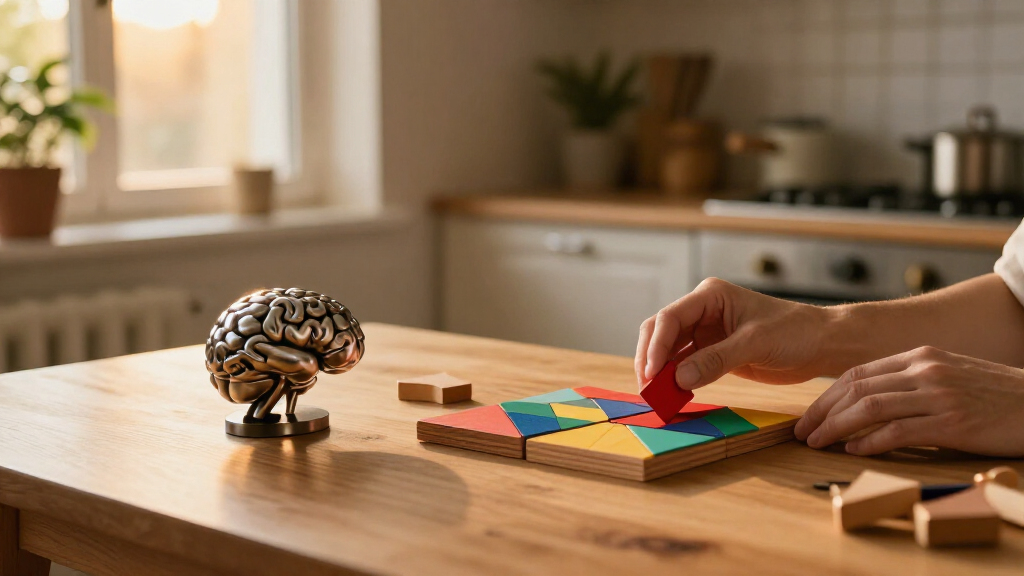
How We Picked
I ranked these options by how well they support adult learning and sustained problem-solving, not by how elaborate their packaging or themes appear. I looked at the type of reasoning each encourages—such as spatial planning, logic, pattern recognition, or mechanical sequencing—as well as whether the activity offers repeated challenges or centers on completing a single build. I also weighed ease of setup, portability, the usefulness of any included challenge progression, and whether the puzzle can work alone or with another person.
That approach puts versatile, repeatable logic play ahead of products that are mainly one-time assembly projects, while still giving the build kits a place for readers who want hands-on construction. Compact games rank well for convenience but not automatically for depth; larger wooden projects gain credit for assembly and display value but lose ground if their main challenge ends once the model is complete. I also treated child-oriented labeling as a cue to check adult challenge fit, not as a reason to dismiss a puzzle outright.
Factors to Consider When Choosing Educational STEM Puzzles For Adults
Before choosing, decide what kind of learning experience you want: a short logic session, a tactile shape challenge, or a longer construction project. The label “STEM” can cover very different activities, so I’d match the puzzle’s mechanics and replay pattern to how you plan to use it.
Choose the Thinking Skill You Want to Practice
Different puzzle formats train different habits of thought, even when they share a STEM label. Shape-fitting games emphasize visual rotation and spatial planning, while metal wire puzzles focus on manipulating parts and testing hypotheses. Marble runs and model kits add sequencing and mechanical assembly, but may involve less repeated problem-solving after construction. A common mistake is choosing by theme alone; a space-themed build does not automatically offer more physics reasoning than a simple logic game. If you want a particular learning outcome, check what the player actually does at each step. Pick the format that matches the skill you want to exercise, not just the subject printed on the box.
Look for Replay Value, Not Just a Large Piece Count
A high number of pieces can signal a longer build, but it does not tell you how many distinct challenges follow. A puzzle with a concise set of rules and many layouts may stay useful longer than a complex assembly kit that becomes a display object once finished. Check whether challenge cards, diagrams, or multiple configurations are included, and whether a solved puzzle can be reset quickly. If you share puzzles with others, repeatable tasks make it easier to hand over a fresh challenge without explaining a new construction process. Buyers who enjoy a single focused project may prefer a build kit despite limited replay. Choose based on how often you expect to return to the puzzle, not on piece count alone.
Match Difficulty to Your Patience and Experience
Adult buyers do not all want the same difficulty: some want a quick mental break, while others want a problem that takes sustained effort. Look for a range of challenge levels or clear progression if you are unsure where to start. A puzzle marketed for all ages may be approachable but can run out of challenge for experienced adults; a dense build can also feel tedious if you wanted short sessions. Avoid treating frustration as proof that a puzzle is educational. A useful challenge should leave room to test ideas and learn from mistakes without making setup or instructions the main obstacle. When possible, favor formats that let you increase difficulty gradually.
Decide Between Solo Practice and Social Play
Some puzzles are naturally solitary, while others work well as a shared challenge or friendly race. If you want to play with a partner, confirm that the rules support simultaneous play or a fair turn-taking format rather than assuming two people can simply share one puzzle. For solo use, a clear challenge sequence can help maintain momentum without another person setting tasks. Group settings call for durable pieces, easy resets, and instructions that newcomers can grasp quickly. A compact handheld puzzle is convenient for individual downtime but may be hard for several people to see at once. Think about where and with whom the puzzle will be used before selecting its format.
Account for Setup, Storage, and Finished Size
Construction puzzles ask for more than solving time: they may need a clear work surface, careful handling, and somewhere to keep the finished model. Loose-piece logic games are usually easier to put away, but small parts can be easy to misplace. Before buying a larger wooden kit, consider whether you want the assembly process and the resulting display object, not just the puzzle-solving aspect. For travel or short breaks, a compact game is often a better fit than a project that needs tools, time, or a dedicated workspace. Storage needs can also affect how readily you revisit a puzzle. Choose a build only if its assembly and finished form both appeal to you.
Treat Age Labels and STEM Claims as Starting Points
Age guidance can help identify small parts, reading demands, and basic complexity, but it is not a reliable measure of adult challenge. A product labeled for children may still suit adults who want an accessible warm-up or a family activity; it may disappoint someone seeking advanced problem-solving. Read the challenge format and instructions rather than relying on promotional wording. Look for concrete features such as progressive puzzles, defined rules, or a build sequence that explains how components work together. Also separate educational value from subject decoration: a science-inspired image is not the same as a puzzle that teaches a scientific concept. This check helps prevent buying a visually appealing item that does not match your learning goal.
Frequently Asked Questions
Which type of STEM puzzle is most likely to hold an adult’s interest over time?
Choose a format with multiple challenges, changing layouts, or a way to vary the rules; those features provide more reasons to return than a single assembly goal. The Genius Square and Kanoodle-style games fit short repeat sessions, while a wooden build kit is better for someone who values the construction process itself. Before deciding, ask whether you enjoy replaying a solved format or would rather move on to a new project. If you are buying for a group, variety and quick resets matter even more. A large build can be absorbing, but its replay pattern differs from a compact logic game.
Are puzzles labeled for kids still worthwhile for adults?
They can be, especially when the adult wants accessible spatial practice, a low-pressure warm-up, or a puzzle to share with a younger player. The label alone does not show how challenging the tasks are, so check for graduated problems and whether the puzzle has a clear route to harder configurations. A simple shape puzzle may stay satisfying if you enjoy experimenting, but it may feel limited if you want lengthy, tightly constrained problems. For advanced solo play, prioritize challenge depth over broad age claims. The best fit depends on the kind of difficulty you want, not the intended age printed on the package.
Should I pick a wooden build kit or a reusable logic game?
Pick a wooden build kit if you want a longer hands-on project, enjoy following assembly steps, and value having a finished model afterward. Choose a reusable logic game if you prefer brief sessions and want to solve new challenges without rebuilding anything. These formats support different kinds of learning: a kit centers on construction and sequencing, while a logic game emphasizes testing solutions and adapting to constraints. Consider your available workspace and patience for keeping parts organized, too. Neither format is automatically more educational; the better choice is the one whose activity you will actually revisit.
What should I check before buying a puzzle as a gift for an adult?
Start with the recipient’s preferred activity: solo logic, tactile manipulation, shared competition, or model building. Then check the likely session length, storage needs, and whether the puzzle depends on instructions or challenge cards that could be misplaced. If you do not know their skill level, a format with varied challenges is safer than a single fixed task. Avoid assuming that a technical theme guarantees a demanding puzzle or that a child-oriented label rules it out. Matching the gift to how the person likes to spend time is more reliable than choosing the most elaborate-looking option.
How can I tell whether a STEM puzzle teaches more than trial and error?
Look for rules or a progression that makes the underlying reasoning visible, such as constraints to track, a sequence to follow, or a pattern the player can test. Trial and error can still build useful problem-solving habits when the puzzle gives feedback and the player can adjust a strategy. A model kit may teach through ordered assembly, while a logic game may develop planning by requiring a solution to meet several conditions. If the learning goal matters, read the instructions or challenge descriptions before buying. A STEM label by itself does not explain what knowledge or skill the activity practices.
Conclusion
For the broadest mix of repeatable solo and two-player play, I’d start with The Genius Square as the best overall choice. Kanoodle and Kanoodle Genius are better suited to beginners or anyone who wants compact logic challenges, while the LEZHI Metal Wire set makes more sense for hands-on manipulation and varied tactile puzzles. For a substantial construction project and a finished display piece, I’d look to ROKR Marble Night City or the ROKR Space Shuttle; they are the premium-style picks for buyers who value assembly over endless replay. If you want a straightforward shape-fitting activity, compare the tangram options by format and included pieces rather than assuming one is automatically harder. The right choice comes down to whether you want recurring logic practice, an accessible introduction, a shared game, or a build that becomes a model.