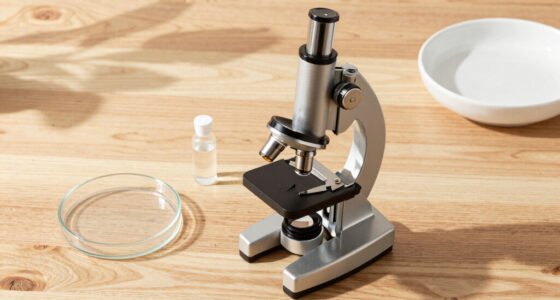
For families comparing kids’ microscope kits, the key choice is between a traditional compound microscope for prepared slides and a digital model with a built-in screen for easy group viewing. The AmScope M30-ABS-KT2 is my best overall pick for a beginner-friendly STEM setup, while the HEWEIMEI 1600x Digital Microscope stands out for its larger screen and the National Geographic Junior Microscope for younger beginners who need simpler magnification. More pieces or a higher magnification number do not automatically mean easier viewing; lighting, focus controls, and useful accessories matter just as much. I compare those tradeoffs across all 15 kits so you can match the microscope to the child’s age, patience, and interests. Read on for the full breakdown and buying advice.

Prime made for students and young adults
- Fast, free delivery for dorm and study essentials
- Prime Video and Amazon Music included
- Member-only deals
Key Takeaways
- Traditional optics and digital screens serve different needs: the AmScope and National Geographic compound kits suit slide-based exploration, while the Odatay, HEWEIMEI, and GEMUFO models make sharing a live image easier.
- A larger screen can help a group learn together: HEWEIMEI’s 4-inch display is a more comfortable shared view than the smaller screens on Odatay and GEMUFO, though it adds a digital-device element to the experience.
- Beginner-friendly magnification beats an impressive maximum: National Geographic Junior’s 50x–250x range offers a gentler starting point than kits advertising magnifications above 1,000x, which can demand steadier focusing and carefully prepared samples.
- Accessory counts are not a measure of learning value: the Xelabrion 67-piece, TOMLOV 63-piece, and Novaluki 65-piece kits bundle many components, but buyers should check whether the child will use those tools and can keep them organized.
- Portability changes where discovery happens: Mileonaim’s carrying case and phone holder, along with the Uarzt 58-piece case, suit families who want to store or carry a kit; a fixed compound microscope is better suited to a regular table setup.


| kids microscope kit | Magnification |
|---|---|
| Odatay 1000X Digital Microscop | 100X–1000X |
| AmScope M30-ABS-KT2-W Beginner | 300x, 600x, and 1200x |
| HKMK Compound Microscope for A | 40x–2000x |
| National Geographic Kids Micro | — |
| Mileonaim Kids Microscope Kit | 100X, 400X, and 1200X |
| Uarzt Kids Beginner Microscope | 100x, 400x, and 1200x |
| HEWEIMEI 1600x Digital Microsc | 100x–1600x |
| Xelabrion Kids Microscope Scie | 100X–1200X |
| GEMUFO Portable Digital Micros | 200x–1000x |
| TOMLOV DM301K Beginner Microsc | 640x |
| BEBANG PM1000 Kids Digital Mic | 200x–1000x, five levels |
| Uarzt 58-Piece Kids Microscope | — |
| Novaluki 65-Piece Kids Microsc | 100x, 600x, and 1200x |
| National Geographic Junior Mic | 50x–250x |
| National Geographic Dual LED M | 20x and 50x |
More Details on Our Top Picks
Odatay 1000X Digital Microscope Kit for Kids with 12 Slides and 2-Inch Screen
The Odatay suits kids who want to capture what they see, with a 1080P camera, built-in storage for up to 500 photos, and computer connectivity. Its rechargeable, portable design is easier to move between rooms than the more traditional AmScope M30-ABS-KT2-W, which emphasizes hands-on viewing through an eyepiece and a larger assortment of tools. Odatay’s 100X–1000X range covers a broad set of close-up observations, while its 12 included slides give beginners something to explore right away. The tradeoff is that a 2-inch screen is small for siblings to gather around, and expanding storage requires a Micro SD card that is not included. Choose it for recording and sharing; skip it if group viewing or conventional microscope handling matters more.
Pros:- 1080P camera captures photos and videos of specimens
- Built-in storage holds up to 500 photos
- Rechargeable and portable for use in different rooms
- Includes 12 slides and connects to a computer for real-time viewing
Cons:- The 2-inch screen is small for group viewing
- Micro SD card for expandable storage is not included
Best for: Families with children who want to save microscope photos and view specimens on a computer.
Not ideal for: Siblings who need a large shared display or families who want expandable storage ready to use out of the box.
- Magnification:100X–1000X
- Camera:2-megapixel, 1080P
- Screen:2-inch IPS
- Lighting:8 LED lights
- Included slides:12 plastic slides
- Photo storage:Built-in storage for up to 500 photos
- Connectivity:Computer connection for real-time viewing
- Power:Rechargeable battery
Our verdict“Choose Odatay if capturing and sharing observations matters more than a large display or a traditional eyepiece.”
AmScope M30-ABS-KT2-W Beginner Microscope STEM Kit, White
The AmScope M30-ABS-KT2-W is the traditional starter choice in this group: a compound microscope, three magnification settings, specimen tools, brine shrimp eggs, and a hatchery make it possible to move from prepared slides to a simple hands-on project. Its 52-piece kit and hard-sided case give beginners more structured activities than the digital-first Odatay, which is better for photographing observations than working through a broad tool set. LED and mirror illumination offer two ways to light a specimen, while the color filter wheel adds another adjustment. The monocular head means one person looks at a time, and coarse-only focus offers less fine control than the HKMK microscope’s fine adjustment. It makes most sense for a child learning conventional slide work; skip it if easy group viewing or precise focusing is a priority.
Pros:- Three magnification settings reach 1200x
- 52-piece kit includes slides, specimen tools, brine shrimp eggs, and a hatchery
- LED and mirror illumination with a built-in color filter wheel
- Hard-sided case and two AA batteries are included
Cons:- Monocular head allows only one viewer at a time
- Coarse-only focus offers less adjustment for fine detail
Best for: Children beginning hands-on slide work with an adult who can help set up specimens and focus.
Not ideal for: Families seeking fine focus control, a digital display, or an eyepiece arrangement for shared viewing.
- Microscope type:Compound
- Viewing head:Monocular
- Magnification:300x, 600x, and 1200x
- Focus:Coaxial coarse focus with rack-and-pinion mechanism
- Illumination:LED and mirror
- Stage:Plain stage with stage clips
- Kit size:52 pieces
- Power:Two included AA batteries
- Case:Hard-sided carrying case
Our verdict“Pick the AmScope for a well-equipped introduction to conventional microscope activities and slide preparation.”
HKMK Compound Microscope for Adults and Kids, 40x–2000x, with Experiment Kit and Phone Adapter
For older children ready to adjust focus carefully, the HKMK compound microscope combines a fine-adjustment knob with 4x, 10x, and 40x objectives, two eyepiece options, and a 2x extender. The stated range reaches 2000x, giving this kit more magnification options than the National Geographic Kids microscope’s three levels up to 400x. That broader range comes with a steeper learning curve: beginners may find the AmScope M30’s simpler three-setting setup easier to approach. A phone mount and prepared slides help families document and begin observing, while the many blank cover slips and specimen tools support making samples. The battery-powered LED and reflector give lighting flexibility, but the battery type and inclusion status are unspecified. Pick HKMK for adjustable, tool-rich exploration; skip it if a clear, simple setup is the priority.
Pros:- Fine-adjustment focus supports careful image tuning
- Offers 4x, 10x, and 40x objectives with 10x and 25x eyepieces
- Phone mount supports capturing views with a smartphone
- Includes prepared slides, blank cover slips, and specimen-handling tools
Cons:- Battery-powered LED requires batteries, but type and inclusion status are unspecified
- Multiple magnification combinations may be harder for beginners to manage
Best for: Older kids and adults who want fine focus, multiple eyepiece choices, and tools for preparing specimens.
Not ideal for: Young first-time users who need a simple setup or buyers who want confirmed battery details before purchase.
- Magnification:40x–2000x
- Objective lenses:4x, 10x, and 40x achromatic
- Eyepieces:10x and 25x
- Lighting:Battery-powered LED and reflector
- Viewing angle:45 degrees
- Phone compatibility:Smartphone mount included
- Slides:5 prepared slides and 100 blank cover slips
- Power:Battery; type and inclusion status unspecified
Our verdict“Choose HKMK for a more adjustable microscope and extensive specimen tools, provided the user is ready for a steeper learning curve.”
National Geographic Kids Microscope Kit, 400x Magnification
The National Geographic Kids Microscope Kit keeps a child’s first investigations approachable with three magnification levels, easy-to-use focus knobs, and a learning guide with activities. Its included rock and mineral specimens add a different starting point from the AmScope M30-ABS-KT2-W, whose broader 52-piece assortment focuses more on slides, tools, and a brine shrimp project. Adjustable lighting above and below helps users view different kinds of samples, and prepared and blank slides provide both a quick start and room to make new observations. The 400x ceiling is more limited than the Odatay’s digital 100X–1000X range or HKMK’s stated 2000x, so this is not the pick for pursuing very high magnification. Its plastic enclosure and unspecified battery inclusion are practical compromises.
Pros:- Three magnification levels reach 400x
- Includes prepared and blank slides plus six rock and mineral specimens
- Learning guide provides activities for getting started
- Adjustable LED lighting above and below the stage
Cons:- Plastic enclosure may feel less substantial than a metal frame
- Battery powered, with battery inclusion unspecified
- 400x maximum magnification is below the HKMK and Odatay ranges
Best for: Children aged 6 and up who benefit from guided activities and a mix of slide and mineral specimens.
Not ideal for: Older learners seeking very high magnification or families who prefer a metal microscope body.
- Maximum magnification:400x
- Magnification levels:3
- Lighting:LED above and below
- Slides:6 prepared plant slides and 6 blank slides
- Included specimens:6 rocks and minerals
- Accessories:Pipette, specimen dish, and tweezers
- Age recommendation:6+
- Power:Battery powered
- Dimensions:11 x 6.7 x 12 inches
Our verdict“Choose this kit for guided first explorations with varied specimens rather than a high-magnification setup.”
Mileonaim Kids Microscope Kit with Slides, LED Light, Phone Holder, and Carrying Case
The Mileonaim SD668 is built around the volume of materials: 12 prepared slides, 32 blank plastic slides, and basic tools give kids plenty of chances to make and examine samples. That emphasis makes it a better fit for repeated slide-making than the National Geographic Kids Microscope Kit, which pairs a smaller slide selection with rocks, minerals, and a learning guide. Mileonaim adds three magnification settings up to 1200X, an LED light, phone holder, and an ABS carrying case for keeping the pieces together at home or school. The tradeoff is limited product detail on image quality and focusing, so its stated magnification alone cannot tell a buyer how easy it will be to bring samples into focus. Plastic slides may also feel less durable than glass.
Pros:- Three magnification settings reach 1200X
- Includes 12 prepared slides and 32 blank slides
- Basic specimen tools support hands-on slide preparation
- ABS carrying case keeps the kit portable and organized
Cons:- Some included slides are plastic
- Product details do not specify image quality or microscope focusing
Best for: Children aged 6–12 who want many blank slides for repeated specimen-preparation activities at home or school.
Not ideal for: Buyers who need documented focusing performance, image quality, or glass slides.
- Model:SD668
- Magnification:100X, 400X, and 1200X
- Piece count:61
- Prepared slides:12
- Blank slides:32 plastic slides
- Included tools:Tweezers, dropper, scalpel, and mixing plate
- Features:LED light and phone holder
- Case:ABS carrying case
- Recommended age:6–12 years
Our verdict“Pick Mileonaim for a portable kit centered on making and examining many slides, with the understanding that focusing details are limited.”
Uarzt Kids Beginner Microscope Science Kit, 100x–1200x
The Uarzt pairs three magnification settings with 31 blank slides, so kids can move from ready-made samples to preparing their own. Its learning guide adds direction to that process, a useful distinction from the TOMLOV DM301K, which emphasizes prepared slides and phone sharing instead. Adjustable LED lighting helps when changing specimens, while the achromatic objective lens is a specified optical feature in this group of beginner kits. The tradeoff is that the headline 1200x magnification does not, by itself, explain how much useful detail each setting resolves. This is also a more hands-on, eyepiece-style choice than the HEWEIMEI P2, which has a screen for group viewing. Batteries are required, and the accessory list is not detailed enough to know exactly what comes in the box.
Pros:- 31 blank slides support repeated specimen-preparation practice
- Learning guide includes instructions for making slides
- Three listed magnification settings from 100x to 1200x
- Adjustable LED lighting and an achromatic objective lens
Cons:- Requires batteries
- The product description does not specify which accessories are included
- The listed maximum magnification does not establish the usable detail at that setting
Best for: Children ready to practice making slides, with an adult who can help them follow the included guide
Not ideal for: Families who want a built-in screen, video capture, or a fully specified accessory list
- Brand:Uarzt
- Model:RM
- Magnification:100x, 400x, and 1200x
- Objective lens:Achromatic
- Light source:Adjustable LED
- Power:Battery powered
- Prepared slides:13
- Blank slides:31
- Compatible devices:Smartphone
Our verdict“Choose the Uarzt if slide-making practice and a guide matter more than screen-based viewing or clearly itemized accessories.”
HEWEIMEI 1600x Digital Microscope for Kids with 4-Inch Screen and Slides Kit
The HEWEIMEI is the clearest fit for kids who want to see a specimen on a screen: its 4-inch IPS display and photo and video capture make sharing observations easier than with the eyepiece-focused Uarzt RM. The detachable body also supports desktop, handheld, and portable use, giving it more flexibility than a fixed viewing setup. Six LEDs with three brightness settings help adjust illumination, and the kit includes slides and sample-preparation supplies. Its 100x–1600x range is the highest listed here, though magnification alone does not tell a buyer how much fine detail will be visible. The main limitation is the built-in, non-removable battery: when it wears down or runs out, it cannot simply be swapped for a spare. Its screen-first approach may also be more device-centered than kids seeking traditional microscope practice want.
Pros:- 4-inch IPS screen supports shared viewing without crowding an eyepiece
- Captures photos and videos at 1080p
- Detachable design offers desktop, handheld, and portable modes
- Includes slides and sample-preparation supplies
Cons:- Built-in lithium polymer battery is non-removable
- Listed 1600x maximum does not establish the amount of useful visible detail
- Screen-based viewing may not suit children seeking conventional eyepiece practice
Best for: Siblings or small groups who want to view and capture specimens together on a built-in screen
Not ideal for: Families who want a replaceable battery or a traditional eyepiece-first microscope experience
- Brand:HEWEIMEI
- Model:P2
- Magnification:100x–1600x
- Screen:4-inch IPS
- Camera:48MP; 1080p video
- Lighting:6 LED lights with 3 brightness settings
- Modes:Desktop, handheld, and portable
- Battery:Built-in, non-removable lithium polymer
- Recommended age:3–14 years
Our verdict“Pick the HEWEIMEI for shared, screen-based exploration if its fixed battery is acceptable.”
Xelabrion Kids Microscope Science Kit, 67 Pieces, 100X–1200X Magnification
The Xelabrion puts its emphasis on hands-on specimen variety: the 67-piece kit includes 12 prepared slides, 45 blank slides, cover slides, tools, collection bottles, a storage box, and a culture dish. That gives curious kids more ways to collect and prepare samples than the TOMLOV DM301K, which lists 12 prepared slides and a phone adapter. Seven-color LED lighting adds flexibility for illuminating semi-transparent specimens, while the portable ABS body suits moving between a desk and outdoor collecting. This abundance comes with a setup tradeoff: the product description says adjusting the microscope angle takes patience. The kit’s 100x–1200x range offers several magnification possibilities, but the listed range does not clarify the detail available at the highest setting. Choose it for activity breadth, not for the easiest adjustment or digital sharing.
Pros:- 67-piece set includes tools and supplies for collecting and preparing specimens
- 45 blank slides support repeated slide-making activities
- Seven-color LED lighting offers illumination choices
- Portable ABS design suits home, classroom, or outdoor use
Cons:- Adjusting the microscope angle can take patience
- No built-in screen or camera is listed
- The listed maximum magnification does not specify usable detail
Best for: Curious children who want supplies for collecting, preparing, and observing a range of specimens
Not ideal for: Young beginners who need quick, simple positioning or want a built-in screen and camera
- Brand:Xelabrion
- Pieces:67
- Magnification:100X–1200X
- Lighting:Seven-color LED
- Prepared slides:12
- Blank slides:45
- Cover slides:5
- Material:ABS plastic
- Manufacturer part number:6002-2
Our verdict“Choose the Xelabrion when a broad set of specimen-preparation activities matters more than easy positioning or digital viewing.”
GEMUFO Portable Digital Microscope Kit for Kids, 200x–1000x Magnification, 2.4-Inch Screen
The GEMUFO combines a small built-in screen with a removable base, making it a flexible choice for kids who want to inspect specimens handheld or steady the unit on a desk. Its rechargeable battery avoids the loose-battery requirement of the Uarzt RM, and the 2.4-inch IPS display lets children frame and capture photos or videos directly. With eight prepared and four blank slides plus specimen tools, it covers basic observation and simple preparation. The compromise is a smaller screen than the HEWEIMEI P2 offers, and its 2MP camera is specified at a lower resolution than that model’s listed camera. USB transfer helps move captures to another device, but expanded storage requires a TF card that is not included. This is a compact digital route, rather than the broadest slide-making kit.
Pros:- Removable base supports both handheld and steadier desktop use
- Built-in IPS screen and camera capture photos and videos
- Rechargeable battery supports cordless use
- USB transfer and TF card expansion provide sharing and storage options
Cons:- TF card for expanded storage is not included
- 2.4-inch screen is smaller than the HEWEIMEI P2 display
- Includes only four blank slides for making specimens
Best for: Families seeking a rechargeable, portable digital microscope for casual viewing and sharing captures
Not ideal for: Buyers who want a larger display, extensive blank-slide supplies, or included expanded storage
- Brand:GEMUFO
- Magnification:200x–1000x
- Screen:2.4-inch IPS
- Camera:2MP
- Slides:8 prepared and 4 blank
- Unit count:21
- Power:Rechargeable battery
- Connectivity:USB transfer; TF card expansion (card not included)
- Recommended age:3–12 years
Our verdict“Pick the GEMUFO for portable, rechargeable screen viewing if a compact display and separate TF card are acceptable.”
TOMLOV DM301K Beginner Microscope Kit for Kids, 63 Pieces
The TOMLOV makes a straightforward starting point for ages 6–12: 12 prepared slides give a child something to view right away, while dual LED lights are designed for both transparent slides and solid everyday objects. Its rechargeable battery, listed for up to 24 hours of runtime, removes the need to keep spare batteries on hand. Compared with the Uarzt RM, TOMLOV lists fewer slide-making supplies but adds a phone adapter for sharing observations on a smartphone. The tradeoff is a more limited learning path for children ready to prepare many of their own samples: no blank slides are listed, and the specified 640x magnification comes without further optical performance details. It is a beginner-focused kit rather than a choice for advanced microscopy or screen-free group viewing.
Pros:- 12 prepared slides let beginners start observing immediately
- Dual LED lights support viewing slides and solid objects
- Rechargeable battery is listed for up to 24 hours of runtime
- Phone adapter supports sharing observations on a smartphone
Cons:- No blank slides are listed for preparing original specimens
- 640x magnification is listed without further optical performance details
- Beginner design may not satisfy children seeking advanced microscopy
Best for: Children ages 6–12 who want ready-to-view slides, cordless sessions, and a way to share observations by phone
Not ideal for: Young scientists who want many blank slides for specimen preparation or more detailed optical specifications
- Brand:TOMLOV
- Model:DM301K
- Recommended age:6–12 years
- Magnification:640x
- Lighting:Dual LED lights
- Battery:Rechargeable; up to 24 hours of runtime
- Included slides:12 prepared plastic slides
- Included accessories:Phone adapter
- Kit size:63 pieces
Our verdict“Choose the TOMLOV for a simple first microscope experience with prepared slides and phone sharing, rather than extensive slide-making.”
BEBANG PM1000 Kids Digital Microscope STEM Kit
The BEBANG PM1000 is a good fit for children who want to capture microscope discoveries and take the kit along. Its 200x–1000x magnification, five prepared glass slides, and included 32GB memory card give beginners a ready starting point for viewing and saving images. At just 0.34 lb with an EVA case, it is easier to carry outdoors than a traditional slide-focused kit such as the National Geographic Junior Microscope Science Kit. The tradeoff is that the description does not give the screen size or image resolution, so buyers cannot judge how clearly saved images will show fine detail. Its approximately 2.5-hour battery life also suits shorter sessions better than a full day of exploring without a recharge.
Pros:- 32GB memory card is included for saving photos and videos
- Five real glass prepared slides provide ready-made samples
- Lightweight design and fitted EVA case make it easy to carry
- Rechargeable battery avoids routine disposable-battery replacement
Cons:- Approximately 2.5 hours of battery life may limit longer outings
- Screen size and image resolution are not specified
Best for: Families seeking a lightweight digital microscope for short indoor or outdoor sessions and photo or video storage
Not ideal for: Children who need long sessions between charges or buyers who want confirmed screen and image-resolution details
- Magnification:200x–1000x, five levels
- Memory card:32GB included
- Prepared slides:5 real glass specimens
- Battery life:Approximately 2.5 hours
- Charging:Rechargeable; Type-C cable included
- Weight:0.34 lb
- Warranty:1 year
- Included accessories:EVA case, neck strap, slides, Type-C cable, and user manual
Our verdict“Choose the BEBANG PM1000 if portability and saving digital observations matter more than a clearly specified display or extended battery life.”
Uarzt 58-Piece Kids Microscope Kit with Carrying Case
The Uarzt 58-piece kit centers on hands-on practice: children get 13 prepared slides to start with and 31 blank slides for their own samples, along with lab accessories and a beginner guide. The carrying case helps keep those parts together, a practical advantage over the more digitally oriented BEBANG PM1000, which is designed around capturing observations. Its stated maximum of 1200x magnification sounds expansive, but this is described as an introductory microscope, so I would choose it for guided exploration rather than expecting professional lab performance. The compact body and smartphone compatibility may appeal to children who like sharing what they see. Batteries are not included, so the kit needs two AA batteries before its first session.
Pros:- 13 prepared slides offer samples children can view right away
- 31 blank slides support collecting and preparing their own specimens
- Carrying case, lab tools, and guide support organized activities
- Smartphone compatibility can help children share observations
Cons:- Two AA batteries are required and are not included
- Introductory design is not intended as professional lab equipment
Best for: Parents or teachers looking for a case-organized starter set with prepared specimens and blank slides for ages 5–12
Not ideal for: Families who want rechargeable power or a microscope intended for advanced, professional-level work
- Piece count:58
- Prepared slides:13
- Blank slides:31
- Maximum magnification:1200x
- Microscope dimensions:4.6 x 2.75 x 8.15 in
- Power:2 AA batteries, not included
- Light source:LED
- Recommended age:5–12 years
Our verdict“Pick the Uarzt 58-piece kit for organized, slide-based beginner activities, provided you are comfortable supplying the batteries.”
Novaluki 65-Piece Kids Microscope Kit, 100x–1200x Magnification
The Novaluki kit gives young explorers a broad set of materials for collecting and viewing samples, including 45 blank slides, 12 prepared specimens, and four collection bottles. Its three magnification settings keep operation straightforward, while seven-color touch-adjustable LED lighting adds a hands-on way to change illumination. Compared with the Uarzt 58-Piece Kids Microscope Kit, Novaluki supplies more blank slides and collection containers, making it better suited to children who want to gather samples rather than mainly work through prepared ones. The tradeoffs are its battery-powered design, with batteries not included, and limited size information: the listed dimensions stop after the 4.9-inch length. Some prepared specimens are randomly selected, so the specific samples may vary.
Pros:- 45 blank slides and four collection bottles encourage sample gathering
- Includes 12 prepared specimens for getting started
- Three magnification settings keep choices simple
- Seven-color adjustable LED lighting adds flexibility for activities
Cons:- Batteries are not included
- Full item dimensions are not provided
- Some prepared specimens are randomly selected
Best for: Children ages 4 and up who want to collect their own samples and try varied lighting during guided microscope activities
Not ideal for: Buyers who want rechargeable power, complete dimension details, or a guaranteed selection of prepared specimens
- Model:6002
- Magnification:100x, 600x, and 1200x
- Light source:LED with seven colors
- Power source:Battery-powered; batteries not included
- Prepared specimens:12
- Blank slides:45
- Other included items:4 collection bottles, tweezers, dropper, culture dish, storage box, and instructions
- Age recommendation:Children ages 4 and up
Our verdict“Choose Novaluki for a sample-collection-focused kit with many blank slides, if variable specimens and battery setup are acceptable.”
National Geographic Junior Microscope Science Kit, 50x–250x Magnification
For a child learning how focus and lighting work, this National Geographic Junior kit keeps the setup accessible: it has an adjustable platform and focus, plus LED illumination from above and below. The two light positions help children explore both prepared slides and objects that are thicker or opaque. Its range of 50x–250x magnification is more modest than the 1200x claims on the Novaluki 65-Piece Kids Microscope Kit, but the simpler range suits early practice without making headline magnification the main attraction. Six prepared and six blank slides, tools, and a lab guide provide a clear activity path. The limitation is scope: it is a beginner kit, and battery power means families must supply batteries.
Pros:- Upper and lower LED lights support viewing slides and thicker objects
- Adjustable focus and platform help beginners practice microscope setup
- Six prepared and six blank slides offer both guided and open-ended activities
- Lab guide and tools give children a structured place to start
Cons:- Magnification tops out at 250x, below several other kits in this roundup
- Batteries are required
- Beginner-focused design may limit appeal as skills advance
Best for: Children new to microscopy who need guided activities and a straightforward way to view both slides and thicker objects
Not ideal for: Older or experienced young hobbyists seeking high magnification or a kit built for more advanced microscopy
- Magnification:50x–250x
- Light source:Dual LED
- Power source:Battery powered
- Prepared slides:6
- Blank slides:6
- Weight:14.4 ounces
- Model number:RTMICROJR
- Included accessories:Slide covers, tweezers, pipette, instructions, lab guide, and sticker sheet
Our verdict“Choose this National Geographic kit for guided first steps and dual-light viewing, rather than for high-magnification exploration.”
National Geographic Dual LED Microscope Science Kit for Kids
This National Geographic kit makes the most sense for children who want to switch between slide work and looking at whole, three-dimensional objects. Its dual LED illumination lights slides from below and objects from above, while the 20x and 50x optical lenses keep the viewing range approachable for younger learners. More than 50 accessories, including 10 prepared and 10 blank slides, give families plenty of activity material to organize. Compared with the National Geographic Junior Microscope Science Kit, this model offers lower magnification but a broad accessory set and an explicit focus on 3D viewing. That lower range limits fine-detail work, and the description does not specify its power source or provide listed drawbacks. It is best treated as an introductory activity kit, not a growth path for advanced microscopy.
Pros:- Dual LED illumination supports slides and three-dimensional objects
- 20x and 50x optical lenses offer a simple entry point
- Includes 10 prepared and 10 blank slides
- More than 50 accessories support varied biology activities
Cons:- Magnification is limited to 20x and 50x
- Power source is not specified in the provided product details
Best for: Families with children ages 8–12 who want a broad accessory set for switching between prepared slides and 3D objects
Not ideal for: Children seeking high magnification or families who want clearly specified power details and a more advanced microscope
- Age range:8–12 years
- Magnification:20x and 50x
- Illumination:Dual LED
- Prepared slides:10
- Blank slides:10
- Included accessories:50+ pieces
- Warranty:1 year against manufacturer defects
Our verdict“Pick this kit for accessible slide and 3D-object activities with plenty of accessories, but look elsewhere for fine-detail magnification.”

How We Picked
I compared the 15 kits around the things that change a child’s experience: viewing style, usable magnification range, lighting and focusing demands, included slides or experiment tools, and how easy the kit looks to store and share. A high magnification claim alone did not move a product up the list, since sample preparation, focus, and illumination affect whether a young learner can see anything clearly. I also weighed whether a kit’s format suits solo exploration, adult-guided experiments, or group viewing.
The ranking gives priority to a balanced first experience: straightforward setup, practical learning tools, and a format that fits the likely user. That puts the AmScope M30-ABS-KT2 first as a conventional STEM starter, while digital models rank higher for screen-based sharing and National Geographic Junior earns a distinct place for low-magnification simplicity. Larger bundles and higher advertised magnification remain useful for some families, but they do not outrank ease of use when they add clutter or demand more patience.
Factors to Consider When Choosing Kids Microscope Kits
Before choosing a kit, I would match the microscope to how the child will actually explore: looking at prepared slides, examining everyday objects on a screen, or following guided activities with an adult. These broader tradeoffs can matter more than the number of accessories in the box.
Choose a Viewing Style That Fits the Activity
A compound microscope is designed around light passing through thin samples, so it suits prepared slides and careful observation at a table. A digital microscope with a built-in screen can show objects to several people at once and may feel more familiar to a child who enjoys screens. Some digital models also make it easier to capture or share what is being viewed, depending on their features. The common mistake is expecting one format to do both jobs equally well: a screen-based viewer may not replace a conventional slide microscope for structured lessons. Think about whether the child wants to inspect slides, look at larger everyday objects, or share discoveries with siblings. That answer points toward the format before magnification or accessory counts enter the decision.
Treat Magnification as a Starting Point, Not a Score
Magnification describes how large an image can appear, but it does not by itself tell you how clear or useful the view will be. At higher settings, a small movement can shift the subject out of view, and light and sample preparation become more demanding. For a younger child or first microscope, a modest range can make it easier to find and focus on an object. Higher advertised maximum magnification may appeal to an older, patient learner who wants to experiment with prepared slides. Avoid buying based on the biggest number on the package alone. A child who cannot locate the sample or adjust the focus may get more from a simpler, usable view.
Check Who Controls the Setup
Some kits work best when an adult helps prepare slides, adjust focus, or explain what the child is seeing. Others offer a screen that can reduce the need for each viewer to look through an eyepiece, but children still need help positioning objects and making sense of the image. Consider the child’s patience with small controls as well as their interest in independent play. If a kit is intended as a gift, an included activity or clear starting point can make the first session less dependent on the buyer’s science knowledge. A common mismatch is choosing a feature-rich kit for a child who wants quick, unsupervised exploration. Match the setup effort to the adult support that will actually be available.
Look Beyond Piece Counts
A large accessory bundle can provide variety, but only if its slides, tools, and containers suit the child’s activities. More pieces also mean more sorting, storage, and chances for small components to go missing. A smaller kit with a focused set of useful slides may be easier to start using than a crowded box with no clear activity path. Before choosing a bundle, check what kinds of samples or experiment tools it includes and whether the child can handle them safely with adult guidance. Do not treat the stated piece count as a direct measure of educational depth. The better question is whether the included items give the child a practical next thing to investigate.
Plan for Storage and Portability
A microscope that lives on a desk can be ready when curiosity strikes, while a kit that packs into a case is easier to put away or take along. Portability can help families with limited space, but it does not automatically make a microscope suitable for outdoor use; lighting and a steady surface still matter. Cases also help keep accessories together, though they add another item the child must open, repack, and maintain. Consider where the microscope will be used most often and whether it needs to be put away after each session. A family that shares a table may value compact storage more than a child with a dedicated science corner. Choose the storage style that supports repeat use rather than adding friction.
Decide When a Screen Is Worth It
A built-in screen can make observations easier to share and may help a child who finds an eyepiece awkward. Screen size matters when siblings or adults will watch together, while a compact display may be enough for one child at a time. Digital viewing also changes the character of the activity: the child is looking at an electronic image rather than only through optical eyepieces. Some families will value that convenience, while others may prefer a traditional microscope experience for learning how optics work. Check the model’s screen and viewing setup rather than assuming every digital kit offers the same visibility. Pay for the display when shared viewing is a real use case.
Frequently Asked Questions
Should I choose a digital microscope or a traditional compound microscope for a child?
Choose a traditional compound microscope if the main goal is learning to view prepared slides through eyepieces and adjust focus by hand. A digital model is a better fit when a built-in screen would make viewing easier to share or less awkward for the child. The two formats support different habits, so consider what the child wants to inspect and whether adults or siblings will join in. Also check whether the digital model is meant for slides, larger objects, or both. The right choice follows the activity, not the word “digital” or “compound” on the box.
Is a 1,000x or higher magnification kit a good choice for a first microscope?
It can be, but a high maximum does not guarantee a useful first view. Strong magnification can make focusing and keeping a sample in view more demanding, especially for younger children. A simpler range may help a beginner find an object and build confidence before moving to more detailed observation. Look at the kit’s focus controls, lighting, and intended samples alongside its magnification claims. If the child is patient and has adult help, a higher range may provide room to experiment; otherwise ease of use may matter more.
Do kids need a microscope kit with dozens of accessories?
No; a large bundle is useful only when its components support activities the child will actually try. Extra slides and tools can offer variety, but they also need storage and adult supervision where appropriate. A smaller set with a clear starting activity may be less overwhelming for a first-time user. Compare what the pieces are for rather than relying on the total count. If the child already has slides or science tools, a simpler microscope may be the more practical choice.
What makes a microscope kit easier for a younger beginner to use?
A beginner benefits from a manageable magnification range, accessible focus controls, and a clear way to get started with a sample. A built-in screen can make viewing more comfortable for some children, while a traditional microscope can teach eyepiece and focus skills with adult support. The child’s patience and fine-motor comfort matter as much as age labels on packaging. Look for a format that fits how much guidance an adult can provide. A kit that is easy to set up is more likely to become part of regular play.
Will a portable microscope kit work for exploring outdoors?
A carrying case makes it easier to transport and store a kit, but portability alone does not make it ready for outdoor viewing. A stable surface and suitable light are still needed, and many compound microscopes are intended for prepared samples rather than casual inspection of large objects. A digital model may suit surface viewing better if its design supports that use. Think about where the child will set it up and how small accessories will be kept together. For field trips, choose a kit whose viewing format and storage match the specific activity you have in mind.
Conclusion
My best overall choice is the AmScope M30-ABS-KT2 for families seeking a traditional beginner STEM setup. For best value in a screen-based format, compare the Odatay and GEMUFO kits around their display size and included slides; choose HEWEIMEI as the larger-screen pick for shared viewing. The best option for younger beginners is National Geographic Junior, whose lower magnification range offers a gentler entry point. If carrying and storing the kit matter most, Mileonaim and Uarzt’s case-equipped kits address that need, while larger bundles such as Xelabrion or TOMLOV suit families who want more components to organize. Choose by the child’s preferred way to explore and the amount of setup help available, then use the product breakdown to compare the details.
Halloween Picks

MGparty 14.5 ft Halloween Inflatable Walk-In Pumpkin House with LED Lights

Govee Outdoor Halloween Projector Light with 3D Dynamic Visuals and Nebula Effect

9 ft Halloween Inflatable Haunted Castle with Dragon and Ghost
As an affiliate, we earn on qualifying purchases.