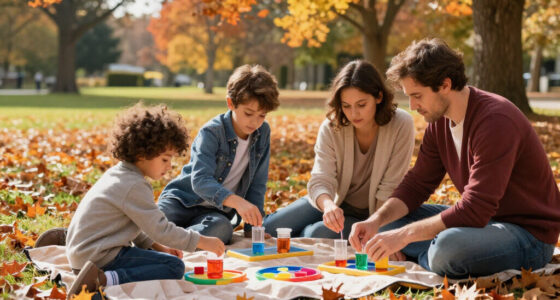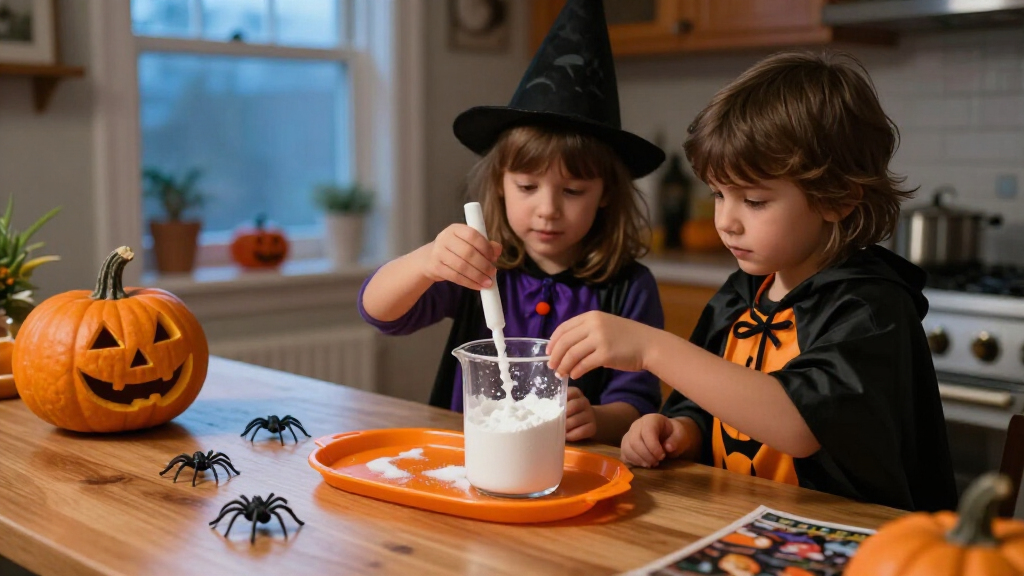
Choosing the right Halloween science book depends entirely on what your child wants to do: read, experiment, or collect facts. I have evaluated four distinct options that serve different learning styles. If your child loves getting their hands dirty, The Halloween Science Lab stands out as the best interactive choice, offering twenty-five structured experiments. For those who prefer reading over doing, 10,000 Halloween Whys for Curious Kids provides a broad, encyclopedia-style overview of the season’s history and science. Meanwhile, The Big Halloween Book of Why strikes a balance for children who enjoy trivia and quick answers. This guide breaks down the tradeoffs between active participation and passive reading to help you select the ideal match for your young scientist.

Prime made for students and young adults
- Fast, free delivery for dorm and study essentials
- Prime Video and Amazon Music included
- Member-only deals
Key Takeaways
- The Halloween Science Lab is the only option in this lineup that includes hands-on experiments, making it ideal for kinesthetic learners.
- 10,000 Halloween Whys for Curious Kids offers the deepest breadth of content, covering history, folklore, and science in a single volume.
- Weird But True! Halloween is the best choice for short attention spans, providing 300 bite-sized facts without narrative complexity.
- Age range matters significantly; The Big Halloween Book of Why spans ages 6-12, while The Halloween Science Lab is strictly targeted at ages 6-10.
- Parents should budget for extra supplies for the lab book, as materials are not included, unlike the purely informational books.
| The Halloween Science Lab: 25 Spooky Experiments, STEM Challenges & Activities for Curious Kids Ages 6–10 |  | Best Overall for Hands-On Learners | Target Age: 6–10 years | Format: Paperback Book | Number of Experiments: 25 | VIEW LATEST PRICE | See Our Full Breakdown |
| 10,000 Halloween Whys for Curious Kids: Clear, Fun Answers About the History, Monsters, Science, and Traditions of the Spooky Season |  | Best Comprehensive Encyclopedia | Target Age: 6-12 years | Content Type: Encyclopedia/Q&A | Topics Covered: History, Science, Folklore | VIEW LATEST PRICE | See Our Full Breakdown |
| The Big Halloween Book of Why: 400 Spooky Questions and Amazing Answers for Curious Kids Ages 6–12 | 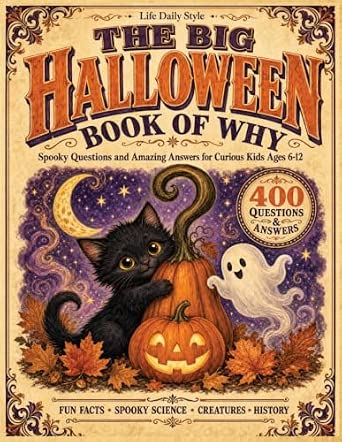 | Best for Trivia Lovers | Target Age: 6–12 years | Question Count: 400 | Format: Paperback | VIEW LATEST PRICE | See Our Full Breakdown |
| Weird But True! Halloween: 300 Spooky Facts to Scare You Silly |  | Best for Short Attention Spans | Target Age: 6-10 years | Fact Count: 300 | Format: Paperback | VIEW LATEST PRICE | See Our Full Breakdown |
| halloween science books for kid | Target Age | Format | Illustrations |
|---|---|---|---|
| The Halloween Science Lab: 25 | 6–10 years | Paperback Book | — |
| 10,000 Halloween Whys for Curi | 6-12 years | Hardcover | Yes |
| The Big Halloween Book of Why: | 6–12 years | Paperback | Yes |
| Weird But True! Halloween: 300 | 6-10 years | Paperback | — |
More Details on Our Top Picks
The Halloween Science Lab: 25 Spooky Experiments, STEM Challenges & Activities for Curious Kids Ages 6–10
This book distinguishes itself from the other three titles by moving beyond passive reading. While 10,000 Halloween Whys explains the science behind monsters, The Halloween Science Lab has your child recreate those effects. It contains twenty-five experiments that range from simple chemical reactions to basic physics challenges, all themed around spooky aesthetics. The step-by-step instructions are clear enough for independent exploration by older children in the target age range, though younger readers will need parental guidance. What makes this option stand out is its focus on the scientific method; it doesn’t just show a trick, it explains the principle behind it. However, this interactivity comes with a logistical cost. Unlike the trivia books, this requires a trip to the store. You will need to supply common household items like baking soda, vinegar, or food coloring. For families who dislike clutter or have limited kitchen space, this might be a hurdle. But for those who value active learning, the tradeoff is worth it.
Pros:- Includes 25 distinct experiments that promote active engagement
- Clear, step-by-step instructions support independent learning for ages 8-10
- Strong STEM focus that teaches scientific principles through play
- Highly suitable for classroom group activities or family bonding
Cons:- Does not include materials; requires purchasing additional supplies
- Some experiments require adult supervision due to mess or small parts
- Strictly seasonal appeal, with limited utility outside of October
Best for: Children who learn best by doing and parents willing to facilitate messy experiments.
Not ideal for: Parents looking for a screen-free, zero-prep activity or those without access to basic science supplies.
- Target Age:6–10 years
- Format:Paperback Book
- Number of Experiments:25
- Subject Focus:STEM and Chemistry
- Material Included:No
- Instruction Style:Step-by-Step
- Seasonal Use:Halloween/Fall
- Skill Level:Beginner to Intermediate
Our verdict“This is the superior choice for active learners, provided you are prepared to supply the materials.”
10,000 Halloween Whys for Curious Kids: Clear, Fun Answers About the History, Monsters, Science, and Traditions of the Spooky Season
If your child is the type who asks ‘why’ until you run out of answers, this book is the definitive resource. It differs significantly from The Big Halloween Book of Why by offering a more narrative-driven, encyclopedia-style approach. It covers a vast spectrum of topics, blending historical context with biological facts about animals associated with Halloween. The language is accessible, making complex ideas digestible for younger readers without talking down to them. Compared to Weird But True!, which offers disjointed facts, this book provides context and continuity. However, the sheer volume of content means it lacks the depth for specialized topics. If your child is specifically interested in physics or chemistry, they might find the science sections here too broad. It is a generalist book for a generalist curiosity. It works best as a reference guide to dip into rather than a cover-to-cover read.
Pros:- Extensive coverage of history, science, and culture
- Clear, age-appropriate language for complex topics
- Engaging format that keeps young readers interested
- Serves as a solid reference for school projects
Cons:- Lacks detailed depth for older children seeking advanced science
- May feel too broad for kids with niche interests
- Text-heavy compared to image-driven alternatives
Best for: Curious readers who want a broad overview of Halloween history, folklore, and science.
Not ideal for: Children who prefer short, punchy facts or those seeking deep-dive scientific explanations.
- Target Age:6-12 years
- Content Type:Encyclopedia/Q&A
- Topics Covered:History, Science, Folklore
- Reading Level:Early Chapter Book
- Illustrations:Yes
- Format:Hardcover
- Interactivity:Low (Reading only)
- Depth:Broad Overview
Our verdict“The best all-around reference book for children who want to understand the ‘big picture’ of Halloween.”
The Big Halloween Book of Why: 400 Spooky Questions and Amazing Answers for Curious Kids Ages 6–12
This title occupies a middle ground between the dense encyclopedia and the fact-list format. It features 400 questions and answers, making it more structured than Weird But True! but less narrative than 10,000 Whys. The strength of this book is its pacing. Each entry is short enough to hold the attention of a child who might struggle with longer paragraphs, yet it provides enough detail to satisfy a basic curiosity. It also includes fall activities, which adds a slight interactive element, though nothing compared to the experiments in The Halloween Science Lab. The age range of 6-12 is ambitious; the content leans toward the lower end of that spectrum. A twelve-year-old might find the questions too simple. However, for a seven or eight-year-old, it is an excellent confidence builder. It validates their questions and gives them answers they can share with friends.
Pros:- 400 questions keep content fresh and varied
- Combines trivia with simple fall activities
- Wide age range (6-12) offers flexibility for siblings
- Easy to navigate for quick answers
Cons:- Seasonal theme limits year-round usage
- Content may be too simple for the upper age range
- Lacks the hands-on component of lab books
Best for: Children aged 6-9 who enjoy trivia and quick, digestible facts.
Not ideal for: Older children (10+) who may find the questions too elementary.
- Target Age:6–12 years
- Question Count:400
- Format:Paperback
- Content Style:Q&A Trivia
- Activities Included:Yes (Fall-themed)
- Reading Effort:Low
- Illustrations:Yes
- Topic Breadth:Medium
Our verdict“A solid, accessible trivia book that bridges the gap between simple facts and complex reading.”
Weird But True! Halloween: 300 Spooky Facts to Scare You Silly
As part of the well-known Weird But True! series, this book relies on a proven formula: high-impact facts with minimal text. It is the most visually driven option in this lineup. Compared to The Big Halloween Book of Why, which asks questions, this book simply asserts facts. This approach is ideal for children who are reluctant readers or who get bored easily. The facts are often bizarre and humorous, which helps retention. However, the lack of narrative or scientific explanation is a drawback. You get the ‘what’ but rarely the ‘how’ or ‘why.’ If your child asks a follow-up question, this book will not help them. It is a collection of conversation starters rather than a learning tool. It works best as a supplement to other materials or as a quick browse during car rides. It lacks the educational depth of 10,000 Whys or the interactivity of The Halloween Science Lab, but it excels at pure entertainment value.
Pros:- 300 bite-sized facts are easy to consume
- High visual appeal with bold graphics
- Humorous tone keeps engagement high
- No reading pressure; great for skimming
Cons:- Lacks scientific context or explanations
- Minimal educational depth
- Limited utility for academic research
Best for: Reluctant readers and children with short attention spans who enjoy bizarre trivia.
Not ideal for: Students needing detailed scientific explanations or context for school projects.
- Target Age:6-10 years
- Fact Count:300
- Format:Paperback
- Series:Weird But True!
- Text Density:Very Low
- Educational Depth:Low
- Humor Level:High
- Visual Style:Graphic/Photo-heavy
Our verdict“The best choice for pure entertainment and quick trivia, but not for serious learning.”

How We Picked
I selected these four titles based on their ability to merge seasonal entertainment with genuine educational value. My primary filter was the balance between ‘spooky appeal’ and ‘scientific rigor.’ Many Halloween books lean heavily into fiction or folklore, offering little in the way of actual STEM learning. I prioritized books that explain the ‘why’ behind phenomena, whether that is the chemistry of dry ice fog or the biology of bats. I also considered the format of engagement. Some children need to touch and build to learn, while others prefer reading. I ensured this roundup includes options for both types of learners. Finally, I looked at age appropriateness. A book that bores a ten-year-old might captivate a six-year-old, so I evaluated the reading level and complexity of concepts to ensure each recommendation fits its stated age group without being too simple or too dense.
| halloween science books for kid | Format |
|---|---|
| The Halloween Science Lab: 25 | Paperback Book |
| 10,000 Halloween Whys for Curi | Hardcover |
| The Big Halloween Book of Why: | Paperback |
| Weird But True! Halloween: 300 | Paperback |
Factors to Consider When Choosing Halloween Science Books For Kids
Selecting a Halloween science book is not just about picking a theme; it is about matching the format to your child’s cognitive style. The market offers three main categories: active labs, comprehensive encyclopedias, and trivia collections. Understanding these categories will help you avoid buying a book that sits unread on the shelf.Active Learning vs. Passive Reading
The most significant divide in this category is between books that require action and books that require attention. The Halloween Science Lab represents the active end of the spectrum. These books are ideal for kinesthetic learners who need to manipulate objects to understand concepts. The tradeoff is preparation time and cleanup. If your household prefers low-maintenance activities, a passive reading book like 10,000 Halloween Whys is more practical. Passive books allow for flexible reading times—bedtime, car rides, or quiet time—without the need for setup. Consider your child’s energy level. A high-energy child may find a text-heavy book frustrating, while a calm child might find an experiment book too chaotic.
Depth of Scientific Content
Not all ‘science’ books are created equal. Some are strictly factual lists, while others explain mechanisms. Weird But True! Halloween is primarily a collection of oddities. It tells you that a bat can eat half its weight in insects, but it may not explain the metabolic process that allows this. For genuine STEM education, look for books that answer ‘how’ and ‘why.’ 10,000 Halloween Whys and The Big Halloween Book of Why are better suited for this because they frame information as answers to questions. This structure encourages critical thinking. If you are using these books to supplement school science curricula, prioritize the Q&A formats over the fact-list formats to ensure your child is learning cause-and-effect relationships.
Age Appropriateness and Reading Level
Age ranges on the cover are often marketing tools rather than strict guidelines. The Big Halloween Book of Why lists ages 6-12, but the content complexity skews toward the younger end. A twelve-year-old will likely find the questions too simple. Conversely, 10,000 Halloween Whys uses more sophisticated vocabulary that might challenge a six-year-old. When choosing, look at the sample pages. If your child is a strong reader, they can stretch the upper limit of a book’s age range. If they are a hesitant reader, stick to books with high visual support and short text blocks, like Weird But True!. Matching the reading difficulty to the child’s current ability ensures the book remains a source of joy rather than frustration.
Frequently Asked Questions
Do these Halloween science books require special equipment?
Most of the books in this roundup are designed for standard household accessibility. The Halloween Science Lab is the exception, as it requires common kitchen and craft supplies like vinegar, baking soda, and food coloring, but these items are inexpensive and widely available. The other three titles—10,000 Halloween Whys, The Big Halloween Book of Why, and Weird But True!—are purely informational and require no additional equipment or preparation. This makes them ideal for travel or last-minute gift-giving where you want to avoid the hassle of shopping for materials.Are these books suitable for classroom use?
Yes, all four titles have applications in an educational setting, though in different ways. The Halloween Science Lab is particularly strong for group activities or science stations, as the experiments can be scaled for multiple students. The trivia and Q&A books, such as The Big Halloween Book of Why, work well for reading centers or as reference material for Halloween-themed writing prompts. Teachers often use Weird But True! for quick ‘brain breaks’ or to engage reluctant readers during free time. However, for formal science lessons, the lab book provides the most direct alignment with STEM standards.How do I choose between a trivia book and a science experiment book?
The decision hinges on your child’s preferred mode of engagement. If your child enjoys building, mixing, and observing physical changes, The Halloween Science Lab is the correct choice. It offers tactile feedback and immediate results. If your child prefers to sit, read, and discuss ideas, or if they are interested in history and folklore alongside science, a book like 10,000 Halloween Whys is more appropriate. Trivia books like Weird But True! are best for children who have short attention spans or who enjoy collecting ‘fun facts’ to share with peers. Observe what your child gravitates toward in daily life to make the best selection.Is the science content accurate and up-to-date?
The scientific principles covered in these books are foundational and do not change frequently. Concepts like chemical reactions, animal biology, and physics principles are stable. However, the historical and cultural context of Halloween can evolve. 10,000 Halloween Whys tends to offer a more nuanced view of history and tradition, which is beneficial for avoiding outdated stereotypes. The trivia books focus on biological and physical facts that are generally timeless. While the core science is accurate, always encourage your child to cross-reference facts if they are using the books for serious school projects, as pop-science books sometimes simplify complex topics for readability.Can these books be used year-round, or are they strictly for October?
While the themes are heavily Halloween-centric, the underlying science is universal. The Halloween Science Lab contains experiments that teach basic chemistry and physics, which can be replicated in a non-spooky context throughout the year. Similarly, the biological facts about bats, spiders, and pumpkins in the Q&A books are relevant to general nature studies. However, the marketing and visual design are undeniably seasonal. You will find that engagement drops significantly after Halloween. To maximize value, parents can use the books as seasonal hooks to introduce broader scientific concepts that can be explored further with other, non-seasonal resources.Conclusion
My recommendation depends on your specific goal for the book. For the highest educational impact and active engagement, The Halloween Science Lab is the winner, provided you are ready to supply the materials. It transforms reading into doing. If you want a comprehensive reference that covers history, science, and culture in one volume, 10,000 Halloween Whys for Curious Kids is the best all-around choice. For younger children or those who need low-effort entertainment, The Big Halloween Book of Why offers a balanced mix of trivia and simple activities. Finally, for reluctant readers who need high visual stimulation and short bursts of information, Weird But True! Halloween is the most effective. Match the format to your child’s energy and interest level, and you will find the perfect spooky STEM gift.
Halloween Picks
halloween
As an affiliate, we earn on qualifying purchases.