Choosing a haptic vest for fear immersion comes down to how much tactile detail you want and how much setup you are willing to manage. I put the bHaptics TactSuit Pro 2026 first for its 32 feedback motors, which give developers more points to map to footsteps, impacts, or nearby threats. The TactSuit Air Onyx is my lighter, more flexible pick: its 16 motors trade some spatial detail for a vest designed to be less burdensome across longer sessions.

Prime made for students and young adults
- Fast, free delivery for dorm and study essentials
- Prime Video and Amazon Music included
- Member-only deals
For horror VR, those differences matter more than a feature-count contest. A vest can make a cue feel closer to the body, but it cannot create fear on its own; game support, well-timed effects, fit, and comfort all shape the result. The Pro’s added motors come with more setup and calibration work, while the Air’s Bluetooth connection may not suit buyers who are especially sensitive to timing delays. I rank them by their potential for immersive, localized feedback, then by ease of wearing and platform fit.
Key Takeaways
- TactSuit Pro 2026 ranks first for buyers who want 32 feedback motors and are prepared to handle setup and calibration.
- TactSuit Air Onyx is the better fit for extended sessions where a lightweight, flexible vest matters more than maximum motor count.
- A higher motor count can allow more granular tactile cues, but only when a supported game or compatible audio setup makes use of them.
- The Air lists broad VR and PC compatibility, including SteamVR, PICO OS, and PlayStation VR; buyers should check their exact headset and game.
- The Pro’s wireless design offers freedom of movement, but the supplied details do not specify its connection method or a complete compatibility list.
| bHaptics TactSuit Pro 2026 – Flagship Haptic Vest for Gaming & VR with 32 Feedback Motors |  | Best Overall for Maximum Tactile Detail | Brand: bHaptics | Model: TactSuit Pro 2026 | Feedback motors: 32 | VIEW ON AMAZON | See Our Full Breakdown |
| bHaptics TactSuit Air Onyx Lightweight Haptic Vest | 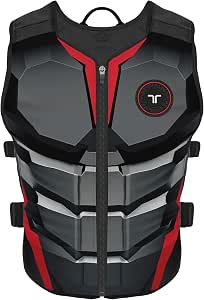 | Best for Longer Sessions and Broad Listed Compatibility | Brand: bHaptics | Model: TactSuit Air Onyx | Model number: 2TSX2040 | VIEW ON AMAZON | See Our Full Breakdown |
| hapticfeedback vests for fear immersion | Brand | Model | Feedback motors | Connectivity |
|---|---|---|---|---|
| bHaptics TactSuit Pro 2026 | bHaptics | TactSuit Pro 2026 | 32 | Wireless; the specific connection method is not stated in the supplied details |
| bHaptics TactSuit Air Onyx Lig | bHaptics | TactSuit Air Onyx | 16 individually controlled points | Bluetooth |
More Details on Our Top Picks
bHaptics TactSuit Pro 2026 – Flagship Haptic Vest for Gaming & VR with 32 Feedback Motors
The TactSuit Pro 2026 takes my top spot because 32 feedback motors give it the strongest stated potential for finely placed sensations in this pair. In a supported horror game, that larger array may make it easier for a developer to distinguish a cue on one part of the torso from another. A series of close footsteps or an attack from behind can feel more specific than a single broad vibration, provided the title and software actually send appropriately mapped signals. The motor count is a capability, not a promise that every game will use all 32 points.
Compared with the TactSuit Air Onyx, the Pro is the choice for buyers who place tactile detail ahead of a lighter, simpler-feeling setup. The Air’s 16 motors still offer individually controlled feedback and its listed 2.5-pound weight gives buyers a concrete comfort reference. The Pro’s description does not state its weight, so I would not assume that doubling the motor count comes without a comfort tradeoff. Its wireless design is useful when a horror scene asks you to turn, crouch, or move freely, though the listing does not specify the wireless protocol.
The clearest drawback is setup and calibration. For a buyer who wants to put on a vest and start a short horror session, that extra work may make the Air the more straightforward pick. I would also check the exact game, headset, and connection path before ordering: the Pro lists PC, Oculus Quest and Quest 2, and PlayStation 5, but the available details do not give the broad platform list supplied for the Air. My ranking favors the Pro’s higher potential for localized cues, while its less complete fit and compatibility information keeps it from being an automatic choice for every VR setup.
Fear immersion benefits most when effects arrive at the right time and place. If the content you play supports the vest well, the Pro’s 32-motor array has the more ambitious ceiling here. If support is uncertain, a larger array alone will not make a title more immersive; confirm game compatibility and plan for calibration before treating this as the stronger practical match.
Pros:- 32 feedback motors offer the highest stated potential for detailed, localized tactile cues in this comparison.
- Wireless design supports movement without a vest cable restricting turns or crouches.
- Listed for PC, Oculus Quest, Oculus Quest 2, and PlayStation 5.
- Audio-to-vibration conversion can add tactile effects in experiences that do not send dedicated game cues.
Cons:- Setup and calibration may take extra time before effects feel properly matched to a game.
- The supplied details do not list weight, strap adjustment, or a complete headset and game compatibility matrix.
- A 32-motor count does not guarantee more effective fear cues when a title has limited vest support.
Best for: VR horror and gaming buyers who want the most feedback points in this comparison, value wireless movement, and are comfortable checking compatibility and calibrating the vest.
Not ideal for: Casual players seeking a simple, clearly documented fit, anyone who does not want setup work, or buyers who need published weight and detailed platform support before choosing.
- Brand:bHaptics
- Model:TactSuit Pro 2026
- Feedback motors:32
- Connectivity:Wireless; the specific connection method is not stated in the supplied details
- Compatible devices:PC, Oculus Quest, Oculus Quest 2, PlayStation 5
- Additional feature:Audio-to-vibration conversion
- Color:Black
- Setup note:Setup and calibration may be needed for best results
Our verdict“I recommend the TactSuit Pro 2026 for buyers seeking the greatest stated tactile detail and willing to verify support and complete calibration.”
bHaptics TactSuit Air Onyx Lightweight Haptic Vest
The TactSuit Air Onyx is my comfort-led alternative to the Pro. Its listed weight of 2.5 pounds, flexible fabric, and adjustable strap system make its role clear: it is aimed at people who want body feedback without committing to the more elaborate 32-motor setup. For a longer horror session, reduced bulk can matter as much as maximum tactile detail. A vest that stays comfortable is less likely to become a distraction while the player waits for the next sound or movement cue.
It has 16 individually controlled feedback points, half the Pro’s stated motor count. That means the Air has less potential for fine-grained placement if a game is built to take advantage of a dense array. It can still provide impacts, engine-like vibration, and other tactile signals, and the listed platform support is notably specific: PC, Meta Horizon OS, PICO OS, PlayStation VR, SteamVR, and VIVEPORT. Compared with the Pro’s shorter stated device list, that makes the Air easier to shortlist for buyers whose setup spans different VR ecosystems, though I would still confirm support for the exact title and hardware configuration.
The Air’s main caution is its Bluetooth connection, which may introduce latency for some users. In horror, an effect that lands noticeably after a visual impact can break the illusion rather than strengthen it. Its 16 motors also make it the less ambitious choice for buyers seeking maximum positional feedback. I would choose the Pro instead when localized tactile detail is the priority and calibration is acceptable; I would choose the Air when weight, flexibility, and the published compatibility list carry more practical value.
One-size-fits-all adjustable straps help the Air accommodate different body shapes, but a universal fit is not the same as a tailored fit. Buyers should check how the vest sits over their clothing and whether its strap range suits them. The included Bluetooth dongle, cable, audio accessories, and manual give a useful starting set of accessories, while the one-year warranty is a concrete ownership detail absent from the supplied Pro specifications. The Air is the more grounded choice for a buyer who wants a lighter vest and broad named platform support, not the one I would pick for the highest possible motor density.
Pros:- Listed weight of 2.5 pounds and flexible fabric suit buyers who value comfort during longer sessions.
- 16 individually controlled feedback points can deliver more specific cues than a single whole-vest vibration.
- Published compatibility spans PC, Meta Horizon OS, PICO OS, PlayStation VR, SteamVR, and VIVEPORT.
- Adjustable strap system, included Bluetooth dongle and cable, and a stated one-year warranty.
Cons:- Bluetooth may introduce latency that can disrupt the timing of sudden horror effects.
- Its 16 feedback points provide less potential spatial detail than the Pro’s 32 motors.
- One-size adjustable straps may not offer the tailored fit every wearer wants.
Best for: Players who expect longer VR or PC sessions, prefer a lightweight and flexible vest, and want a product with a broad, clearly stated list of supported platforms.
Not ideal for: Buyers who prioritize the greatest number of feedback points, are especially sensitive to possible Bluetooth delay, or need a fitted rather than adjustable one-size design.
- Brand:bHaptics
- Model:TactSuit Air Onyx
- Model number:2TSX2040
- Feedback motors:16 individually controlled points
- Connectivity:Bluetooth
- Weight:2.5 pounds
- Compatibility:PC, Meta Horizon OS, PICO OS, PlayStation VR, SteamVR, VIVEPORT
- Fit and color:Adjustable one-size strap system; black or white
- Included items and warranty:Bluetooth dongle, cable, TactSuit Audio Accessories, user manual; one-year warranty
Our verdict“I recommend the TactSuit Air Onyx for buyers who value lower listed weight, flexible wear, and broad named compatibility over maximum motor count.”

How We Picked
I ranked these two vests for fear immersion, not as general gaming accessories. My main question was how each could help a buyer feel directional or impact-based cues during a horror session: approaching footsteps, a sudden strike, a door slam, or other effects a game can send to the vest. Motor count matters because more feedback points can give supported content finer placement options, but count alone does not prove that a game will deliver better effects.
I also weighed wearing comfort and fit. A fear experience often depends on sustained tension, and a vest that feels heavy or restrictive can distract from the scene. The Air is listed at 2.5 pounds and uses flexible fabric with adjustable straps. The Pro description emphasizes wireless movement and 32 motors, but does not provide a weight or fit details. That leaves a meaningful information gap for buyers comparing all-night comfort.
My third ranking factor was compatibility and setup clarity. The Air lists specific platforms, including PC, Meta Horizon OS, PICO OS, PlayStation VR, SteamVR, and VIVEPORT, and includes a Bluetooth dongle. The Pro lists PC, Oculus Quest devices, and PlayStation 5, plus setup and calibration as a tradeoff. Neither product description guarantees support for every title or headset configuration, so I treat compatibility as something to confirm at the game and connection level rather than assume from a platform name.
Finally, I considered how much the listed drawbacks could interrupt immersion. Bluetooth latency is a stated concern for the Air; calibration demands are a stated concern for the Pro. Because fear games rely on timing, I reward clear compatibility and manageable wear, but I give the Pro the lead for its higher tactile resolution. I have not treated either vest as independently proven to produce stronger fear, and I do not assume that every game uses every motor.
| hapticfeedback vests for fear immersion | Model | Connectivity |
|---|---|---|
| bHaptics TactSuit Pro 2026 | TactSuit Pro 2026 | Wireless; the specific connection method is not stated in the supplied details |
| bHaptics TactSuit Air Onyx Lig | TactSuit Air Onyx | Bluetooth |
Factors to Consider When Choosing Hapticfeedback Vests For Fear Immersion
I would choose a vest for fear immersion by starting with the horror games and hardware I already use, then weighing tactile detail against comfort and setup. A feature list matters only when it fits that chain: game support, device connection, fit, and timely feedback. These are the points I would check before deciding between the 32-motor Pro and the lighter 16-point Air.
Start With the Horror Game, Not the Motor Count
Haptic vests do not independently know when a monster is nearby or a door slams. A game or compatible software must provide cues, or the vest must use a conversion feature that turns audio into vibration. That distinction shapes what fear immersion you can expect. Dedicated game effects may be designed to line up with a character’s movement or an incoming impact; audio conversion can broaden the range of sounds that create vibration, but it may not place each cue as precisely as an authored effect.
Before choosing either model, check whether the horror titles you play support the vest and which connection method they require. The Pro’s 32 motors can only add useful detail when the content or software maps effects to them. The Air’s 16 motors can still add a physical layer, but it is not a substitute for title support. I would treat compatibility as a title-by-title question rather than assume every game on a listed platform sends vest data.
Decide How Much Tactile Detail You Need
The Pro offers 32 feedback motors, while the Air lists 16 individually controlled points. More points can provide developers with additional locations for effects across the torso, which may help separate a cue’s position or shape. That is most appealing to buyers who want a layered physical response and are willing to set up the software carefully.
For many players, a well-timed broad pulse may matter more than having twice as many motors. A poorly timed cue or a game with limited support will not become more convincing just because the vest has a denser array. I would pick the Pro when supported content and tactile precision are the priority. I would lean toward the Air if a lighter build and a clear platform list are more useful than the highest stated motor count.
Check Fit and Session Length
Comfort is part of immersion: pressure, excess heat, or restricted movement can pull attention away from a horror scene. The Air gives buyers a useful reference point with its 2.5-pound weight, flexible fabric, and adjustable one-size straps. Those details favor extended sessions, although adjustable sizing may not feel tailored to every body. The Pro is described as wireless but its supplied information does not give a weight or detailed fit system, so I would look for those details before assuming it will feel as light or comfortable.
Think about what you wear under the vest, how easily you can tighten or loosen it, and whether you need to remove it quickly between sessions. If you mainly play short, intense sessions and put tactile detail first, the Pro’s unknown weight may be a manageable uncertainty. If you plan to wear the vest for longer stretches, the Air has the more concrete comfort case in this comparison.
Confirm the Connection and Platform Match
The Air lists Bluetooth connectivity and includes a Bluetooth dongle, while the Pro is described as wireless without a specific connection method in the supplied information. The Air also names PC, Meta Horizon OS, PICO OS, PlayStation VR, SteamVR, and VIVEPORT. The Pro names PC, Oculus Quest, Oculus Quest 2, and PlayStation 5. These lists are useful starting points, but they do not confirm every headset generation, game, or software setup.
For horror, timing can matter as much as breadth. The Air description flags possible Bluetooth latency, so buyers who notice even small delays should check connection behavior and return policies before relying on it. With the Pro, confirm how the vest pairs to the exact platform you use, since the wireless protocol is not stated here. Neither platform list should be read as a guarantee that every game on that device supports vest effects.
Account for Setup and Audio Conversion
The Pro’s stated tradeoff is setup and calibration. Calibration can be worthwhile when it helps the vest’s feedback match your body and content, but it adds steps for someone who wants a quick, casual session. The Air also requires a working Bluetooth connection, though its product details do not call out calibration as a particular burden. I would compare the time you are willing to spend configuring a vest against how often you expect to use it.
The Pro description mentions audio-to-vibration conversion, which may help add tactile movement to experiences that do not send dedicated vest cues. Conversion should not be mistaken for game-authored effects: a sound-driven pulse may not communicate direction or threat location as clearly as a cue deliberately programmed for the vest. If you want a more dependable fear effect, first look for title support; treat audio conversion as a possible supplement rather than the central reason to buy.
Use a Practical Decision Rule
I would choose the TactSuit Pro 2026 when I wanted the greatest stated feedback-point density, could verify support for my games and hardware, and did not mind calibration. I would choose the TactSuit Air Onyx when lower listed weight, flexible fabric, adjustable straps, and a wider named platform list mattered more than maximum tactile resolution. Both can add body sensations, but neither removes the need to check game support and connection timing.
If your setup or games are uncertain, write down the headset, PC or console, and the exact horror titles you intend to play before comparing product claims. Then confirm the complete pairing path and supported effects. That simple check can matter more than a headline motor count, since a compatible, comfortable vest is more useful than a theoretically detailed one that your preferred games cannot drive.
Frequently Asked Questions
Which vest is the better choice for fear immersion?
I rank the TactSuit Pro 2026 first for buyers focused on tactile detail because its 32 motors give it the higher stated potential for localized effects. The Air is a stronger practical fit for players who value a lighter listed weight, flexible construction, and broader named platform compatibility. Game support, connection quality, and comfort can outweigh motor count, so I would match the choice to the titles and hardware you actually use.
Will either vest work with every horror VR game?
No. A platform being listed does not mean every game on it sends dedicated haptic signals to the vest. Support can depend on the title, headset, software, and connection setup. I would check the game’s current compatibility information before buying, especially if your goal is to feel specific events such as footsteps or impacts rather than general vibration.
Does the Pro’s 32-motor design guarantee stronger immersion than the Air?
No. The Pro has twice the stated number of feedback motors, which can allow more tactile positions, but the result depends on how supported content uses them and whether the vest is calibrated well. A timely, well-matched effect may feel more convincing than a larger array used by a title with limited support. The Air can still provide individually controlled feedback with 16 points and has the clearer comfort details.
Could Bluetooth latency affect the Air in a horror game?
It could. The Air’s product details identify Bluetooth latency as a possible issue, and a delayed pulse can weaken the link between an on-screen event and the sensation. The degree of delay may depend on the hardware and setup, so I would verify the connection with your system if precise timing is a high priority. The Pro is described as wireless, but the supplied details do not name its connection method.
Should I choose a vest that converts audio into vibration?
Audio conversion can add vibration to experiences that do not send dedicated vest cues, which may broaden the situations where the vest responds. It may not deliver the same directional or event-specific meaning as haptics authored for a particular game. I would treat the Pro’s audio-to-vibration feature as a supplement and prioritize confirmed support for your horror titles when precise fear cues matter most.
What are the best haptic vest?
The picks above are the best haptic vest options highlighted in this roundup for immersive fear experiences in 2027. The right choice depends on how you plan to use it, which games or experiences you want to pair it with, and whether its fit and setup suit your space. Check the article’s recommendations for details on compatibility, comfort, and the type of feedback each pick provides. Comparing those practical factors can help you find a vest that supports the experiences you enjoy without adding unnecessary setup complexity.
Conclusion
For buyers who want the highest stated tactile detail and are willing to verify game support and handle calibration, I recommend the bHaptics TactSuit Pro 2026. Its 32 motors give it the more ambitious potential for localized horror cues, although buyers should confirm fit and connection details before deciding. For longer sessions, players who prefer a lighter flexible vest, or anyone who values a broader published list of platforms, I recommend the TactSuit Air Onyx. Its 16 feedback points are fewer, and Bluetooth timing remains a possible concern, but its comfort and compatibility information is clearer. My final rule is simple: choose the Pro for maximum stated tactile resolution, and the Air for a comfort-led, broadly listed option—after checking that your games and hardware support the vest effects you want.
Fall Picks
fall essentials
As an affiliate, we earn on qualifying purchases.