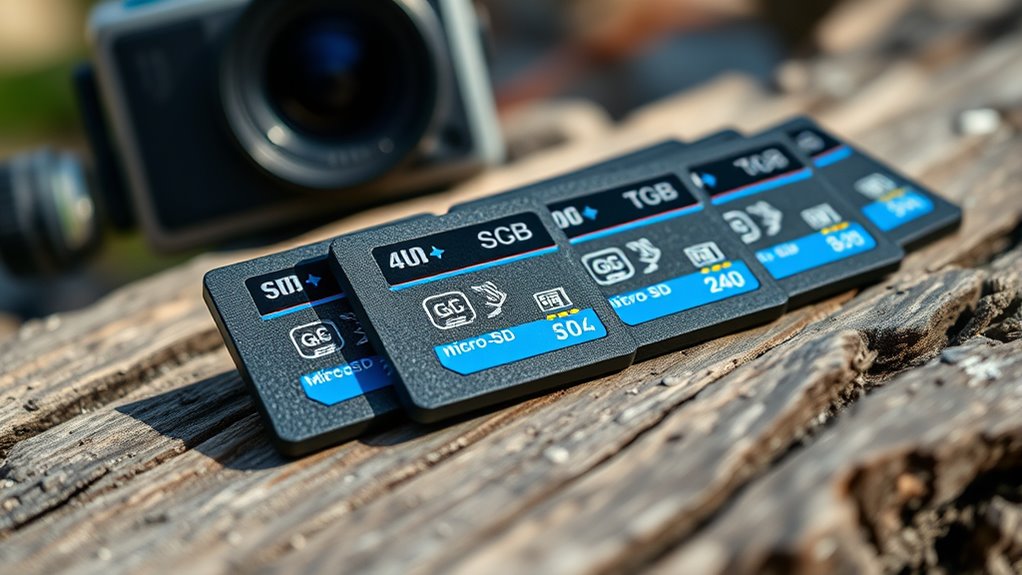

For most trail-camera owners, I’d start with the Samsung PRO Endurance 128GB: its endurance-focused design is a strong match for cameras that repeatedly write footage. The SanDisk High Endurance 128GB is another sensible choice for frequent recording, while the Spypoint 32GB offers a straightforward option for compatible Spypoint cameras. The main tradeoffs are recording endurance, capacity, camera compatibility, and whether a multipack’s spare cards are more useful than a single higher-capacity card. Read on for my full comparison of all 14 picks and guidance on matching a card to your camera and recording habits.

Get school and study supplies delivered free — and shop member deals
- Fast, free delivery on millions of items
- Access to Prime Big Deal Days deals on October 6–7
- Prime Video, Amazon Music and more included
Key Takeaways
- Endurance-focused cards lead for frequent recording: Samsung PRO Endurance and SanDisk High Endurance are more purpose-matched to repeated camera writes than general-purpose Ultra cards.
- Capacity is not automatically an advantage: a 128GB card can mean fewer card changes, but only if the trail cam supports that capacity and your workflow benefits from storing more footage at once.
- Small cards and multipacks suit rotation: the Spypoint 32GB, KEXIN three-pack, GIGASTONE five-pack, TOPESEL two-pack, and Lexar three-pack offer options for spare-card systems, with tradeoffs in per-card capacity and brand-specific details.
- U3 or V30 labels do not make a card a better trail-cam pick by themselves: faster video ratings can be unnecessary for cameras that capture stills or modest-resolution clips.
- Camera compatibility should outrank headline speed: card format, supported capacity, and the camera maker’s recommendations can matter more than advertised read speeds or a high-speed class.


| microsd cards for trail cam | Capacity | Speed class | Read speed | Warranty |
|---|---|---|---|---|
| Samsung PRO Endurance 128GB mi | 128GB | — | Up to 100MB/s | 5-year limited warranty for card; 1-year for adapter |
| SanDisk 128GB Ultra microSDXC | 128GB | Class 10, UHS-I, U1, A1 | Up to 140MB/s | — |
| Spypoint 32GB Micro SD Card fo | 32GB | Class 10 | — | — |
| SanDisk 64GB Ultra microSDXC-I | 64GB | Class 10, U1, A1 | Up to 120MB/s | 10-year term-based warranty listed |
| SanDisk 128GB High Endurance V | 128GB | — | — | — |
| Silicon Power 128GB Micro SD C | 128GB | U3 | — | 5 years |
| SanDisk 128GB Ultra microSDXC | 128GB | U1, Class 10, V10 | Up to 195MB/s | 10-year limited |
| KEXIN 3 Pack 32GB Micro SD Car | — | Class 10, U1 | Up to 80MB/s | 2 years |
| SanDisk 128GB Ultra microSDXC | 128GB | Class 10, V10 | Up to 100MB/s | 5 years |
| GIGASTONE 32GB Micro SD Card 5 | — | Class 10, U1, V10 | Up to 90MB/s | 5 years |
| TOPESEL 32GB(The Actual Usable | 32GB per card; approximately 28.8GB usable | Class 10, U1 | Up to 80MB/s | — |
| 128GB Micro SDXC Memory Card | 128GB | Class 10, U1 | Up to 90MB/s | Limited |
| Lexar E-Series 32GB Micro SD C | 32GB per card | — | — | — |
| GIGASTONE 128GB Micro SD Card | 128GB per card | A1, V30 | Up to 95MB/s | 5-year limited |
More Details on Our Top Picks
Samsung PRO Endurance 128GB microSDXC Memory Card with Adapter
The Samsung PRO Endurance is the strongest fit here for a trail cam left running through long stretches between visits. Its stated endurance of up to 70,080 hours of Full HD recording directly addresses repeated recording cycles better than a general-purpose card such as the SanDisk Ultra 128GB. Water, drop, temperature, magnet, and X-ray resistance also suit exposed camera locations, though the camera enclosure still matters. The 128GB capacity gives more room for extended capture than Spypoint’s 32GB card, but actual usable space will be lower than the label. Its 40MB/s write speed is adequate for the listed FHD and 4K support, yet it is not the fastest writing option by specification. I’d choose it for endurance and ruggedness, not for maximizing transfer speed.
Pros:- Endurance specification is aimed at continuous recording
- 128GB capacity offers more room than the Spypoint 32GB card
- Resists water, drops, magnets, X-rays, and temperature extremes
- Includes an SD adapter and a five-year limited card warranty
Cons:- 40MB/s write speed is modest compared with cards aimed at faster capture workflows
- Actual usable capacity is below the labeled capacity
- The endurance figure is specified for Full HD recording and may vary by camera and settings
Best for: Trail-cam owners who leave cameras in remote or harsh locations and want a card specified for long-running recording.
Not ideal for: Buyers prioritizing fast file transfers or a card focused on photography; the listed write speed is 40MB/s, and its endurance advantage may be unnecessary for occasional short deployments.
- Capacity:128GB
- Read speed:Up to 100MB/s
- Write speed:Up to 40MB/s
- Recording endurance:Up to 70,080 hours of Full HD recording (128GB model)
- Video support:FHD and 4K
- Operating temperature:-25°C to 85°C
- Water resistance:Up to 72 hours in 1m of seawater
- Included:SD adapter
- Warranty:5-year limited warranty for card; 1-year for adapter
Our verdict“Choose this Samsung when long recording life and environmental resistance matter more than fast transfers.”
SanDisk 128GB Ultra microSDXC UHS-I Memory Card with Adapter
The SanDisk Ultra 128GB is a practical general-purpose choice for trail cams that record Full HD clips rather than nonstop high-bitrate video. Its Class 10 and U1 ratings identify its recording class, while the listed 140MB/s figure is a read speed that mainly helps when moving files off the card; it does not establish a matching write speed. Compared with the Samsung PRO Endurance, this card lacks a stated long-recording endurance figure, so I’d favor Samsung for a camera that records frequently over a long deployment. The SanDisk is more versatile for owners who also use the card in phones, tablets, or other supported devices, and it includes an SD adapter. Its durability claims are useful for outdoor use, but camera compatibility and recording demands should guide the choice.
Pros:- 128GB capacity suits collections of routine trail-camera clips
- Class 10 and U1 speed classifications support Full HD use in compatible devices
- Water, shock, temperature, X-ray, and magnetic protection are listed
- Includes a full-size SD adapter
Cons:- No recording-endurance figure is provided
- 140MB/s is a maximum read speed, not a stated write speed
- Maximum read performance depends on compatible devices
Best for: Trail-cam owners recording routine Full HD clips who also want one card for supported phones, tablets, or cameras.
Not ideal for: People running a camera continuously for long deployments who want a specifically stated endurance rating; the Samsung PRO Endurance is the clearer fit.
- Capacity:128GB
- Read speed:Up to 140MB/s
- Speed class:Class 10, UHS-I, U1, A1
- Durability:Waterproof, shockproof, temperature-proof, X-ray-proof, magnetic-proof
- Supported video:Full HD recording and playback
- Compatible devices:Android smartphones, tablets, Nintendo Switch (not Switch 2), MIL cameras
- Weight:4.54g
- Model number:SDSQUAB-128G-GN6MA
- Included:SD adapter
Our verdict“Pick the SanDisk Ultra for ordinary Full HD trail-cam use and wider device flexibility, but choose Samsung PRO Endurance for frequent continuous recording.”
Spypoint 32GB Micro SD Card for Trail Cameras
The Spypoint 32GB Micro SD is the most directly trail-camera-focused option in this group: its supplied details identify it for trail and game cameras and specify Class 10 performance. That simplicity may appeal to someone who wants a card for a compatible camera without sorting through phone-oriented features such as the SanDisk Ultra’s A1 rating. Its main limitation is capacity. At 32GB, it offers substantially less room than the 128GB Samsung PRO Endurance and may mean more card changes when a camera captures many images or video clips. The listing describes outdoor reliability, but provides no specific temperature range, endurance-hour figure, or write-speed number. I’d treat this as a straightforward, camera-oriented option, while checking the camera maker’s supported card types and capacity limits before buying.
Pros:- Explicitly described for trail and game cameras
- Class 10 speed classification is provided
- 32GB capacity offers more room than very small-capacity cards
- Compact, dedicated choice for a compatible camera
Cons:- 32GB capacity is limited beside the 128GB Samsung and SanDisk cards
- No specific write speed or recording-endurance figure is listed
- Outdoor reliability claims are not accompanied by temperature or water-resistance ratings
Best for: Trail-camera owners with a compatible camera who prefer a basic Class 10 card and do not need high capacity.
Not ideal for: People leaving cameras out for long periods or capturing frequent video; 32GB provides less headroom than the 128GB options, and no endurance-hour rating is supplied.
- Capacity:32GB
- Memory type:Micro SD
- Speed class:Class 10
- Intended use:Trail and game cameras
- Outdoor use:Described as suitable for outdoor and rugged conditions
- Compatibility:Standard SD card slots in trail cameras, as described
Our verdict“Choose the Spypoint for a compatible trail cam and modest storage needs, but step up to a 128GB card for longer intervals between card changes.”
SanDisk 64GB Ultra microSDXC-I Memory Card with Adapter, SDSQUA4-064G-GN6MA
This 64GB SanDisk Ultra occupies a useful middle ground: it doubles the Spypoint card’s capacity without requiring the 128GB storage offered by the Samsung PRO Endurance and SanDisk Ultra 128GB. Its Class 10 and U1 markings, plus stated Full HD support, suit compatible trail cams used for ordinary clip recording. The advertised 120MB/s is a read speed, so it speaks more to file transfer than to how quickly a camera can write video; the listing says write speeds are lower but gives no figure. Unlike the Samsung, this card has no stated continuous-recording endurance rating. The listing also says this version has been discontinued by the manufacturer, which may make replacement or matching a card harder. I’d pick it when 64GB fits the camera’s needs and the specific listing is dependable.
Pros:- 64GB capacity sits between the 32GB Spypoint and 128GB options
- Class 10 and U1 classifications are listed
- Supports Full HD video in compatible host devices
- Includes an SD adapter and lists multiple environmental protections
Cons:- Manufacturer-discontinued version may be harder to replace consistently
- 120MB/s is a read-speed figure; no specific write speed is supplied
- No continuous-recording endurance figure is provided
Best for: Trail-cam owners who want more storage than a 32GB card but do not need 128GB capacity.
Not ideal for: Buyers wanting a current, clearly supported model or a stated endurance rating for continuous recording; Samsung PRO Endurance is better specified for that use.
- Capacity:64GB
- Read speed:Up to 120MB/s
- Media speed:50MB/s
- Speed class:Class 10, U1, A1
- Video support:Full HD, subject to host device and recording conditions
- Durability:Drop-proof, humidity-proof, magnetic-proof, temperature-proof, water-proof, wearout-proof, X-ray-proof
- Weight:4.54g
- Manufacturer status:Listing states this version has been discontinued
- Warranty:10-year term-based warranty listed
Our verdict“Choose this SanDisk if 64GB is the right capacity and you can verify the listing, but favor Samsung PRO Endurance for long-running recording.”
SanDisk 128GB High Endurance Video microSDXC Card with Adapter for Dash Cam and Home Monitoring
The SanDisk High Endurance Video 128GB pairs a monitoring-oriented design with speed classifications that set it apart from the general-purpose SanDisk Ultra 128GB. Its V30 and U3 ratings make it the more clearly specified fit of those two for compatible cameras recording higher-bitrate video, including 4K. It is also described as high endurance, with up to 10,000 recording hours; that is a substantial use-case advantage over cards with no endurance figure, though it is well below the Samsung PRO Endurance’s stated maximum of 70,080 hours for Full HD. That makes the Samsung the stronger choice for extended recording life, while this SanDisk better suits buyers focused on video speed classes. Water, temperature, shock, humidity, and magnet resistance add outdoor relevance, but actual recording hours vary with settings and device.
Pros:- V30 and U3 speed classes are specified for higher-bitrate recording in compatible devices
- 128GB capacity provides room for extended capture
- High-endurance design is stated for up to 10,000 recording hours
- Listed resistance covers temperature, water, shock, humidity, and magnets
Cons:- Stated recording endurance is lower than the Samsung PRO Endurance figure
- Actual recording hours depend on video quality and device settings
- Capacity available to the camera is lower after formatting and system overhead
Best for: Trail-cam owners with compatible hardware who record 4K or other higher-bitrate video and want a monitoring-oriented card.
Not ideal for: People whose main priority is the longest stated recording endurance; Samsung PRO Endurance lists a much higher Full HD endurance figure.
- Capacity:128GB
- Video speed class:V30
- UHS speed class:U3
- Class:C10
- Recording endurance:Up to 10,000 hours; actual duration varies
- Video support:Full HD and 4K UHD
- Durability:Temperature-proof, water-proof, shock-proof, humidity-proof, magnet-proof
- Compatibility note:Nintendo Switch (not Switch 2), per listing
Our verdict“Pick this SanDisk for compatible trail cams recording higher-bitrate video, and choose the Samsung PRO Endurance when longer stated recording life matters more.”
Silicon Power 128GB Micro SD Card U3 SDXC
The U3 speed class gives this 128GB card a stronger stated speed profile than the U1 and V10 SanDisk Ultra SDSQUNR-128G-GN6MN, which makes the Silicon Power a more fitting pick for trail cams that record demanding video. Its 128GB capacity also leaves more room for extended deployments than the 32GB multi-card packs here, though actual recording time depends on the camera’s settings and overwrite behavior. The listed maximum transfer speed is 100MB/s, but that figure is not a write-speed guarantee, so I would check the camera maker’s card requirements before relying on it for continuous recording. Compared with the SanDisk Ultra SDSQUJQ-128G-GZ6MA, this card has the clearer U3 class listing; the SanDisk instead lists broader durability protections and a longer warranty. The five-year warranty is a plus, but this model has no stated water or temperature protection.
Pros:- U3 speed class is a useful fit for cameras that specify that class.
- 128GB capacity provides more storage than the 32GB cards in this group.
- Listed maximum transfer speed reaches 100MB/s.
- Five-year warranty is longer than the KEXIN pack’s two-year coverage.
Cons:- The 100MB/s maximum is not identified as a sustained write speed.
- No water, shock, or temperature protection is specified.
- Trail-camera compatibility is not specifically listed.
Best for: Trail-cam owners whose camera calls for U3 media and who want 128GB capacity for longer periods between card changes.
Not ideal for: Buyers whose cameras require an explicitly documented write speed or environmental protection; the listing does not provide either detail.
- Capacity:128GB
- Format:microSDXC
- Speed class:U3
- Maximum speed:Up to 100MB/s
- Listed compatibility:Cameras, drones, Android devices, action cameras, DSLR, 4K/Full HD camcorders
- Warranty:5 years
Our verdict“Choose this for a trail cam that specifies U3 and benefits from 128GB, but verify its write-speed requirements before buying.”
SanDisk 128GB Ultra microSDXC UHS-I Memory Card (SDSQUJQ-128G-GZ6MA)
Among the 128GB cards in this batch, this SanDisk Ultra makes its strongest case through listed environmental protection: the product data describes it as waterproof, temperature-proof, shockproof, and X-ray-proof. That is relevant when a card is handled outdoors or moved between cameras, though it does not replace checking the trail cam’s own weather sealing. The U1 and V10 classes point to a more modest video-speed tier than the U3 Silicon Power 128GB, so I would favor the Silicon Power if a camera specifically calls for U3. This SanDisk instead offers a stated A1 rating and up to 195MB/s read speed, useful for moving files to a compatible reader, not proof of fast sustained recording. Write speed is not specified, a notable gap for continuous capture. Its 10-year limited warranty is the longest stated here.
Pros:- Waterproof and temperature-proof protections are explicitly listed.
- 128GB capacity suits longer intervals between card retrievals.
- A1 rating and up to 195MB/s read speed can help with file access on compatible devices.
- Ten-year limited warranty is longer than the five-year coverage listed for the Silicon Power.
Cons:- U1 and V10 are lower listed video classes than the Silicon Power’s U3.
- Write speed is not specified, leaving continuous-recording suitability less clear.
- Maximum read speed depends on a compatible reader and does not establish trail-cam write performance.
Best for: Trail-cam owners who prioritize a card with stated water and temperature protection and want 128GB for less frequent card swaps.
Not ideal for: Owners of trail cams requiring U3 or a specified sustained write speed; this card is listed as U1/V10 and has no stated write rate.
- Capacity:128GB
- Interface:UHS-I
- Speed class:U1, Class 10, V10
- Read speed:Up to 195MB/s
- App performance:A1
- Durability:Waterproof, temperature-proof, shockproof, X-ray-proof
- Warranty:10-year limited
Our verdict“Pick this SanDisk when listed environmental protection and long warranty matter more than a U3 class or documented write speed.”
KEXIN 3 Pack 32GB Micro SD Card Memory Card MicroSDHC UHS-I Class 10 High Speed
The KEXIN bundle’s advantage is practical rather than high-capacity: three separate 32GB cards let a new trail-cam owner equip several cameras or keep a spare ready while another card is being checked. That flexibility differs from the single 128GB Silicon Power, which holds more footage in one card but leaves fewer ready-to-swap options. Each KEXIN card is listed as Class 10, U1, with up to 80MB/s read speed and 20MB/s media speed; those figures are more modest than the higher class claimed by the Silicon Power, and camera compatibility should be checked before use. Water resistance, shockproofing, and temperature resistance are stated, a useful set of protections for field handling. Still, the two-year warranty is the shortest among these picks, and the listing does not establish long-term recording endurance.
Pros:- Three cards support multi-camera setups or a simple spare-card rotation.
- Water resistance, shockproofing, and temperature resistance are listed.
- 80MB/s read speed and 20MB/s media speed are provided in the specs.
- Class 10 and U1 make the stated speed class easy to compare with camera requirements.
Cons:- 32GB per card means less capacity than the 128GB options in this group.
- U1 is a lower listed class than the Silicon Power’s U3.
- Two-year warranty is shorter than the coverage listed for the other picks.
Best for: First-time trail-cam users setting up multiple compatible cameras or wanting spare 32GB cards for rotation.
Not ideal for: Owners who want one high-capacity card per camera, need U3-class media, or prioritize a longer warranty and documented endurance.
- Pack quantity:3 cards
- Capacity per card:32GB
- Format:microSDHC
- Speed class:Class 10, U1
- Read speed:Up to 80MB/s
- Media speed:20MB/s
- Listed protection:Water-resistant, shockproof, temperature-resistant
- Warranty:2 years
Our verdict“Choose this pack to outfit several compatible trail cams with spare cards, not for maximum capacity or high-speed recording needs.”
SanDisk 128GB Ultra microSDXC UHS-I Class 10 Memory Card 100 MB/s SDSQUNR-128G-GN6MN
This SanDisk Ultra is a straightforward 128GB, U1/V10 card for trail cams that record Full HD and do not call for a higher speed class. The listed 10MB/s media speed gives buyers a more useful recording reference than the SanDisk SDSQUJQ-128G-GZ6MA, whose write speed is not specified, though neither listing establishes a trail-cam endurance rating. Its 100MB/s read speed can help when transferring files, but it should not be mistaken for write performance. Compared with the U3 Silicon Power, this model has a lower listed class, so I would not choose it for a camera that specifies U3. It does list water, temperature, and X-ray protection, plus a five-year warranty. The product data gives a particularly narrow width measurement, so I would confirm physical dimensions with the seller if fit is a concern.
Pros:- 128GB capacity offers more room than the 32GB multi-card packs.
- 10MB/s media speed is listed, unlike the unspecified write rate on the SDSQUJQ SanDisk.
- Waterproof, temperature-proof, and X-ray-proof protections are stated.
- Five-year warranty is included.
Cons:- U1 and V10 classes are below the U3 Silicon Power’s listed class.
- 100MB/s is a read-speed figure, not the stated media speed.
- No dedicated continuous-recording endurance rating is provided.
Best for: Trail-cam owners with Full HD cameras that accept U1/V10 cards and want 128GB plus a stated media-speed figure.
Not ideal for: Owners whose cameras require U3, or buyers seeking a dedicated endurance card for heavy continuous recording.
- Capacity:128GB
- Format:microSDXC
- Interface:UHS-I
- Speed class:Class 10, V10
- Read speed:Up to 100MB/s
- Media speed:10MB/s
- Listed protection:Temperature-proof, waterproof, X-ray-proof
- Warranty:5 years
Our verdict“This fits Full HD trail cams that accept U1/V10 and need 128GB, but skip it if the camera specifies U3 or endurance media.”
GIGASTONE 32GB Micro SD Card 5-Pack, MicroSDHC Memory Cards for Security Cameras, Wyze Cam, Roku, Full HD Video Recording, UHS-I U1 A1 Class 10, up to 90MB/s, with Adapter
For a trail-cam setup spread across several locations, the GIGASTONE bundle supplies five 32GB cards and a stated 20MB/s write speed, making its recording specification clearer than the KEXIN pack’s read-speed-led listing. Its U1, Class 10, and V10 ratings suit compatible Full HD devices, but this is not the pick for a camera that requires U3 or for long intervals between card checks. Each card holds far less than the 128GB SanDisk Ultra SDSQUJQ-128G-GZ6MA, so the trade is more cards and easier rotation for less capacity per camera. The listing names security cameras and other devices, not trail cams specifically; check the camera’s supported card type and maximum capacity. Environmental protections and a five-year warranty add reassurance, but the data does not state an endurance rating for repeated recording cycles.
Pros:- Five cards can equip multiple cameras and provide spares.
- 20MB/s write speed is stated, unlike several cards with only a read-speed claim.
- Waterproof, shockproof, temperature-proof, and X-ray-proof protections are listed.
- Five-year warranty is longer than the KEXIN pack’s two-year coverage.
Cons:- 32GB capacity per card is substantially less than the 128GB options.
- U1 and V10 classes may not meet cameras that specify U3.
- No sustained-write endurance rating is stated for repeated trail-camera recording.
Best for: Owners running several compatible Full HD trail cams who prefer a set of smaller cards for rotation and spares.
Not ideal for: Users who want long recording intervals on one card, need U3 media, or want a trail-camera-specific endurance rating.
- Pack quantity:5 cards
- Capacity per card:32GB
- Format:microSDHC
- Speed class:Class 10, U1, V10
- Read speed:Up to 90MB/s
- Write speed:20MB/s
- Listed protection:Waterproof, shockproof, temperature-proof, X-ray-proof
- Warranty:5 years
Our verdict“Choose this five-pack for multiple compatible Full HD cameras and card rotation, but opt for a larger or higher-class card when camera requirements demand it.”
TOPESEL 32GB(The Actual Usable Capacity is 28.8GB) Micro SD Card 2 Pack Memory Cards MicroSDHC UHS-I TF Card Class 10(32GB 2Pack)
The TOPESEL pair suits trail-cam owners who want two separate 32GB cards for rotation rather than one large card. Its listed 20MB/s write speed is the more relevant figure for recording, but the card is marked U1 and the listing cautions that it may not suit high-speed write scenarios. Compared with the GIGASTONE 128GB two-pack, TOPESEL offers much less room per card and less stated write-speed headroom, so it is a better fit for basic photo capture or cameras with modest card requirements than frequent, high-resolution video. The included adapter is shared between both cards, which is less convenient if you move them between devices. Its FAT32 formatting and SDHC standard may also limit compatibility with older cameras; check the trail cam manual before buying.
Pros:- Two cards allow a simple rotation or a spare in the field.
- Listed write speed of 20MB/s is specified for recording use.
- FAT32 formatting may suit trail cams that require that file system.
- Shared SD adapter lets either microSD card fit a standard SD slot.
Cons:- Each card provides only 32GB nominal capacity, with about 28.8GB shown as usable.
- U1 rating and stated write speed may be limiting for demanding video recording.
- Only one adapter is included, and older cameras may not recognize the SDHC card.
Best for: Trail-cam owners with modest photo needs who want two 32GB cards to rotate between camera and storage.
Not ideal for: Owners recording frequent video or leaving cameras unattended for long periods, since 32GB fills sooner and the listed write speed may not suit demanding recording.
- Pack size:2 microSD cards
- Capacity:32GB per card; approximately 28.8GB usable
- Card standard:microSDHC
- Interface:UHS-I
- Speed class:Class 10, U1
- Read speed:Up to 80MB/s
- Write speed:Up to 20MB/s
- Default format:FAT32
- Included adapter:One shared SD adapter
Our verdict“Choose TOPESEL for basic trail cams that accept 32GB SDHC cards and benefit from having a spare, but pick a higher-capacity option for longer recording intervals.”
128GB Micro SDXC Memory Card, 90MB/s Read, U1, A1, with Adapter
This 128GB card makes sense for a trail cam that stays in place between visits: more storage per card can mean fewer trips to swap media than with the 32GB TOPESEL or Lexar options. Its listing specifically names security cameras and continuous recording, which aligns better with unattended capture than general-purpose cards alone. Still, the U1 class is a modest recording specification, and the stated 90MB/s is a read speed, not a promise of equally fast writes. That distinction matters when a camera is capturing video or bursts of images. The GIGASTONE two-pack also offers 128GB cards and states a 40MB/s write speed, making it the clearer fit for higher write demands. This single-card option is the simpler capacity pick, but trail-cam compatibility and formatting support should be checked first.
Pros:- 128GB capacity can hold more captures between field visits than 32GB cards.
- Listing identifies security cameras and continuous recording as intended uses.
- Water, shock, temperature, and X-ray resistance are stated.
- Included SD adapter supports use in standard SD slots.
Cons:- U1 is a modest speed class for demanding video capture.
- 90MB/s is the listed read speed; no write speed is provided.
- One card provides no in-pack spare if it needs replacement or rotation.
Best for: Trail-cam owners who prioritize longer intervals between card changes and whose camera supports 128GB microSDXC media.
Not ideal for: Buyers whose camera requires a specified sustained write rating or who want a spare card in the same purchase.
- Capacity:128GB
- Card type:Micro SDXC
- Read speed:Up to 90MB/s
- Speed class:Class 10, U1
- Application class:A1
- Compatible devices:Camera, gaming console, PC, smartphone, tablet
- Water resistance:Waterproof
- Included accessory:SD adapter
- Warranty:Limited
Our verdict“Pick this card for a compatible trail cam where capacity between visits matters more than a stated high write speed or a spare card.”
Lexar E-Series 32GB Micro SD Card 3 Pack
Lexar’s three-card bundle is built around rotation and separation: keep one card in the trail cam, another ready to swap, and a third available for a different camera or backup. That arrangement can be more useful in the field than a single high-capacity card, especially for owners who prefer to retrieve full cards rather than clear them on site. Each card is 32GB, though, so the pack does not match the longer intervals between swaps offered by the 128GB GIGASTONE pair. Lexar lists speeds up to 100MB/s, but that figure is a transfer-speed claim, and performance can vary with the camera; the product details do not specify write speed. Waterproof and temperature-proof construction plus a 10-year card warranty add reassurance, but buyers still need to confirm their trail cam accepts 32GB microSDHC media.
Pros:- Three cards support rotation, backup, or use across multiple cameras.
- Up to 100MB/s listed transfer speed can help when retrieving stored files.
- Waterproof, shockproof, temperature-proof, and magnetic-proof construction is stated.
- Includes a 10-year limited warranty for the card.
Cons:- 32GB per card means more frequent swaps than with 128GB options.
- No write-speed figure is provided, so recording performance is harder to judge.
- Speed depends on device support, and actual usable capacity is below the nominal amount.
Best for: Owners of multiple trail cams or frequent field visitors who want several smaller cards for rotation and separate storage.
Not ideal for: People seeking long unattended recording intervals or a specified sustained write speed, since each card holds 32GB and write speed is not listed.
- Pack size:3 microSD cards
- Capacity:32GB per card
- Card type:microSDHC
- Interface:UHS-I
- Listed speed:Up to 100MB/s
- Video support:Full-HD and 3D video recording
- Durability:Waterproof, temperature-proof, shockproof, magnetic-proof
- Card warranty:10-year limited
- Adapter warranty:1 year
Our verdict“Choose the Lexar pack if you want several 32GB cards to rotate among trail cams, not if minimizing card changes is your main goal.”
GIGASTONE 128GB Micro SD Card 2-Pack, A1 V30 4K Video Recording, Compatible with Security Camera, Dash Cam, Drone
For a trail cam that records substantial video, GIGASTONE provides the strongest stated write specification in this group: V30 and up to 40MB/s write speed give buyers a more useful recording reference than the read-only speed listed for the 128GB U1 card. The two 128GB cards also offer room for longer deployments and a ready spare, unlike the smaller Lexar three-pack, where each card holds 32GB. Its exFAT format and SDXC capacity may not suit older trail cams, so check the camera’s supported card size and file system before purchase. The listing supports 4K recording, but a trail cam must also support the relevant resolution and speed class for those features to matter. Environmental resistance and a five-year limited warranty round out the case, though compatibility remains the deciding tradeoff.
Pros:- V30 rating and listed 40MB/s write speed suit more demanding recording than the U1 options here.
- Two 128GB cards provide both substantial capacity and a spare.
- Waterproof, shockproof, temperature-proof, and X-ray-proof construction is stated.
- Five-year limited warranty is listed.
Cons:- exFAT formatting may require reformatting or be incompatible with older trail cams.
- Actual speed depends on device compatibility.
- Its video-focused specification may be unnecessary for cameras that only capture still images.
Best for: Trail-cam owners recording frequent or high-resolution video whose camera supports 128GB SDXC cards and exFAT.
Not ideal for: Owners of older cameras limited to smaller SDHC cards or FAT32, and buyers who only need basic still-photo storage.
- Pack size:2 microSD cards
- Capacity:128GB per card
- Speed class:A1, V30
- Read speed:Up to 95MB/s
- Write speed:Up to 40MB/s
- Video support:4K Ultra HD recording
- Format:exFAT
- Environmental resistance:Waterproof, shockproof, temperature-proof, X-ray-proof
- Warranty:5-year limited
Our verdict“Choose GIGASTONE for video-heavy trail cams that support SDXC and exFAT; select a smaller card if your camera has older format limits.”
How We Picked
I ranked these cards by how well their stated features fit the demands of trail cameras: repeated writing, unattended operation, capacity for photos or clips, and practical card handling in the field. Endurance-focused models received the strongest fit for cameras that record often; general-purpose cards remained viable when they offer a useful capacity or clear value advantage. I also weighed whether a small card or multipack makes sense for rotating cards, and whether speed claims appear relevant to typical trail-cam recording rather than just attractive on a package.
The ranking reflects the available product details, not hands-on testing or a guarantee of compatibility with every camera. A product’s position can shift for a buyer whose camera has a strict capacity limit, who needs several cards for rotation, or who records only occasional still images. I give preference to clear use-case fit over the highest capacity or most ambitious speed label, and I treat missing details as a reason to check the camera manual before buying.
Factors to Consider When Choosing Microsd Cards For Trail Cams
Choosing a trail-cam card is less about chasing maximum speed and more about matching the card to how the camera records and how often you retrieve footage. I’d check compatibility first, then weigh endurance, capacity, and whether a rotation routine suits your setup.
Check the Camera’s Card Limits First
Trail cameras can impose limits on card format and maximum capacity, so a card that works in a phone or action camera may not work in an older trail cam. Check the manual or manufacturer support page for microSDHC versus microSDXC support and the largest capacity the camera accepts. A 128GB card is only useful if the camera can format and reliably use it. If the manual names a supported capacity range, stay within it rather than relying on the card’s advertised compatibility. This check can prevent wasted trips to retrieve a card that the camera never recorded to correctly.
Match Endurance to How Often the Camera Writes
Endurance-focused cards are designed with repeated recording in mind, which makes them a more natural fit for cameras taking frequent clips or operating for long stretches. A camera triggered only occasionally may put far fewer writes on its card than one pointed at a busy feeder or trail. That difference can affect whether paying attention to endurance is worth more than buying extra capacity or spare cards. No memory card lasts forever, and cold, moisture, and heat can affect equipment beyond the card itself. Keep a replacement plan for remote cameras instead of treating an endurance label as a guarantee of service life.
Choose Capacity Around Retrieval Frequency
Higher capacity reduces how often you need to swap cards, which is useful when cameras are far from home or positioned across a large property. Smaller cards can make sense when you check cameras regularly, want several cards in rotation, or prefer to limit how much footage is lost if a card goes missing. Capacity needs also depend on whether the camera records still photos, short clips, or long video. Estimate your recording volume from the camera’s settings and trigger activity rather than assuming a larger card is always better. If footage is important, retrieve and back it up on a schedule instead of relying on a single card to hold everything.
Treat Speed Ratings as a Compatibility Check, Not a Trophy
Speed classes can help identify a card’s performance tier, but trail cams often cannot take advantage of the fastest ratings available. For many cameras, reliable writing at the camera’s supported recording rate matters more than high advertised read speeds, which mainly affect transferring files to another device. Video-focused labels such as U3 or V30 may be useful if the camera’s manual calls for them, but they are not a substitute for checking compatibility. Avoid selecting a card just because its package lists a large megabytes-per-second figure. Match the rating to the camera’s requirements and spend the rest of your decision on endurance, capacity, and dependable handling.
Decide Whether One Card or a Rotation Set Fits Your Routine
A single larger card means fewer field visits, while a set of smaller cards lets you replace a full card quickly and keep recording. Rotation can also help organize footage by camera or date, but only if you label cards and track which ones are cleared and ready. Multipacks provide spares, yet the cards may have less capacity individually and their exact specifications can vary by listing. For cameras in hard-to-reach locations, a large compatible card can reduce maintenance trips; for a group of cameras checked often, several smaller cards may be easier to manage. Pick the approach you can maintain consistently, since an unlabelled rotation system can lead to lost or overwritten footage.
Use Field Handling Habits to Protect Footage
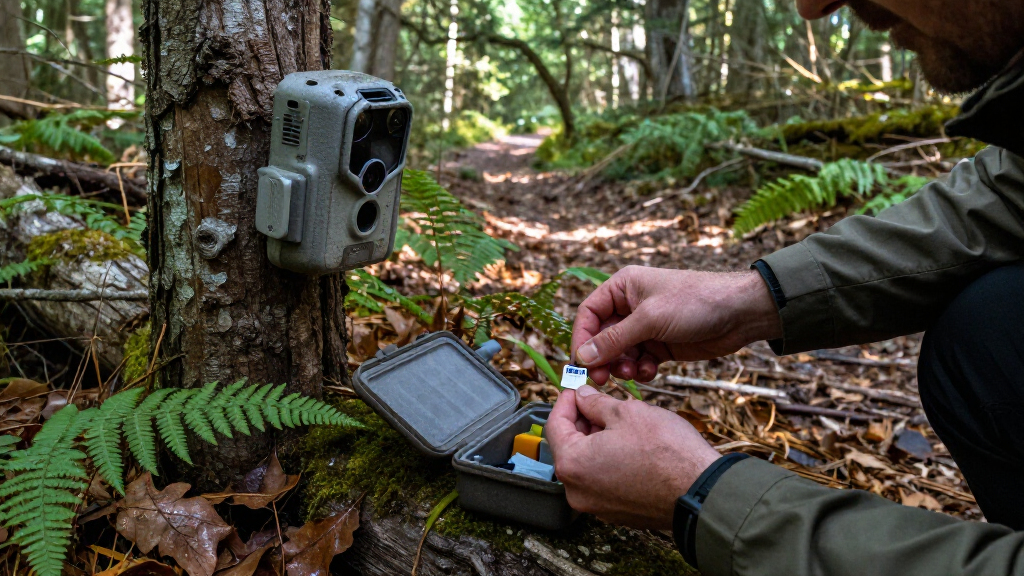
Trail-camera cards are handled outdoors, often with cold hands, gloves, dust, and damp conditions. Keep spare cards in a small protective case, and avoid touching the contacts or leaving cards loose in a pocket. Turn the camera off before removing a card unless its instructions say otherwise, and let wet equipment dry before opening the card compartment. Format a card in the camera when the manufacturer recommends that process, and verify that it records before leaving the site for an extended period. These habits will not make a card more durable, but they can reduce avoidable file errors and handling damage.
Frequently Asked Questions
Is an endurance card worth choosing if my trail cam only takes occasional photos?
It may not be the best use of your budget if the camera records only a few still images and you retrieve them often. Endurance becomes more compelling when the camera records repeated clips, operates continuously, or stays unattended for long periods. In this lineup, Samsung PRO Endurance and SanDisk High Endurance are the clearest matches for frequent recording, while a general-purpose card may suit lighter use. Check the camera’s card requirements before deciding. If the camera is remote or the footage is hard to replace, the added focus on repeated writes can still be worthwhile.
Should I buy one 128GB card or a pack of 32GB cards?
Choose a 128GB card when your camera supports it and fewer field visits matter more than dividing footage across cards. A pack of 32GB cards can suit frequent checks, multiple cameras, or a rotation routine that keeps a spare ready. Smaller cards also limit how much material sits on any one card, though they require more swapping and careful labeling. The KEXIN, GIGASTONE, TOPESEL, and Lexar packs vary in pack size and stated details, so compare the exact listing and camera compatibility. Neither format is automatically safer; your handling and backup routine matter too.
Can I use a 128GB microSDXC card in an older trail camera?
Do not assume that it will work just because the card fits the slot. Older cameras may support microSDHC but not microSDXC, or may have a lower maximum capacity than 128GB. Check the camera manual for card format and capacity limits before buying, and follow its formatting instructions. If support information is unclear, a smaller card within the documented range is the lower-risk choice. Test the card in the camera and confirm that images or clips save correctly before leaving it unattended.
Does a U3 or V30 card improve trail-camera results?
Only if the camera can use the higher write performance or its manual calls for that rating. Many trail cams record stills or modest video files, so a higher speed label may not change capture quality or reduce missed triggers. The GIGASTONE 128GB two-pack lists A1 and V30, but those labels alone do not make it a better match than an endurance-focused card for frequent recording. Read speed claims often describe file transfer rather than how quickly a trail cam can write. Check your camera’s stated requirements before paying extra attention to speed tiers.
How often should I replace or reformat a trail-camera card?
There is no single replacement interval that fits every camera, because recording frequency, conditions, and card design differ. Follow the camera and card makers’ guidance, and replace a card if the camera reports errors, files become unreadable, or recording stops unexpectedly. Reformatting can clear a card for reuse, but it erases its contents, so copy and verify wanted footage first. For a remote camera, inspect the card more often until you know how quickly it fills and how consistently it records. Keeping a known-good spare nearby can prevent a card problem from leaving the camera idle.
Conclusion
For the strongest all-around trail-cam fit, I’d choose the Samsung PRO Endurance 128GB, particularly for cameras that write often. My best value depends on the job: the SanDisk Ultra 64GB is a sensible general-purpose pick when a smaller capacity suits your camera, while multipacks such as KEXIN or Lexar make more sense if spare cards are the priority. For a premium, frequent-recording setup, compare Samsung PRO Endurance with SanDisk High Endurance and favor the one whose capacity and compatibility best match your camera. Beginners can start with the Spypoint 32GB when using a compatible Spypoint camera, or a clearly supported smaller card if they are unsure about capacity limits. For multiple cameras or a rotation system, consider the GIGASTONE five-pack or another small-card bundle; for fewer field visits, choose a compatible 128GB card. Whatever you select, verify support in the camera manual and test recording before relying on it in the field.
Halloween Picks
halloween
As an affiliate, we earn on qualifying purchases.