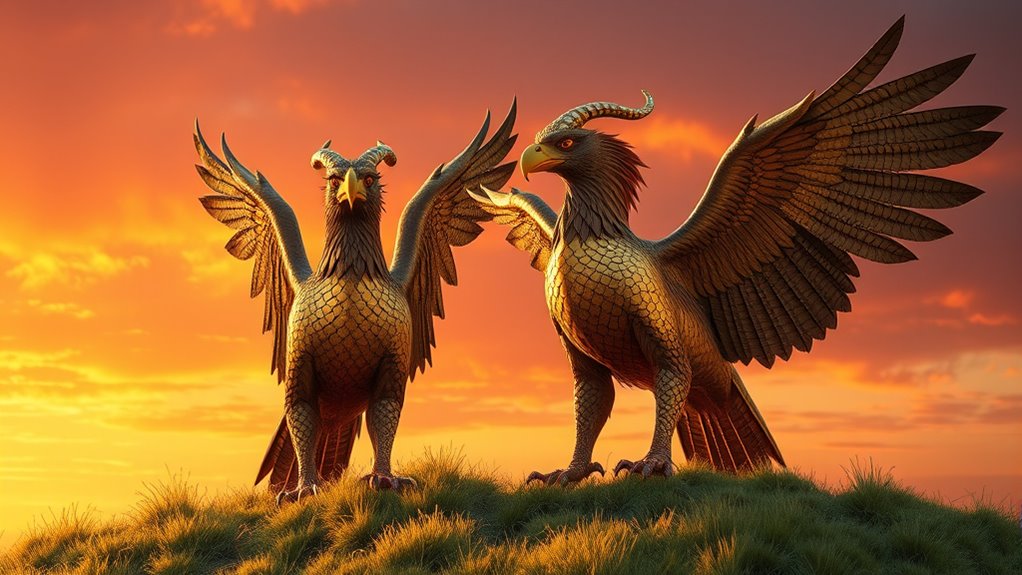

The Scythian griffins are legendary guardians often depicted in ancient art as fierce hybrids with lion bodies and eagle heads, symbolizing strength, vigilance, and divine protection. They are commonly found guarding treasures, sacred spaces, and artifacts crafted from gold and precious metals. These mythical creatures reflect the culture’s emphasis on divine guardianship and power. If you keep exploring, you’ll discover how these guardians played a crucial role in their spiritual and artistic worlds.
Open a free Amazon Business account
Business pricing, bulk buying and tax-exempt orders.
As an affiliate, we earn on qualifying purchases.
Key Takeaways
- Scythian griffins are mythical creatures blending lion and eagle features, symbolizing strength, vigilance, and divine protection.
- They frequently appear in Scythian gold artifacts, serving as guardians of sacred treasures and spiritual objects.
- These creatures embody themes of divine authority, guardianship, and the duality of chaos and order in their culture.
- Artistic depictions often show griffins in dynamic poses, emphasizing their role as vigilant protectors.
- The use of gold highlights the importance of griffins as symbols of power and divine guardianship in Scythian society.
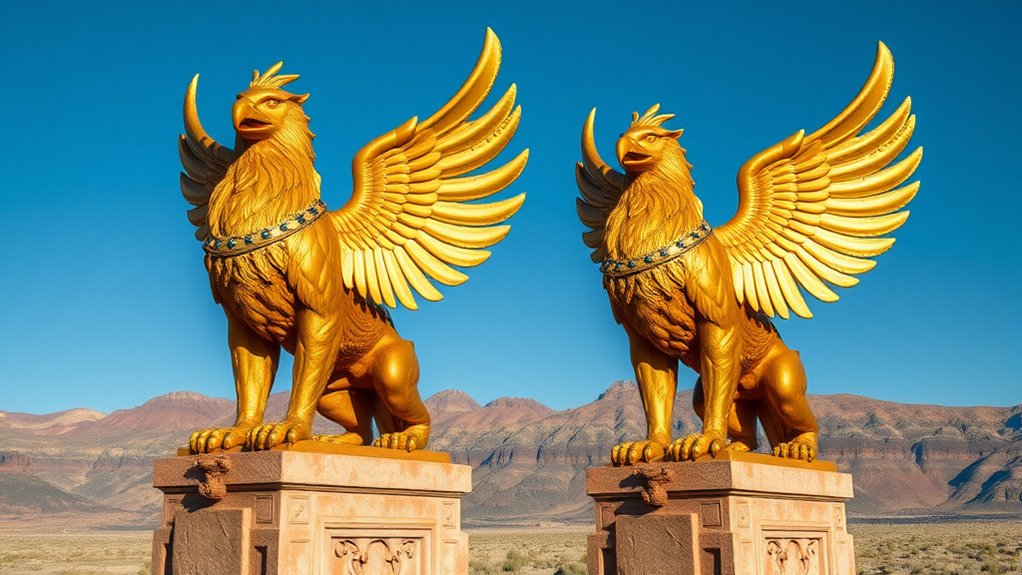
Have you ever wondered what mythical creatures the ancient Scythians believed in? Their worldview was deeply rooted in powerful symbolism and rich artistic traditions, which often featured mythical beings guarding treasures or embodying divine forces. Among these, the legendary Scythian griffins stand out as some of the most striking symbols in their culture. These creatures, blending the body of a lion with the head and wings of an eagle, symbolize strength, vigilance, and protection. They frequently appear in Scythian art, especially in their metalwork and decorative motifs, serving as artistic expressions of their spiritual beliefs. The Scythian animal symbolism often portrayed such beasts as guardians of sacred spaces and priceless treasures, emphasizing their role as protectors against evil or malevolent forces. Understanding the symbolic significance of these creatures enhances our appreciation of their role in Scythian culture. In their artistic motifs, these mythical creatures are more than mere decorative elements—they embody complex ideas about power and divine authority. You can see their influence in intricate gold plaques, weapons, and jewelry, where griffins are depicted in dynamic poses, often in combat or watchful stances. These motifs aren’t just aesthetic; they serve to communicate the Scythians’ reverence for the animal kingdom, channeling their understanding of nature’s strength into mythic forms. The use of gold and other precious metals in their art underscores the importance of these creatures, especially since griffins are often associated with guarding valuable possessions. This symbolism aligns with the broader context of Scythian animal symbolism, where animals are seen as intermediaries between the mortal world and the divine. The griffin, as a hybrid creature, embodies this duality, merging qualities of the king of beasts with the eagle, the king of the skies. You might notice that the recurring motifs of griffins in their art also serve a protective purpose. By incorporating these mythical guardians into their adornments and artifacts, the Scythians believed they could invoke divine protection and safeguard their wealth and spiritual essence. These motifs reveal a culture that revered the natural world and saw divine power in the animal kingdom’s most formidable beings. Their art was a visual language, conveying messages of strength, vigilance, and divine guardianship, all centered around the mythical griffin. When studying their artifacts, it’s clear that these creatures weren’t just myth—they were integral to how the Scythians understood their universe, symbolizing the eternal struggle between chaos and order, and serving as eternal protectors of their sacred treasures.
As an affiliate, we earn on qualifying purchases.
Frequently Asked Questions
What Materials Were Used to Craft Scythian Griffin Artifacts?
You’ll find that Scythian griffin artifacts are crafted with a combination of gold and silver through metal alloying, creating durable and striking surfaces. Artists also inlay gemstones like garnets and agates, adding vibrant details to their designs. These materials reflect their craftsmanship and symbolic significance, making each piece both a work of art and a powerful symbol of protection and wealth. You can admire their intricate blend of metalwork and gemstone inlay techniques.
Are There Any Modern Depictions of Scythian Griffins?
You’ll find that modern depictions of Scythian griffins are quite popular, especially in art and jewelry inspired by ancient motifs. Around 60% of contemporary griffin symbolism draws from Scythian art, highlighting their legendary role as gold-guarding creatures. Artists and designers often incorporate these mythical beings into jewelry, tattoos, and logos, celebrating their fierce guardianship and rich cultural history. Their striking imagery continues to captivate and inspire today.
How Did Scythian Griffins Influence Surrounding Cultures?
You see that Scythian griffins influence surrounding cultures through their rich cultural symbolism, representing protection, power, and divine authority. Their imagery spreads via trade influences, as artisans and traders share motifs across regions. This exchange fosters a shared mythological language, embedding griffins into local art, jewelry, and rituals. As a result, their legendary presence shapes cultural identities and reinforces the interconnectedness of ancient Eurasian civilizations.
What Symbols Did Griffins Represent in Scythian Society?
You see that griffins symbolized regal power and protective strength in Scythian society. They served as symbolic guardians, representing divine authority and safeguarding treasures like gold. These creatures embodied the idea of powerful protectors, emphasizing the importance of leadership and spiritual strength. By embodying these qualities, griffins reinforced societal hierarchies and honored the divine right of rulers, making them central symbols of authority and protection in Scythian culture.
Have Any Real Griffin Remains Ever Been Discovered?
No, you won’t find any real griffin remains from fossil discoveries or genetic research. Griffins are mythical creatures, blending features of lions and eagles, so no fossil evidence supports their existence. Scientists haven’t uncovered any genuine griffin bones or DNA. Instead, they rely on ancient art and legends to understand these mythological beings, which symbolize strength and protection in various cultures.
As an affiliate, we earn on qualifying purchases.
Conclusion
You might find it fascinating that over 2,500 years ago, the Scythians honored their griffins as guardians of their gold. These mythical creatures weren’t just symbols; they reflected the high value placed on wealth and protection in their culture. Knowing this, you see how legends shape history, revealing that even ancient societies believed in divine guardianship. It reminds you that myths often serve as windows into what societies truly treasure—be it gold, power, or protection.
ancient guardian animal figurine
As an affiliate, we earn on qualifying purchases.
As an affiliate, we earn on qualifying purchases.
gold-embellished mythological art
As an affiliate, we earn on qualifying purchases.
As an affiliate, we earn on qualifying purchases.
College move-in / dorm season Picks
dorm essentials
As an affiliate, we earn on qualifying purchases.