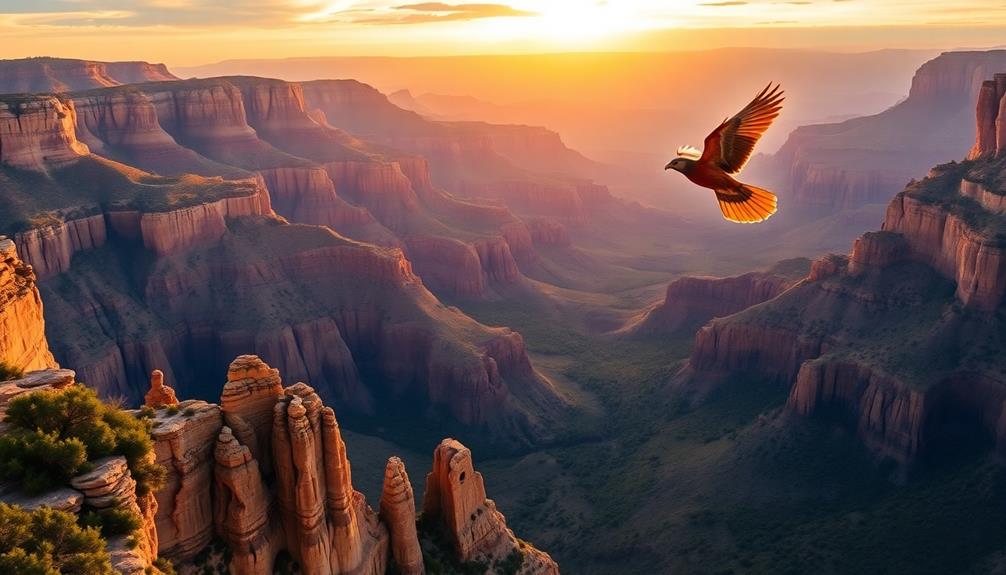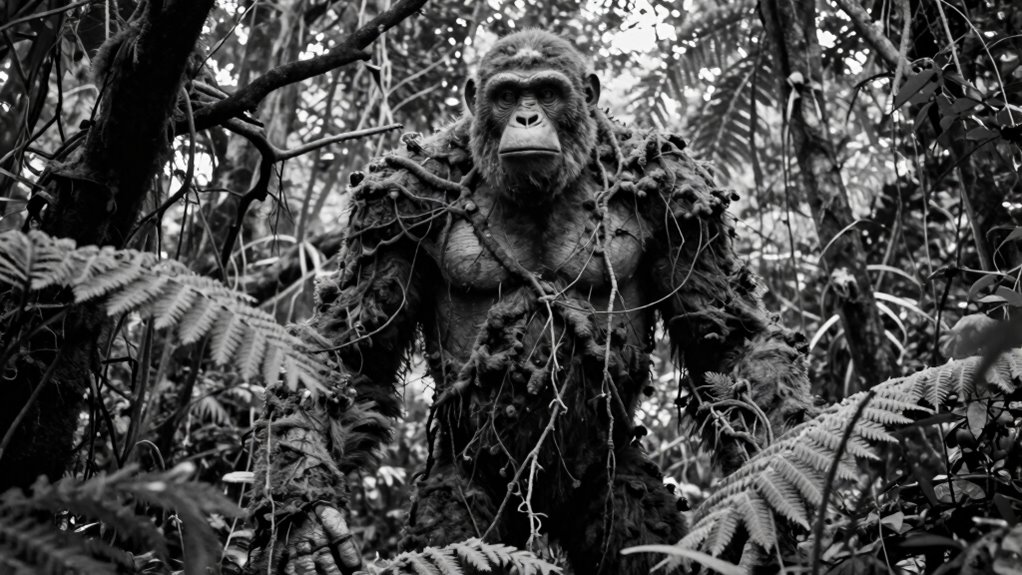

Before 1958, stories of a hairy wild man were deeply rooted in Native American legends, where such beings were seen as spiritual guardians or ancestral spirits. European settlers encountered and incorporated these tales, blending them with frontier sightings of large, elusive creatures in remote wilderness areas. These early descriptions often reflected cultural and spiritual themes, portraying the creature as more than just an animal. If you stay curious, you’ll discover how these ancient beliefs laid the foundation for the modern Bigfoot legend.
Listen free for 30 days with Audible
Thousands of audiobooks and originals — cancel anytime.
As an affiliate, we earn on qualifying purchases.
Key Takeaways
- Indigenous legends depicted large, hairy beings as spiritual guardians and cultural symbols long before European contact.
- Native stories served as moral lessons and explanations for wilderness phenomena, emphasizing the creature’s spiritual importance.
- European settlers incorporated Native legends into local folklore, blending spiritual themes with frontier encounters.
- Sightings of mysterious, elusive hairy beings increased in 19th-century wilderness areas, echoing Native descriptions.
- These early stories and sightings laid the foundation for modern Bigfoot mythology, blending myth, spirituality, and frontier folklore.
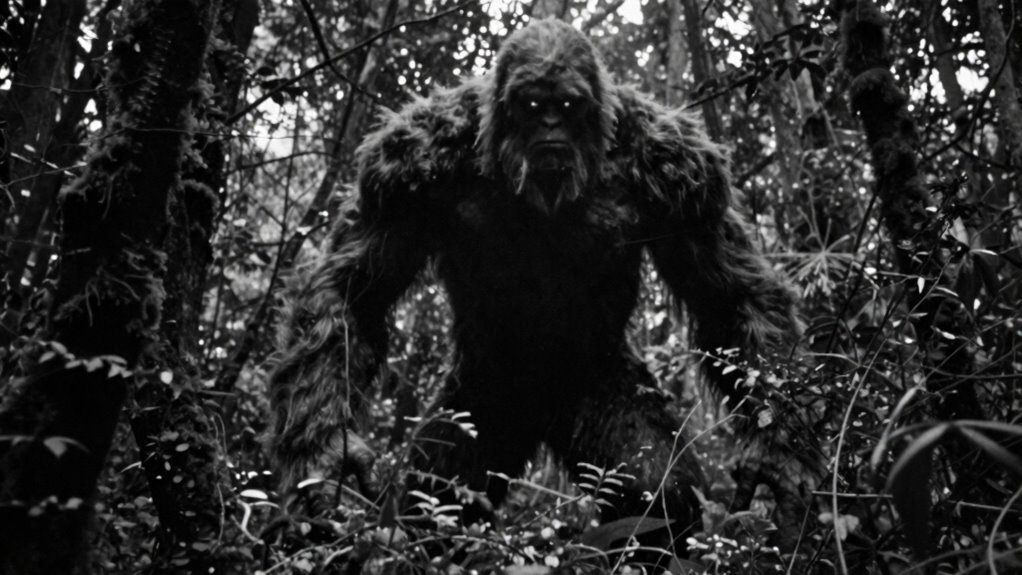
Long before the term “Bigfoot” entered popular culture in the late 1950s, stories of mysterious, ape-like creatures roaming North American wildernesses had been around for centuries. Indigenous peoples across the continent shared legends of powerful, hairy beings that lurked in remote forests and mountains. These early Native legends often portrayed these creatures as spiritual entities or guardians, woven into their cultural and spiritual beliefs. For many tribes, these beings were not just animals but beings with intelligence and significance, sometimes linked to creation stories or ancestral spirits. These stories weren’t just myth; they served as lessons, warnings, or explanations for unexplained phenomena in the wilderness. When European settlers arrived, they encountered these stories and incorporated them into their own narratives, further fueling the curiosity about these mysterious creatures.
Moving into the 19th century, sightings of strange, ape-like beings increased in North America, especially in frontier regions and untouched wilderness. You might find reports from settlers, hunters, or explorers describing large, hairy creatures that seemed to vanish into the forest with uncanny agility. These sightings often lacked concrete evidence but fueled speculation about the existence of a wild-man or Sasquatch, as some called it. The descriptions in these reports echo Native legends—tall, hairy, elusive, and often intimidating. Many of these accounts appeared in newspapers and local stories, becoming part of the folklore that spread through rural communities. These sightings weren’t isolated; they formed a pattern that kept the idea of a mysterious creature alive in the collective consciousness. Interestingly, some of these early reports also reflect a spiritual significance that tribes associated with these beings, emphasizing their role beyond just physical appearances. This blending of spiritual symbolism and physical descriptions helped shape the early Bigfoot mythology within American culture. Moreover, these stories often carried moral lessons rooted in Native traditions, underscoring their cultural importance.
As you explore deeper into these early accounts, you begin to see a continuity between Native traditions and 19th-century sightings. Both depict a creature that’s more than just an animal—something that embodies the wild, untamed spirit of the wilderness. Though no definitive proof existed back then, these stories persisted, passed down orally and through reports, shaping the early wild-man tradition in America. They laid the groundwork for the modern Bigfoot legend, blending Native spirituality with frontier encounters. The early Native legends and 19th-century sightings remind you that the fascination with these mysterious beings isn’t just about curiosity—it’s about connecting with a deep, primal part of human history and storytelling.

Bigfoot Research Team Silhouette Graphic Binocular View T-Shirt
- Design: Bigfoot silhouette through binoculars
- Target Audience: Bigfoot researchers and cryptid lovers
- Style: Lightweight, classic fit
As an affiliate, we earn on qualifying purchases.
As an affiliate, we earn on qualifying purchases.
Frequently Asked Questions
Were There Any Scientific Expeditions Searching for Bigfoot Before 1958?
Yes, before 1958, there were scientific expeditions searching for Bigfoot, driven by cryptid sightings and expedition myths. You might not realize that some researchers and explorers took these reports seriously, organizing efforts to find tangible evidence. These early quests often mixed folklore with scientific curiosity, fueling debates about the creature’s existence. While no conclusive proof emerged, these expeditions laid the groundwork for future investigations into this legendary creature.
How Did Indigenous Legends Influence Early American Wild-Man Stories?
You might be surprised to learn that over 100 indigenous legends describe legendary creatures similar to Bigfoot, shaping early American wild-man stories. These myths, with roots in mythical origins, deeply influence how early settlers viewed mysterious, hairy beings. Indigenous legends provided a cultural framework, lending authenticity to the stories and inspiring explorers to seek these creatures. Your understanding of these traditions reveals how myth and reality intertwine in America’s wild-man lore.
Did Early Sightings Differ Significantly From Modern Bigfoot Descriptions?
Early sightings often differ markedly from modern Bigfoot descriptions. You’ll notice that prehistoric footprints and early eyewitness accounts typically describe a creature with more primitive features, sometimes larger and more ape-like. In contrast, recent reports tend to focus on a more human-like figure. These differences may result from evolving perceptions, better evidence collection over time, or variations in regional legends influencing eyewitness descriptions.
What Role Did Folklore Play in Shaping Early Wild-Man Beliefs?
You might think folklore shaped wild-man beliefs, but evidence suggests mythical origins and folkloric symbolism deeply influenced these ideas. It’s likely that stories of mysterious, ape-like figures evolved from ancient legends, blending cultural myths with local sightings. These tales fueled imagination and reinforced the wild-man archetype, creating a cycle where myth and reality intertwined, shaping early perceptions of these mysterious beings long before modern sightings.
Were There Any Notable Early Photographs or Evidence of Bigfoot?
There aren’t any confirmed early photographs or solid evidence of Bigfoot, but folk art and mythical narratives from different cultures hint at the creature’s longstanding presence. You’ll find stories and carvings that suggest a mysterious, ape-like being in North American folklore. These depictions fuel curiosity, but without concrete proof, Bigfoot remains a fascinating legend rooted in myth and tradition, inspiring countless stories and sightings over the years.

MAXDONE Solar Trail Camera, 4K 64MP WiFi Bluetooth Night Vision Game Camera
- Wi-Fi Hotspot for Setup: Creates short-range Wi-Fi for setup and downloads
- No Internet Required: Records automatically without home Wi-Fi or subscription
- Adjustable Solar Panel: Flexible placement with manual angle adjustment
As an affiliate, we earn on qualifying purchases.
As an affiliate, we earn on qualifying purchases.
Conclusion
As you reflect on these early wild-man stories, it’s intriguing how they quietly mirror our own fears and fantasies about the unknown. Sometimes, the mysteries we chase seem to find us first, whispering that perhaps the wildness we seek is just beneath the surface of our everyday lives. In those fleeting moments of coincidence, you realize that what you’re searching for might be more about understanding yourself than uncovering a creature.

The United States of Cryptids: A Tour of American Myths and Monsters
As an affiliate, we earn on qualifying purchases.
As an affiliate, we earn on qualifying purchases.

Sucrain Pocket Chainsaw with Paracord Handle, Folding Chain Hand Saw, Emergency Outdoor Survival Gear for Camping, Hunting, Hiking, Cutting Wood & Tree (Army Green, 11 Teeth, 24'' Long)
- Length: 24 inches long for versatile cutting
- Cutting Blades: 11 sharp bidirectional teeth
- Material: Heat-treated Mn steel alloy chain
As an affiliate, we earn on qualifying purchases.
As an affiliate, we earn on qualifying purchases.
Flea & tick season Picks
flea and tick prevention
As an affiliate, we earn on qualifying purchases.