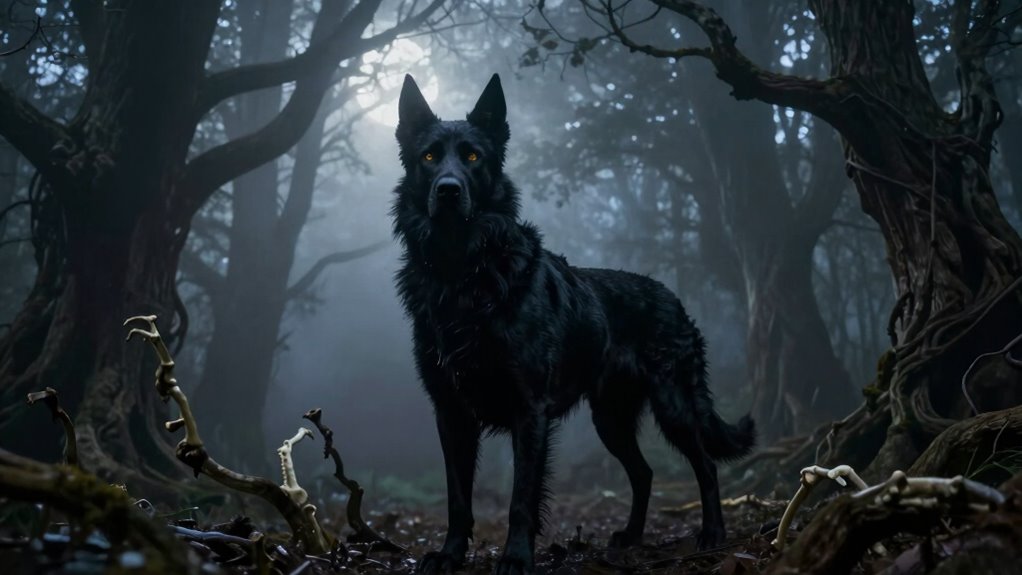

England’s Black Dog legends refuse to fade because they tap into your universal fears of mortality and the unknown. These stories, rooted in centuries of superstitions and societal anxieties, continue to resonate because they symbolize warnings of disaster or death. They evolve with each encounter, reinforcing community bonds and cultural beliefs. If you keep exploring, you’ll discover how these tales adapt over time and remain part of our collective consciousness.
Listen free for 30 days with Audible
Thousands of audiobooks and originals — cancel anytime.
As an affiliate, we earn on qualifying purchases.
Key Takeaways
- The legends symbolize deep-rooted societal fears of death, the unknown, and mortality, keeping them culturally relevant.
- Persistent sightings and stories reinforce the legend’s relevance across generations and adapt to modern media.
- Black dog stories serve as collective memories, strengthening community bonds and regional identities through folklore.
- They reflect universal human fears, ensuring their emotional resonance and ongoing fascination.
- Media and pop culture continually reinterpret the legends, maintaining their presence in contemporary consciousness.

Have you ever heard of the Black Dog legends that haunt the countryside of England? These stories have persisted for centuries, and you might wonder why they refuse to fade away. At their core, these legends are deeply rooted in superstitions’ origins, which often stem from fears and societal anxieties passed down through generations. Historically, a black dog symbolized something ominous—bad luck, death, or a warning of impending disaster. These beliefs took hold in rural communities where unexplained events or mysterious animal sightings sparked legends that grew more elaborate over time. The dark, intimidating silhouette of the black dog became a vessel for collective fears, especially during times of upheaval or illness when communities sought explanations they could grasp. Interestingly, the symbolism of the Black Dog often reflects collective anxieties about mortality and the unknown, reinforcing its role as a cultural touchstone. This connection to societal fears helps explain why the legend remains powerful and relevant today.
Today, you might still hear about modern black dog sightings—strange shadows darting across fields, ghostly figures lurking near ruins, or spectral hounds seen from the corner of your eye. These sightings, whether rooted in genuine encounters or collective imagination, keep the legend alive. They serve as a bridge connecting the past with the present, reminding people of stories that have persisted through centuries. Modern encounters often occur in remote locations, where the darkness of night amplifies the mystery and fear. Sometimes, these sightings are dismissed as misidentifications of ordinary animals or optical illusions, but their persistence suggests they hold a symbolic power that’s hard to dismiss. The legend adapts, evolving with each new sighting, reinforcing its grip on popular consciousness. Cultural significance continues to sustain the legend, ensuring it remains a part of local storytelling. Additionally, urban legends about black dogs often serve to reinforce community bonds and shared histories. These stories are also supported by regional legendary creatures, which further embed the Black Dog within a broader tradition of supernatural stories. Moreover, the origins of superstitions related to these legends highlight how societal fears can shape folklore and collective beliefs over generations.
What keeps these legends alive isn’t just the fear they evoke but also the cultural significance they carry. The Black Dog embodies more than just superstition; it’s a symbol of the unknown and a reminder of humanity’s fascination with the supernatural. These stories are embedded in local folklore, passed around fires and in pubs, shaping regional identities. You might even find that modern media, from ghost-hunting shows to paranormal blogs, keeps the legend current, fueling curiosity and belief. The Black Dog’s enduring presence is a testament to how stories rooted in superstitions’ origins can adapt and thrive, especially when they tap into our collective fear of the unseen. Whether real or imagined, these legends continue to haunt England’s countryside, refusing to fade into history entirely.

As an affiliate, we earn on qualifying purchases.
Frequently Asked Questions
How Did the Black Dog Legend Originate in England?
You might find that the black dog legend in England originated from superstitious beliefs and folklore symbolism, where the creature represented death or a warning of danger. People believed sightings signaled ominous events, often linked to supernatural forces or spirits. Over time, these stories became ingrained in local folklore, with the black dog embodying mystery and fear, ensuring the legend persists through generations as a powerful symbol of the unknown.
Are There Specific Locations Most Associated With Black Dog Sightings?
You’ll find the Black Dog sightings often tied to eerie, remote locations like Dartmoor, the Yorkshire Moors, and the Welsh borders, where fog and darkness create a perfect stage. These cryptid sightings thrive on folklore influence, making these sites legendary hotspots. Like whispers carried by the wind, the legend persists strongest in these areas, where locals swear they’ve seen the shadowy figure lurking, fueling the myth’s dark allure.
Do Black Dog Legends Vary Across Different Regions in England?
Yes, black dog legends vary across England’s regions. You’ll find different folklore variations and cryptid sightings in places like Devon, Yorkshire, and the Lake District. Each area has its unique stories, which reflect local culture and history. These regional differences keep the legends alive, enchanting locals and visitors alike. By exploring these variations, you’ll see how folklore evolves, making each black dog legend a fascinating piece of England’s mysterious heritage.
What Psychological Factors Contribute to Black Dog Sightings?
You might see visions or hallucinations of black dogs due to psychological factors like fear, stress, or grief, which can distort your perception. Cultural symbolism surrounding black dogs, often seen as omens or protectors, influences how you interpret these sightings. Your mind’s tendency to seek patterns and assign meaning to ambiguous stimuli can make these encounters feel real, reinforcing the legends and making them persist across generations.
Have Any Modern Events Been Linked to Black Dog Folklore?
Modern events often tie into black dog folklore through superstitious beliefs, especially during unsettling or mysterious circumstances. You might see these legends linked to sightings near abandoned places or during strange weather phenomena, fueling modern interpretations of the myth. These stories persist because they tap into deep-seated fears and cultural symbols, making them relevant even today. As a result, black dog legends continue to evolve, blending old superstitions with contemporary narratives.

Articulated Wendigo Figurine – Poseable Cryptid Collectible Desk Decor – Unique Gift for Adults – 3D Printed in Canada
- Intricately Detailed Wendigo: Features earthy tones and striking red eyes
- Poseable Design: Can be posed in various dynamic stances
- Unique Artistic Style: Eerie design inspired by folklore
As an affiliate, we earn on qualifying purchases.
As an affiliate, we earn on qualifying purchases.
Conclusion
As you explore England’s haunting Black Dog legends, you realize they’re more than tales—they’re whispers of history lurking in the shadows. These stories refuse to fade, their mystery deepening with each retelling. You can’t help but wonder—what truths lie behind the sightings? As darkness falls and the legends stir anew, one thing’s certain: some secrets refuse to stay buried forever. Will you be the next to uncover what lurks in the night?

Marvel Legends Series Jubilee, X-Men '97 Collectible 6-Inch Action Figure Toy
- Series-Inspired Jubilee Figure: Inspired by X-Men '97 animated series
- Includes 5 Accessories: Alternate hands and power FX included
- Animated Likeness: Premium animation-accurate deco and design
As an affiliate, we earn on qualifying purchases.
As an affiliate, we earn on qualifying purchases.
Back to school Picks
back to school
As an affiliate, we earn on qualifying purchases.