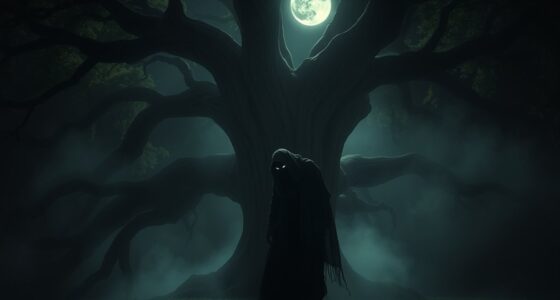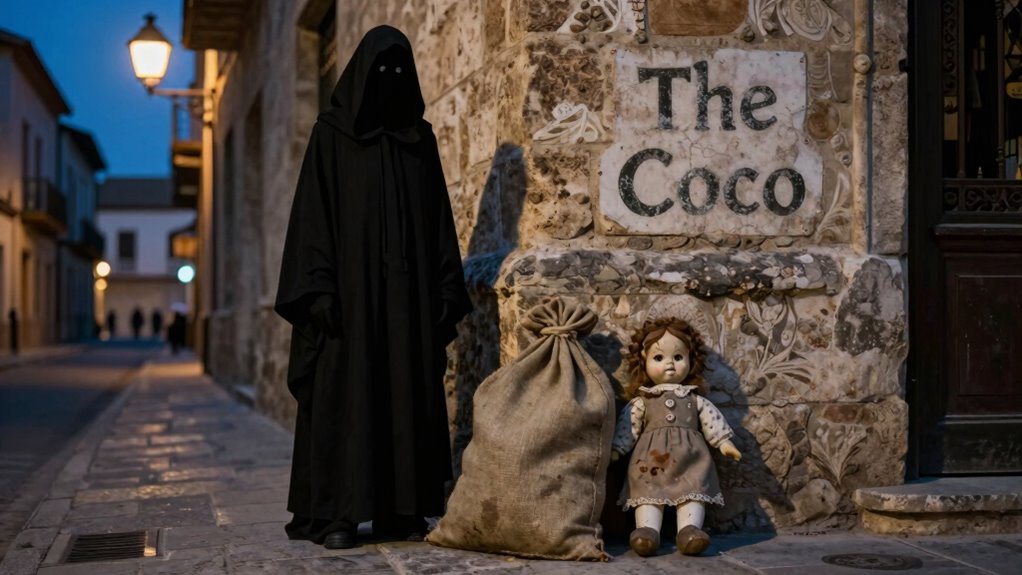

In Spain, legends like El Coco and the Sack Man have been used for generations to warn children about dangers and encourage good behavior. These figures, rooted in ancient pagan rituals and regional stories, embody societal fears and moral lessons. El Coco is a fearsome character that captures children who misbehave, while the Sack Man varies in appearance but often carries a sack to punish or scare kids. Discover more about how these legends reflect Spain’s culture and values.
Open a free Amazon Business account
Business pricing, bulk buying and tax-exempt orders.
As an affiliate, we earn on qualifying purchases.
Key Takeaways
- The Coco and Sack Man are traditional fearsome figures used in Spain to discipline misbehaving children.
- These legends originate from ancient pagan rituals and rural community stories shaping moral lessons.
- Variations in appearance and behavior reflect regional customs and local environmental influences.
- Legends serve to reinforce societal values, warn of dangers, and maintain moral discipline across generations.
- They symbolize societal fears, emphasizing obedience and the unknown within Spain’s rich folkloric tradition.
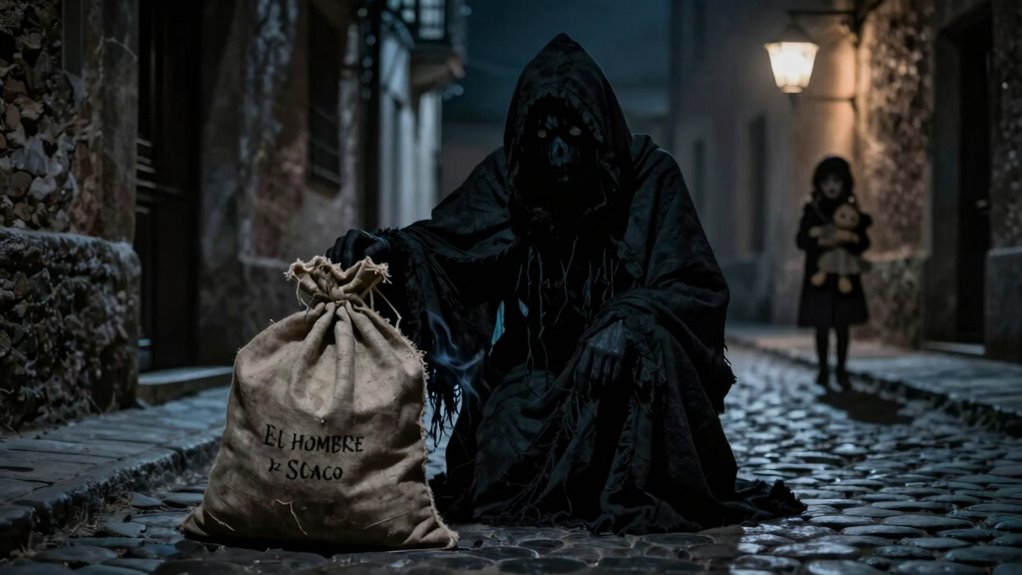
Spain is rich with legends that have captivated generations, and among the most haunting are the tales of Coco, the Sack Man, and Child-Fear. These stories serve as cautionary tales meant to keep children in line, but their origins run much deeper, rooted in mythical origins and shaped by cultural variations across regions. You might wonder where these legends came from and why they vary from place to place. The mythical origins of these stories often trace back centuries, blending pre-Christian beliefs with religious influences. For example, Coco, also known as El Coco, is believed to have roots in ancient pagan rituals that warned children about dangers lurking in darkness. Over time, this figure evolved into a more tangible, fearsome entity used by parents to discipline children or scare them into good behavior. Similarly, the Sack Man, or Hombre del Saco, has mythic origins linked to stories from rural communities. Originally, it was a tale told by adults to explain missing children or to discourage bad behavior, with variations in how the figure looks and what he does depending on the region. In some areas, he’s depicted as a ghostly figure carrying a sack to steal or punish misbehaving kids, while in others, he’s more of a shadowy, unspecified threat. Child-Fear, a broader concept, includes the collective anxieties and moral lessons embedded within these legends, often reflecting societal values and fears. The cultural variations in these stories highlight how different regions adapt the legends to suit local traditions and morals, making them uniquely Spanish but also diverse. You find that these variations help reinforce the stories’ purpose: to keep children from danger, whether physical or moral. Additionally, these legends often carry cultural significance that reinforces community values and shared history. These narratives also serve to transmit moral lessons across generations, ensuring societal norms are upheld through storytelling. Despite their differences, the core themes remain consistent—fear of the unknown, the importance of obedience, and the power of myth to shape behavior. These legends are more than stories; they are cultural artifacts that reveal how communities have historically used myth to teach lessons and address societal fears. Moreover, understanding the mythical origins of these legends provides insight into how ancient societies used storytelling to explain the unexplainable and instill societal discipline. The regional variations are often influenced by local customs and environmental factors, which shape how the stories are told and understood. As you explore Spain’s rich tapestry of folklore, you see how these legends, with their mythical origins and cultural variations, continue to resonate, serving as both warnings and windows into the collective psyche of Spanish society.

Disney Pixar Dante Alebrije Plush – Coco – 16 ½ Inches
As an affiliate, we earn on qualifying purchases.
As an affiliate, we earn on qualifying purchases.
Frequently Asked Questions
How Did These Legends Originate Historically in Spain?
You might find that these legends originated as a way to enforce childhood discipline and safety, reflecting Spain’s cultural influences. Their origins trace back to folk stories passed down through generations, often shaped by historical events and societal norms. By embodying fears and moral lessons, these legends helped shape childhood behavior and social values, blending local traditions with broader cultural themes that continue to influence Spanish storytelling today.
Are There Regional Differences in These Legends Across Spain?
You’ll find that regional variations of these legends add a colorful twist to their cultural impact across Spain. Ironically, what scares children in one region might be a beloved tradition in another. These differences deepen local identities, shaping stories unique to each area. So, while the core tales remain, the regional variations make each legend a reflection of local fears, values, and history, turning fear into a shared cultural tapestry.
What Modern Influences Have Shaped These Legends Today?
Modern influences like social media greatly shape these legends today. You see new modern adaptations that spread quickly, making the stories more vivid and accessible. Social media influence introduces contemporary elements, blending traditional fears with current themes, which keeps the legends relevant for younger generations. These updates guarantee the stories stay alive, evolving with the times while maintaining their core purpose of teaching lessons or warning children.
How Do These Legends Compare to Similar Stories Worldwide?
You might think these legends are unique, but they share similarities with global stories rooted in urban legends and cultural symbolism. While each culture has its own figures—like the Boogeyman or the Candyman—they all serve to enforce societal norms or fears. These stories adapt over time, reflecting modern influences, yet their core purpose remains: to teach, warn, or protect children through fear.
Are These Legends Still Actively Told to Children Today?
You’ll find that many of these legends are still told to children today, often as part of urban myths or cultural symbolism. They serve to teach lessons or enforce behaviors, even if their popularity wanes. While modern entertainment might overshadow them, parents and communities keep these stories alive, preserving cultural identity and childhood fears. So, yes, these legends continue to influence children’s imaginations in contemporary settings.

We pay your sales tax Feng Shui See No Evil Happy Face Laughing Buddha Figurine Home Decor Statue Gift/Birthday Gift/House Warming Gift
- Size: 3 x 3 x 2.5 inches
- Material: Polyresin
- Deity: Laughing Buddha from Chinese folklore
As an affiliate, we earn on qualifying purchases.
As an affiliate, we earn on qualifying purchases.
Conclusion
So, next time you hear about Coco or the Sack Man, remember they might just be echoes of Spain’s childhood fears, shaped by stories meant to keep you safe. Some believe these legends are rooted in real events or cultural warnings, while others see them as simple tales. But whether fact or fiction, they reveal how deeply stories influence our fears—proof that even in legend, there’s a hint of truth.

The Legend of Zelda Official Sticker Book (Nintendo®): Over 800 Stickers!
As an affiliate, we earn on qualifying purchases.
As an affiliate, we earn on qualifying purchases.

The Very Hungry Caterpillar/La Oruga Muy Hambrienta: Spanish board book (Spanish Edition)
As an affiliate, we earn on qualifying purchases.
As an affiliate, we earn on qualifying purchases.
Grilling season Picks
grills
As an affiliate, we earn on qualifying purchases.