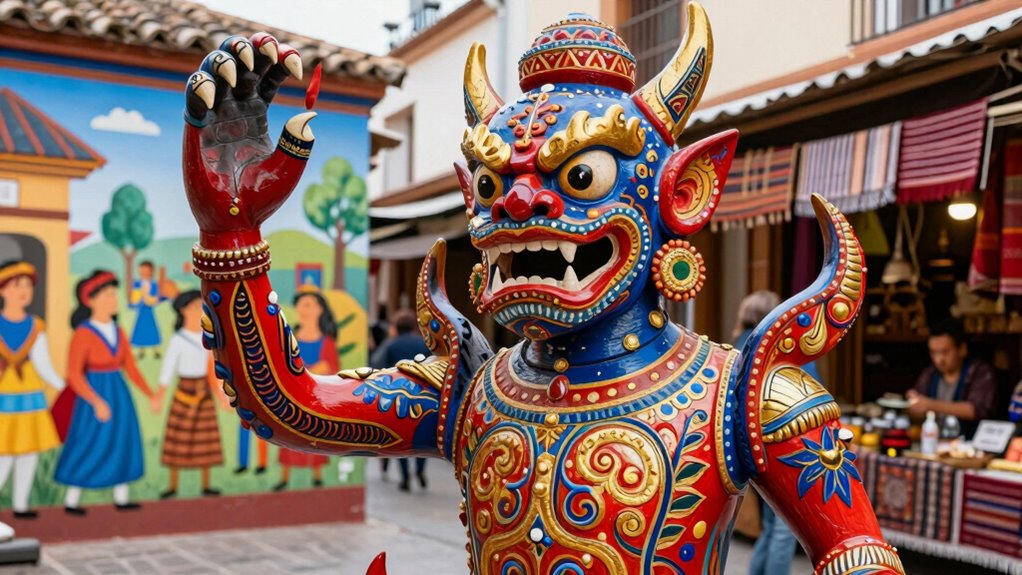
You’ll find that the Coco is a shared symbol in Spain and Latin America, but its meanings differ. In Spain, it’s more about moral lessons and childhood fears, while in Latin America, it’s a vivid monster tied to indigenous stories that reinforce discipline. The figure adapts to reflect each culture’s values, serving as a tool for social cohesion. If you explore further, you’ll uncover how this folklore continues to shape cultural identities and morals today.
Key Takeaways
- Coco originates from European folklore, representing childhood fears and moral lessons in Spain.
- In Latin America, Coco is a vivid, monster-like figure used to enforce discipline and caution among children.
- The character’s symbolism shifts from moral guidance in Spain to a threatening presence in Latin American stories.
- Cultural influences shape Coco’s portrayal, reflecting regional values, fears, and social norms.
- Despite differences, Coco remains a universal symbol for moral education and social cohesion across regions.
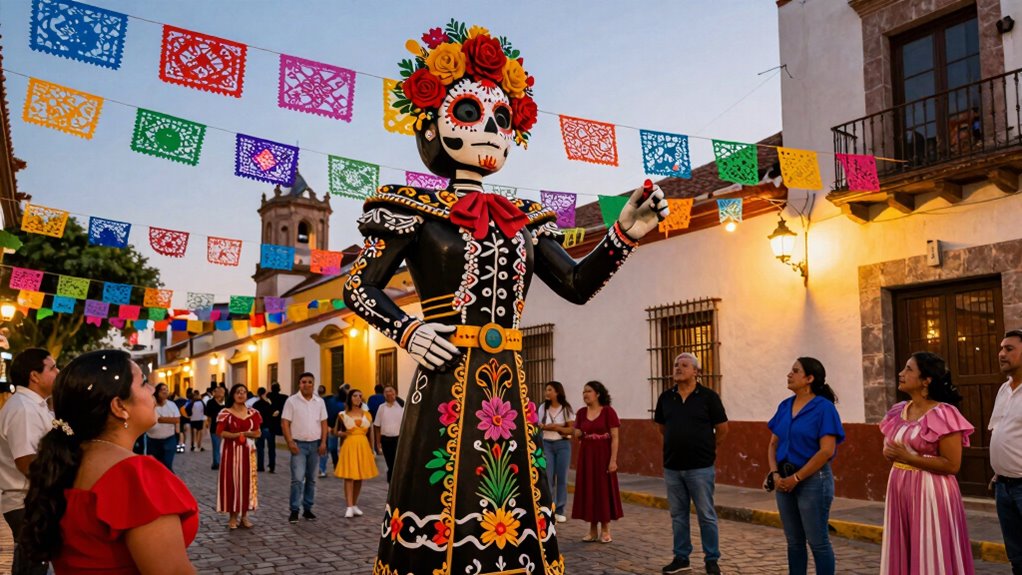
Have you ever wondered how the beloved coconut, or “coco,” has woven itself into the cultural fabric of Spain and Latin America? The story of coco is a fascinating journey through different cultural variations and folklore origins, revealing how a simple fruit can carry diverse meanings across regions. In Spain, the term “coco” often refers to a ghostly figure from folklore—an eerie, shadowy creature that embodies childhood fears and moral lessons. Its origins trace back to European stories where the “coco” represents an ominous monster used by parents to encourage good behavior. Over time, this folklore evolved into stories of a spooky being lurking in the dark, a symbol of caution rather than a tangible creature.
In Spain, coco is a ghostly figure symbolizing childhood fears and moral lessons rooted in European folklore.
In Latin America, however, the “coco” takes on a different persona. Here, it’s more than just a ghostly apparition; it’s deeply embedded in local traditions and storytelling. Latin American folklore often depicts the coco as a monster that kidnaps children who misbehave, serving as a cautionary tale to promote discipline. This monster is sometimes described as a hideous, hairy creature, lurking in the shadows or hiding behind doors, reinforcing the importance of listening to elders. The folklore origins in Latin America reflect a blend of indigenous beliefs and colonial influences, creating a rich tapestry of stories that warn children about the dangers of straying from rules. These stories serve as a cultural safety mechanism, shaping behavioral expectations within communities. This adaptability of the coco highlights its significance as a symbolic figure across different societies. Additionally, the evolution of these stories demonstrates how folklore can serve as a powerful tool for social cohesion and moral education, illustrating the importance of storytelling in preserving cultural identity.
Despite these cultural variations, the coco’s core symbolism remains consistent: a creature used to enforce moral behavior. But the ways in which people interpret and tell stories about it differ widely, influenced by local customs and histories. In Spain, the folklore often emphasizes the coco’s role as a moral enforcer, but it’s less feared and more a part of childhood storytelling. In Latin America, the coco’s presence is more vivid and tangible, often associated with bedtime tales that keep children wary of the dark and unseen dangers. The enduring presence of the coco in various cultural expressions underscores its cultural significance as a way to transmit values and lessons across generations.
This contrast highlights how the same monster adapts to different cultural contexts, transforming from a moral lesson into a more visceral symbol of childhood fears. The folklore origins of the coco show how stories evolve and take on new meanings, shaping cultural identities. Whether as a ghostly spirit in Spain or a mischievous monster in Latin America, the coco remains a powerful figure—one that continues to reflect regional values and fears, demonstrating how a simple fruit and its stories can bridge cultural divides while keeping their unique identities alive.
children's folklore storybooks about Coco
As an affiliate, we earn on qualifying purchases.
As an affiliate, we earn on qualifying purchases.
Frequently Asked Questions
How Did the Coco Myth Originate in Different Regions?
You see, the myth of Coco originated from different regions through varied historical origins and cultural adaptations. In Spain, it’s linked to ancient beliefs about spirits and the supernatural, while in Latin America, it evolved from indigenous stories blending with Spanish influences. These regions adapted the myth to reflect local fears and traditions, creating unique versions of Coco that still serve as cautionary tales or moral lessons today.
Are There Similar Stories to the Coco in Other Cultures?
Like the tale of the Boogeyman or the Wendigo, many cultures have urban legends and folklore symbolism with similar themes to Coco. In Japan, the Kappa lurks in rivers, warning children to behave, while in Africa, the Tokoloshe acts as a mischievous or dangerous spirit. These stories serve to teach lessons and instill values, showing that across cultures, such legends shape behavior and reflect societal fears and morals.
How Does the Coco Influence Modern Folklore and Media?
You see how the coco influences modern folklore and media through its powerful cultural symbolism, representing fears and morals. Media representations often adapt the coco for entertainment, like films and stories, reinforcing its role as a cautionary figure. This continued presence helps preserve cultural values, making the coco a familiar symbol that evolves with society, blending traditional beliefs with contemporary storytelling to keep its relevance alive today.
What Are Regional Variations in Coco Stories Across Latin America?
You’ll notice several regional variations in coco stories across Latin America, reflecting diverse cultural adaptations and storytelling styles. In some areas, coco is a cautionary character, warning kids about misbehavior, while in others, it’s a mysterious monster lurking in the shadows. These tales transform with local languages, customs, and beliefs, creating a tapestry of cultural adaptations that shape how coco is perceived, feared, and folklore-filled across Latin America.
How Do Local Beliefs Shape the Perception of the Coco Today?
You see that local beliefs heavily influence how you perceive the Coco today. Cultural symbolism shapes its role as both a warning and a protector in many communities. Modern interpretations often blend tradition with contemporary fears, making the Coco a symbol of caution or even empowerment. These beliefs keep the story alive, transforming it to fit current social issues, while still honoring its roots as a cultural symbol across regions.
Coco monster plush toy Latin America
As an affiliate, we earn on qualifying purchases.
As an affiliate, we earn on qualifying purchases.
Conclusion
Just as the Coco weaves through the fabric of Spain and Latin America, its threads take on different hues and textures, shaping each community’s story. It’s a mirror reflecting cultural fears and lessons, yet also a vessel for shared tradition. Embrace this allegory, knowing that, like the monster itself, its meaning evolves with every perspective. In understanding its shifting guise, you reveal the deeper essence of how stories transform across borders, binding us in collective memory.
Spanish moral lessons children's books
As an affiliate, we earn on qualifying purchases.
As an affiliate, we earn on qualifying purchases.
Coco folklore costume for kids
As an affiliate, we earn on qualifying purchases.
As an affiliate, we earn on qualifying purchases.