
Satellite communicators make your remote creature expeditions safer by providing reliable links where cell service fails. They enable quick emergency alerts and help coordinate rescues instantly with dedicated buttons for distress signals. Their rugged, weather-resistant design guarantees they withstand harsh conditions, while regular maintenance keeps them dependable. Knowing these devices are prepared for any environment gives you peace of mind. Keep going to discover how these features work together to protect you during your adventures.
Listen free for 30 days with Audible
Thousands of audiobooks and originals — cancel anytime.
As an affiliate, we earn on qualifying purchases.
Key Takeaways
- Provide reliable communication links in remote areas without cell service, ensuring constant contact with support teams.
- Enable quick emergency alerts and distress signals, facilitating rapid rescue responses in critical situations.
- Offer durable, weather-resistant design to withstand harsh environmental conditions during long expeditions.
- Allow precise location sharing to assist rescuers in locating team members or tracking elusive creatures.
- Support ongoing equipment maintenance and resilience, ensuring reliable operation throughout extended, unpredictable expeditions.
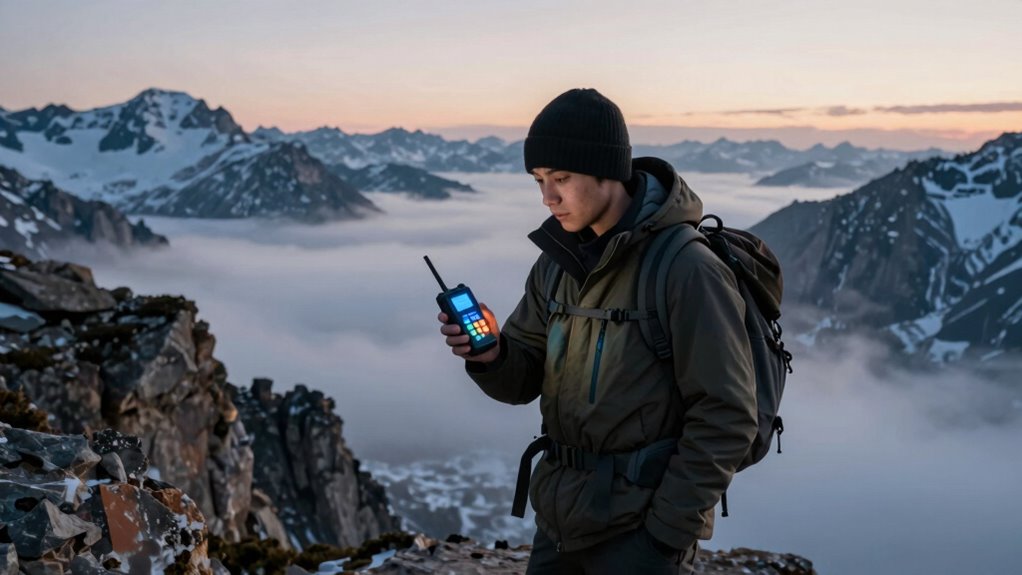
When venturing into remote expeditions where cell service is unavailable, satellite communicators become indispensable tools for staying connected and guaranteeing safety. In environments far from civilization, your ability to communicate can mean the difference between a manageable situation and a full-blown emergency. Satellite communicators provide a reliable link to help you summon help quickly if needed, making emergency signaling straightforward and dependable. Whether you’re tracking elusive creatures or exploring untouched landscapes, having a device that can send distress signals instantly reassures you that help is just a button press away. These communicators often feature dedicated emergency buttons, designed to transmit your location and alert rescue services with minimal effort, which is essential when every second counts.
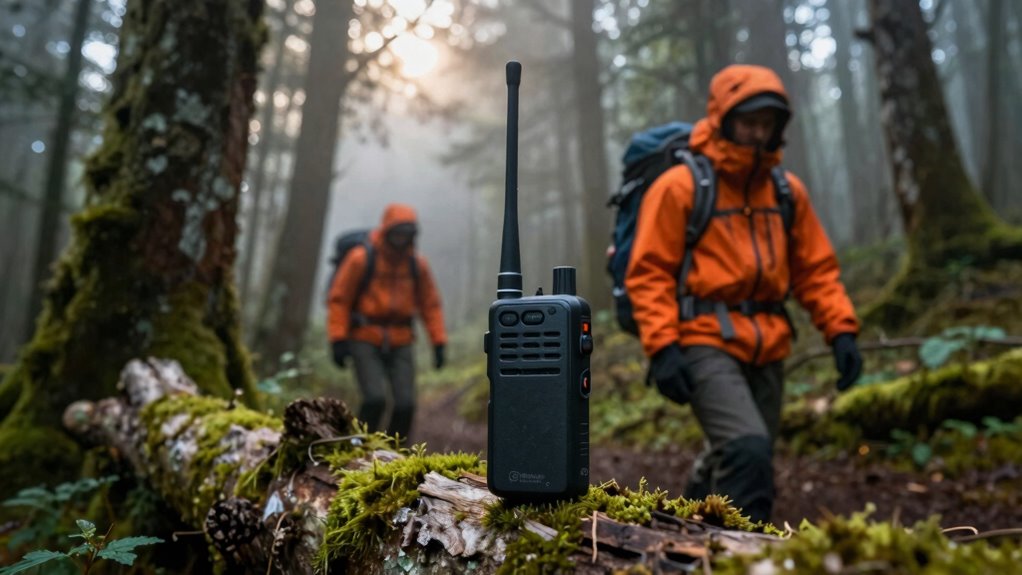
Beyond emergency signaling, the durability of your equipment plays an indispensable role in remote expeditions. Satellite communicators are built to withstand the harshest conditions, often boasting rugged, weather-resistant designs that resist water, dust, and impact. You might encounter extreme temperatures, turbulent weather, or rough terrain, but your device’s equipment durability ensures it remains functional in these demanding environments. This resilience means you won’t have to worry about accidental drops, exposure to rain, or dust infiltrating your vital communication tool. Instead, you can focus on your expedition, knowing your satellite communicator is reliable and ready to perform at all times. The tough construction and high-quality materials used in these devices are specifically engineered to endure the rigors of remote exploration, providing you peace of mind no matter how challenging the terrain. Additionally, the specialized construction of satellite communicators often includes features that prevent damage from environmental hazards, ensuring your device stays operational when it’s needed most. Regularly inspecting and caring for your device can extend its lifespan, ensuring it remains a dependable safety tool for future expeditions. Proper maintenance and understanding of equipment durability can also help you optimize the device’s performance in extreme conditions, making sure it functions reliably when every second counts. Being aware of environmental resilience can further help you prepare for unpredictable expedition scenarios.
satellite communicator with emergency button
As an affiliate, we earn on qualifying purchases.
As an affiliate, we earn on qualifying purchases.
Frequently Asked Questions
How Do Satellite Communicators Work Without Cellular Networks?
Satellite communicators work without cellular networks by connecting directly to satellites orbiting Earth. You’ll find that they face satellite signal limitations in dense forests or deep valleys, but they usually work well in open areas. Make sure your device is compatible with the satellite network used. You activate it by sending signals via satellites, which then relay your messages or location data to your contacts, ensuring safety even in remote locations.
What Is the Battery Life Typically Like During Long Expeditions?
During long expeditions, you’ll typically get several days of use from a satellite communicator’s battery, thanks to efficient power consumption. While it varies by model, many devices are designed for extended use and have low power modes. To avoid running out of juice, you should plan for regular battery maintenance—carrying spare batteries or portable chargers. This guarantees you stay connected, even in the most remote areas.
Are Satellite Communicators Waterproof and Rugged Enough for Harsh Environments?
Yes, satellite communicators are designed with weather resistance and device durability in mind. You can depend on them in harsh environments, as they’re built to withstand rain, dust, and extreme temperatures. Their rugged construction ensures durability during tough expeditions, so you won’t have to worry about damage from the elements. This makes them essential tools for staying connected and safe, even in the most challenging outdoor conditions.
How Secure Are the Communications Transmitted via Satellite Devices?
Think of satellite communication like a locked vault—your messages stay private thanks to advanced encryption protocols, ensuring no one else can access your data. These devices prioritize signal reliability, so your messages get through even in remote wilderness. You can trust that your communications are secure, allowing you to focus on the adventure without worrying about breaches or lost signals. Your safety and privacy are protected every step of the way.
Can Satellite Communicators Be Used for Real-Time GPS Tracking?
Yes, satellite communicators can be used for real-time GPS tracking, which is essential for wildlife monitoring and emergency signaling during remote expeditions. You can track animal movements or your team’s location accurately, even in the most isolated areas. This technology guarantees you stay connected, monitor wildlife behavior, and send immediate emergency signals if needed. It’s a critical tool for enhancing safety and gathering valuable data in remote creature expeditions.
rugged satellite phone for outdoor expeditions
As an affiliate, we earn on qualifying purchases.
As an affiliate, we earn on qualifying purchases.
Conclusion
With satellite communicators, you’re like a lighthouse guiding you through uncharted waters. No matter how remote your expedition, these devices keep you connected and safe, illuminating your path back home. They serve as your steadfast beacon, ensuring help is always within reach. So, when venturing into the wild unknown, trust in this technological lighthouse to steer you clear of danger and bring you safely back to shore.
weather-resistant satellite communicator device
As an affiliate, we earn on qualifying purchases.
As an affiliate, we earn on qualifying purchases.
satellite GPS tracker for remote expeditions
As an affiliate, we earn on qualifying purchases.
As an affiliate, we earn on qualifying purchases.
Flea & tick season Picks
flea and tick prevention
As an affiliate, we earn on qualifying purchases.