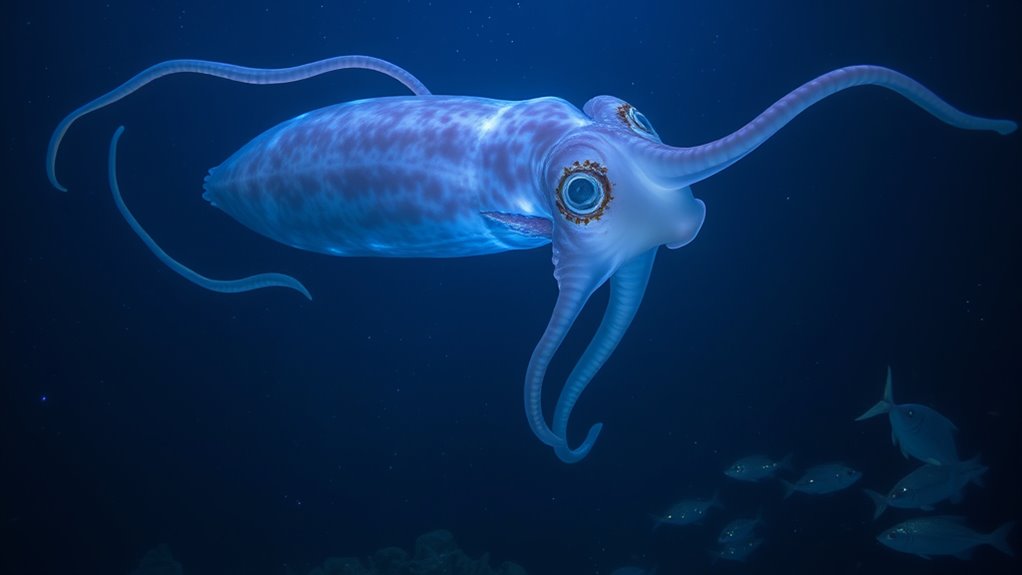

Deep in the dark depths of the ocean, real-life sea giants like giant squids and colossal octopuses hide, elusive and rarely seen. These creatures have incredible adaptations, including bioluminescence, which helps them hunt, communicate, and survive in extreme conditions. Although challenging to explore, scientists continue uncovering clues about these mysterious beings. If you’re curious, discover the fascinating secrets of these legendary monsters lurking beneath the waves.

Prime made for students and young adults
- Fast, free delivery for dorm and study essentials
- Prime Video and Amazon Music included
- Member-only deals
Key Takeaways
- Legends of deep-sea monsters like giant squids are supported by scientific evidence from recent expeditions.
- Many deep-sea creatures exhibit bioluminescence, creating eerie, glowing appearances often associated with sea giants.
- Some known species, such as the colossal squid, can reach extraordinary sizes, fueling myths of enormous sea monsters.
- Extreme deep-sea conditions challenge explorers, making the discovery of large, elusive creatures a rare but ongoing achievement.
- Advances in technology have led to the first confirmed sightings of legendary monsters, bridging myth and reality in marine exploration.

Have you ever wondered if colossal creatures lurk beneath the ocean’s surface? Beneath the waves, the deep sea remains one of the most mysterious and least explored environments on Earth, hiding secrets that challenge even the most seasoned explorers. When you consider these giants of the deep, you’re immediately struck by their extraordinary adaptations, especially bioluminescent features that light up the darkness in mesmerizing displays. These glowing traits aren’t just for show; they serve essential functions like attracting prey, communicating, and camouflaging from predators. The glow of these creatures hints at a complex, vibrant ecosystem thriving in a domain that’s largely beyond human reach.
Deep-sea giants glow with bioluminescence, revealing a hidden, vibrant world beneath the ocean’s dark, mysterious depths.
Venturing into these depths isn’t simple. Deep sea expedition challenges abound, from crushing pressure and frigid temperatures to the absence of sunlight. Submersibles and remotely operated vehicles are engineered to withstand these extreme conditions, yet each mission still presents obstacles. The equipment must be incredibly durable and capable of precise navigation in an environment where even minor malfunctions can be costly. Limited visibility adds another layer of difficulty, making it hard to locate and study these elusive giants. Despite these hurdles, scientists persist, driven by curiosity and the hope of uncovering new species that could redefine what we know about marine life. Every expedition offers glimpses into a world where monsters of legend—like giant squids and colossal octopuses—may actually be real.
When you think about these sea giants, their bioluminescent adaptations stand out as some of their most fascinating traits. In the pitch-black darkness of the deep, these creatures produce light through specialized cells called photophores. This ability not only helps them hunt and avoid predators but also plays a role in mating and territorial displays. The glow can be faint or intensely bright, creating otherworldly displays that seem almost supernatural. These adaptations reveal a survival strategy finely tuned to their environment, where light is scarce and danger lurks in every shadow.
All of this underscores just how challenging it is to study these animals. Deep sea expedition challenges mean that every discovery requires careful planning, cutting-edge technology, and a bit of luck. Still, the allure of uncovering the truth behind these mythic monsters pushes scientists forward. As technology advances, so does our understanding of these enormous, glowing creatures, bringing us closer to revealing the secrets of the ocean’s deepest depths. In doing so, you realize that the true monsters of the deep aren’t just legends—they’re real, and they’re waiting to be understood.
As an affiliate, we earn on qualifying purchases.
Frequently Asked Questions
Are Sea Giants Dangerous to Humans?
Sea giants are generally not dangerous to humans, but you should still be cautious around them. They usually avoid contact and pose little threat. However, their habitats are threatened by marine conservation issues and habitat destruction, which can impact their behavior and survival. Respect their space and support efforts to protect these gentle giants, ensuring they continue to thrive in their natural environment without risking human interference or harm.
What Is the Largest Known Sea Giant?
The largest known sea giant is the colossal squid, which can reach up to 43 feet long. Deep sea gigantism explains why these colossal marine creatures grow so large, thriving in the dark, pressure-filled depths. You might find it fascinating how these giants have evolved to dominate their environment, showcasing nature’s incredible capacity for size and adaptation in the ocean’s mysterious, deep zones.
How Do Scientists Study Deep-Sea Creatures?
You study deep-sea creatures through deep sea exploration, using remotely operated vehicles (ROVs) and submersibles to reach extreme depths. These tools let you observe bioluminescent adaptations firsthand, revealing how creatures produce their own light for survival. You also collect samples for analysis back at labs, helping you understand their behavior, biology, and environment. This combination of technology and research uncovers the mysteries of these elusive ocean giants.
Are Sea Giants Related to Mythical Sea Monsters?
You might wonder if sea giants are related to mythical sea monsters. While some legends have mythical origins, these deep-sea creatures are real, scientifically identified animals. Their cultural significance varies across societies, often inspiring tales of mysterious, enormous beings lurking in the depths. Though they aren’t monsters in the mythical sense, their impressive size and elusive nature have fueled stories and legends, linking them to the mythic sea monsters of folklore.
Can Sea Giants Be Kept in Captivity?
You can’t keep sea giants in captivity, and for good reason. Aquarium challenges make it nearly impossible to provide their vast habitat, and captivity ethics raise serious concerns about their well-being. These colossal creatures require immense space, complex environments, and specific conditions that no current facility can replicate. Attempting to keep them risks harm, stress, and ethical violations, so it’s best to appreciate these ocean giants in their natural, open waters.
bioluminescent diving flashlight
As an affiliate, we earn on qualifying purchases.
As an affiliate, we earn on qualifying purchases.
Conclusion
As you plunge into the mysteries of these incredible sea giants, remember you’re glimpsing into a world more awe-inspiring than anything you’ve ever imagined. These creatures, vast and ancient, make the ocean’s depths seem like a tiny pond compared to their colossal presence. Their existence challenges everything you thought you knew about the sea. So next time you look out at the vast blue, realize you’re peering into a domain where giants rule the depths, more legendary than any myth.
marine research underwater camera
As an affiliate, we earn on qualifying purchases.
As an affiliate, we earn on qualifying purchases.
pressure-resistant underwater drone
As an affiliate, we earn on qualifying purchases.
As an affiliate, we earn on qualifying purchases.
Halloween Picks
halloween
As an affiliate, we earn on qualifying purchases.