
Not all educational science reference books serve the same reader, and that is exactly why choosing one can be frustrating. Some, like Science: The Definitive Visual Guide, aim at teens and adults with sweeping coverage of every discipline, while others, like the National Geographic Kids Science Encyclopedia, are built for younger readers who need bite-size explanations and bold visuals. The main tradeoff in this category is depth versus accessibility: dense reference guides grow with a student for years, but lighter encyclopedias get opened far more often. For most households, Science: The Definitive Visual Guide earns the top spot for its breadth and longevity, with The Way Things Work: Newly Revised Edition standing out for mechanical curiosity and Everything You Need to Ace Science in One Big Fat Notebook as the clear choice for middle school study support. Read on for the full breakdown of all ten.

Prime made for students and young adults
- Fast, free delivery for dorm and study essentials
- Prime Video and Amazon Music included
- Member-only deals
Key Takeaways
- Visual guides dominated the top of this comparison: DK’s Science: The Definitive Visual Guide and Knowledge Encyclopedia Science! offer the best balance of illustrations, diagrams, and depth for older kids and adults.
- Age fit matters more than quality in this category — several excellent books, like First Human Body Encyclopedia, ranked lower only because they serve a narrow age window of roughly 5-9 years.
- The Way Things Work remains the only pick that explains applied mechanics rather than academic science, making it a complement to, not a substitute for, a general encyclopedia.
- The Big Fat Notebook is the sole study-oriented pick; it trades visual richness for curriculum-aligned notes, which makes it ideal for test prep but weak as a shelf reference.
- Sciencia packs six disciplines into a compact, inexpensive format — the best portable option, though its small pages limit the diagrams that make the larger encyclopedias effective.
| Science: The Definitive Visual Guide |  | Best Overall | Format: Illustrated hardcover reference | Subject Coverage: Physics, chemistry, biology, earth science, and science history | Target Audience: Students and general science enthusiasts | VIEW LATEST PRICE | See Our Full Breakdown |
| Sciencia: Mathematics, Physics, Chemistry, Biology, and Astronomy for All (Wooden Books, 37) |  | Best Compact Pick | Format: Compact paperback (Wooden Books series) | Subject Coverage: Mathematics, physics, chemistry, biology, astronomy | Target Audience: General readers and beginners | VIEW LATEST PRICE | See Our Full Breakdown |
| The Way Things Work: Newly Revised Edition |  | Best for Engineering Curiosity | Format: Illustrated print reference, newly revised edition | Subject Coverage: Machines, technology, and mechanical engineering concepts | Target Audience: Readers of all ages | VIEW LATEST PRICE | See Our Full Breakdown |
| National Geographic Kids Science Encyclopedia: Atom Smashing, Food Chemistry, Animals, Space, and More! |  | Best for Elementary Learners | Format: Illustrated children’s encyclopedia | Subject Coverage: Chemistry, biology, space, food science, animals, and more | Target Audience: Elementary school children | VIEW LATEST PRICE | See Our Full Breakdown |
| First Human Body Encyclopedia (DK First Reference) | 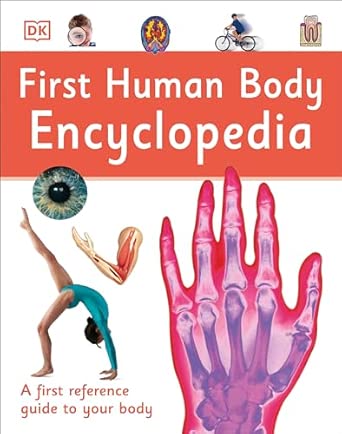 | Best for Youngest Readers | Format: Illustrated children’s encyclopedia (DK First Reference series) | Subject Coverage: Human anatomy and bodily functions | Target Audience: Young children, roughly ages 5 to 8 | VIEW LATEST PRICE | See Our Full Breakdown |
| The Usborne Science Encyclopedia |  | Best Interactive Learning Pick | Format: Print encyclopedia with digital companion content | Coverage: Gravity, flight, genes, DNA, and general science | Video Clips: Over 180 | VIEW LATEST PRICE | See Our Full Breakdown |
| Everything You Need to Ace Science in One Big Fat Notebook |  | Best for Middle School Students | Format: Paperback study guide, notebook-style layout | Grade Level: Middle school (grades 6-8) | Coverage: Complete middle school science curriculum | VIEW LATEST PRICE | See Our Full Breakdown |
| Knowledge Encyclopedia Human Body! |  | Best Visual Anatomy Reference | Format: Hardcover illustrated encyclopedia | Subject: Human anatomy and biology | Visual Style: 3D-style rendered illustrations and cross-sections | VIEW LATEST PRICE | See Our Full Breakdown |
| Knowledge Encyclopedia Science! 2nd Edition |  | Best All-Ages Science Encyclopedia | Format: Hardcover illustrated encyclopedia | Edition: 2nd Edition | Coverage: Physical sciences, life sciences, earth and space | VIEW LATEST PRICE | See Our Full Breakdown |
| Science Book: Everything You Need to Know About the World and How It Works |  | Best for Adult Learners | Format: Illustrated reference book | Coverage: Broad range of scientific principles and natural phenomena | Writing Style: Accessible, explanatory, non-textbook | VIEW LATEST PRICE | See Our Full Breakdown |
| educational science reference book | Format | Best Use | Depth Level | Subject Coverage |
|---|---|---|---|---|
| Science: The Definitive Visual | Illustrated hardcover reference | Home reference and study support | Broad, encyclopedic overview | Physics, chemistry, biology, earth science, and science history |
| Sciencia: Mathematics | Compact paperback (Wooden Books series) | Casual reading and curiosity-building | Introductory overviews | Mathematics, physics, chemistry, biology, astronomy |
| The Way Things Work: Newly Rev | Illustrated print reference, newly revised edition | Browsing and nurturing engineering curiosity | Accessible, mechanics-focused explanations | Machines, technology, and mechanical engineering concepts |
| National Geographic Kids Scien | Illustrated children’s encyclopedia | Independent browsing and early science learning | Kid-friendly introductions across topics | Chemistry, biology, space, food science, animals, and more |
| First Human Body Encyclopedia | Illustrated children’s encyclopedia (DK First Reference series) | First reference for early learners | Introductory, age-appropriate | Human anatomy and bodily functions |
| The Usborne Science Encycloped | Print encyclopedia with digital companion content | — | — | — |
| Everything You Need to Ace Sci | Paperback study guide, notebook-style layout | — | — | — |
| Knowledge Encyclopedia Human B | Hardcover illustrated encyclopedia | Reference and independent reading | — | — |
| Knowledge Encyclopedia Science | Hardcover illustrated encyclopedia | Home reference and curiosity-driven browsing | — | — |
| Science Book: Everything You N | Illustrated reference book | Self-education and general reference | Introductory to intermediate | — |
More Details on Our Top Picks
Science: The Definitive Visual Guide
Science: The Definitive Visual Guide earns the top spot because it does something none of the other picks attempt: covering every major scientific discipline in one visually rich volume. Where Sciencia compresses five sciences into a pocket-sized summary, this guide gives physics, chemistry, biology, and earth science genuine room to breathe, pairing each concept with detailed illustrations that make abstract ideas concrete. This pick makes the most sense for households that want a single reference to serve homework help, casual browsing, and serious curiosity for years.
The tradeoff is weight and commitment. This is a dense, coffee-table-scale book, not something a younger child will cart around, and compared with The Way Things Work it’s less playful and more encyclopedic. Readers wanting light, diagram-driven fun may find it dry.
Pros:- Extensive visual explanations clarify difficult concepts
- Comprehensive coverage across all major scientific disciplines
- Suitable for both students and adult science enthusiasts
- Functions as a long-term household reference
Cons:- Large and heavy, so it’s not portable or kid-friendly to handle
- Encyclopedic tone is drier than illustrated, story-driven alternatives
Best for: Families and high school students who want one deep, all-purpose science reference that lasts through multiple grade levels
Not ideal for: Parents of very young children — the text density and scale outpace early readers who would do better with the National Geographic Kids encyclopedia
- Format:Illustrated hardcover reference
- Subject Coverage:Physics, chemistry, biology, earth science, and science history
- Target Audience:Students and general science enthusiasts
- Visual Content:Detailed illustrations and diagrams throughout
- Depth Level:Broad, encyclopedic overview
- Best Use:Home reference and study support
Our verdict“Buy this if you want the most complete single-volume science reference in the lineup and don’t mind a hefty, serious book.”
Sciencia: Mathematics, Physics, Chemistry, Biology, and Astronomy for All (Wooden Books, 37)
Where most entries in this roundup go big, Sciencia goes small — and that’s its entire appeal. This compact volume distills mathematics, physics, chemistry, biology, and astronomy into an accessible format you can actually carry in a bag, something neither Science: The Definitive Visual Guide nor the National Geographic Kids Science Encyclopedia can claim. Compared with those larger titles, it works better as a curiosity-sparker for commutes or travel than as a homework reference.
The tradeoff is depth. Explanations stay deliberately brief, and the visual aids are sparser than in DK’s heavyweight guides, so a student needing detailed diagrams for a project will come up short. This option stands out for inspiration rather than information retrieval.
Pros:- Covers five core sciences in one portable volume
- Accessible explanations written for a broad audience
- Small format makes it easy to carry anywhere
- Encourages curiosity without overwhelming beginners
Cons:- Lacks the technical depth of larger encyclopedic references
- Fewer diagrams and visual aids than illustrated competitors
Best for: Teens and adults who want a portable, browsable introduction to the sciences for travel or casual reading
Not ideal for: Students who need a thorough study reference — the condensed treatments lack the technical depth required for coursework
- Format:Compact paperback (Wooden Books series)
- Subject Coverage:Mathematics, physics, chemistry, biology, astronomy
- Target Audience:General readers and beginners
- Portability:Highly portable pocket-sized format
- Depth Level:Introductory overviews
- Best Use:Casual reading and curiosity-building
Our verdict“Choose this if you want science inspiration in your pocket, and skip it if you need a serious study resource.”
The Way Things Work: Newly Revised Edition
The Way Things Work takes a different angle than every other book here: instead of organizing by scientific discipline, it explains how machines and everyday objects actually function. That mechanical focus makes it the strongest pick in this roundup for budding engineers, filling a gap the National Geographic Kids Science Encyclopedia only partially covers with its broader topic sweep. The newly revised edition adds contemporary content, keeping the classic format relevant for today’s gadgets.
The limitation is scope. Readers exploring chemistry, biology, or space will need a companion title, because this book stays firmly in the world of mechanisms and technology. Compared with Science: The Definitive Visual Guide, it’s also lighter on academic rigor, which advanced students will notice.
Pros:- Engaging explanations of machines and technology
- Accessible to a wide age range, kids through adults
- Newly revised with updated modern content
- Stronger engineering focus than any other pick here
Cons:- Narrow scope excludes chemistry, biology, and earth science
- Too basic for advanced or older readers
Best for: Curious kids ages 8 and up, and families who want to nurture mechanical and engineering interest
Not ideal for: Advanced students or anyone seeking a full-spectrum science reference — the mechanics-only scope leaves out most lab sciences
- Format:Illustrated print reference, newly revised edition
- Subject Coverage:Machines, technology, and mechanical engineering concepts
- Target Audience:Readers of all ages
- Edition:Newly revised with updated content
- Depth Level:Accessible, mechanics-focused explanations
- Best Use:Browsing and nurturing engineering curiosity
Our verdict“Pick this for a child who asks how things work rather than why the natural world behaves as it does.”
National Geographic Kids Science Encyclopedia: Atom Smashing, Food Chemistry, Animals, Space, and More!
For the middle of this lineup’s age range, the National Geographic Kids Science Encyclopedia hits a sweet spot the DK titles bracket on either side. It’s more expansive than the First Human Body Encyclopedia, covering chemistry, biology, space, and more rather than a single subject, yet its colorful presentation is far more kid-friendly than Science: The Definitive Visual Guide. National Geographic’s photography and fact-driven layout make it a book children genuinely flip through voluntarily.
The tradeoff is staying power. Content is pitched at elementary readers, so middle schoolers will outgrow it quickly, and the breadth comes at the cost of the depth the Usborne Science Encyclopedia offers for slightly older students. It’s a gateway book, not a last stop.
Pros:- Wide-ranging coverage across many science topics
- Colorful illustrations and engaging facts hold attention
- Photography and layout appeal to reluctant readers
- Sparks curiosity without feeling like a textbook
Cons:- Depth is shallow compared with dedicated encyclopedias
- Reading level may challenge the youngest children in the target range
Best for: Elementary school children ages roughly 7 to 11 who browse science books for fun
Not ideal for: Middle school and older students — the reading level and depth will feel juvenile and run out quickly
- Format:Illustrated children’s encyclopedia
- Subject Coverage:Chemistry, biology, space, food science, animals, and more
- Target Audience:Elementary school children
- Visual Content:Colorful illustrations and National Geographic photography
- Depth Level:Kid-friendly introductions across topics
- Best Use:Independent browsing and early science learning
Our verdict“This is the pick for keeping an elementary-aged kid excited about science — buy something deeper once they hit middle school.”
First Human Body Encyclopedia (DK First Reference)
The First Human Body Encyclopedia is the youngest-skewing entry here, and that specificity is its strength. By narrowing to anatomy and how the body works, it delivers age-appropriate depth that the broader National Geographic Kids Science Encyclopedia can’t match on this single subject. Young readers get colorful illustrations paired with simple explanations of bodily functions, making it an excellent first reference for the 5-to-8 range.
The flip side is a short shelf life. Once a child reads confidently and wants scientific substance, this book is quickly outgrown, and older students studying anatomy will find the Knowledge Encyclopedia Human Body! a far better fit. Compared with that title, this one trades detail for accessibility — deliberately, but the tradeoff is real.
Pros:- Age-appropriate anatomy explanations for early readers
- Colorful illustrations support visual learning
- Single-subject focus gives more body coverage than general encyclopedias
- Format designed specifically for young children
Cons:- Limited scientific detail that kids outgrow quickly
- Single-subject scope leaves the rest of science uncovered
Best for: Parents of children ages 5 to 8 who want a gentle, engaging first look at the human body
Not ideal for: Older students or curious adults — the simplified content runs out well before middle school anatomy study begins
- Format:Illustrated children’s encyclopedia (DK First Reference series)
- Subject Coverage:Human anatomy and bodily functions
- Target Audience:Young children, roughly ages 5 to 8
- Visual Content:Colorful illustrations and labeled diagrams
- Depth Level:Introductory, age-appropriate
- Best Use:First reference for early learners
Our verdict“A great first science book for a young child fascinated by their own body — just plan to upgrade within a couple of years.”
The Usborne Science Encyclopedia
Where most reference books in this roundup stop at the printed page, this encyclopedia keeps going with over 180 video clips and 1,000 curated websites tied directly to topics like gravity, flight, genes, and DNA. That multimedia layer turns it into a self-directed learning system rather than a static reference, which is why it stands apart from the visual-heavy Knowledge Encyclopedia Science!. Compared with Everything You Need to Ace Science, this is broader in scope but less focused as a study aid. The tradeoff is real, though: younger readers may find sections like genetics too advanced without adult help, and the web-linked format assumes reliable internet access.
Pros:- Extensive topic coverage spanning physics, biology, and engineering
- Video clips and 1,000 recommended websites extend learning beyond the page
- Encourages independent research skills
- Well-organized for looking up specific topics quickly
Cons:- Content in areas like DNA and genetics may be too advanced for very young children
- Web-linked content depends on internet access and link longevity
Best for: Curious kids aged 9-14 who learn best when books connect to videos and interactive online resources
Not ideal for: Households limiting screen time or lacking internet access, since the multimedia component is central to its value
- Format:Print encyclopedia with digital companion content
- Coverage:Gravity, flight, genes, DNA, and general science
- Video Clips:Over 180
- Recommended Websites:1,000
- Target Age:Approximately 9-14 years
- Learning Style:Interactive, self-directed
Our verdict“Choose this if you want a science reference that actively pushes kids toward further exploration online rather than just answering questions.”
Everything You Need to Ace Science in One Big Fat Notebook
This is the only pick in the lineup built explicitly around school curriculum mastery rather than general curiosity. Borrowing the look of a student’s own notebook, it breaks middle school science into digestible sections with clear explanations and practice questions for reinforcement — something none of the encyclopedias here offer. Compared with the Usborne Science Encyclopedia, it is far narrower in scope but much better suited to exam prep and homework support. The hand-drawn, casual style makes dense topics approachable, though visual learners who crave the rendered cross-sections of Knowledge Encyclopedia Human Body! may find it plain. It is a study tool first and a reference second.
Pros:- Aligns with standard middle school science curriculum
- Friendly, notebook-style layout reduces intimidation
- Practice questions reinforce each concept
- Explanations are concise and easy to reread before tests
Cons:- Scope is limited to middle school level, with little depth beyond it
- Simpler visuals than DK-style illustrated encyclopedias
Best for: Middle school students (roughly grades 6-8) who need a curriculum-aligned study guide for tests and homework
Not ideal for: Adult learners or advanced students wanting deeper technical explanations beyond middle school level
- Format:Paperback study guide, notebook-style layout
- Grade Level:Middle school (grades 6-8)
- Coverage:Complete middle school science curriculum
- Study Features:Practice questions and concept summaries
- Writing Style:Conversational, student-friendly
- Primary Use:Test prep and homework support
Our verdict“If the goal is passing science class rather than browsing science for fun, this is the most practical pick in the roundup.”
Knowledge Encyclopedia Human Body!
This is the specialist in a lineup of generalists. Rather than spreading across every scientific discipline, it goes deep on human anatomy with detailed 3D-style imagery that makes organs, bones, and body systems legible in a way text alone never manages. Compared with the broader Knowledge Encyclopedia Science!, it sacrifices breadth for anatomical depth, which makes it the better choice for a budding biologist but the wrong choice for someone wanting physics and chemistry coverage. It also sits above First Human Body Encyclopedia in sophistication, suiting older kids and teens rather than early readers. The tradeoff: it is a single-subject purchase, so it cannot serve as an all-in-one science shelf.
Pros:- Stunning rendered illustrations clarify complex anatomy
- Accessible enough for a wide age range, from older kids to adults
- Deep single-subject coverage exceeds general encyclopedias
- Body systems are explained in logical, layered progression
Cons:- No coverage of physics, chemistry, or earth science
- Lighter on technical and clinical detail than a true anatomy textbook
Best for: Students, teens, and adults who want a visually rich, single-subject reference on human biology
Not ideal for: Buyers seeking one general-purpose science book, since anatomy is its entire scope
- Format:Hardcover illustrated encyclopedia
- Subject:Human anatomy and biology
- Visual Style:3D-style rendered illustrations and cross-sections
- Audience:Approximately 9 years to adult
- Depth:Single-subject, in-depth
- Best Use:Reference and independent reading
Our verdict“Buy this as a companion to a general encyclopedia when human biology is the subject that matters most.”
Knowledge Encyclopedia Science! 2nd Edition
This is the strongest candidate for a family shared-shelf science book — broad enough that a curious ten-year-old and a parent can both get something from the same spread. Its illustrated approach makes abstract concepts tangible, and the second edition refreshes content compared with older general science references. Where Science: The Definitive Visual Guide leans more adult and encyclopedic in tone, this one stays welcoming to younger readers without dumbing things down. Against Everything You Need to Ace Science, it offers far wider topic range but no curriculum alignment or practice questions. The compromise is depth: topics get a page or two each, so readers wanting to truly master a subject will need to go elsewhere.
Pros:- Broad coverage across physics, chemistry, biology, and earth science
- Updated second-edition content
- Illustrations make abstract concepts accessible to younger readers
- Works equally well for browsing and targeted lookups
Cons:- Each topic gets limited depth compared with specialized books
- Not aligned to any school curriculum
Best for: Families and mixed-age households wanting one visually engaging science book everyone can share
Not ideal for: Students needing structured study support, since there are no practice questions or curriculum mapping
- Format:Hardcover illustrated encyclopedia
- Edition:2nd Edition
- Coverage:Physical sciences, life sciences, earth and space
- Visual Style:Full-color illustrations and diagrams throughout
- Audience:Approximately 8 years to adult
- Best Use:Home reference and curiosity-driven browsing
Our verdict“If you can only buy one general science encyclopedia for a household with kids, this is the most balanced choice.”
Science Book: Everything You Need to Know About the World and How It Works
Among these picks, this one skews most clearly toward older teens and adults who want to understand how the world works without returning to a textbook. It explains scientific principles in plain language across a genuinely wide range of topics, making it a solid refresher for parents homeschooling with the Big Fat Notebook or adults relearning science after years away. Compared with Knowledge Encyclopedia Science!, the visual presentation is more restrained and the tone more explanatory than eye-catching, which suits mature readers but may not hold a younger child’s attention. The main limitation is depth — it prioritizes accessibility, so readers with technical backgrounds will find it introductory.
Pros:- Plain-language explanations accessible without a science background
- Wide-ranging coverage across many scientific disciplines
- Suits a broad age range from teens upward
- Logical organization supports both reading cover-to-cover and dipping in
Cons:- Lacks technical depth for advanced readers
- Visuals are less engaging for children than DK-style references
Best for: Adults and older teens wanting an accessible, wide-ranging refresher on how science explains the world
Not ideal for: Young children, who will engage better with the illustrated DK encyclopedias in this lineup
- Format:Illustrated reference book
- Coverage:Broad range of scientific principles and natural phenomena
- Writing Style:Accessible, explanatory, non-textbook
- Audience:Teens and adults
- Depth Level:Introductory to intermediate
- Best Use:Self-education and general reference
Our verdict“This makes the most sense for grown-ups rebuilding their science foundation rather than kids browsing pictures.”

How We Picked
I evaluated each book on four factors: depth of coverage, clarity of visual presentation, age-appropriateness, and longevity as a reference. A book a family can consult for a decade ranks above one that excels for a single school year, which is why general encyclopedias with broad discipline coverage took the lead over single-subject titles. I also weighed how well each entry explains why scientific concepts matter, not just what they are, since reference books that connect ideas tend to get revisited far more often.
Ranking also reflected practical fit: durability of the physical edition, whether the book supports independent browsing, and whether digital tie-ins (like Usborne’s linked video clips) genuinely add value or just add clutter. Books that duplicate each other’s purpose were separated by execution, and single-purpose picks were placed according to how well they serve their specific buyer rather than as general recommendations.
| educational science reference book | Subject Coverage | Target Audience | Depth Level |
|---|---|---|---|
| Science: The Definitive Visual | Physics, chemistry, biology, earth science, and science history | Students and general science enthusiasts | Broad, encyclopedic overview |
| Sciencia: Mathematics | Mathematics, physics, chemistry, biology, astronomy | General readers and beginners | Introductory overviews |
| The Way Things Work: Newly Rev | Machines, technology, and mechanical engineering concepts | Readers of all ages | Accessible, mechanics-focused explanations |
| National Geographic Kids Scien | Chemistry, biology, space, food science, animals, and more | Elementary school children | Kid-friendly introductions across topics |
| First Human Body Encyclopedia | Human anatomy and bodily functions | Young children, roughly ages 5 to 8 | Introductory, age-appropriate |
| The Usborne Science Encycloped | — | — | — |
| Everything You Need to Ace Sci | — | — | — |
| Knowledge Encyclopedia Human B | — | — | — |
| Knowledge Encyclopedia Science | — | — | — |
| Science Book: Everything You N | — | — | Introductory to intermediate |
Factors to Consider When Choosing Educational Science Reference Books
Before picking a science reference book, it helps to understand what actually separates a book that gets used weekly from one that gathers dust. These are the factors that shaped my rankings and should shape your decision.Match the Book to the Reader’s Age, Not Their Grade
Publishers label books by grade level, but reading level and conceptual level are different things. A visually driven encyclopedia like First Human Body Encyclopedia can suit a strong five-year-old reader, while a text-heavier title like Sciencia can frustrate a middle schooler who decodes well but lacks background knowledge. The most common mistake I see is buying up — parents purchase an ambitious book the child ‘grows into,’ and it sits unread because the presentation feels like work. A better rule: match the visual density to attention span and let depth come later. If a child devours pictures and captions, an encyclopedia-heavy format will win; if they prefer connected narrative explanations, a guide like The Way Things Work fits better.
General Encyclopedia or Single-Subject Depth?
General science encyclopedias cover physics, chemistry, biology, and astronomy in one volume, which makes them excellent first references but shallow on any single topic. Single-subject books like Knowledge Encyclopedia Human Body! go far deeper — anatomical detail a general guide cannot match — but leave the rest of science uncovered. My advice for a first purchase is almost always the general encyclopedia, then add subject-specific volumes based on the interests your child actually shows. Buying three specialized books up front is a common and expensive mistake when one broad volume would have revealed which topics spark curiosity. The exception is anatomy: human body books get disproportionately heavy use because the subject is personally relevant to every reader.
Visual Quality Is Not a Luxury in This Category
In science reference publishing, diagrams do the teaching. Cross-sections, labeled cutaways, and step-by-step visual sequences communicate processes — circulation, plate tectonics, circuit flow — that plain text struggles to convey. This is why DK’s visual guides consistently outperform text-heavy alternatives even when the factual content is similar. When comparing options, look at how the book handles one complex topic you know well; if the diagram alone teaches you something, the book will teach a child. Also note page size: the same illustration that sings on a large-format encyclopedia page becomes illegible in a compact edition like Sciencia. Smaller formats trade portability for visual clarity, and that tradeoff matters more in science than in any other reference category.
Curriculum-Aligned Books Versus Curiosity-Driven Ones
Study guides like the Big Fat Notebook series are organized around school standards, which makes them ideal for test prep and homework help — but that same structure makes them less inviting for casual browsing. Curiosity-driven encyclopedias have no sequence, so a reader can open to any page and learn something, which builds the independent habit that study guides cannot. The mistake to avoid is assuming one book can do both jobs. If your goal is grades, buy curriculum-aligned; if your goal is a lifelong interest in science, buy the browsing book first. Families with middle schoolers often benefit from owning one of each, since they genuinely serve different moments in the same week.
Digital Extras: Helpful Link or Gimmick?
Several modern references bundle online content — the Usborne Science Encyclopedia links to over 180 video clips and a thousand vetted websites. These extras shine when a static diagram cannot capture motion, like wave behavior or planetary orbits, and QR-linked content keeps a print book from going stale. The risk is dependency: linked content can move or disappear over the years, so a book should stand on its own print content. Treat digital extras as a tiebreaker between two otherwise equal books, not a primary reason to buy. A well-printed diagram in hand usually beats a video that requires a device, an internet connection, and parental supervision to access.
Build Quality and Shelf Longevity
A reference book is handled differently from a novel — dragged across tables, propped open, flipped through constantly — so binding and paper stock genuinely matter here. Heavier coated paper holds up to repeated page-turns and renders diagrams more sharply, while thin paperback bindings on thick encyclopedias tend to crack at the spine within a couple of years of family use. If the book is meant to serve multiple children over many years, a hardcover edition pays for itself. Also check revision dates for anything touching fast-moving fields: space titles from a decade ago may predate discoveries your child will hear about in the news. The newly revised editions in this roundup, like The Way Things Work, were updated precisely for that reason.
Frequently Asked Questions
Which book should I buy if I can only get one science reference for the whole family?
For a household spanning different ages, a large-format visual encyclopedia is the strongest single purchase because it works at multiple reading levels simultaneously — younger kids absorb the diagrams and captions while older readers engage the full text. Science: The Definitive Visual Guide handles this best among the ten, since its coverage runs from basic concepts through material a high schooler will still find useful. The Knowledge Encyclopedia Science! edition is a close alternative if your readers skew younger. What you give up with any single-volume approach is depth in specialized areas like human anatomy, where a dedicated book goes considerably further. If budget allows later, a body encyclopedia is the best second purchase because it is the subject kids return to most.
Is the Big Fat Notebook good for learning science, or just for passing tests?
It depends entirely on the goal. The Big Fat Notebook is structured as condensed, curriculum-aligned notes in a student-friendly handwriting style, which makes it excellent for review and exam preparation — particularly for middle schoolers who need to consolidate what a textbook taught. What it is not is a discovery tool: it has no browsing appeal and assumes the reader already wants to know the material. Compared with an encyclopedia, it sacrifices visuals and tangential curiosity in exchange for direct, memorization-friendly explanations. If your child struggles to organize class notes or panics before tests, this format solves that problem better than any reference encyclopedia can. As a shelf book for building scientific interest, though, nearly every other pick in this roundup serves better.
Are the Usborne Science Encyclopedia’s linked videos and websites worth it?
The digital extras are genuinely valuable for topics involving motion, scale, or processes that print cannot show well — things like orbital mechanics, cellular division, or sound waves benefit enormously from animation. Usborne also curates its links rather than pointing to random search results, which matters if you want a child browsing safely without supervision. The tradeoff is that any linked content depends on the publisher maintaining it, and printed web guides have a shorter reliable lifespan than the book itself. I would treat the extras as a meaningful bonus rather than the core reason to choose this book, because its print content stands on its own as a solid young-scientist reference. If your household limits screen time strictly, weigh whether the video component will actually get used.
At what age should I move my child from a kids’ encyclopedia to a more advanced reference?
The signal to watch for is not age but reading stamina and question sophistication — when a child starts asking ‘why’ and ‘how’ questions that a kids’ encyclopedia answers in two sentences and they want more, the upgrade is due. Typically this lands between ages 9 and 12, which is why titles like Science: The Definitive Visual Guide start around upper elementary. Moving too early backfires predictably: the book reads as a textbook, the child retreats to picture-heavy alternatives, and the investment sits unused. A useful bridge is keeping both on the shelf, since advanced guides with strong visuals, like the DK format, allow a child to graduate topic by topic rather than all at once. Donating the kids’ edition too quickly is a common mistake; younger siblings and casual browsing extend its life for years.
Is Sciencia a real reference book or more of a novelty gift?
Sciencia sits somewhere in between, and knowing which helps you buy wisely. It condenses mathematics, physics, chemistry, biology, and astronomy into a small, elegantly illustrated volume that introduces each discipline’s core ideas with unusual clarity for its size. As a pocket-sized primer or a gift for a curious teen or adult, it succeeds well — the Wooden Books format is designed for big ideas on small pages. As a reference a student consults for schoolwork, it falls short: the compact page size limits detailed diagrams, and coverage of any single subject is necessarily thin next to a full encyclopedia. Think of it as an invitation to science rather than a dictionary of it, and it earns its place in this lineup on those terms.
Conclusion
The right pick here depends less on which book is ‘best’ and more on who is reading. For best overall, I recommend Science: The Definitive Visual Guide — its breadth, visual clarity, and ability to serve readers from upper elementary through adulthood make it the most durable single purchase in the roundup. For best value, Sciencia delivers six disciplines of genuine insight at a fraction of the size and cost of the encyclopedias, provided you accept its compact scope. The best premium choice is The Usborne Science Encyclopedia, whose curated video and website links extend the print content well beyond the page for young scientists willing to use them.
For beginners and younger readers, the National Geographic Kids Science Encyclopedia and First Human Body Encyclopedia offer the friendliest entry points, with the latter ideal for the anatomy-obsessed five-to-nine crowd. For specific needs: middle schoolers preparing for exams should get Everything You Need to Ace Science in One Big Fat Notebook, mechanically curious kids and tinkerers belong with The Way Things Work, and readers wanting a modern visual upgrade should look at Knowledge Encyclopedia Science! or its Human Body companion for single-subject depth. Whatever you choose, buy the book that matches the reader in front of you — in this category, fit beats ambition every time.
Halloween Picks
halloween
As an affiliate, we earn on qualifying purchases.