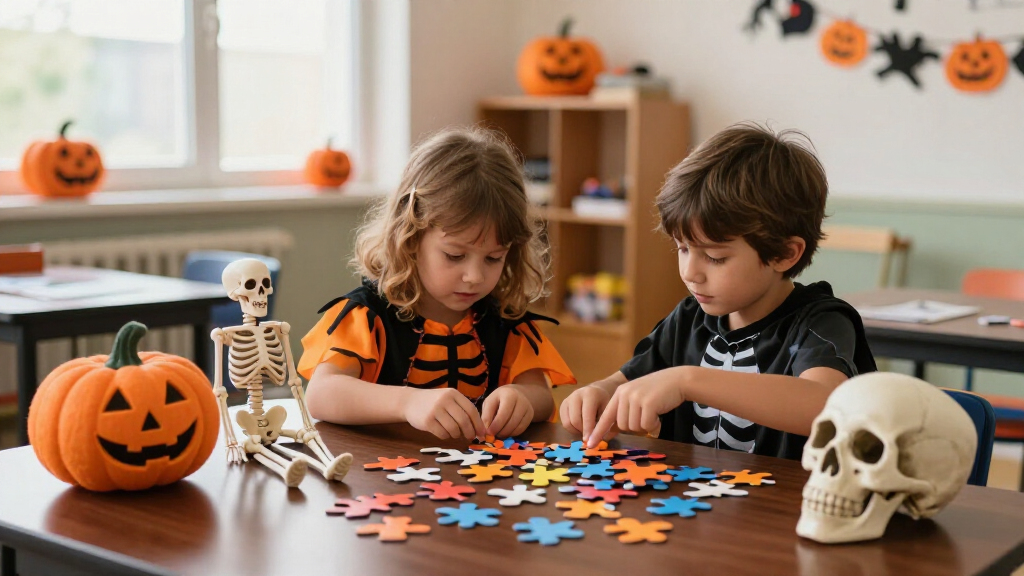
The best Halloween anatomy puzzles pair a spooky-season feel with a format that suits the learner. I’d put the Kidzlane Boy Wooden My Body Puzzle first for young children who need a simple, hands-on introduction; the Dr. Livingston Jr. 100-piece floor puzzle stands out for older kids who want a large, detailed challenge, while the Genius Games 441-piece head puzzle is the advanced pick for anatomy-minded puzzlers. The main tradeoff is between easy, tactile play and larger puzzles with more pieces or detail. Magnetic body parts and X-ray cards offer different ways to explore anatomy, but they are not substitutes for a conventional jigsaw. Read on for the full breakdown and guidance on choosing the right format.

Prime made for students and young adults
- Fast, free delivery for dorm and study essentials
- Prime Video and Amazon Music included
- Member-only deals
Key Takeaways
- Kidzlane’s 29-piece wooden board is the clearest starting point for younger children; it is more approachable than the 90-piece magnetic set or the floor puzzles.
- The Dr. Livingston Jr. floor puzzle combines a 100-piece count with a four-foot finished size, making it the strongest choice for shared, floor-based assembly.
- Gemileo’s 90 magnetic pieces favor arranging and revisiting body parts over the single-build experience of a jigsaw.
- The Genius Games 441-piece head puzzle is the most demanding puzzle here, but its head-only subject is narrower than the whole-body options.
- The 15-piece X-ray card set offers a different, compact learning format; buyers seeking a traditional puzzle should look instead at the floor or jigsaw picks.


| halloween anatomy puzzle | Brand | Material | Piece count | Model |
|---|---|---|---|---|
| Kidzlane Boy Wooden My Body Pu | Kidzlane | Wood | 29 | KL-2308 |
| Human Anatomy Kids Floor Puzzl | Genius Games | Cardboard | 100 | — |
| Gemileo Human Body Puzzle | Gemileo | Wood | 90 magnetic parts | 745681704532 |
| Learning Resources Skeleton Fl | Learning Resources | Soft foam | 15 | LER3332 |
| 15-Piece Human Skeleton X-Ray | GIFTMISSU | Cardboard cardstock | 15 | XRAYSKEL-15P |
| Genius Games Human Head Anatom | Genius Games | Cardboard | 441 | — |
More Details on Our Top Picks
Kidzlane Boy Wooden My Body Puzzle – 29-Piece Anatomy Set for Ages 3+
For younger children who are ready to move beyond a single skeleton picture, the Kidzlane Boy Wooden My Body Puzzle offers a clear progression through five body layers. Its 29 pieces introduce the skeletal, muscular, respiratory, and digestive systems, giving a parent or teacher several ways to talk about anatomy during play. Compared with the Learning Resources Skeleton Floor Puzzle, which focuses on bones, this set covers more systems in a smaller, tabletop format. The wooden pieces and rounded edges suit repeated handling, while the relatively modest piece count keeps the activity approachable for early learners. The tradeoff is that it depicts a boy only and is described as primarily single-player, so it is less suited to group play or buyers seeking a gender-inclusive set with more components, like the Gemileo Human Body Puzzle.
Pros:- Five layers introduce four major body systems rather than focusing only on bones
- Thick wooden pieces are designed for easy handling by young children
- Rounded edges support repeated play by early learners
- Compact puzzle format works better for tabletops than full-size floor puzzles
Cons:- Primarily designed for single-player use, limiting shared puzzle play
- Boy-only figure offers less representation than the Gemileo set
- Less suited to older children seeking a more demanding puzzle
Best for: Parents and preschool teachers seeking a durable, layered introduction to several body systems for children aged three and up
Not ideal for: Buyers seeking a cooperative classroom activity, a girl-and-boy set, or a full-height anatomy display
- Brand:Kidzlane
- Model:KL-2308
- Age range:3 years and up
- Material:Wood
- Piece count:29
- Dimensions:11.54 x 5.67 x 0.1 inches
- Anatomy coverage:Skeletal, muscular, respiratory, and digestive systems across five layers
Our verdict“Choose this wooden set for a young child who will benefit from a manageable, multi-system anatomy puzzle rather than a large display or group activity.”
Human Anatomy Kids Floor Puzzle – Dr. Livingston Jr.’s 100-Piece Full Body Jigsaw – 4 ft Medically Accurate Floor Puzzle for Ages 6‑10
The Dr. Livingston Jr.’s 100-Piece Full Body Jigsaw earns its place for families and classrooms that want anatomy to become a large, shared activity. Its completed four-foot image makes organs and major body features easier to examine together than the smaller format of the Kidzlane Boy Wooden My Body Puzzle. With 100 uniquely shaped cardboard pieces, it asks more of older children than the 15-piece Learning Resources Skeleton Floor Puzzle, while its medically accurate cross-section gives the finished image stronger educational detail than a simple skeleton outline. That scale has practical costs: it needs clear floor space during assembly and somewhere sizable to display it afterward. Cardboard also calls for gentler handling than the wood pieces in the Kidzlane or Gemileo sets, so this is less compelling for frequent rough play or very young puzzlers.
Pros:- Four-foot finished puzzle creates a large visual aid for anatomy discussions
- Medically accurate cross-section depicts organs and major body features
- 100 uniquely shaped pieces offer more assembly challenge than a 15-piece skeleton puzzle
- Can be displayed on a wall or floor after assembly
Cons:- Requires substantial floor space while assembling and display space afterward
- Cardboard is less durable than the wooden pieces in the Kidzlane and Gemileo puzzles
- The 100-piece format may frustrate children below its listed age range
Best for: Teachers, parents, and children aged six to ten who want a large, detailed anatomy puzzle for cooperative floor assembly
Not ideal for: Small-room households, younger children needing easy-to-handle pieces, or buyers prioritizing durable wooden construction
- Brand:Genius Games
- Puzzle type:Jigsaw floor puzzle
- Piece count:100
- Material:Cardboard
- Age range:6 years and up
- Completed size:4 ft full-body floor puzzle
- Package dimensions:10.24 x 6.69 x 1.57 inches
- Weight:1.3 pounds
Our verdict“Pick this for school-age children who have room to assemble and display a detailed, life-size anatomy image.”
Gemileo Human Body Puzzle – 90 Magnetic Pieces, Boy & Girl Anatomy Set with Skeleton, Organs, Muscles – Educational Toy for Ages 3+
For buyers who want more than one anatomy view in a single set, the Gemileo Human Body Puzzle combines boy and girl figures with skeleton, organs, and muscle puzzles. Its 90 magnetic parts and board give children a different kind of activity from the Kidzlane Boy Wooden My Body Puzzle: there is more variety and representation, but also more pieces to organize. The magnets help parts stay in place during assembly, making this a practical choice for children who might find loose pieces fiddly. Five posters add reference material, while the board and wooden stick support play beyond simply placing a layer on a flat surface. Compared with the four-foot Dr. Livingston Jr.’s 100-Piece Full Body Jigsaw, Gemileo offers several models rather than one large cross-section, but it lacks that puzzle’s dramatic finished display. Its many small parts can take time to sort and may challenge younger three-year-olds.
Pros:- Includes both boy and girl figures alongside skeleton, organ, and muscle puzzles
- Magnetic pieces help keep assemblies together on the board
- Five posters provide visual references for anatomy learning
- 90 parts offer more variety than the simpler Kidzlane layered puzzle
Cons:- Many pieces need substantial space for sorting and play
- Smaller parts may be difficult for some younger toddlers to manage
- Assembly can take long enough to frustrate children who prefer quick activities
Best for: Families and preschool programs wanting a reusable, magnetic anatomy set with boy and girl figures and several body-system views
Not ideal for: Impatient young children, small play areas, or buyers who want a single large puzzle with a quick setup
- Brand:Gemileo
- Model:745681704532
- Age range:3–12 years
- Material:Wood
- Piece count:90 magnetic parts
- Included puzzles:Girl body, boy body, skeleton, organs, and muscles
- Included accessories:Five human body posters, puzzle board, wooden stick, and gift box
Our verdict“Choose Gemileo when you want several magnetic anatomy activities and both boy and girl models, and have room to manage its many parts.”
Learning Resources Skeleton Floor Puzzle
The Learning Resources Skeleton Floor Puzzle keeps the anatomy lesson focused: children assemble a soft-foam skeleton, then turn the pieces over to see bone names. At 15 pieces, it is a gentler starting point than the Dr. Livingston Jr.’s 100-Piece Full Body Jigsaw, and its roughly four-foot finished height gives it the visual presence of a floor display without the same intricate assembly. The foam construction also offers a softer play surface than the cardboard floor puzzle or the wooden Kidzlane set. That simplicity is its main limitation. Children ready to explore organs, muscles, or more demanding piece matching may outgrow it quickly; the layered Kidzlane puzzle covers more body systems, while Gemileo offers several anatomy models. Choose this for a first lesson on bones, not as a broad or long-lasting anatomy challenge.
Pros:- Reverse side labels bone names to connect the assembled skeleton with anatomy terms
- Soft foam pieces have no sharp edges
- Approximately four-foot completed height makes the skeleton easy to view
- 15-piece format is less demanding than the 100-piece Dr. Livingston puzzle
Cons:- Only 15 pieces may provide too little challenge for older children
- Focuses on the skeleton rather than organs or other body systems
- Offers less anatomical variety than the layered Kidzlane and multi-model Gemileo sets
Best for: Preschoolers and early learners who need a simple, large-format introduction to bone names and the skeleton
Not ideal for: Older children seeking a challenging assembly, or families wanting organs and multiple body systems in one puzzle
- Brand:Learning Resources
- Model:LER3332
- Age range:3 years and up
- Piece count:15
- Material:Soft foam
- Assembled height:About 4 feet
- Puzzle design:Double-sided: illustrated skeleton on one side, bone names on the reverse
Our verdict“This is a strong first skeleton puzzle for young children, but choose another set if you want broader anatomy coverage or sustained challenge.”
15-Piece Human Skeleton X-Ray Card Set
The 15-Piece Human Skeleton X-Ray Card Set is the most decoration-focused choice here: its blue X-ray-style graphics form a roughly 4.7-foot skeleton, and adhesive dots are included for indoor wall mounting. That makes it a closer fit for a Halloween-themed classroom or homeschool display than the Learning Resources Skeleton Floor Puzzle, which uses soft foam and teaches bone names on the reverse. The cardstock pieces can also serve as a simple hands-on assembly activity before they go on the wall. By comparison, the Dr. Livingston Jr.’s 100-Piece Full Body Jigsaw offers a more detailed anatomy cross-section and a higher piece count, but not the same X-ray decoration angle. The main compromise is material: printed cardstock is not a durable three-dimensional puzzle, and its listed age recommendation is 18 years and up, which makes it a poor choice to present as a children’s toy.
Pros:- Large, approximately 4.7-foot skeleton creates a visible Halloween display
- Blue X-ray-style bone graphics give it a distinct spooky theme
- Adhesive dots are included for indoor wall mounting
- Lightweight cardstock pieces can be assembled before display
Cons:- Cardstock is less durable than foam or wooden puzzle pieces
- Listed age recommendation is 18 years and up, limiting its fit as a children’s puzzle
- Skeleton-only imagery offers less anatomy detail than the Dr. Livingston full-body cross-section
Best for: Adult Halloween hosts, teachers, or homeschoolers seeking a lightweight skeleton display with an assembly activity
Not ideal for: Parents shopping for a child’s toy, buyers wanting a durable reusable puzzle, or anyone seeking detailed organ anatomy
- Brand:GIFTMISSU
- Model:XRAYSKEL-15P
- Material:Cardboard cardstock
- Piece count:15
- Assembled height:About 4.7 ft
- Included components:15 printed skeleton pieces and round adhesive dots
- Age recommendation:18 years and up
- Display use:Indoor
Our verdict“Choose this for an adult-led Halloween wall display, not as a durable children’s anatomy puzzle.”
Genius Games Human Head Anatomy Jigsaw Puzzle, 441 Pieces
For a Halloween anatomy puzzle with a more clinical focus than a cartoon body or skeleton, this 441-piece head-and-neck cross-section puts detailed anatomy at the center. A certified medical illustrator created the medically accurate image, so the finished puzzle can serve as a learning aid as well as a display piece. Compared with the Human Anatomy Kids Floor Puzzle, which spreads a full-body image across a large format, this puzzle concentrates on one complex region and asks more of the solver.
Custom-shaped pieces add another layer of challenge, making this a better fit for older children and adults than for young beginners. The tradeoff is its intermediate difficulty and narrower subject: shoppers seeking a playful, hands-on body overview may prefer the Gemileo Human Body Puzzle. Replacement pieces or a replacement puzzle are offered for missing or damaged parts, though no product warranty is listed.
Pros:- Medically accurate cross-section illustrated by a certified medical illustrator
- 441 pieces and custom-shaped pieces provide a more involved assembly challenge
- Anatomy-focused image supports learning and can be displayed when complete
- Replacement pieces or a replacement puzzle are offered for missing or damaged parts
Cons:- Intermediate difficulty may frustrate younger or inexperienced puzzlers
- Focuses on the head and neck rather than offering a full-body anatomy overview
- No product warranty is listed
Best for: Older children, teens, or adults who enjoy intermediate jigsaws and want a medically accurate head-and-neck anatomy image for seasonal learning or display.
Not ideal for: Young beginners or families seeking a simple, hands-on full-body activity; the 441-piece count and detailed cross-section may be challenging, and the subject is limited to the head and neck.
- Brand:Genius Games
- Piece Count:441
- Material:Cardboard
- Recommended Age:8 years and up
- Skill Level:Intermediate
- Puzzle Type:Jigsaw
- Educational Objectives:Concentration, problem solving
- Model Number:GOT3001
- Series:Dr. Livingston’s Anatomy Series
Our verdict“Choose this for a Halloween anatomy activity centered on detailed head-and-neck learning, but pick a simpler or full-body puzzle for younger beginners.”
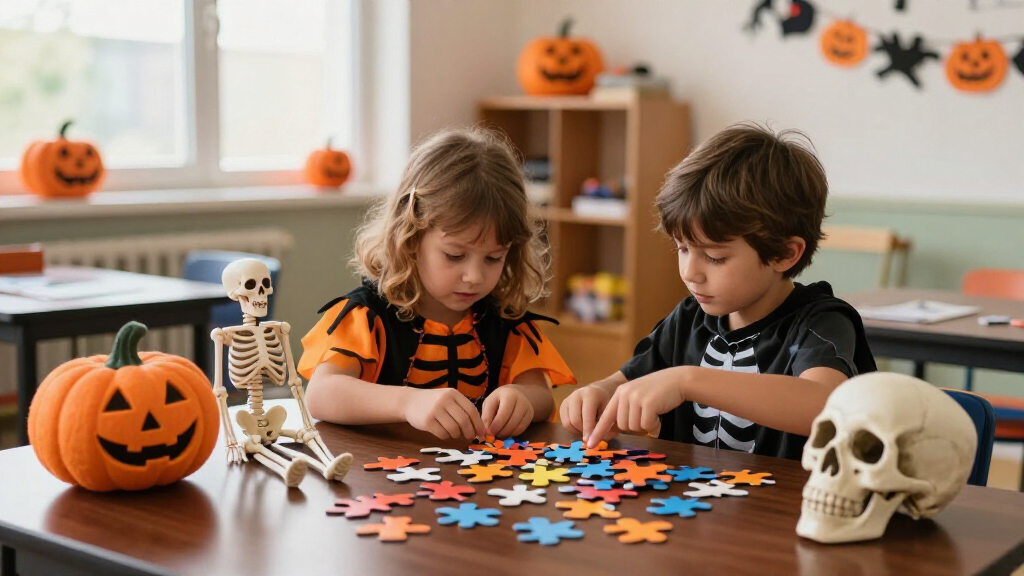
How We Picked
I compared these six options by the kind of anatomy activity they support, the complexity suggested by piece count and format, and how clearly each one fits a Halloween-season learning activity. I gave weight to age guidance, whether the puzzle invites repeated handling or a single assembly, and how much room the finished activity may require. Because the lineup ranges from a small wooden board to a large floor jigsaw and a high-piece-count head puzzle, I judged each against its intended buyer rather than treating piece count as a universal measure of quality.
The ranking favors approachable, broadly useful options first, then choices with stronger appeal for a particular age, setting, or puzzle style. The Kidzlane board leads for its accessible entry point; the large Dr. Livingston Jr. puzzle ranks next for families wanting a shared challenge. Magnetic play, skeleton-focused assembly, X-ray cards, and the advanced head jigsaw each serve narrower needs, so their lower placement reflects fit for a general roundup rather than a lack of value for the right buyer. I did not assume that anatomy detail, durability, or included teaching materials exceed what the product information states.
| halloween anatomy puzzle | Brand | Material |
|---|---|---|
| Kidzlane Boy Wooden My Body Pu | Kidzlane | Wood |
| Human Anatomy Kids Floor Puzzl | Genius Games | Cardboard |
| Gemileo Human Body Puzzle | Gemileo | Wood |
| Learning Resources Skeleton Fl | Learning Resources | Soft foam |
| 15-Piece Human Skeleton X-Ray | GIFTMISSU | Cardboard cardstock |
| Genius Games Human Head Anatom | Genius Games | Cardboard |
Factors to Consider When Choosing Halloween Anatomy Puzzles
For a Halloween activity, the right anatomy puzzle depends on more than a spooky theme. Match the format to the child’s age, the way they like to play, and whether you want a quick conversation starter or a substantial build.
Match the challenge to the child, not just the age label
Age guidance is a useful starting point, but a child’s comfort with small parts, visual matching, and sustained attention matters just as much. A low piece count can still involve unfamiliar body-part vocabulary, while a large floor puzzle may feel manageable when several people work together. Avoid choosing solely by the highest piece count: it can turn a seasonal activity into a frustrating task if the learner is not ready. For a group with mixed ages, a simpler puzzle lets younger children take part while adults add anatomy context. More advanced puzzlers may prefer a narrower, detailed challenge rather than a whole-body layout. Check the maker’s age guidance and supervise younger children around pieces.
Choose between assembling, arranging, and studying
Not every product called an anatomy puzzle offers the same kind of play. A jigsaw focuses on fitting pieces into a finished image, while magnetic parts support repeated placement and rearrangement. A card set may be better for short prompts or discussion than for the hands-on satisfaction of completing a board. Before buying, decide whether the goal is a sit-down puzzle session, open-ended body-part exploration, or a compact learning aid. A common mismatch is expecting cards or magnets to provide the same sustained challenge as a conventional jigsaw. If you want one item to support several styles of play, check whether its pieces can be reused in different configurations rather than assuming they can.
Plan for the puzzle’s footprint
Large floor puzzles can turn anatomy into a shared event, but they need clear floor space and room for people to move around the image. A table-sized board is easier to keep contained, while magnetic pieces and cards are generally easier to bring out for brief activities. Think about where the puzzle will be assembled and whether you can leave it in place if the activity takes more than one session. Buyers often focus on the piece count and overlook the finished dimensions. For a classroom or party, a large format may help a group gather around; for a small home, a compact format may see more use. Check the listed dimensions and storage needs before choosing.
Decide how much anatomy detail is useful
More body parts do not automatically make a better learning activity. Younger children may benefit from a clear, basic layout, while older kids can be ready for separate systems or a more focused image. A skeleton-only puzzle narrows the topic and can make bones easier to discuss without introducing every organ at once. A head-focused puzzle offers concentrated detail but does not cover the full body. Consider what you want the child to learn or talk about, and check whether the product description specifies the anatomy included. Do not assume a puzzle is medically detailed simply because it uses anatomy language. If accuracy is a priority, verify the stated content and any educational guidance before purchase.
Weigh repeat play against a single completed build
Jigsaw puzzles offer a clear finish line, which suits children who enjoy solving and completing a picture. Repositionable magnets can support repeat play, though the experience depends on how the pieces are designed and stored. Cards are easy to revisit in short bursts but may not feel like a full puzzle project. Ask whether the child prefers rebuilding the same image, changing arrangements, or using pieces as conversation prompts. Storage also affects repeat use: loose parts are easier to misplace, while a board can give pieces a defined home. For a Halloween activity you plan to bring out each year, choose a format that can be packed away and reset without much fuss.
Frequently Asked Questions
Which option is best for a child who has never tried an anatomy puzzle?
I’d start with the Kidzlane wooden body puzzle because its 29-piece format is less demanding than the 90-piece magnetic set or the larger jigsaws. An adult can name body parts as the child places them, turning assembly into a conversation rather than a test. If the child prefers moving pieces around instead of matching shapes, Gemileo’s magnetic format may be a better fit. Check the product’s age guidance and supervise children who may mouth small pieces. The best beginner choice is the one the child can handle without needing constant help.
Is a large floor puzzle worth choosing over a smaller anatomy puzzle?
A floor puzzle makes more sense when you have enough space and want children to work together around a large image. The Dr. Livingston Jr. puzzle is listed as four feet across, so it needs a suitable area and may be awkward to leave assembled in a busy room. A smaller board takes less room and is easier to bring out for a short session. Think about storage as well as assembly space, especially if the puzzle will be used at home rather than at an event. The large format is a benefit only when the setting can support it.
Should I choose the magnetic body set or a traditional jigsaw?
Choose magnets if the goal is to place and rearrange body parts repeatedly; choose a jigsaw if the child enjoys matching pieces toward one completed image. The Gemileo set’s 90 magnetic pieces offer a different activity from the fixed assembly of the wooden board or floor puzzles. Magnets may suit short, open-ended sessions, while jigsaws can provide a more defined challenge. Check what surfaces the magnets are intended for and how the pieces are stored, since loose components can be misplaced. Neither format is automatically more educational; the better choice depends on how the child likes to play.
Which puzzle works best for a classroom or Halloween party?
For a group activity with room to gather, a large floor puzzle is the most natural fit among these options. Its scale gives several children a chance to help, though the group will need enough clear floor space and an adult to guide turn-taking. A compact card set can work better for rotating stations or brief anatomy prompts, but it does not offer the same shared build. Consider the group’s ages and whether children can collaborate without crowding one another. If the event has limited space or time, a smaller format may be easier to manage.
Is the 441-piece head puzzle suitable for a child interested in anatomy?
The Genius Games head puzzle is the most advanced assembly in this lineup by piece count, so it suits a puzzler ready for a longer, more demanding build. Its subject is the head rather than the entire body, which can appeal to someone who wants a focused topic but may disappoint a buyer seeking a broad anatomy overview. Check the listed age guidance and the image detail before choosing it for a younger child. For a first anatomy activity, the lower-piece-count options are less likely to feel overwhelming. This puzzle makes the most sense when the child already enjoys jigsaws and has a specific interest in head anatomy.
Conclusion
My best overall pick is the Kidzlane wooden body puzzle for a straightforward introduction that fits younger learners. For best value in versatility, I’d choose Gemileo if the child will get more from rearranging magnetic parts than completing a fixed image. The best premium-style challenge is the 441-piece Genius Games head puzzle for experienced puzzlers; the Dr. Livingston Jr. floor puzzle is the stronger choice for a big shared activity. For beginners, start with Kidzlane, while the best specific pick for compact anatomy prompts is the 15-piece X-ray card set. Choose Learning Resources Skeleton Floor Puzzle if a skeleton-focused floor build is the priority. Match the format to the learner and the space available, and the Halloween theme can add seasonal appeal without making the activity harder to use year-round.
Fall Picks
fall essentials
As an affiliate, we earn on qualifying purchases.