
TL;DR

Prime made for students and young adults
- Fast, free delivery for dorm and study essentials
- Prime Video and Amazon Music included
- Member-only deals
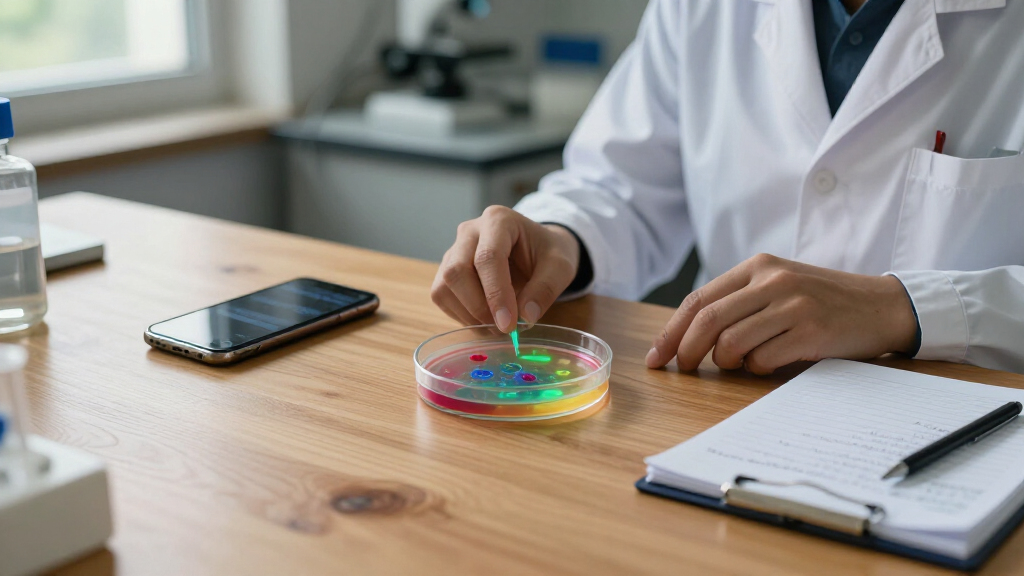
Researcher Claude has identified a new enzyme system containing repeats similar to CRISPR sequences. The discovery is confirmed but its functions and applications are still under investigation. This could impact gene editing and biotechnology fields.
Researcher Claude has confirmed the discovery of a novel enzyme system featuring CRISPR-like repeats, a finding that could have significant implications for gene editing and biotechnology. The discovery was announced by Claude’s team after initial analyses identified unique repeat sequences similar to those found in known CRISPR systems, but with distinct structural differences. This breakthrough is confirmed, though the full functional characterization of the enzyme system remains ongoing.
Claude’s team reported that the enzyme system was isolated from a microbial source during a recent genomic screening project. The system contains repeat sequences that resemble CRISPR arrays, which are known for their role in bacterial adaptive immunity and gene editing technologies. The team verified the presence of these repeats through sequencing and bioinformatics analysis, confirming the structural similarity to CRISPR but noting notable differences in the repeat sequence motifs.
While the discovery is confirmed, the functional properties of this enzyme system are not yet fully understood. Preliminary experiments suggest it may have nucleic acid targeting capabilities, but researchers have not yet demonstrated its activity in gene editing or defense mechanisms. Further laboratory studies are underway to determine how the enzyme interacts with DNA or RNA and whether it can be harnessed for biotechnological applications.
Potential Impact on Gene Editing Technologies
This discovery could expand the toolkit available for gene editing and molecular biology. If the enzyme system exhibits unique targeting or editing capabilities, it may lead to the development of new biotechnological tools. The presence of CRISPR-like repeats raises the possibility of novel mechanisms for nucleic acid recognition or cleavage, potentially offering alternatives to existing CRISPR-Cas systems. However, the significance remains speculative until functional assays are completed and the enzyme’s capabilities are fully characterized.
As an affiliate, we earn on qualifying purchases.
Emerging Interest in CRISPR Variants and Enzyme Systems
The scientific community has shown increasing interest in discovering new CRISPR-related systems beyond the well-characterized Cas proteins. Recent years have seen multiple reports of novel CRISPR variants with different properties, often from unexplored microbial sources. This trend reflects ongoing efforts to diversify gene editing tools and understand bacterial immune systems. The current discovery by Claude adds to this growing body of research, although it is still in the early stages of validation.
Search interest around CRISPR variants and enzyme systems has spiked recently, driven by scientific publications and media coverage. However, the specific discovery by Claude remains unconfirmed in broader scientific publications, and details about its potential applications are still emerging.
As an affiliate, we earn on qualifying purchases.
Unconfirmed Aspects and Research Gaps
While the presence of CRISPR-like repeats has been confirmed through sequencing, the functional role of this enzyme system remains unclear. It is not yet known whether it can target nucleic acids in vivo, or if it possesses gene editing capabilities similar to known CRISPR-Cas systems. The potential applications, such as in biotechnology or medicine, are still speculative. Researchers have not yet published peer-reviewed data demonstrating activity or utility, and further experiments are needed to establish these properties.
DNA nucleic acid targeting enzymes
As an affiliate, we earn on qualifying purchases.
As an affiliate, we earn on qualifying purchases.
Next Steps in Characterizing the Enzyme System
Researchers plan to conduct detailed functional assays to determine the enzyme’s activity, specificity, and potential for gene editing. Additional sequencing and structural studies are expected to clarify how this system compares to existing CRISPR components. The discovery will likely be subject to peer review and validation by the broader scientific community. If promising, it could lead to the development of new biotechnological tools or therapies in the future.
As an affiliate, we earn on qualifying purchases.
Key Questions
What makes this enzyme system similar to CRISPR?
The system contains repeat sequences that resemble CRISPR arrays, which are known for their role in bacterial immune defense and gene editing. However, its exact function and activity are not yet confirmed.
Could this discovery lead to new gene editing tools?
Potentially, yes. If the enzyme demonstrates targeted nucleic acid activity, it could be developed into a new gene editing technology. But this remains speculative until further research is completed.
Has this enzyme system been tested in living organisms?
No, the current findings are based on sequencing and preliminary analysis. Functional tests in vivo are still in progress.
Why is this discovery significant?
It could expand the diversity of available gene editing tools and deepen understanding of bacterial immune systems. Its unique features might enable new approaches in biotechnology and medicine.
When will more details about this enzyme system be available?
Further experimental results are expected in the coming months as researchers complete functional analyses and peer review the findings.
Source: hn
Fall Picks
fall essentials
As an affiliate, we earn on qualifying purchases.