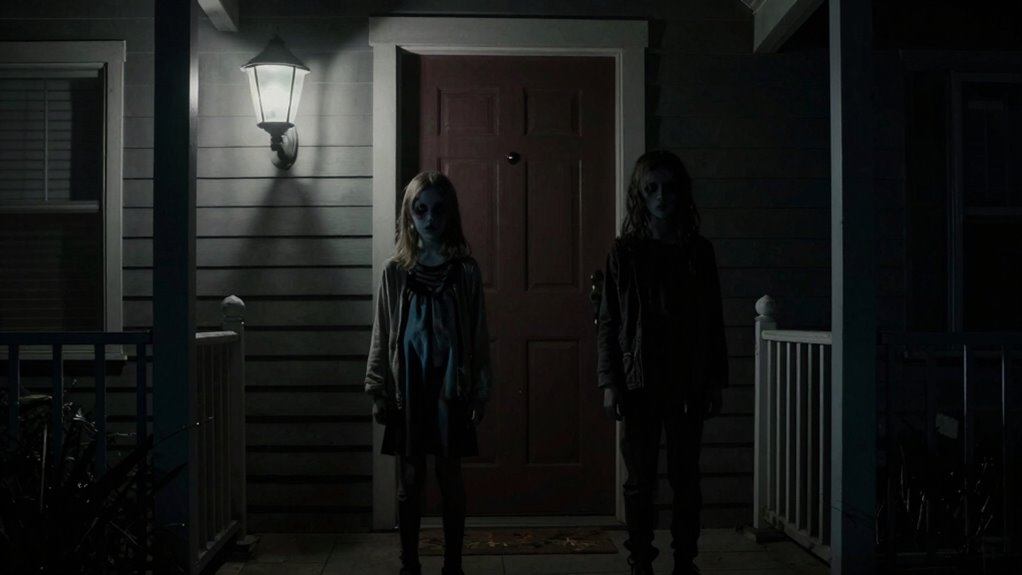
The Black Eyed Children symbolize modern fears of strangers at your door, blending folklore with anxiety about trusting unknown people. Stories show children with completely black eyes, often appearing innocent but hiding malicious intent. This phenomenon taps into your subconscious worries about safety, fueling paranoia and distrust. These tales amplify the universal fear of hidden dangers and the unknown, creating a lasting sense of vulnerability. If you keep exploring, you’ll uncover more about how these legends influence our perceptions of safety and trust.

Prime made for students and young adults
- Fast, free delivery for dorm and study essentials
- Prime Video and Amazon Music included
- Member-only deals
Key Takeaways
- The Black Eyed Children phenomenon revives fears of trusting strangers, blending folklore with modern urban legend.
- Stories evoke subconscious fears, creating feelings of dread and danger when encountering unfamiliar children.
- These legends amplify anxiety about appearances masking malicious intent, emphasizing caution with strangers at the door.
- The phenomenon impacts mental health by causing anxiety, sleep issues, and heightened vigilance.
- It symbolizes the fragile boundary between safety and threat, merging supernatural fears with everyday urban anxieties.
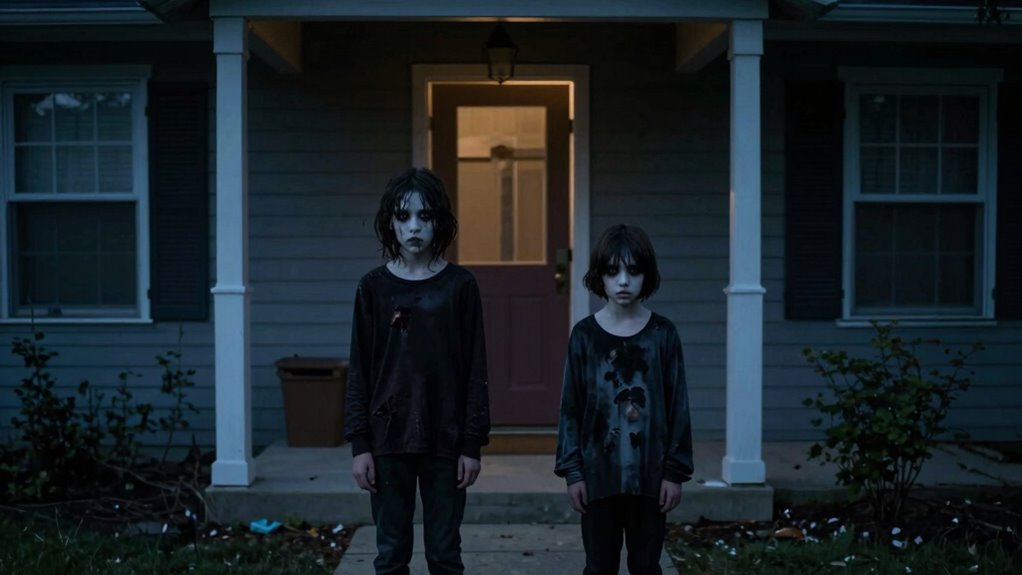
In recent years, the eerie phenomenon of Black Eyed Children has reignited fears of the stranger-at-the-door, blending modern urban legend with age-old anxieties about trusting unknown visitors. These stories circulate online and through word of mouth, creating a chilling sense that something sinister lurks behind innocent appearances. You might hear accounts where people encounter children with completely black eyes—no sclera, no iris—standing silently on their doorstep, asking to be let inside. These encounters tap into deep-seated fears of intrusion and vulnerability, which are as old as human society itself. As urban legends, these tales evolve with each retelling, often becoming more detailed and unsettling, fueling collective anxieties about who might be lurking just outside your home.
What makes the Black Eyed Children stories particularly disturbing isn’t just the supernatural element, but how they exploit your psychological vulnerabilities. When you hear about these encounters, it’s easy to imagine yourself in the victim’s shoes—feeling that initial curiosity, then creeping dread as you realize something’s wrong. The stories often describe a sense of inexplicable fear, a gut feeling that warns you to stay away. That psychological effect is powerful; it triggers your subconscious fears of the unknown and of losing control. These tales aren’t just scary stories—they influence your perception of safety, making you question every knock on the door or ring of the bell, especially when you’re alone.
The stories also serve as cautionary urban legends, warning you about trusting strangers, especially those who seem out of place or behave oddly. They tap into the universal anxiety about the stranger at the door, amplifying the fear that something more sinister could be hidden behind innocent appearances. This psychological impact isn’t just about fear—it can cause real anxiety, sleep disturbances, and heightened vigilance. The idea that children with black eyes could be malicious entities or supernatural beings makes you wonder if appearances are deceiving, and whether you should always be wary of who’s knocking. Moreover, these stories often highlight the importance of recognizing urban legend patterns and understanding their role in shaping collective fears.
Ultimately, the Black Eyed Children stories reinforce the age-old idea that some strangers can threaten your safety, but they do so in a way that’s amplified by modern urban legends. They blend folklore with contemporary fears, creating a psychological effect that lingers long after the story ends. Whether you believe in their supernatural roots or see them as symbolic stories, these tales remind you of the fragile boundary between safety and danger, especially when you least expect it—at your own doorstep.
doorbell camera with night vision
As an affiliate, we earn on qualifying purchases.
As an affiliate, we earn on qualifying purchases.
Frequently Asked Questions
Are Black Eyed Children Stories Based on Real Encounters or Urban Legends?
Black eyed children stories are generally considered urban legends with uncertain supernatural origins. You might find some accounts believable, but most lack solid evidence, making their urban legend credibility questionable. While some people claim to have encountered these children, these stories tend to spread through online forums and local tales. Overall, it’s safe to say that black eyed children stories are more myth than fact, rooted in folklore rather than confirmed real encounters.
How Has Social Media Impacted the Spread of Black Eyed Children Sightings?
Social media has profoundly amplified the spread of black-eyed children sightings by turning them into viral narratives within digital folklore. You’ll notice how stories quickly gain traction, with people sharing their encounters and creating a communal sense of mystery. This rapid sharing fosters a sense of authenticity and fear, making the tales feel more real. As a result, these sightings become part of a larger, online cultural phenomenon that feeds curiosity and speculation.
What Psychological Factors Contribute to the Fear of Strangers at the Door?
Imagine your fear response as a fire alarm triggered at the sight of an unfamiliar face at your door. Paranormal psychology suggests that our fear of strangers stems from evolutionary survival instincts, heightened by social conditioning. When you see someone unexpected, your brain may interpret it as a threat, activating this deep-seated fear. This instinctual reaction keeps you alert and cautious, even when the threat is purely psychological or supernatural in nature.
Are There Cultural Differences in the Perception of Black Eyed Children?
You’ll notice that cultural myths and folklore variations shape how black-eyed children are perceived across different societies. In some cultures, they’re seen as sinister or supernatural entities, while others interpret them as omens or spirits. These contrasting perceptions influence your reactions and fears, making you more wary or accepting depending on local stories and beliefs. Your understanding of these variations deepens your awareness of how folklore impacts modern fears.
How Can Individuals Protect Themselves From Potentially Harmful Strangers?
To protect yourself from potentially harmful strangers, prioritize personal safety by trusting your instincts and avoiding risky situations. Stay aware of your surroundings and maintain community awareness, such as sharing your whereabouts with trusted friends or family. Keep doors and windows locked, and don’t hesitate to call authorities if someone behaves suspiciously. By staying alert and connected, you can reduce the risk of harm and foster a safer environment for everyone.
As an affiliate, we earn on qualifying purchases.
Conclusion
As you stand in the dim glow of your porch light, the black-eyed children’s hollow stares linger in your mind, like shadows stretching beyond the edges of night. Their silent presence whispers a modern stranger-at-the-door dread, blending innocence with an unsettling void. In that fleeting moment, you realize fear isn’t just in what you see, but in the emptiness behind those eyes—an eerie reminder that sometimes, the most terrifying strangers wear familiar faces, hiding darkness where light should be.
video doorbell with motion detection
As an affiliate, we earn on qualifying purchases.
As an affiliate, we earn on qualifying purchases.
As an affiliate, we earn on qualifying purchases.
Fall Picks
fall essentials
As an affiliate, we earn on qualifying purchases.