TL;DR

Prime made for students and young adults
- Fast, free delivery for dorm and study essentials
- Prime Video and Amazon Music included
- Member-only deals
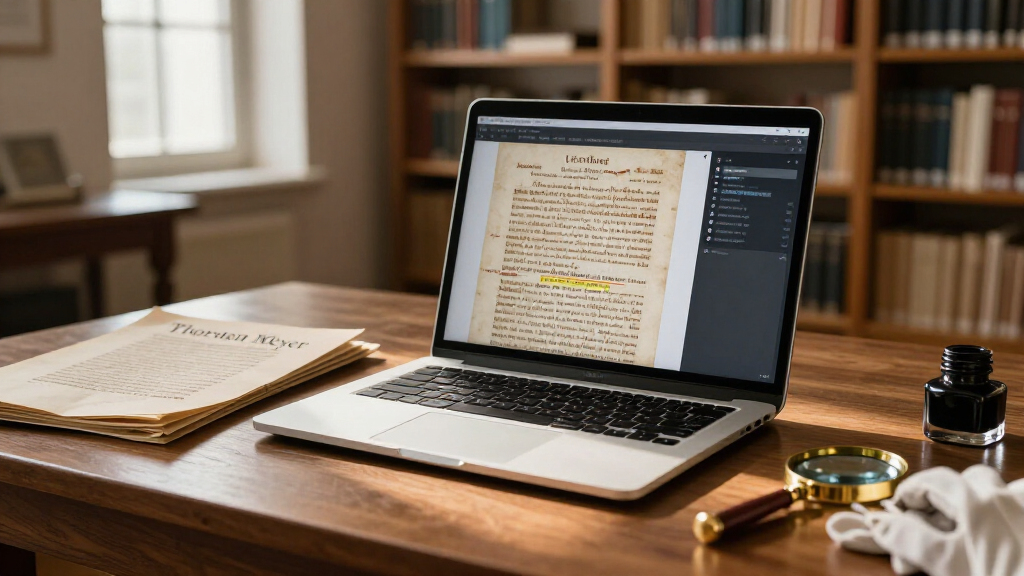
Online interest is spiking around the idea of using large language models to trace alchemical knowledge networks and decode 17th century correspondence. The underlying research fields are real and long-established, but the specific trigger for the current surge is unconfirmed.
Interest is spiking in the use of large language models (LLMs) to study historical alchemy and to decode 17th century letters, with search queries and online coverage of the topic climbing noticeably. The surge points to growing public curiosity about whether AI text tools can help historians read censored, ciphered, or faded manuscripts and reconstruct how alchemical ideas moved between thinkers centuries ago. What exactly triggered the current wave of attention is not confirmed, and no single announcement, paper, or discovery could be verified as its cause.
The phrase covers two related but distinct areas of work. The first is computational analysis of alchemical texts: alchemists across early modern Europe wrote in Latin and vernacular languages, often using coded vocabulary, pseudonyms, and deliberately obscure symbols for substances and processes. Historians have long studied these manuscripts manually. In recent years, researchers have applied digital methods — transcription tools, network analysis, and language models — to map who cited whom, which recipes circulated where, and how terminology shifted between authors and regions.
The second area is AI-assisted decipherment of historical documents. This is an established field with verified precedents: in 2023, researchers announced that a machine-learning pipeline had helped read charred, previously unreadable scrolls from Herculaneum, a project known as the Vesuvius Challenge. Separately, in 2024, a team reported in the journal Nature that a 17th century collection of encrypted letters held by the Bibliothèque nationale de France’s Satigny collection had been substantially deciphered with computational assistance, revealing diplomatic correspondence of the Holy Roman Emperor Leopold I. Those projects demonstrated that computational approaches can recover text that human scholars could not read within reasonable timeframes.
What the current spike reflects is plausibly a convergence: readers encountering these successes and wondering whether the same techniques — now supercharged by general-purpose LLMs rather than purpose-built models — could be applied to alchemy manuscripts and 17th century correspondence. That connection is an interpretation, not a confirmed fact about any new research result.
Why AI Meets Alchemy Matters
If LLMs can reliably help with alchemical and early modern manuscripts, the payoff for historians is substantial. Alchemical texts are abundant and under-studied: archives across Europe hold thousands of manuscripts that were never transcribed, partly because the writing is deliberately obscure and partly because trained readers are scarce. Tracing knowledge transmission — which ideas travelled, between whom, and when — currently depends on laborious manual comparison. Language models that can handle historical spelling variation, Latin, and multilingual sources could accelerate that work dramatically.
The stakes also extend beyond alchemy itself. Alchemy overlaps with the early history of chemistry, medicine, and craft technology. Mapping its networks more completely could reshape understanding of how experimental practices spread in the centuries before modern science institutionalised. And the same techniques apply to diplomatic ciphers, family correspondence, and administrative records from the same period — the 17th century was a peak era for encrypted letters, as the 2024 decipherment showed.
There are also real cautions. LLMs can confidently fabricate translations or readings, and historians have raised concerns that AI-generated transcriptions must be checked against the original documents before being treated as evidence. The technology assists experts; it does not replace the need for them.
Top picks for "llms trace alchemical"
As an affiliate, we earn on qualifying purchases.
From Herculaneum Scrolls to Encrypted Letters
Computational decipherment is not new, but its recent successes have moved it into public view. The Vesuvius Challenge, launched in 2023, used machine learning to detect ink patterns in X-ray scans of scrolls carbonised by the eruption of Mount Vesuvius, yielding the first readable passages from texts that had been sealed for nearly two millennia.
In 2024, researchers published in Nature the decipherment of hundreds of 17th century encrypted letters, work largely credited to a team that combined computational methods with historical expertise, opening a cache of correspondence from the 1670s–1680s. Earlier landmark efforts, such as the 2023 decipherment of the Herculaneum scrolls and long-running computational work on the Dead Sea Scrolls, established that pattern-recognition tools could succeed where generations of human readers failed.
Alchemy studies, meanwhile, have their own digital-history tradition, including databases of alchemical texts and projects transcribing manuscript collections. The application of general-purpose LLMs — trained on broad text corpora rather than built for one archive — to this material is the newer and less settled part of the picture.
What Is Unconfirmed Here
The specific cause of the current interest spike is unverified. It is not confirmed whether it stems from a newly published paper, a conference presentation, a documentary or podcast segment, a viral social media post, or a new AI tool release. No named project, institution, or researcher has been verified as launching a specific initiative to trace alchemical knowledge or decode a particular set of 17th century letters using LLMs.
It is also unclear whether any claimed AI readings of alchemical manuscripts have been peer-reviewed or independently verified. The established decipherment successes cited above predate general-purpose LLMs and used bespoke computational methods; their results should not be taken as proof that off-the-shelf LLMs can perform equivalent work on alchemical texts. Claims circulating in social contexts about AI ‘solving’ alchemy or reading previously impenetrable letters should be treated as unconfirmed unless backed by named, published research.
Where This Research Goes From Here
Watch for peer-reviewed publications that specifically apply large language models to alchemical corpora or 17th century correspondence — conference proceedings in digital humanities and history of science are the likeliest venues. Projects of this kind typically announce transcription benchmarks, comparisons against human experts, and released datasets, which would allow independent verification.
For readers following the topic, the reliable developments to track are the established teams behind prior decipherment successes, digital-history centres working on early modern manuscripts, and any institutional announcements from major archives holding alchemical collections. Until a named project is confirmed, the current surge is best understood as public interest running ahead of a verifiable news event.
Key Questions
Have LLMs actually decoded 17th century letters?
Not confirmed as a general capability. A verified 2024 Nature paper reported computational decipherment of 17th century encrypted letters, but that effort used purpose-built methods rather than general-purpose LLMs. Claims that LLMs specifically have decoded such letters should be treated as unconfirmed.
Why are alchemical texts hard to read?
Alchemical authors frequently used coded terminology, symbols, and pseudonyms for substances and procedures, partly to protect trade secrets and partly by tradition. Handwriting, spelling variation, and multiple languages add further barriers for modern readers.
What verified AI decipherments have happened so far?
The best-known confirmed cases include the Vesuvius Challenge readings of Herculaneum scrolls announced from 2023, and the 2024 decipherment of a 17th century encrypted letter collection published in Nature. Both used tailored computational pipelines, not off-the-shelf chatbots.
Can LLMs be trusted to translate old manuscripts accurately?
Only with expert oversight. Language models can produce fluent but invented readings, and historians stress that AI output must be checked against original documents before being used as historical evidence.
Is there a specific new project behind this story?
None has been verified. The current attention appears to be a trend signal; no specific paper, tool launch, or named research team has been confirmed as the trigger.
Source: hn
Halloween Picks
halloween
As an affiliate, we earn on qualifying purchases.