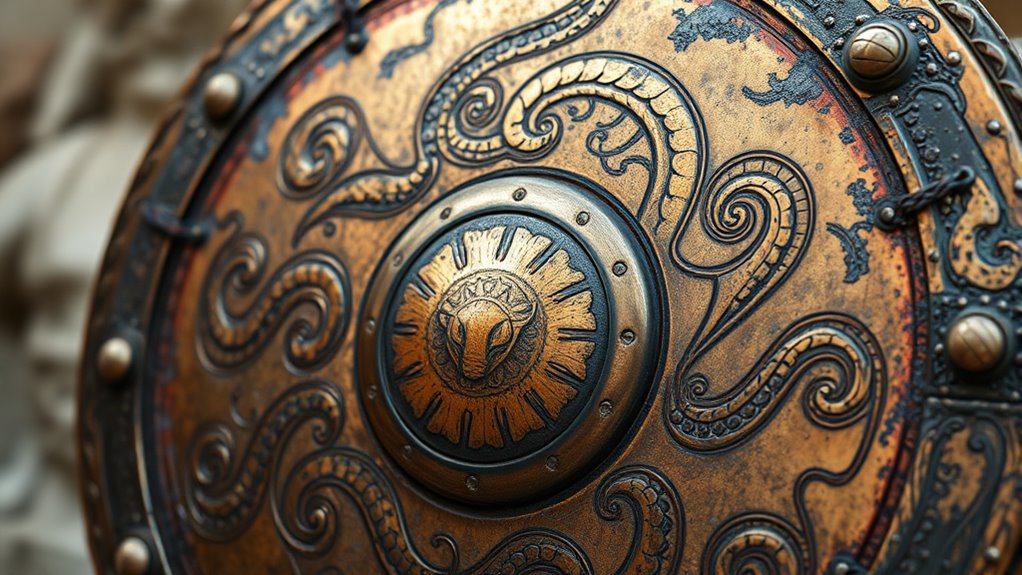

Gorgon shields associated with Perseus combine mythological symbolism with advanced ancient metallurgy. They are crafted from metals like bronze, often decorated with gold or silver inlays, showing skilled forging, gilding, and inlay techniques. These shields served as divine protection symbols and reflected technological mastery in alloying and craftsmanship. By exploring their material composition and historical context, you’ll discover how mythology and metallurgy intertwined, revealing fascinating insights into ancient technological achievements and cultural beliefs.
Play games included with Prime
Start a Prime free trial and play with Amazon Luna on your devices.
As an affiliate, we earn on qualifying purchases.
Key Takeaways
- Metallurgical analysis shows Perseus’s shield was crafted from bronze alloys with gold or silver inlays for decorative and symbolic purposes.
- Scientific evidence indicates layered forging, gilding, and inlay techniques used to enhance both durability and mythic symbolism.
- Actual shields prioritized practicality, while mythological depictions exaggerated features like Medusa’s face for protective and symbolic effects.
- Gorgon shields embody divine power and protection, blending mythic symbolism with advanced ancient metallurgical craftsmanship.
- Archaeological finds and scientific studies confirm the use of sophisticated metallurgical techniques in creating myth-inspired shields.
As an affiliate, we earn on qualifying purchases.
The Origin of Gorgon Shields in Mythology and Art
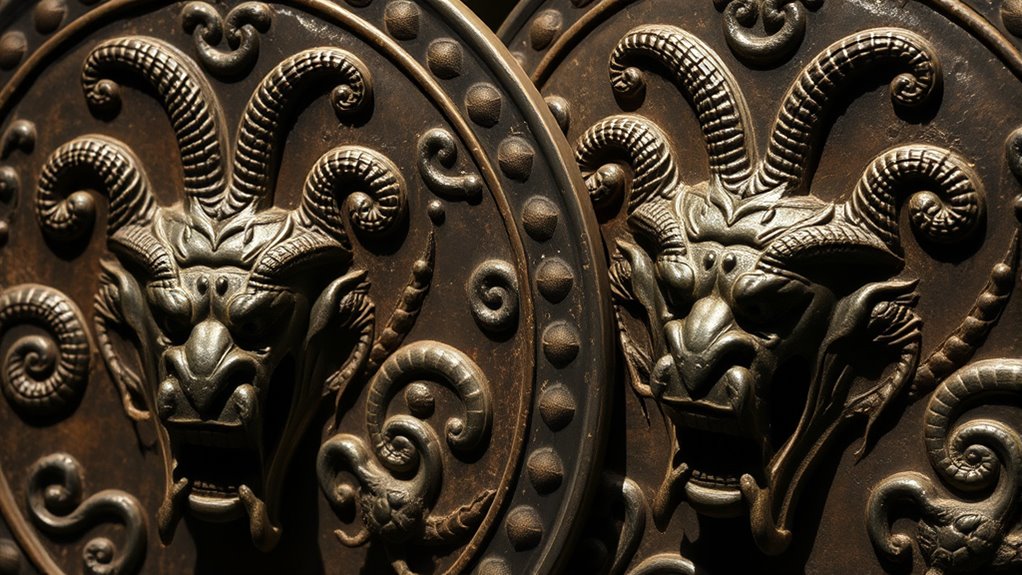
The Gorgon shields in mythology and art originate from the powerful imagery associated with Medusa, one of the most infamous Gorgons. These shields serve as striking examples of artistic symbolism, embodying fear, protection, and divine power. Artists and artisans used Gorgon imagery to evoke awe and ward off evil spirits, turning Medusa’s terrifying face into a symbol of protection rather than menace. The Gorgon shields’ design reflects this duality, blending frightening features with their role as protective talismans. Over time, this symbolism extended beyond mythology into art and armor, transforming Medusa’s visage into a universal emblem. By incorporating Gorgon shields into their work, creators communicated complex themes of danger, power, and divine intervention, making these shields enduring symbols in both myth and art.
As an affiliate, we earn on qualifying purchases.
Material Composition of Ancient Shields and Artifacts

Understanding what ancient shields and artifacts were made of reveals much about their craftsmanship and durability. You’ll see how metallurgical techniques affected their strength and how material choices influenced their preservation over time. Comparing their actual composition to mythological descriptions highlights the differences between legend and reality.
Metallurgical Techniques Used
Ancient metallurgists employed a variety of techniques to craft the sturdy shields associated with Perseus, often combining different metals to achieve ideal strength and appearance. Ancient forging was central to shaping thick bronze or copper sheets, ensuring durability against enemy strikes. Skilled artisans also used decorative plating, applying thin layers of precious metals like gold or silver to enhance visual appeal and signify status. These techniques allowed them to create both resilient and visually striking surfaces, often mimicking mythological symbols such as the Gorgon’s visage. The metallurgists carefully controlled temperature and cooling processes to optimize metal properties, while decorative plating added intricate detail without compromising structural integrity. Together, these methods highlight advanced craftsmanship and a sophisticated understanding of metallurgy that combined functionality with artistry.
Material Durability Factors
Material composition played a essential role in determining the durability of ancient shields and artifacts, as the specific metals and alloys used directly influenced their strength and resilience. Variations in alloy composition affected how well the shield resisted metal corrosion over time, which is critical for preservation. For example, higher copper content in alloys could increase corrosion susceptibility, weakening the material. Alloy variability also impacted flexibility and shock absorption, affecting overall durability. You should consider that ancient metallurgists selected materials carefully, often blending metals to optimize resistance against environmental factors. Understanding these material factors reveals why some shields survived centuries while others deteriorated quickly. Ultimately, the metal composition’s influence on corrosion resistance and alloy variability shaped the longevity of these artifacts.
Composition vs. Mythology
The composition of shields and artifacts often reflects a blend of practical metallurgy and the myths that surrounded their creation. When examining gorgon shields, metallurgical analysis helps distinguish myth from material reality. These shields, celebrated for their mythic power, may contain alloys or decorative elements that align with cultural stories. However, metallurgical analysis can reveal whether their construction was purely functional or intentionally mythicized, blending precious metals or unique alloys to evoke divine or monstrous qualities. Understanding the actual composition allows you to question if their legendary status stems from symbolic myth or material craftsmanship. This comparison between the physical makeup and the mythological significance helps clarify how ancient artisans combined metallurgy and storytelling, shaping the iconic image of gorgon shields as both practical defenses and mythic symbols.
As an affiliate, we earn on qualifying purchases.
Metallurgical Techniques in Ancient Greece and Beyond
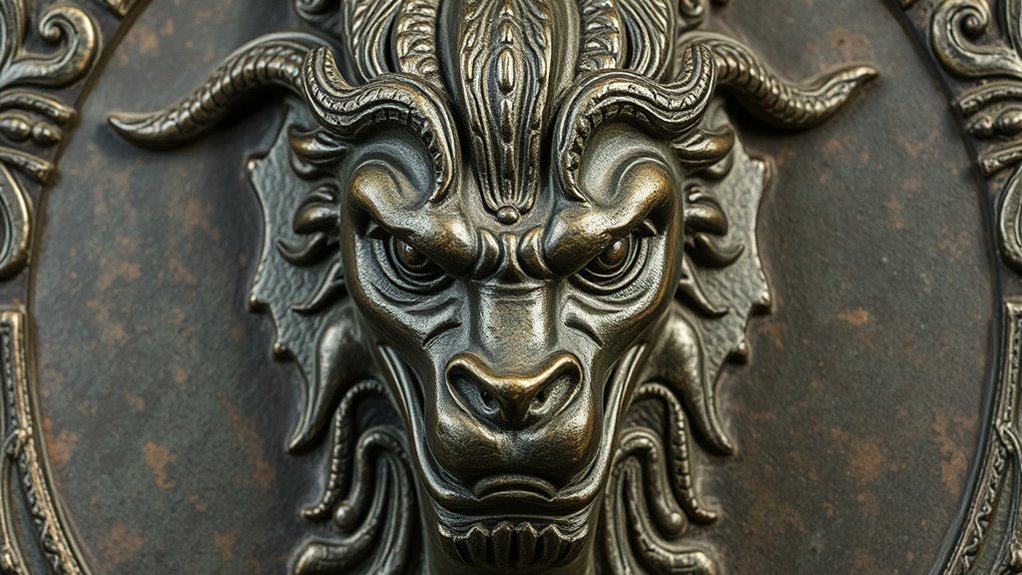
Metallurgical techniques in ancient Greece and beyond showcase remarkable ingenuity in extracting, refining, and shaping metals. You can see this in the mastery of ancient forging, where artisans heated and hammered metals to create durable tools and weapons. Metal alloying played a vital role, allowing craftsmen to combine metals like copper and tin to produce bronze with enhanced strength and corrosion resistance. These techniques required precise control of temperature and timing, demonstrating sophisticated understanding of metallurgical properties. Beyond Greece, other cultures also advanced these methods, developing unique alloys and forging techniques. The skill involved in these processes contributed to the production of iconic artifacts, including weapons, armor, and decorative items like shields. Their metallurgical expertise laid the groundwork for technological progress that shaped civilizations.
ancient metallurgical shield replica
As an affiliate, we earn on qualifying purchases.
As an affiliate, we earn on qualifying purchases.
Archaeological Discoveries of Gorgon-Decorated Artifacts
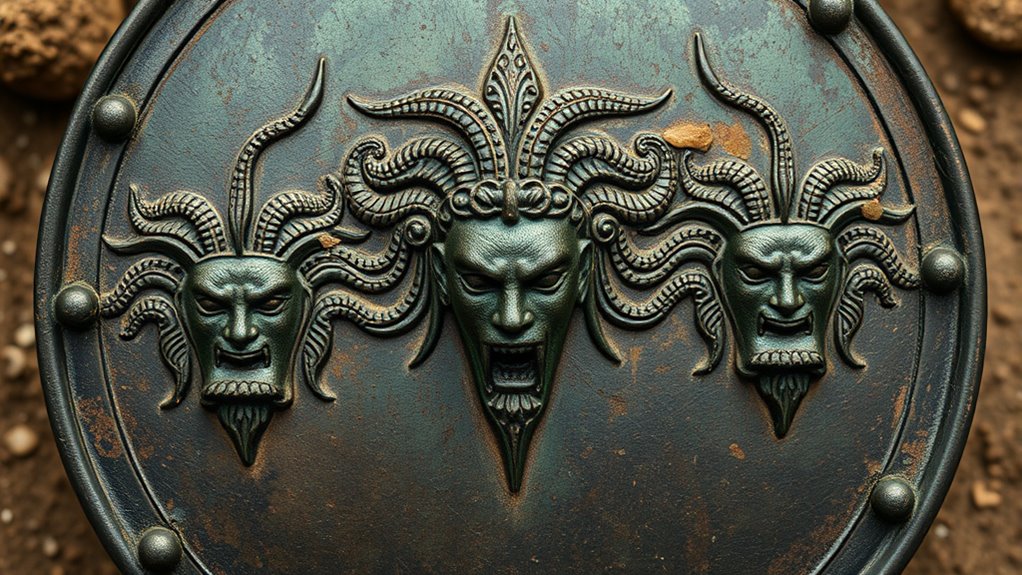
Archaeologists have uncovered numerous artifacts decorated with the iconic Gorgon motifs, revealing the widespread use of this powerful symbol in ancient Greek art and armor. You might find Gorgon images carved into ornamental jewelry, such as brooches or pendants, showcasing intricate craftsmanship. Ceramic relics, like vases and figurines, often feature detailed Gorgon depictions, emphasizing their protective and apotropaic significance. Some discoveries include:
- Fine ceramic vessels with painted Gorgon faces, guarding their contents.
- Ornamental jewelry with Gorgon-shaped pendants, worn as amulets.
- Fragments of decorated tiles bearing fierce Gorgon masks, once part of architectural design.
These findings highlight the cultural importance of the Gorgon as both an artistic motif and a protective symbol in everyday objects and ceremonial items.
Scientific Analysis of Metalwork and Craftsmanship
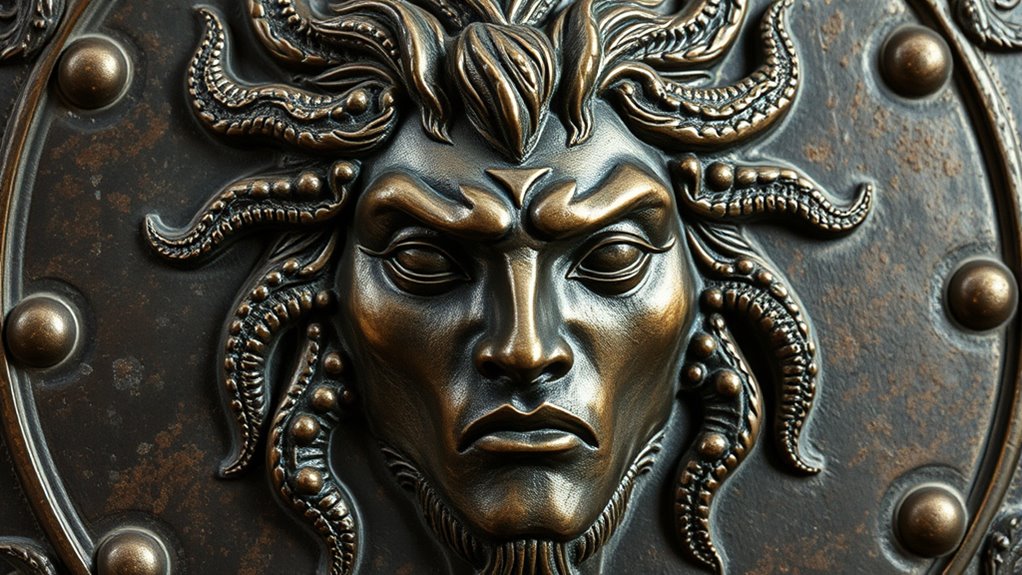
Scientific analysis of metalwork and craftsmanship reveals the advanced techniques ancient Greek artisans used to create Gorgon-shield artifacts. You can see how they combined metallurgical skills with artistic techniques to produce detailed, durable pieces imbued with mythical symbolism. These shields showcase layered forging, gilding, and inlay methods that highlight their craftsmanship. The following table summarizes key features:
| Feature | Description |
|---|---|
| Metal Composition | High-quality bronze alloys for strength |
| Surface Decoration | Inlay of gold and silver for contrast |
| Artistic Techniques | Chasing and repoussé for detailed reliefs |
| Mythical Symbolism | Gorgon’s face as a protective talisman |
| Craftsmanship Precision | Fine polishing and symmetrical design |
This evidence underscores the sophisticated artistry and symbolic importance woven into each shield.
Symbolism and Cultural Significance of the Gorgon Image

The Gorgon image isn’t just a mythological motif; it represents powerful symbolism that conveys protection and fear. You’ll see how cultures used the Gorgon to embody strength and ward off evil. Its image also reflects a shared identity, connecting communities through common beliefs and artistic expression.
Mythical Power Symbolism
Have you ever wondered why the Gorgon’s terrifying face became such a powerful symbol? Its image represented protection, warding off evil with its petrifying gaze. In medieval armor, the Gorgon’s visage was used to evoke strength and resilience, intimidating enemies in battle. Today, modern replicas of Gorgon shields carry that same symbolic power, blending myth and martial tradition. When you see a Gorgon’s face on a shield, you’re witnessing more than decoration—you’re embracing a symbol of formidable power. It’s a reminder that fearsome imagery can serve as a potent safeguard. The Gorgon’s image, rooted in myth, transcends time, embodying both divine power and protective symbolism across cultures and eras.
Cultural Identity Significance
The Gorgon’s image, beyond its mythological origins, has played a pivotal role in shaping cultural identities across different societies. You see, it served important ceremonial functions, often symbolizing protection and warding off evil. In many cultures, Gorgon imagery appeared in rituals, acting as a powerful emblem of strength and divine authority. Artistic representations of Gorgons were common in sculpture, pottery, and jewelry, reflecting societal values and beliefs. These depictions reinforced cultural identity by embodying shared fears, morals, or protective symbols. The fierce, intimidating visage conveyed more than myth; it became a cultural marker, linking communities through collective symbolism. Whether as talismans or artistic motifs, Gorgon images helped define cultural boundaries and reinforced societal cohesion.
Technological Feats and Limitations of Ancient Metalworkers

Ancient metalworkers demonstrated remarkable skill in crafting the Gorgon shields of Perseus, pushing the boundaries of their technological capabilities despite limited resources. Their mastery of ancient forging allowed them to shape large, complex pieces with precision, while innovative metal alloying techniques enhanced durability and appearance. You can imagine them heating metals over open fires, skillfully hammering and joining pieces without modern tools. Their knowledge of alloying enabled the creation of alloys that balanced strength and flexibility, despite the constraints of available materials. The shield’s surface likely featured intricate casting and polishing processes, highlighting their technical prowess.
- Heating metals in primitive furnaces, controlling temperature with intuition
- Combining different metals to improve resilience and shine
- Crafting detailed designs through careful casting and finishing
Comparing Mythical Shields to Actual Historical Objects
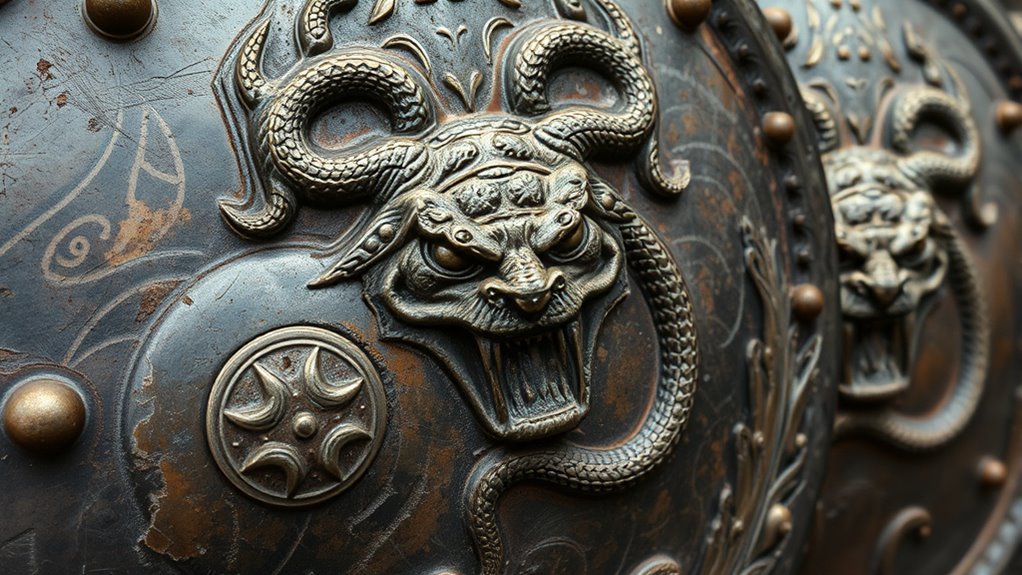
Mythical shields like the Gorgon shields of Perseus capture the imagination with their legendary power and intricate designs, but they often differ markedly from actual historical objects. Real shields focus on practicality, with designs prioritizing durability and ease of use, while mythological symbolism dominates the legendary shields. The Gorgon shield, for example, is depicted with a terrifying face meant to petrify enemies, emphasizing mythic power rather than functional design. Actual historical shields rarely featured such elaborate iconography, instead emphasizing simple, effective shield design. The mythological symbolism embedded in these shields reflects cultural values and storytelling, contrasting with the utilitarian nature of surviving ancient artifacts. Comparing the two helps us understand how myth and reality intertwine in ancient representations of warfare and protection.
Implications for Understanding Ancient Technological and Cultural Knowledge
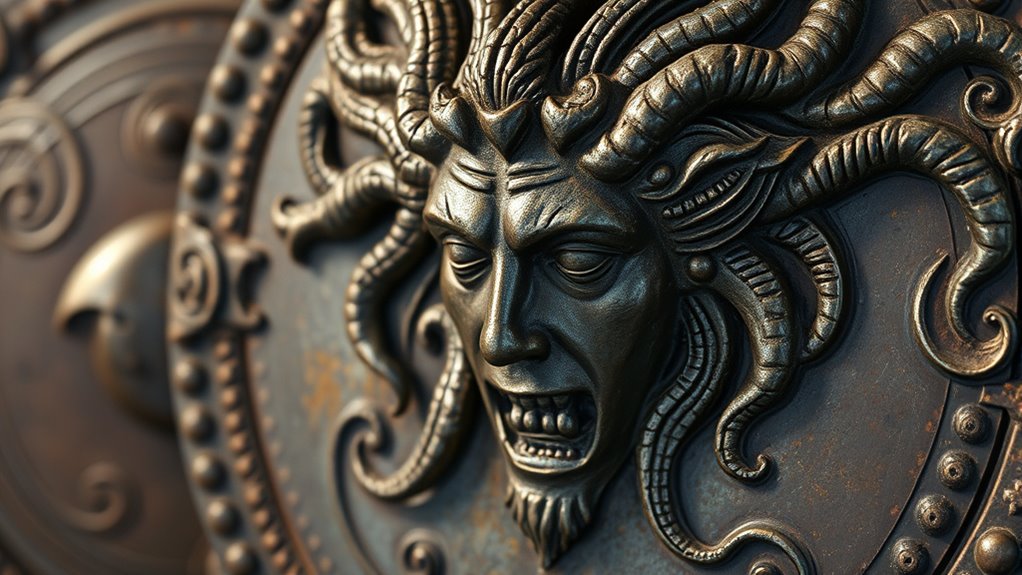
Examining how mythological shields like the Gorgon of Perseus reflect broader technological and cultural knowledge reveals much about the societies that created them. These shields demonstrate advanced metalworking techniques, showing mastery in alloying, casting, and surface finishing. They also embody mythological symbolism, illustrating how societies infused objects with meaning to convey power, protection, or divine favor. By studying these artifacts, you gain insight into the technological capabilities and cultural values of ancient peoples. The craftsmanship suggests a sophisticated understanding of metallurgy and artistic expression, intertwined with mythic narratives. Such shields weren’t just battlefield tools; they were cultural symbols that communicated societal identity and beliefs. This intersection of metallurgy and myth underscores the importance of technological innovation in shaping cultural identity.
Frequently Asked Questions
How Did Ancient Artisans Achieve the Detailed Gorgon Face on Shields?
You can see that ancient artisans achieved the detailed gorgon face on shields through skilled artistic techniques combined with mythical symbolism. They used intricate metalworking, such as repoussé and chasing, to create depth and realism. By carefully shaping and engraving, they captured the terrifying expression of Medusa. This craftsmanship not only showcased their technical prowess but also conveyed powerful mythological symbolism, making the shield an impressive and meaningful piece of art.
What Specific Metals Were Used in Gorgon Shield Construction Across Different Regions?
You might wonder about the metal composition and regional variations in gorgon shield construction. Across different regions, artisans used a variety of metals, including bronze, copper, and silver, depending on local resources and craftsmanship traditions. These metals were often alloyed for strength and visual effect. Regional differences influenced the shield’s appearance and durability, reflecting local metallurgical practices and trade networks that supplied specific materials for creating detailed, iconic gorgon faces.
Are There Any Surviving Myths Explaining the Protective Power of Gorgon Shields?
You wonder if any myths explain the protective power of gorgon shields. These shields hold deep symbolic protection and mythological significance, often believed to ward off evil and danger. In stories, the Gorgon’s petrifying gaze and the shield’s reflective surface symbolize divine defense, emphasizing their role as symbols of safety. Such myths reinforce the idea that these shields aren’t just physical objects but powerful talismans rooted in cultural beliefs.
How Did Metallurgical Advancements Influence Shield Design in Ancient Greece?
You see, metallurgical advancements greatly impacted shield design in ancient Greece. As ancient metallurgy improved, craftsmen could produce stronger, more durable shields with detailed designs like the iconic Gorgon shields. These innovations allowed for better protection in battle and enhanced artistic expression. You can appreciate how shield craftsmanship evolved from simple wood and bronze to sophisticated, metallurgically enhanced pieces, blending functionality with mythological symbolism for both practical use and cultural significance.
What Evidence Links Mythological Gorgon Shields to Actual Historical Artifacts?
You see, the mythological gorgon shields are linked to actual artifacts through symbolism and artistic techniques. Experts identify similarities in design and craftsmanship that suggest some shields may have been inspired by myth. These artifacts often feature detailed metalwork and iconography, reflecting cultural beliefs. By analyzing these elements, you can connect mythological symbolism to real historical objects, revealing how ancient artisans incorporated stories and symbols into their armor.
Conclusion
So, as you explore the metallurgical secrets behind Perseus’s Gorgon shields, it’s clear they blend myth and reality. These ancient artifacts reflect impressive craftsmanship—like ancient Iron Man suits—showing how mythic symbolism and technological skill intertwined. By decoding their material makeup, you get a glimpse into a world where gods and mortals worked side by side, proving that even in antiquity, innovation was just as legendary as the stories themselves.
NFL season / tailgating Picks
team gear
As an affiliate, we earn on qualifying purchases.