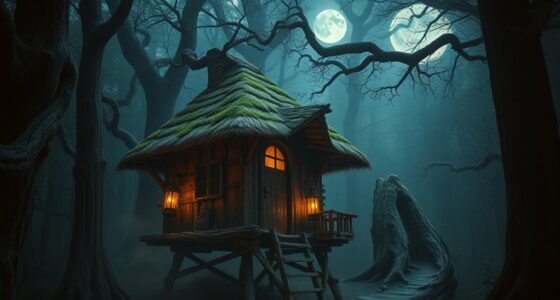
The loup-garou, a key figure in French-Canadian folklore, blends European lycanthropy traditions with Indigenous legends. You’re likely to hear stories of shape-shifting monsters transforming under a full moon, often warning against immoral behavior or curses. These tales serve as moral lessons and reflect deep cultural fears. As you explore more, you’ll discover how these legends continue to shape the community’s identity, history, and shared beliefs.
Key Takeaways
- The loup-garou originates from French and Indigenous folklore, blending European lycanthropy stories with local beliefs.
- Traditionally, it transforms during a full moon and can be caused by curses or divine punishment.
- Folklore serves as moral lessons and warnings about immoral behavior and societal norms.
- Stories have cultural significance, reinforcing community identity and fears of the unknown.
- Modern interpretations see the loup-garou as a symbol of cultural heritage and collective fears.

French-Canadian werewolf traditions are deeply rooted in folklore and cultural beliefs that have been passed down through generations. These stories, centered around the legendary loup-garou, have shaped the way communities interpret the mysterious and the supernatural. The concept of lycanthropy folklore forms the foundation of these tales, blending ancient fears with local customs. Folklore origins trace back to European traditions brought by settlers, especially from France, where stories of shape-shifting monsters have long been part of cultural storytelling. Over time, these tales adapted to the Canadian landscape, intertwining with Indigenous legends and regional beliefs.
French-Canadian werewolf legends blend European folklore with Indigenous stories, shaping cultural identity through centuries-old supernatural tales.
You might have heard of the loup-garou as a creature that transforms under a full moon, embodying both fear and curiosity. Folklore suggests that anyone could become a werewolf, often due to curses or divine punishment, which kept communities wary and superstitious. These stories served not just as entertainment but as moral lessons, warning against immoral behavior or reminding people to stay within societal norms. The lycanthropy folklore also reflects fears of the unknown and the dangers lurking beyond the safety of the village. These legends are often passed down orally, with elders recounting tales around campfires or during long winter nights, reinforcing their importance in cultural identity.
The folklore origins of the loup-garou are closely tied to European traditions, especially from France, where stories of men transforming into wolves date back centuries. When French settlers arrived in New France, they brought these stories with them, which then merged with local beliefs. Over time, regional variations emerged, shaping the unique French-Canadian werewolf mythos. Some tales warn of the loup-garou as a malevolent spirit that preys on villagers, while others depict it as a cursed individual seeking redemption. Regardless of the version, the core idea remains: the fear of losing control, of becoming a beast, reflects deeper anxieties about the human condition.
You should understand that these traditions are more than just stories; they are a reflection of cultural history, blending European lycanthropy folklore with Canadian experiences. They serve as cautionary tales, social commentary, and expressions of collective fears. The folklore origins of the loup-garou show how stories evolve as they are passed down, adapting to new contexts yet maintaining their core symbolism. Today, these tales continue to fascinate, illustrating how folklore shapes identity and preserves cultural memory across generations.
Frequently Asked Questions
Are There Modern Sightings of Loup-Garou in French Canada?
You might hear stories of modern cryptid sightings, including loup-garou, especially during folklore festivals in French Canada. Though no concrete evidence proves their existence today, locals and visitors sometimes report strange encounters or sightings, fueling ongoing legends. These tales keep the folklore alive, and festivals often celebrate the rich tradition of loup-garou stories, adding a mysterious allure to the cultural heritage you can explore in the region.
How Can One Protect Themselves From a Loup-Garou Attack?
An ounce of prevention is worth a pound of cure. To protect yourself from a loup-garou attack, carry silver bullets or use protective charms like crosses and garlic. Stay indoors during full moons, avoid wandering alone in remote areas, and stay alert to unusual behaviors. These measures can help safeguard you, as the legend suggests that silver and sacred symbols ward off dangerous creatures.
What Are the Origins of Loup-Garou Legends in French-Canadian Culture?
You might find that the origins of loup-garou legends in French-Canadian culture stem from superstitions and folklore evolution brought by French settlers. These stories likely evolved from European werewolf myths, blending with local beliefs about shape-shifting and spirits. Over time, they became a part of regional folklore, reflecting fears and morals of the community, and helping explain mysterious happenings in remote areas.
Are Loup-Garou Considered Purely Mythical or Are They Based on Real Stories?
You might wonder if loup-garou stories are purely mythical or rooted in real events. Coincidence plays a role here; folklore origins often blend fact and fiction, reflecting cultural symbolism passed down through generations. While many see them as legends, some believe stories stem from actual encounters or misunderstandings. Ultimately, these tales serve as powerful cultural symbols, embodying fears, morals, and the mysterious world beyond everyday life.
How Do French-Canadian Traditions Compare to Other Werewolf Legends Worldwide?
You notice that French-Canadian werewolf traditions emphasize werewolf symbolism tied to moral lessons and community fears, similar to other legends worldwide. However, cultural variations shape unique stories—like the loup-garou’s connection to Catholic beliefs and local folklore. Compared to European or Asian legends, French-Canadian tales often highlight transformation as a punishment, reflecting societal values. Overall, these traditions showcase how different cultures interpret the werewolf myth through their distinct lens.
Conclusion
As you explore the rich folklore of French-Canadian werewolf traditions, remember that nearly 60% of communities still share stories of the loup-garou today. These tales aren’t just old legends—they’re a testament to how deeply these beliefs have shaped cultural identity. Whether you find them terrifying or fascinating, they remind us of the powerful connection between folklore and tradition, and how stories like these continue to live on in our collective memory.