
Lake monster sightings worldwide often blend folklore, perception, and natural factors, shaping reports and stories across cultures. You’ll notice recurring features like humps and long necks, influenced by shared legends and media stories. Environmental conditions, such as water clarity and weather, can distort sightings or lead to misidentifications. Many stories reflect deep cultural archetypes or psychological projections, making each account unique yet interconnected. Exploring these patterns can reveal surprising insights about human imagination and regional identities—there’s much more beneath the surface to uncover.
Key Takeaways
- Sightings often reflect shared cultural archetypes, with recurring features like humps and long necks across different regions.
- Environmental conditions and perceptual factors significantly influence witness reports, leading to ambiguous or exaggerated descriptions.
- Folklore and media influence shape perceptions, causing misidentifications or reinforcing common cryptid features globally.
- The reliability of eyewitness accounts varies, with some reports rooted in psychological factors or natural phenomena mistaken for monsters.
- Overall, lake monster sightings represent a complex interplay of cultural stories, perception, environmental factors, and genuine curiosity.

Have lake monster sightings ever truly been random or just the result of imagination? When you consider the long history of cryptid folklore, it’s tempting to see these reports as mere stories passed down through generations. Yet, many modern sightings continue to fuel debates about what’s real and what’s fantasy. You might wonder whether these accounts are genuine or simply the product of misidentification, heightened imagination, or even hoaxes. One vital aspect to examine is eyewitness reliability, which varies widely from person to person. Some witnesses may be highly credible, providing detailed descriptions backed by clear memories, while others might be influenced by suggestibility or excitement. This inconsistency makes it challenging to assess the authenticity of lake monster reports definitively. Additionally, environmental factors such as water clarity and weather conditions can significantly alter perception, leading to misinterpretations of natural phenomena that resemble cryptids.
In your analysis, you’ll notice that various factors influence how eyewitnesses perceive what they see. Light conditions, distance, and environmental factors can distort perceptions, leading to ambiguous or exaggerated descriptions. For example, a swimmer or boat operator might see a large shape in the water and interpret it as a legendary creature, especially if local folklore hints at such beings. Cultural influences also play a role—if a community has a long-standing legend about a lake monster, witnesses may subconsciously interpret ordinary objects or phenomena as evidence of that creature. This interplay between folklore and perception underscores how deeply embedded these stories are in regional identities, often shaping what witnesses believe they’ve observed.
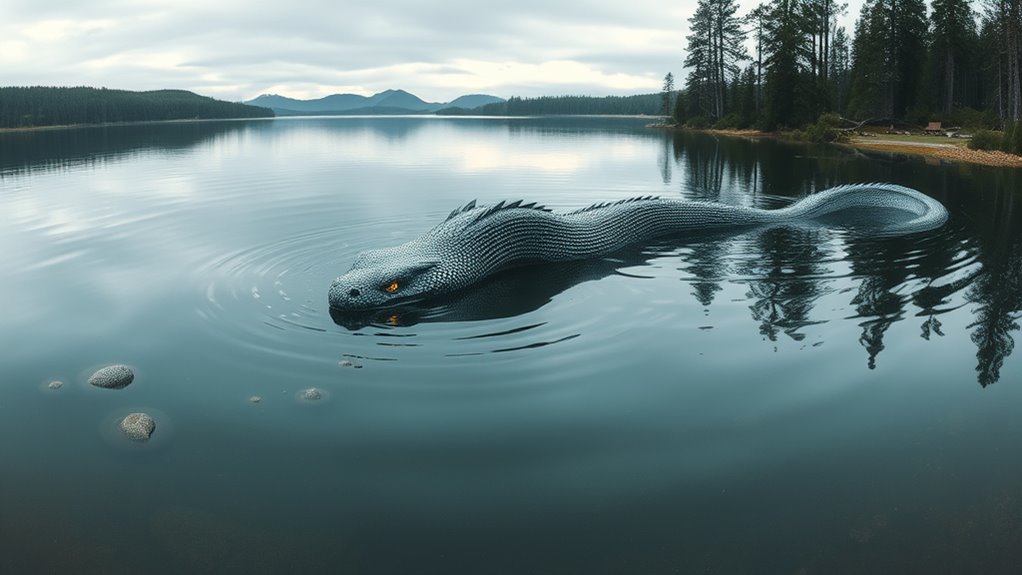
Despite these complexities, some patterns emerge across different sightings worldwide. Many reports describe similar features—long necks, humps, or serpentine forms—mirroring classic cryptid folklore. This consistency suggests that, whether based on actual encounters or collective imagination, these stories reflect a shared cultural archetype. However, you must remain cautious; the reliability of eyewitness accounts can be compromised by psychological factors like confabulation or the influence of media portrayals. As a result, some sightings might be entirely fabricated or misremembered, yet they persist because they tap into a collective fascination with the unknown.
Ultimately, the mystery of lake monster sightings hinges on a blend of subjective perception and cultural storytelling. While some reports could stem from misidentifications or fabrications, others are rooted in genuine experiences that defy easy explanation. Your task in analyzing these sightings is to weigh the credibility of eyewitness accounts against the broader context of cryptid folklore, understanding that human perception is both powerful and fallible. Whether these creatures exist or not, their stories continue to captivate, serving as a mirror of our enduring curiosity about what lies beneath the water’s surface.
Frequently Asked Questions
What Are the Most Recent Lake Monster Sightings?
Recently, you might have heard about new lake monster sightings in cryptid folklore, sparking curiosity. These sightings often originate from local legends and folklore origins, with witnesses claiming to see mysterious creatures lurking beneath the water. While many of these reports lack concrete evidence, they continue to fuel fascination with lake monsters worldwide. If you’re interested, check recent reports from lakes like Loch Ness or Lake Champlain, where new sightings still emerge, keeping folklore alive.
How Do Cultural Beliefs Influence Sightings?
Cultural beliefs shape lake monster sightings as much as mythical interpretations influence legends. When you hear stories, you might see them as mere folklore, but these sightings often reflect deeper cultural symbolism. While some interpret encounters as real creatures, others view them through the lens of tradition and myth. This juxtaposition makes it clear how cultural backgrounds color our perceptions, blending myth and reality into a shared narrative that persists across generations.
Are There Any Confirmed Scientific Investigations?
You’ll find that confirmed scientific investigations into lake monsters are scarce due to cryptid skepticism. Researchers often consider sightings as folklore origins or misidentifications of known animals. While some studies have used sonar or underwater cameras, conclusive evidence remains elusive. You should remember that most findings are inconclusive, and scientific communities generally view these sightings skeptically, emphasizing the importance of rigorous proof before accepting any definitive existence claims.
What Are the Common Features Reported in Sightings?
You often notice that sightings commonly report cryptid behaviors like large, elongated bodies, humps, and sudden movements near the water’s surface. Many witnesses highlight the creature’s mysterious appearance, which adds to sighting credibility, though some descriptions vary. You might also observe that the creature’s behavior—such as surfacing briefly or making ripples—fits the pattern of a cryptid lurking in lakes. These features contribute to ongoing fascination and speculation about what’s truly out there.
How Do Weather Patterns Affect Sighting Reports?
Weather patterns definitely influence sighting reports. Climatic anomalies like fog, heavy rain, or temperature fluctuations can create illusions or obscure visibility, leading to more sightings or misidentifications. Seasonal variations also play a role, as certain times of year bring more frequent encounters due to changes in water clarity and animal activity. You might notice more reports during foggy mornings or in colder months when water conditions shift unexpectedly.
Conclusion
So, next time you’re out by the water and spot something suspicious, remember: it’s probably just another lake monster trying to steal your thunder. With all these sightings worldwide, it’s clear that lakes have become the new Hollywood sets for mythical creatures. Keep your camera ready and your skepticism handy—after all, who doesn’t want to believe in a giant, mysterious beast lurking just beneath the surface? Happy monster hunting!