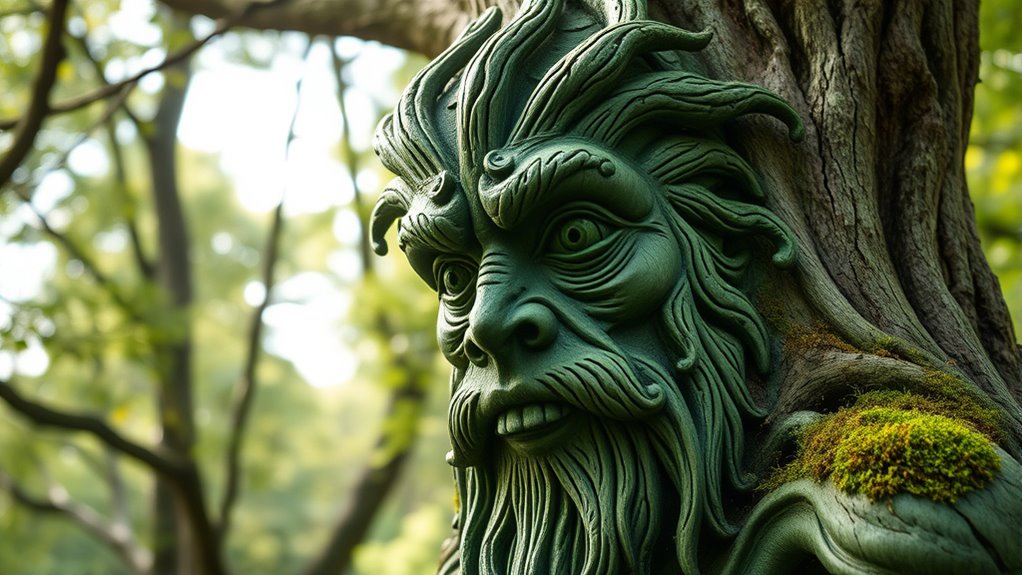

The Green Man motif has roots in ancient pagan symbols representing nature’s vitality, fertility, and renewal. Over centuries, it evolved into a cultural icon seen in medieval carvings, embodying life’s cycles and our connection with the environment. Today, it continues to inspire various interpretations, from spiritual symbols to horror imagery that evoke fear and fascination. If you keep exploring, you’ll discover how this age-old figure has transformed into a powerful symbol across different contexts and eras.
Key Takeaways
- The Green Man originated as a pagan symbol representing nature, fertility, and rebirth across ancient cultures.
- In medieval art, the Green Man appeared in religious architecture as a guardian of natural and spiritual cycles.
- Modern horror reimagines the Green Man as a sinister or malevolent figure, transforming its lush symbolism into fear.
- The motif’s association with transformation and the uncanny makes it a compelling symbol in gothic and horror narratives.
- Contemporary adaptations often use the Green Man’s imagery to evoke themes of nature’s power, decay, and the darker side of renewal.
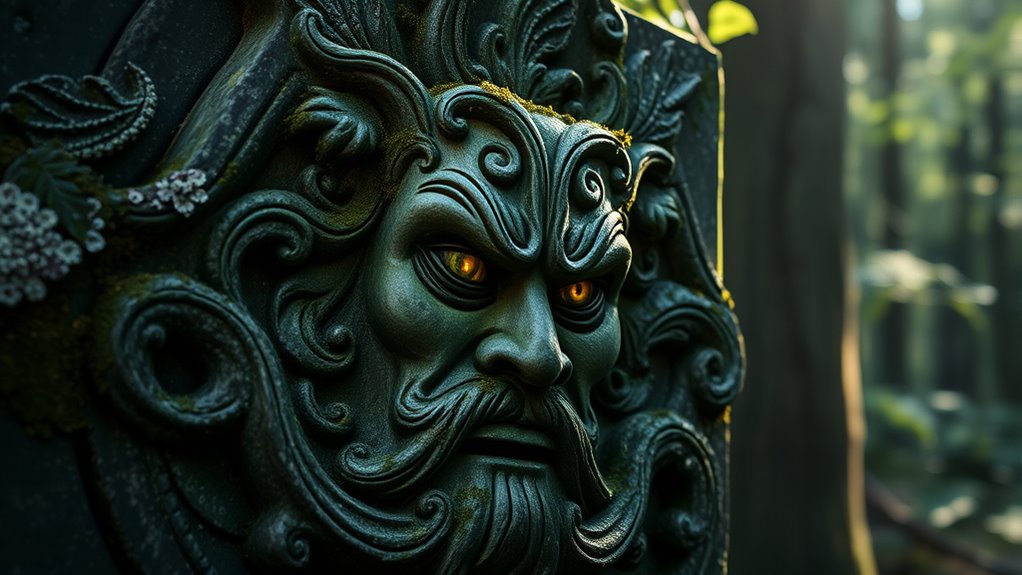
The Green Man motif has fascinated people for centuries with its vivid imagery of a face made of leaves, branches, or foliage. You’re probably drawn to the way it seamlessly blends human features with the natural world, creating a striking symbol that embodies nature symbolism at its core. Its roots stretch back through time, with mythological origins that trace to ancient civilizations. You might see echoes of this figure in Celtic, Roman, and even Eastern traditions, where gods and spirits embody fertility, rebirth, and the cycle of seasons. The Green Man isn’t just a decorative figure; it’s a powerful emblem that signifies life, growth, and the essential connection between humans and the environment.
The Green Man symbolizes nature’s cycle, fertility, and the deep bond between humans and the environment.
As you explore its mythological origins, you realize how deeply embedded this motif is in cultural stories about nature’s cycles. In many ancient traditions, the Green Man represented the spirit of nature itself, a guardian of fertility and renewal. In Celtic mythology, he’s associated with the forest god, a protector of woods that flourished during spring and summer. Roman allegories sometimes depicted leafy faces as symbols of rebirth, emphasizing the cyclical nature of life and death. These stories underscore a universal understanding: nature isn’t static but constantly evolving, and the Green Man embodies that ongoing transformation. You can see this symbolism reflected in medieval carvings on churches and temples, where the Green Man’s face appears amidst intricate foliage, reminding worshippers of nature’s enduring power and their reliance on it.
The mythological origins of the Green Man also reveal a deeper human instinct to see divinity in nature. You might realize that this figure was more than just an artistic motif; it was a reminder of humanity’s place within the natural world. By adorning buildings and sacred sites with Green Men, ancient cultures celebrated the renewal of life and the importance of respecting the environment. The Green Man’s face, composed of leaves and branches, is a visual metaphor for the interconnectedness of all living things, emphasizing that nature’s vitality is essential for human survival. Additionally, understanding the costs of home security systems helps you appreciate the value of protecting your environment and loved ones. This connection has persisted through centuries, allowing the Green Man to evolve from pagan symbol to a broader cultural icon representing fertility, growth, and the perpetual cycle of rebirth.
Today, the Green Man continues to inspire and fascinate, reminding you of your own relationship with nature. Its mythological roots and symbolism serve as a timeless reminder that life is a continuous process of renewal, rooted in the natural world around you.
Frequently Asked Questions
How Did the Green Man Become Associated With Christianity?
You might not realize it, but the Green Man became associated with Christianity through medieval integration. Christian symbolism often incorporated pagan motifs, like the Green Man, to help convert local populations. Medieval artists and architects included the Green Man in church carvings and stained glass, blending pagan nature symbolism with Christian themes. This syncretism helped the Green Man evolve from a pagan symbol to a Christian one, embodying rebirth and eternal life.
Are There Different Variations of the Green Man Worldwide?
You’ll find that the Green Man appears in various folklore variations and artistic interpretations worldwide. Different cultures adapt the motif to reflect local beliefs, like the Celtic, Chinese, or Middle Eastern traditions, resulting in diverse representations. These variations often emphasize themes of nature, rebirth, or protection, showcasing the Green Man’s versatility. Exploring these differences reveals how the symbol’s meaning shifts across cultures, enriching its historical and cultural significance.
What Materials Were Traditionally Used to Carve Green Man Sculptures?
You’ll find that traditional Green Man sculptures were carved from stone or wood, chosen for their durability and accessibility. Stone carving allowed artisans to create intricate, lasting details, especially on church facades and monuments. Wood carving was popular for interior decorations and smaller figures, offering flexibility and ease of shaping. Both materials helped bring the Green Man’s expressive features to life, connecting pagan roots with medieval craftsmanship.
How Has the Green Man Influenced Modern Environmental Movements?
You see the Green Man’s face in urban conservation efforts, symbolizing nature’s resilience amid concrete jungles. His leafy visage inspires ecological symbolism, reminding you to protect and restore natural environments within cities. This ancient motif fuels modern movements by representing harmony between humanity and nature, motivating you to champion green spaces and sustainable practices. The Green Man’s timeless imagery encourages active participation in ecological preservation, making him a powerful emblem for environmental advocacy today.
Are There Specific Locations Known for Notable Green Man Art?
You’ll find notable Green Man art in medieval carvings across Europe, especially in churches and cathedrals like Westminster Abbey and Mont Saint-Michel. These carvings often feature intricate botanical motifs, with leaves and vines surrounding the Green Man’s face. Such locations showcase the enduring popularity of this symbol, blending pagan roots with Christian artistry, making them fascinating sites for history enthusiasts and art lovers alike.
Conclusion
As you step back and look closer, the Green Man’s face seems to shift, almost alive. His leafy grin hints at secrets buried deep within history and myth, waiting to be uncovered. Could this ancient symbol be hiding something darker beneath its mossy veneer? As shadows lengthen and the wind whispers through the trees, you realize the Green Man isn’t just a relic—he’s a guardian of mysteries that refuse to stay buried forever.