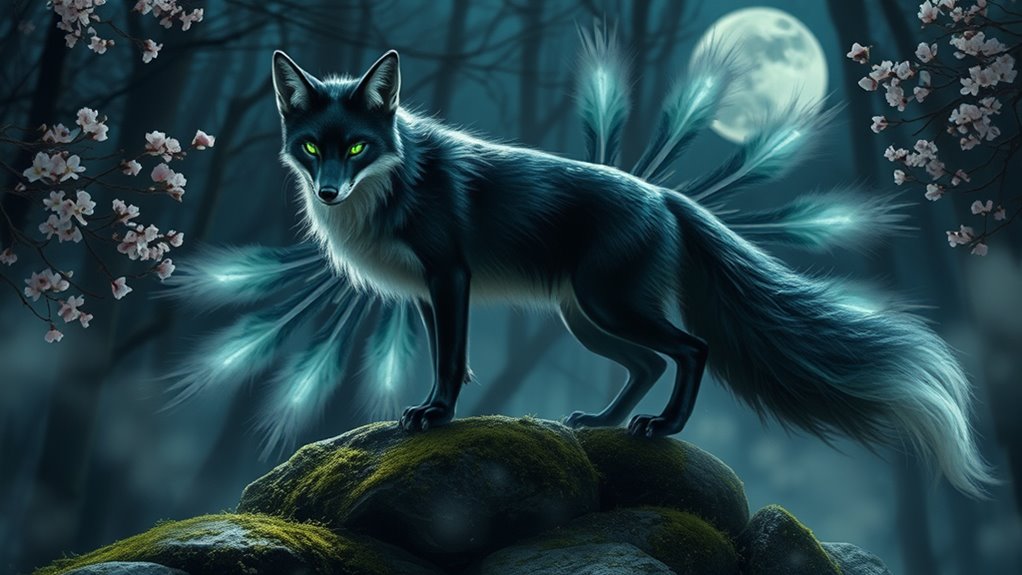

The Kumiho is a fascinating figure from Korean folklore, known as a nine-tailed fox that transforms from a graceful woman into a powerful supernatural creature. Its tails symbolize wisdom, strength, and influence, often hiding a dangerous side behind beauty and charm. While some stories show her as tragic or seeking redemption, many depict her as a tempting yet deadly force representing deception and peril. To uncover more about her complex legends, explore further into her cultural significance and symbolism.
Key Takeaways
- The Kumiho is a legendary Korean fox spirit with nine tails symbolizing wisdom and supernatural power.
- She often appears as a beautiful woman, using allure and deception to prey on humans.
- Traditionally, the Kumiho can feed on human flesh or life force, embodying danger and temptation.
- Folklore portrays her as both a tragic figure seeking redemption and a malevolent force to fear.
- The legend reflects themes of transformation, morality, and societal fears surrounding the supernatural.

The Kumiho is a legendary creature from Korean folklore, often depicted as a beautiful woman with nine tails. As one of the most iconic mythical creatures in East Asian mythology, she embodies both allure and danger. You might think of her as a symbol of transformation and deception, which are common themes in folklore symbolism. Her story has been passed down through generations, blending elements of myth and morality, and serving as a cautionary tale about temptation and the unknown.
In traditional stories, the Kumiho starts as a fox spirit that gains human form after centuries of living in the wild. This ability to transform is a hallmark of many mythical creatures, highlighting their supernatural origins. You could see her as a creature that blurs the line between the natural and the supernatural, embodying the mysterious power of nature’s unseen forces. Her nine tails not only mark her as a powerful being but also symbolize her wisdom and age, echoing the folklore symbolism of venerable creatures possessing great knowledge and influence. These tails often serve as visual cues of her strength and mystical prowess, making her both fascinating and terrifying.
The nine tails symbolize her wisdom, strength, and mystical power, blending natural beauty with supernatural influence.
The folklore surrounding the Kumiho often emphasizes her dual nature—she can be alluring and charming, yet deadly and deceitful. You might encounter stories where she seduces humans, sometimes to feed on their life force or to fulfill her hunger for human flesh. These tales reflect deeper cultural fears about trust and the unknown dangers lurking beneath beauty. The myth suggests that appearances can be deceiving, a common motif in stories involving mythical creatures. Her beauty is often portrayed as an illusion designed to lure unsuspecting victims, reinforcing the folklore symbolism of temptation and moral peril.
Throughout history, the Kumiho has been a complex figure in Korean culture, representing both the allure of the supernatural and the danger it poses. She embodies the idea that beauty can conceal evil, a powerful message woven into folklore symbolism. While some stories depict her as a tragic figure longing for redemption or human connection, others emphasize her as a malevolent force to beware of. This duality makes her an enduring legend, reflecting society’s fascination with the mysterious and the moral lessons embedded in myth. Additionally, her story underscores the cultural importance of folklore symbolism in understanding morality and societal values. As a mythical creature, the Kumiho continues to inspire stories, art, and cultural reflection, reminding you of the complex relationship between humans and the supernatural world.
Frequently Asked Questions
Are Kumiho Always Malevolent or Can They Be Benevolent?
You might think fox spirit lore always depicts kumiho as malevolent, but they can also be benevolent. In some benevolent legends, these fox spirits use their powers to help humans, offering protection or wisdom. While many stories portray them as mischievous or dangerous, others highlight their capacity for kindness. So, kumiho aren’t always evil; their nature depends on the story, balancing malevolent and benevolent qualities.
How Do Kumiho Differ From Other Fox Spirits in Asian Mythology?
Imagine a tapestry woven with diverse threads—Kumiho, unlike other fox spirits, carries a unique cultural significance rooted in Korean mythology. While some mythological origins portray them as malevolent tricksters, others depict benevolent protectors. Their nine tails symbolize immense power, setting them apart from Japanese kitsune or Chinese huli jing, which often harbor different roles. You see, the Kumiho’s story reflects Korea’s rich, complex view of these mystical foxes—neither purely good nor evil.
Can Humans Become Kumiho Through Transformation or Curse?
Yes, you can become a kumiho through mythical transformations or a cursed lineage. In Korean folklore, humans might transform into a kumiho after making a pact or experiencing a curse that alters their form. These transformations often involve mystical forces or cursed bloodlines, turning ordinary people into shape-shifting fox spirits. Such stories highlight the dangerous allure of mythical transformations and the tragic consequences of cursed lineage.
What Are Common Symbols Associated With Kumiho in Korean Culture?
You see symbols like the nine tails, foxes, and plum blossoms often representing the kumiho in Korean culture. Traditional emblems, such as the mirror and red string, symbolize her dual nature—beauty and danger. Think of the nine tails like chapters in a story, each adding depth. These symbolic motifs remind you of her mysterious allure and the thin line between transformation and danger, echoing ancient tales told around fires.
Are There Modern Depictions of Kumiho in Korean Media?
You’ll find modern depictions of the kumiho in Korean media, especially in urban legends and folklore adaptations. Films, dramas, and webtoons often portray it as a shape-shifting creature, blending traditional symbols with contemporary storytelling. These adaptations emphasize its mysterious, sometimes dangerous nature, making it a popular character that bridges ancient myth and modern entertainment. You’ll see it in various forms, from villains to complex antiheroes, reflecting evolving cultural perceptions.
Conclusion
Now that you know about the kumiho, you can see how it’s like a mysterious, enthralling friend lurking in Korean folklore. Its story weaves together beauty, danger, and transformation, reminding you that appearances can be deceiving. Like a fox in the shadows, the kumiho keeps you guessing, inviting curiosity and caution. Next time you hear about this nine-tailed fox, you’ll understand its complex, mesmerizing nature a little better.