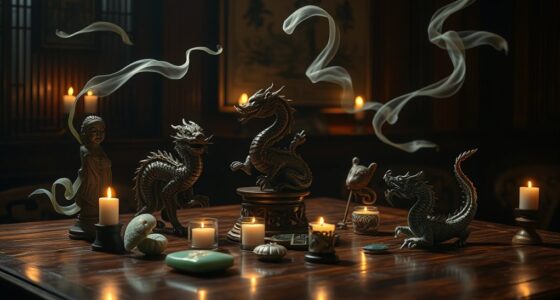

During Christmas, folklore monsters like Perchta and Gryla remind you of the darker side of holiday traditions. Perchta watches over morality during the Twelve Days of Christmas, rewarding good behavior and punishing laziness. Gryla, Iceland’s fearsome giantess, punishes naughty children, emphasizing the importance of kindness. These monsters serve as moral guides and reflect ancient fears tied to winter’s darkness. If you keep exploring, you’ll discover even more surprising stories behind holiday monsters.
Listen free for 30 days with Audible
Thousands of audiobooks and originals — cancel anytime.
As an affiliate, we earn on qualifying purchases.
Key Takeaways
- Monsters like Perchta and Gryla embody winter fears, serving as moral guardians during Christmas traditions.
- Perchta is a winter guardian who rewards good behavior and punishes dishonesty during the Twelve Days of Christmas.
- Gryla is an Icelandic giantess who kidnaps naughty children, reinforcing moral conduct through her legend.
- These monsters reflect ancient fears and add moral lessons, emphasizing discipline and community norms during holiday celebrations.
- Folklore monsters reveal that Christmas involves confronting supernatural elements, blending reverence, caution, and morality.
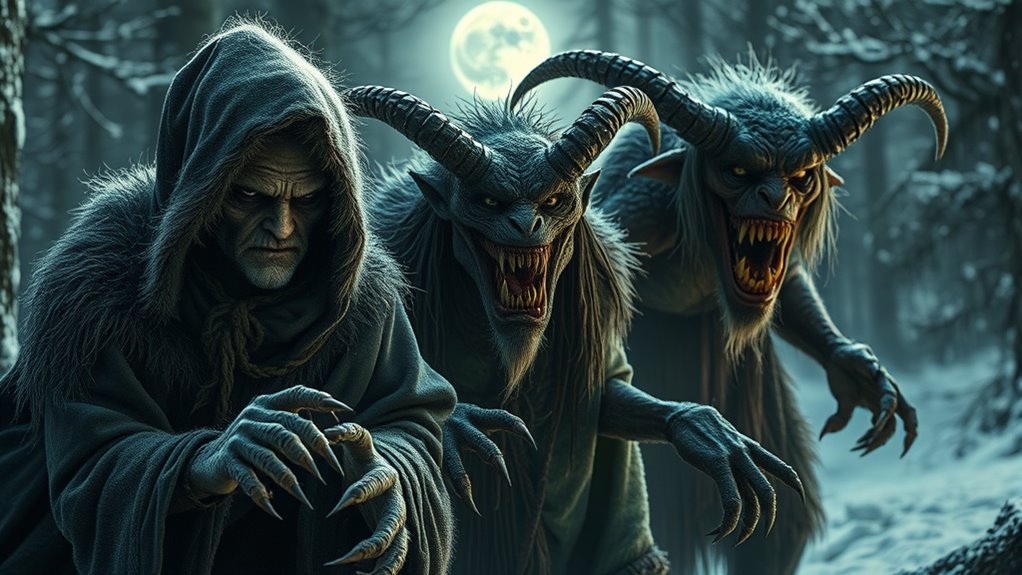
Have you ever wondered what monsters might lurk behind the festive cheer of Christmas? In many northern folklore traditions, holiday celebrations are not just about joy and giving but also about stories of creatures that serve as warnings or lessons. These monsters are woven into holiday traditions, shaping how communities approach the season with a mix of reverence and caution. They reflect ancient fears and moral lessons, often embodying the darker side of winter’s long, cold nights. By understanding these figures, you can see how Christmas isn’t just about merriment but also about confronting the unknown and the supernatural.
Monsters behind Christmas cheer reveal ancient fears and moral lessons in northern folklore traditions.
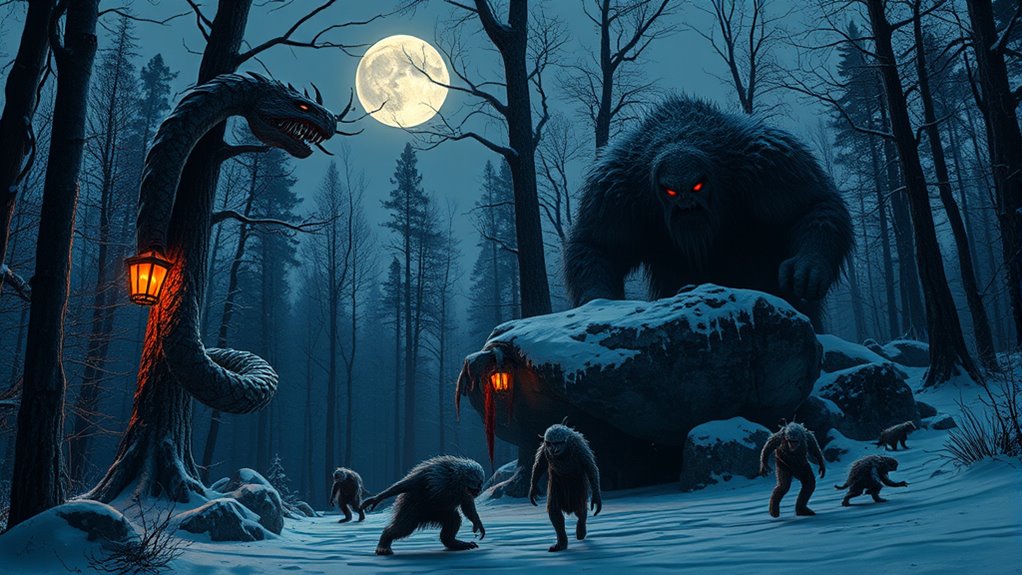
In northern folklore, Perchta is one of the most intriguing holiday monsters. She’s a complex figure, sometimes depicted as a beautiful woman with a serpent or a braid of hair, but she also has a fierce, terrifying aspect. According to tradition, Perchta is a guardian of the winter season, and her appearance signals a time when misbehavior could have consequences. During the Twelve Days of Christmas, she’s said to patrol the countryside, rewarding the good and punishing the lazy or dishonest. Her story is embedded in holiday customs, serving as a reminder to uphold moral conduct during the festive season. These tales shape holiday traditions, emphasizing discipline and respect for cultural norms, even amidst the joyful spirit of Christmas. Interestingly, the concept of traditional healing practices plays a role in some communities’ understanding of folklore and the symbolic significance of figures like Perchta.
Gryla, another chilling figure from northern folklore, is a giantess associated with the Christmas season in Iceland. She’s often portrayed as a fearsome, hairy hag who kidnaps naughty children, devouring those who don’t receive coal or other punishment. Her story is part of a tradition that encourages children to behave well, warning them of the monstrous consequences of bad behavior. The legend of Gryla is woven into the holiday fabric, especially in Icelandic culture, where her image looms large during Christmas time. She’s not just a monster but a symbol of moral order, reminding everyone that kindness and good conduct are essential virtues during the season.
These monsters aren’t just stories for fright; they’re cultural tools that reinforce social norms. They remind you that the holiday season isn’t solely about gift-giving and festivities but also about reflection, moral conduct, and community cohesion. The legends of figures like Perchta and Gryla show how northern folklore uses monsters to personify winter’s harshness and the consequences of misbehavior. They add a layer of depth to holiday traditions, pointing out that behind the merriment, there’s a recognition of the darker, more mysterious aspects of the season. So, when you think about Christmas customs from the north, remember that some of them carry echoes of ancient monsters lurking just beyond the cheerful veneer—guardians, punishers, and moral enforcers from the depths of folklore.

Articulated Ninjen Cryptid Figurine 6.5" – Flexible Antarctic Sea Monster Desktop Display Model, Mysterious Humanoid Ocean Legend Collectible Statue for Office Setup, Home Decor & Myth Enthusiasts
- Legend Inspiration: Inspired by Antarctic sea folklore
- Articulated Design: Fully poseable with flexible segments
- Compact Size: Measures 6.5 inches for versatile display
As an affiliate, we earn on qualifying purchases.
As an affiliate, we earn on qualifying purchases.
Frequently Asked Questions
What Are the Origins of Perchta and Gryla?
You discover that Perchta and Gryla originate from medieval folklore rooted in pagan traditions. Perchta, associated with Alpine regions, was believed to be a shape-shifting spirit who judged women’s behavior during winter. Gryla, from Icelandic legends, is a fearsome giantess tied to old pagan winter customs. Both figures symbolize the connection between ancient pagan rites and later Christian influences, blending moral lessons with seasonal mythologies.
How Do These Monsters Compare to Santa Claus?
Imagine Santa Claus as a glowing lantern, guiding children with warmth and kindness, symbolizing generosity. In contrast, Perchta and Gryla are shadowy figures embodying Christmas monster symbolism, warning of misbehavior and consequences. Unlike Santa’s cheerful image, these monsters serve as cautionary tales, blending myth and morality. You see, Santa’s joyous spirit contrasts sharply with the darker roles Perchta and Gryla play, highlighting different aspects of holiday tradition.
Are These Monsters Still Part of Modern Christmas Celebrations?
Yes, these monsters are still part of modern holiday traditions through seasonal folklore adaptations. You might spot references to Perchta, Gryla, or similar figures in Christmas stories, festivals, or themed events. While Santa remains central, many communities keep alive these legends to add a spooky or cultural twist, blending old-world folklore with contemporary celebrations to enrich the holiday experience.
What Symbols or Motifs Are Associated With These Monsters?
Imagine a shadowy figure lurking in traditional imagery—Perchta’s spindle or Gryla’s fiery eyes—these folkloric symbols evoke fear and intrigue. Their associated motifs include cloaks, hoods, and monstrous features, representing winter’s harshness and moral lessons. These symbols serve as warnings, blending folklore with festive tradition to remind you of the monsters’ lurking presence amid holiday cheer, creating a vivid tapestry of myth and morality woven into holiday celebrations.
How Have These Legends Influenced Holiday Folklore Worldwide?
These legends have markedly influenced holiday folklore worldwide by inspiring cultural adaptations and modern reinterpretations. You might notice how stories of monsters like Gryla evolve into festive warnings or themes of redemption, shaping traditions and media representations. These legends encourage communities to reflect on values like kindness and generosity, blending ancient fears with contemporary festivities, making holiday celebrations more meaningful and culturally rich across different societies.

Sesame Street Friends 8-inch Cookie Monster Plush Stuffed Animal, Recycled Filling, Kids Toys for Ages 18 Month by Just Play
- Includes: Cookie Monster plush toy
- Portability: 8-inch take-along Sesame Street character
- Cuddly Material: Soft fabrics with recycled filling
As an affiliate, we earn on qualifying purchases.
As an affiliate, we earn on qualifying purchases.
Conclusion
Now that you know about these Christmas monsters, remember that not everything festive is as cheerful as it seems. These holiday horrors remind you to keep your eyes open and your wits about you, even during the most wonderful time of the year. Sometimes, the biggest surprises come from the shadows. Stay vigilant, and don’t let the holiday cheer blind you—after all, appearances can be deceiving, and danger can lurk where you least expect it.

Moral Stories for Kids – Set of 10 Illustrated Storybooks for Children 5+ Years | Early Learning kids Collection on Good Habits, Values & Life Lessons … Reading, School & Gifts for Boys and Girls
As an affiliate, we earn on qualifying purchases.
As an affiliate, we earn on qualifying purchases.

Amyhill 12 Pcs Nordic Christmas Scandinavian Ornament Set with Lanyard Felt Nordic Noel Red Thread Snowflake Xmas Tree Elk Hanging Ornaments for Christmas Tree Decorations Winter Holiday Party Gifts
- Set Includes: 12 Nordic Christmas ornaments with various patterns
- Premium Material: Made of safe, non-toxic, durable felt
- Ideal Size: Each ornament is 8 cm for versatile decorating
As an affiliate, we earn on qualifying purchases.
As an affiliate, we earn on qualifying purchases.
College move-in / dorm season Picks
dorm essentials
As an affiliate, we earn on qualifying purchases.