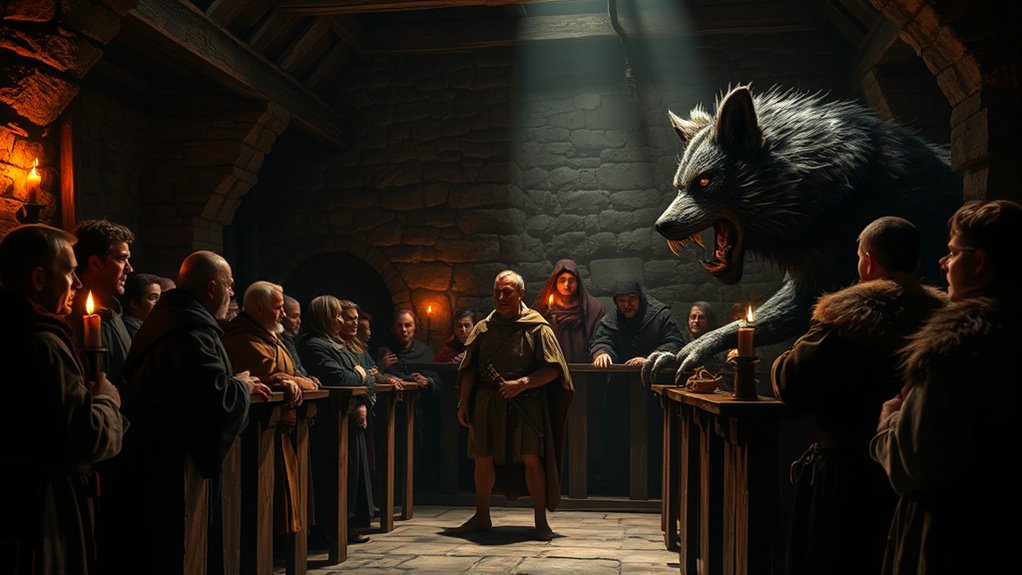

The trial of Peter Stumpp, known as the “Werewolf of Bedburg,” shows how medieval superstition and fear ruled justice. Accused of heinous crimes linked to werewolf legends, he was tortured to confess his supposed supernatural deeds. The community’s beliefs in witchcraft and transformations shaped his fate, often ignoring facts and evidence. If you keep exploring, you’ll discover how these fears led to tragic consequences and influenced justice in a time of superstition.
Listen free for 30 days with Audible
Thousands of audiobooks and originals — cancel anytime.
As an affiliate, we earn on qualifying purchases.
Key Takeaways
- Peter Stumpp was accused of being a werewolf responsible for murders in Bedburg during the late 16th century.
- His trial involved brutal torture to extract confessions linking him to lycanthropy and supernatural crimes.
- Superstition and medieval beliefs heavily influenced the legal proceedings, often prioritizing myth over evidence.
- The case exemplifies how fear and superstition led to unjust accusations and executions based on spectral and supernatural claims.
- The Bedburg werewolf story remains a historical symbol of the dangerous intersection between superstition and justice.
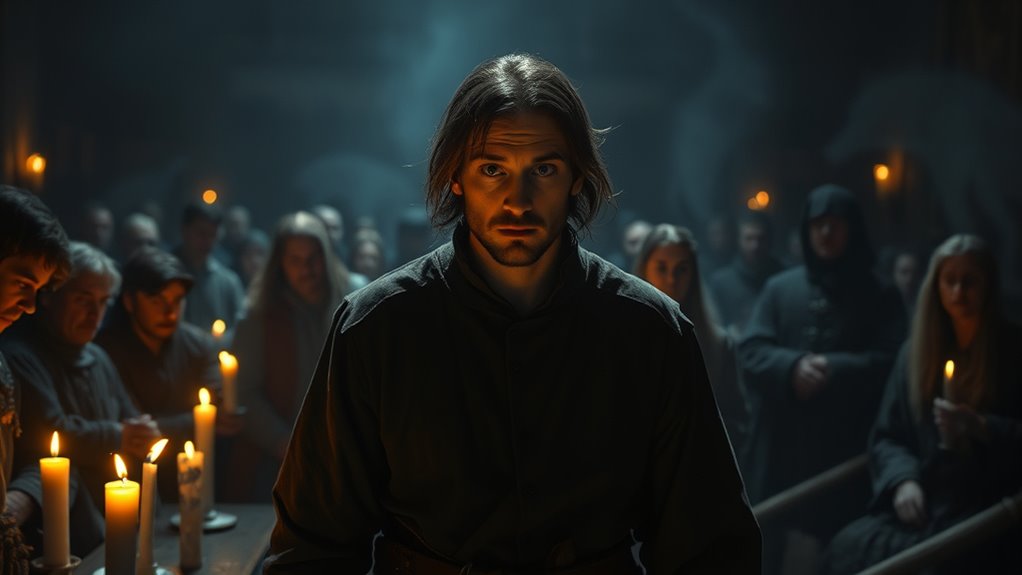
Have you ever wondered if a real werewolf once prowled the quiet streets of Bedburg? It’s a question that lingers in the minds of those fascinated by history’s darker tales. Back in the late 16th century, the town was gripped by fear and superstition. During this period, medieval superstition heavily influenced how people understood strange occurrences and criminal acts. When Peter Stumpp was accused of heinous crimes, the community’s fears took on a supernatural edge. The suspicion that he was a werewolf wasn’t just about superstitions; it became part of the criminal proceedings that condemned him. Authorities viewed his alleged transformation as proof of pact with the devil, blurring the lines between legend and law.
In those days, accusations like Stumpp’s weren’t merely seen as criminal acts—they were woven into the fabric of superstition that dominated the era. When someone was accused of being a werewolf, it wasn’t just about the crimes they committed; it was about their supposed supernatural nature. The legal process reflected this, as criminal proceedings often relied heavily on confessions, accusations, and spectral evidence. In Stumpp’s case, he was subjected to brutal torture to force a confession, which was common at the time. The authorities believed that confessions of lycanthropy and murder were proof of his guilt. The idea of a man transforming into a wolf, or being a wolf in human form, fit perfectly into the medieval worldview that linked evil to supernatural forces.
Additionally, the trial exemplifies how medieval superstition and fear of the supernatural could override rational evidence, leading to tragic outcomes. The trial of Peter Stumpp was a grim mix of law and superstition. His guilt was determined not only by the evidence but also by the community’s deep-rooted fears and beliefs. The case illustrates how medieval superstition influenced criminal proceedings, leading to verdicts based on supernatural accusations rather than objective evidence. As Stumpp was convicted and executed, the community saw his punishment as a moral victory against evil. Yet, for modern observers, it’s a chilling reminder of how superstition once shaped justice, often with tragic consequences. The legend of the Bedburg werewolf endures because it embodies that dark intersection of myth and law—a time when fear and superstition could turn a man into a monster in the eyes of society.

TORTURED:: The Darkest Tools of Human History,True Stories of Historical Torture and Execution Devices from the Ancient World to the Inquisition Era (The Torture Chronicles)
As an affiliate, we earn on qualifying purchases.
As an affiliate, we earn on qualifying purchases.
Frequently Asked Questions
Were There Any Modern-Day Sightings of Peter Stumpp?
There are no verified modern-day sightings of Peter Stumpp, but urban legends and supernatural sightings keep his story alive. You might hear whispers or tales claiming he appears in haunted forests or during full moons, fueling local lore. These stories are part of a long tradition of ghostly legends, but there’s no concrete evidence to support any real sightings today. It’s mainly a myth that continues to intrigue enthusiasts of the supernatural.
What Methods Were Used to Convict Stumpp of Witchcraft?
You might find it surprising, but Peter Stumpp was convicted mainly through eyewitness testimonies and confessions, not forensic evidence. In the 16th century, forensic science didn’t exist, so accusations often relied on witness accounts and confessions obtained under pressure. These testimonies described his supposed crimes and were used as the primary evidence to convict him of witchcraft and lycanthropy, leading to his execution.
How Has Stumpp’s Story Influenced Local Folklore?
You see, Stumpp’s story deeply influences local legends, shaping community tales about evil and transformation. His trial’s gruesome details fuel folklore, emphasizing themes of witchcraft and werewolf myths. The cultural impact persists today, as stories of his deeds are retold, warning against evil forces. His legend embodies fears and beliefs of the time, making him a lasting symbol in regional storytelling and a reminder of historical fears around witchcraft.
Were Similar Werewolf Trials Common in 16th-Century Europe?
Like shadows lurking in a foggy forest, werewolf trials were quite common in 16th-century Europe. You’d find medieval justice often tangled with witchcraft accusations, fueling fears of monstrous transformations. These trials echoed through towns and villages, turning suspicion into a spectacle of fear. Peter Stumpp’s case wasn’t isolated—many others faced similar accusations, as society struggled to distinguish between superstition and reality, often punishing those they believed to be cursed.
What Is the Current Historical Consensus on Stumpp’s Guilt?
You should know that the current historical consensus leans toward scientific skepticism regarding Peter Stumpp’s guilt. Modern researchers question the validity of the trial’s accusations and evidence, emphasizing the need for legal reexamination. Many believe that social hysteria and superstition influenced the verdict, and there’s little concrete proof to confirm his guilt. This perspective encourages us to critically evaluate historical accounts rather than accept them at face value.
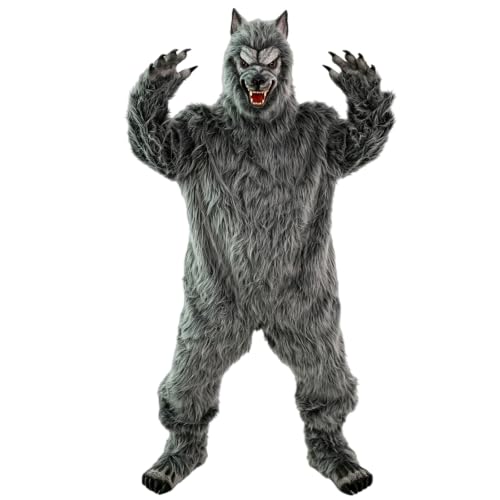
BEENODI Adult Werewolf Costume, Big Bad Wolf Halloween Cosplay Outfit, One Size, Latex and Polyester. (Dark Gray)
- Complete Werewolf Costume Set: Includes mask, jumpsuit, claws, foot covers
- Premium Skin-Friendly Materials: Latex mask and soft polyester jumpsuit
- Comfortable Fit for Most Adults: One size with flexible, roomy design
As an affiliate, we earn on qualifying purchases.
As an affiliate, we earn on qualifying purchases.
Conclusion
As you reflect on Peter Stumpp’s story, you see a tragic soul caught between darkness and despair. His tale reminds you that sometimes, unseen struggles lead us down shadowed paths, where innocence is lost in the whispers of fear and misunderstanding. Though history judges him harshly, you can’t help but feel a twinge of sorrow for a man who was perhaps searching for peace amid his torment. His story lingers, a somber reminder of the human condition’s fragile nature.

Blizzard of Lies: Karen Read, John O'Keefe, and the Shocking Unsolved Murder in Cop Town, USA
As an affiliate, we earn on qualifying purchases.
As an affiliate, we earn on qualifying purchases.

Funko Pop! TV: Supernatural – Crowley King of Hell – Collectable Vinyl Figure – Gift Idea – Official Merchandise – Toys for Kids & Adults – TV Fans – Model Figure for Collectors and Display
- Ideal collectible size: Approximately 3.75 inches tall
- Premium vinyl material: Durable and long-lasting
- Great gift for fans: Perfect for holidays and birthdays
As an affiliate, we earn on qualifying purchases.
As an affiliate, we earn on qualifying purchases.
Grilling season Picks
grills
As an affiliate, we earn on qualifying purchases.