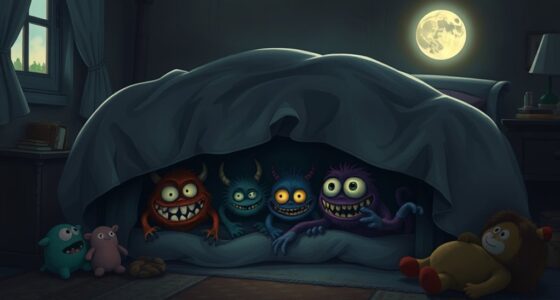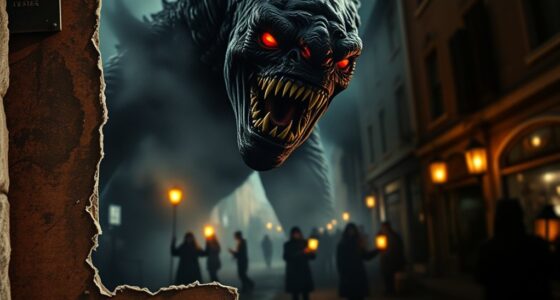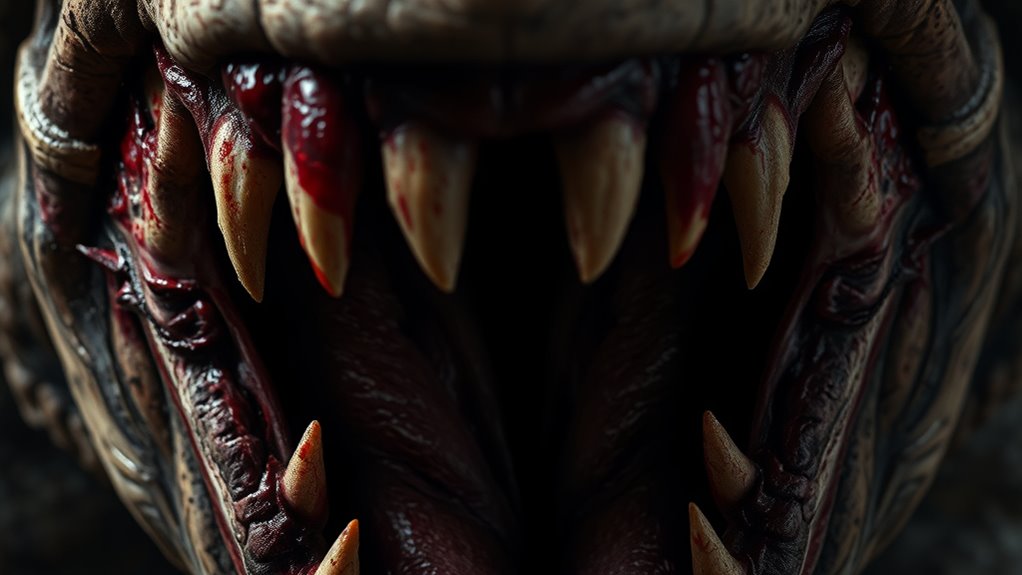

The monster’s mouth in myths symbolizes profound psychological and cultural themes behind cannibalism. It represents primal urges, internal conflicts, and fears of losing control or identity. It also reflects societal taboos and the chaos threatening moral boundaries. By exploring these symbols, you can see how cannibalism serves as a powerful metaphor for power, chaos, and inner struggles. To truly understand how these stories bypass surface horror, continue exploring the deeper meanings behind the monster’s mouth.
Key Takeaways
- The monster’s mouth symbolizes internal conflicts between civilization and primal instincts, reflecting psychological struggles.
- Cannibalism in myths often represents ultimate control, power, and dominance over others and oneself.
- It embodies fears of identity loss, vulnerability, and the destructive nature of unchecked primal urges.
- Cultural interpretations transform cannibalism from barbarism into symbols of reverence, highlighting complex societal taboos.
- Myths use cannibalism as a metaphor for internal chaos, moral boundaries, and the fear of losing moral integrity.
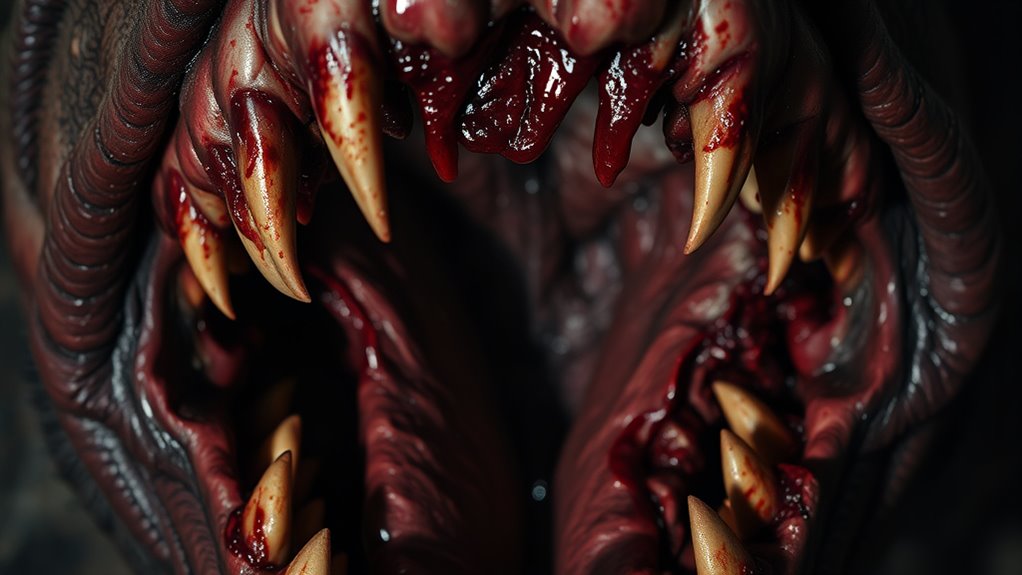
Have you ever wondered what truths and myths surround cannibalism? It’s a topic that stirs fear, fascination, and curiosity, often wrapped in layers of cultural symbolism and psychological symbolism. These symbols reveal much about human nature, society, and our deepest fears. In myths, cannibalism isn’t just about survival or horror; it’s a mirror reflecting complex ideas about power, taboo, and identity. When you think about it, many stories portray cannibalism as a sign of ultimate evil or chaos, emphasizing its role as the antithesis of civilization. This cultural symbolism reinforces ideas that consuming another person signifies the breakdown of social order or moral boundaries. Yet, in some cultures, cannibalism was once seen as a way to honor ancestors or gain their strength, turning what outsiders see as barbaric into a symbol of reverence. Understanding these cultural interpretations helps us see how cultural symbolism influences perceptions of cannibalism throughout history.
Beyond cultural symbolism, psychological symbolism digs into the mind’s darkest corners. Cannibalism in myths often symbolizes a desire for complete control or a fear of losing oneself. When a myth depicts a monster devouring humans, it’s not just about the act itself but what it represents — a loss of identity, an overpowering hunger that consumes reason and morality. These stories serve as metaphors for internal struggles, like the primal urges we suppress or the destructive tendencies lurking beneath our conscious thoughts. They evoke feelings of vulnerability, as if we’re all capable of losing ourselves to our darker impulses. The monster’s mouth becomes a metaphor for these internal battles, a place where the boundary between civilization and savagery dissolves.
In myths, the act of cannibalism also embodies psychological symbolism related to power and dominance. The monster’s consumption of others signifies a total takeover, a way to assert dominance over life and death itself. It’s a visceral reminder of the fears surrounding loss of control and the desire to nullify opponents completely. These stories tap into our primal fears and desires, illustrating how the monster’s mouth is a symbol of ultimate power, but also of chaos and destruction. When you examine these myths closely, they often reveal more about human psychology than about actual acts of cannibalism. They expose our anxieties about mortality, identity, and the thin veneer of civility we rely on to keep our darker sides in check.
Ultimately, myths about cannibalism serve as powerful symbolic tools, blending cultural beliefs with psychological truths. They allow us to explore the boundaries of human morality, the fears of losing oneself, and the allure of primal power. Whether seen as a cultural taboo or a psychological metaphor, these stories remind us of the complex layers beneath the horror, revealing how deeply rooted our fears and symbols are in the narrative fabric of human existence.

Creepshow (DVD)
Factory sealed DVD
As an affiliate, we earn on qualifying purchases.
Frequently Asked Questions
How Do Cannibalism Myths Influence Modern Horror Stories?
Cannibalism myths influence modern horror stories by tapping into your primal fears and symbolically representing taboo desires. You see characters facing symbolic consumption, which heightens the horror and emotional impact. These myths remind you of deep-seated fears about loss of control and the unknown, making stories more intense and unsettling. They serve as a powerful tool to evoke visceral reactions, connecting ancient fears with contemporary narratives.
Are There Cultural Taboos Associated With Cannibalism Across Societies?
You’ll find that many societies have strong cultural prohibitions against cannibalism, viewing it as taboo and morally wrong. However, some cultures incorporate ritualistic practices involving cannibalism, often believing it grants spiritual power or honors ancestors. These cultural prohibitions and ritualistic practices shape how communities perceive and regulate cannibalism, making it a complex issue that varies widely across different societies and histories.
What Psychological Factors Contribute to the Perpetuation of Cannibalism Myths?
You might think myths about cannibalism persist just because people love shocking stories, but it’s more than that. Fear conditioning plays a huge role, making societies associate cannibalism with horror and danger. Taboo reinforcement then cements these fears, ensuring such myths spread and endure. This cycle keeps the idea alive, magnifying the horror and embedding it deep in cultural consciousness, even when the reality is far more complex.
How Do Myths About Cannibalism Vary Between Ancient and Contemporary Cultures?
You notice that myths about cannibalism differ between ancient and modern cultures through their cultural symbolism and ritual significance. In ancient societies, such myths often reinforced social hierarchies or spiritual beliefs, portraying cannibalism as a sacred act. Today, contemporary stories tend to highlight fears or moral lessons, with less emphasis on ritual, reflecting evolving cultural values and a shift away from viewing cannibalism as a sacred practice.
Can Cannibalism Myths Impact Real-World Criminal Behavior?
Cannibalism myths can influence real-world criminal behavior by shaping psychological influence and myth reinforcement. When you’re exposed to these stories, they can distort perceptions of morality and normalcy, potentially inspiring or justifying extreme actions. These myths can serve as psychological triggers or reinforcement, leading some individuals to imitate or rationalize criminal acts. Understanding this connection highlights the importance of addressing myth narratives to prevent their impact on behavior.
![The Mummy's Hand / The Mummy's Tomb Double Feature [DVD]](https://m.media-amazon.com/images/I/51-lj8ygRhL._SL500_.jpg)
The Mummy's Hand / The Mummy's Tomb Double Feature [DVD]
HORROR
As an affiliate, we earn on qualifying purchases.
Conclusion
So, next time you hear about monsters chomping on humans, remember—it’s not just about hunger, but a wild dance of fears, taboos, and ancient nightmares. Cannibalism myths serve as the ultimate scare tactic, turning friendly faces into monstrous mouths. Who knew that lurking behind those stories is a society’s way of saying, “Stay in line, or we’ll have you for dinner!” Bon appétit, or rather, beware the monstrous menu!

Cult Horror Classics Double Feature
Factory sealed DVD
As an affiliate, we earn on qualifying purchases.
![The Return of the Living Dead 1984 Movie - MGM [DVD] Clu Gulager & James Karen, Includes Free Coloring Booklet](https://m.media-amazon.com/images/I/5179SDsMjXL._SL500_.jpg)
The Return of the Living Dead 1984 Movie - MGM [DVD] Clu Gulager & James Karen, Includes Free Coloring Booklet
the return of the living dead dvd
As an affiliate, we earn on qualifying purchases.