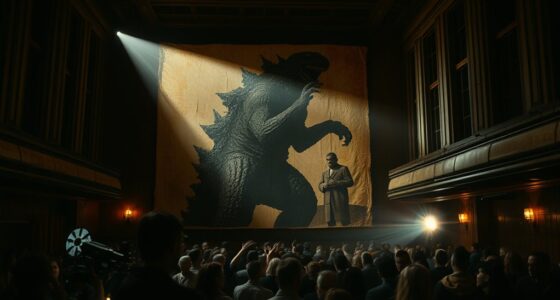
Monster theory helps you see how society uses monsters as symbols of deeper fears, anxieties, and moral values. These creatures reflect what we find threatening or unacceptable, like vampires symbolizing fear of death or loss of control, and werewolves representing primal instincts. The way monsters are portrayed reveals cultural tensions and changing anxieties over time. If you keep exploring, you’ll discover how these symbols expose what society fears most and how they shape collective responses.
Key Takeaways
- Monsters symbolize societal fears, anxieties, and taboos, serving as mirrors reflecting collective moral and cultural values.
- The portrayal of monsters evolves with cultural anxieties, revealing how societies respond to crises and moral threats.
- Monsters often embody fears of outsiders, chaos, or moral decay, highlighting societal boundaries and exclusions.
- Analyzing monster symbolism uncovers underlying societal fears about mortality, primal instincts, and social order.
- Media and storytelling shape and reflect societal fears through monster portrayals, influencing collective psychology.

Monster theory provides a framework for understanding how society constructs and responds to monsters, revealing deeper insights into cultural fears and values. When you explore monster symbolism, you begin to see how monsters embody the anxieties, taboos, and moral standards of a culture. These creatures aren’t just figments of imagination; they serve as mirrors reflecting what a society finds threatening or unacceptable. For example, a vampire’s association with blood and immortality can symbolize fears surrounding disease, death, and the loss of control, while a werewolf embodies anxieties about primal instincts and the beast within. By analyzing these symbols, you discover that monsters often stand in for societal fears that are hard to confront directly.
Your understanding deepens when you realize that cultural fears shape how monsters are portrayed and what they represent. In some cultures, monsters symbolize chaos and disorder, acting as warnings against moral decay or societal collapse. In others, they may symbolize the outsider or the other—those who threaten the social fabric because they are different or marginalized. The way we respond to monsters, whether through fear, fascination, or rejection, reveals what values we hold dear and what threats we perceive. For instance, the monster as a villain often embodies the fear of the unknown, the unfamiliar, or the uncontrollable, making it a vessel for societal anxieties about change and difference.
You also notice that monster symbolism evolves alongside cultural fears. In times of crisis, monsters may become more grotesque or exaggerated, amplifying the collective anxieties of the moment. During periods of societal upheaval, monsters might represent political threats, moral corruption, or environmental destruction. This interplay between monster symbolism and cultural fears allows you to see how stories, myths, and media shape and are shaped by societal anxieties. It’s a cycle where monsters are both a product of cultural fears and a means of coping with them. Additionally, the study of philosophical insights on authenticity and existence can deepen your understanding of how monsters symbolize human struggles with identity and morality.
Frequently Asked Questions
How Do Monsters Reflect Societal Anxieties Across Different Cultures?
Monsters reflect societal fears through cultural symbolism, embodying anxieties about morality, chaos, or outsiders. You see this in mythologies where monsters symbolize fears of the unknown or societal collapse. Across cultures, monsters serve as warnings or reflections of collective concerns, like fears of invasion, disease, or moral decay. By studying these creatures, you uncover how societies project their deepest fears onto monsters, revealing shared cultural anxieties that transcend borders.
Can Monster Theory Be Applied to Digital or Virtual Monsters?
Yes, monster theory can be applied to virtual representations and digital fears. You see, digital monsters symbolize societal anxieties about technology, privacy, and identity. By analyzing these virtual creatures, you can understand how fears of loss of control or dehumanization manifest in our digital age. These virtual monsters reflect collective concerns, revealing how society navigates its evolving relationship with technology and the unknown dangers it presents.
What Role Do Monsters Play in Shaping Moral Values?
Monsters act as symbols that challenge your moral boundaries, revealing what society deems unacceptable. By embodying fears or taboos, they reinforce societal norms or provoke reflection. As guardians of morality, monsters highlight boundaries you shouldn’t cross, shaping collective values. Their presence reminds you of the importance of moral limits, serving as a mirror to societal standards and encouraging you to question or uphold the moral fabric that keeps society cohesive.
How Has the Portrayal of Monsters Evolved Over History?
You’ve seen how the portrayal of monsters has evolved from mythical beasts in ancient myths to legendary creatures in modern stories. Over history, these beings shifted from symbols of chaos and evil to complex characters that reflect societal fears and values. Today, you notice they’re often more nuanced, sometimes even sympathetic, showing how cultural attitudes towards monsters change with our understanding of morality and human nature.
Are There Psychological Benefits to Fearing Monsters?
Did you know that 60% of people report feeling braver after confronting fears like monsters? Fear of monsters can boost your psychological resilience and help with emotional regulation by teaching you to manage anxiety. Facing or imagining monsters allows you to confront fears safely, strengthening mental strength. So, your fear isn’t just a threat; it can be a tool for growth, helping you develop coping skills and emotional stability.
Conclusion
By exploring monster theory, you realize that your fears reflect society’s deepest anxieties—like fearing a future where AI takes over, reminiscent of sci-fi’s old-school robots. Monsters aren’t just creatures to be scared of; they reveal how we view ourselves and the world. So, next time you see a monster, remember, it’s not just a myth. It’s a mirror, showing what we’re afraid to face, even in this digital age.