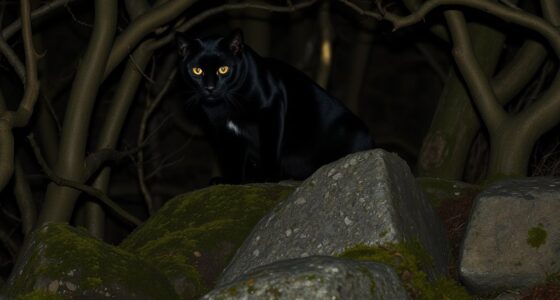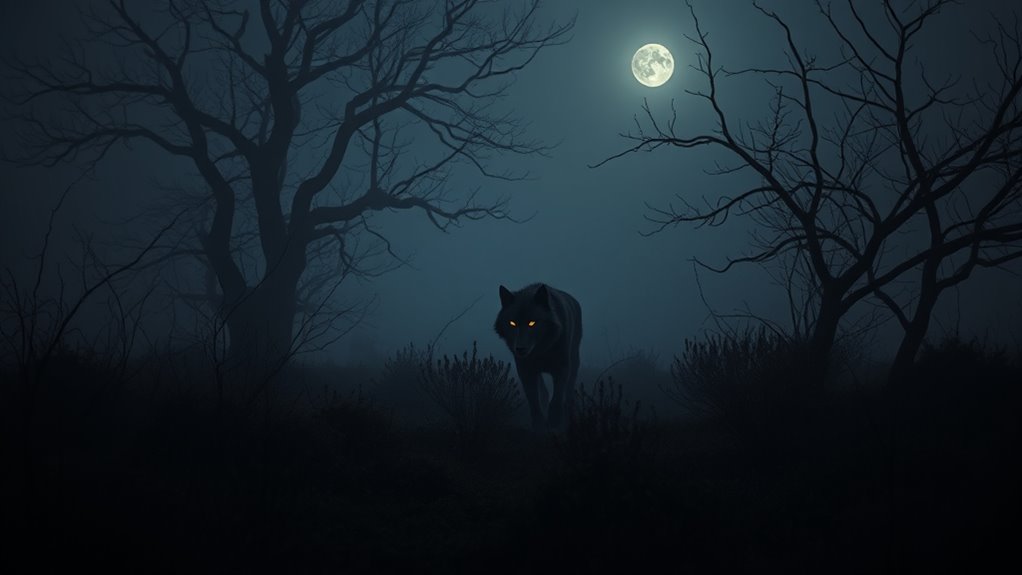

The Barghest is a feared black dog from Northern English legends, often seen as a spectral warning of death or misfortune. You’ll find it roaming desolate moors, lonely roads, and haunted spots, sometimes transforming into human shapes or spectral figures. This creature embodies danger and supernatural signs, acting as a messenger from the spirit world. If you want to uncover its mysterious origins and regional tales, keep exploring these intriguing legends.
Open a free Amazon Business account
Business pricing, bulk buying and tax-exempt orders.
As an affiliate, we earn on qualifying purchases.
Key Takeaways
- The Barghest is a legendary black dog from Northern English folklore, symbolizing death and misfortune.
- It is often seen as a solitary or spectral pack of dogs haunting desolate areas and crossroads.
- The creature serves as an omen of impending doom, warning travelers and villagers of nearby danger.
- Variations include shape-shifting into humans or spectral figures, enhancing its supernatural reputation.
- The legend reflects regional fears, embodying themes of death, spirits, and the supernatural in Northern culture.
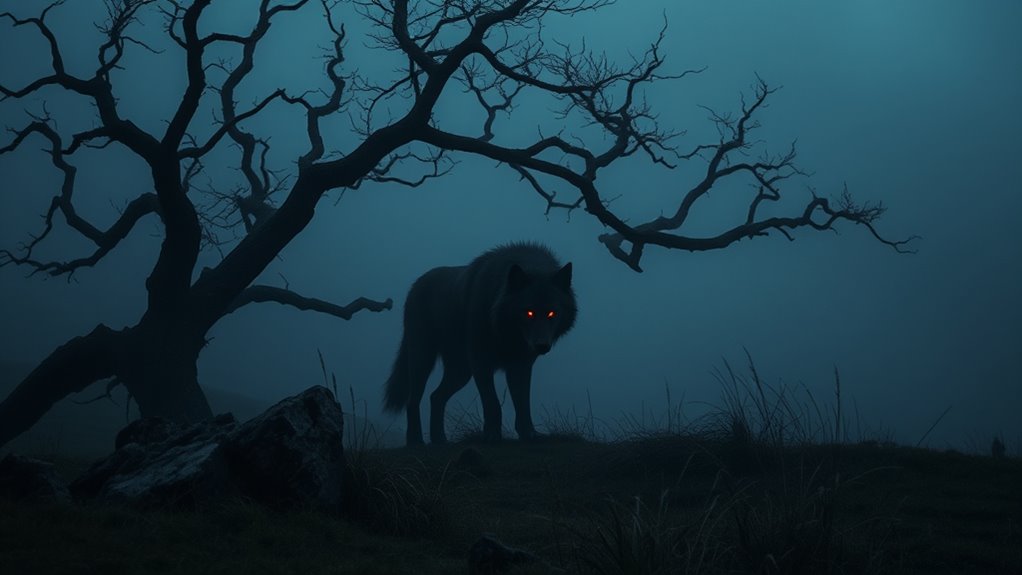
The Barghest is a legendary creature from Northern English folklore, often depicted as a monstrous black dog with glowing eyes. Its mythical origins are rooted in ancient stories that warn of an omen of death or misfortune. You might find it fascinating that the creature’s origins are shrouded in myth, with many believing it to be a supernatural manifestation from early pagan traditions. Over centuries, tales have evolved, but the core idea remains: encountering a Barghest signals trouble ahead. Its presence is often associated with ominous events, and folks in the North have long regarded it as a harbinger of doom.
Regional variations of the Barghest add a layer of richness to its legend. In some stories, it’s a solitary beast prowling desolate moors and lonely roads, while others depict it as a pack of spectral dogs haunting specific villages. For example, in Yorkshire, the creature is sometimes called the “Giant Black Dog,” and stories emphasize its enormous size and glowing eyes that pierce through darkness. In Northumberland, the creature’s role as a death omen is more pronounced, with tales warning travelers to stay clear when they see its silhouette. The creature’s shape-shifting ability also varies by region; some legends describe it as a large dog, while others suggest it can morph into a human or a spectral figure to lure victims. These regional variations reflect local fears and beliefs, making the Barghest a versatile symbol of danger across Northern England.
Despite these differences, the core themes remain consistent: the Barghest is a warning, a sign that something ominous is about to happen. Its mythical origins are intertwined with stories of spirits and otherworldly beings, and many believe it acts as a messenger from the spirit world. The creature is often linked to specific locations—haunted moors, abandoned houses, or crossroads—where its appearances are considered more likely. If you find yourself wandering late at night in these areas, legends warn you to be cautious. Sightings of the Barghest are rare but impactful, serving as a stark reminder of how folklore often reflects collective anxieties about death, the unknown, and the supernatural. Whether as a mythic guardian or a death omen, the creature’s regional variations help keep its legend alive and relevant in Northern English culture.
Top picks for "explor barghest england"
As an affiliate, we earn on qualifying purchases.
Frequently Asked Questions
Are There Any Modern Sightings of the Barghest?
There are occasional reports of modern supernatural encounters with the Barghest, but their credibility remains doubtful. Many believe these sightings are rooted in folklore, making them hard to verify. If you’re interested, you might find stories from rural communities or local legends that claim to have seen this spectral creature. However, most skeptics view these accounts as mere folklore, with little proof to support their supernatural credibility.
How Does the Barghest Compare to Other British Black Dogs?
You’ll find that the Barghest’s mythical origins set it apart from other British black dogs, like the Black Shuck or the Gurt Dog. It’s mainly linked to northern England and often appears as a large, ghostly dog with glowing eyes. Regional variations influence its appearance and behavior, but the Barghest remains distinct for its ominous reputation, often seen as an omen of death, unlike some others which are more protective or mischievous.
What Are the Most Common Locations Associated With Barghest Legends?
You should watch out for haunted forests and desolate moorlands, as these are the most common locations linked to barghest legends. These dark, eerie places are where the creature’s ominous presence is often felt — shadows flicker, and the air thickens with dread. If you venture into these lonely landscapes, stay alert; the barghest might be lurking, ready to reveal its sinister presence when least expected.
Can the Barghest Be Warded off or Protected Against?
You can ward off or protect yourself against the barghest by using protective charms and performing warding rituals. Carrying symbols like iron or specific amulets, believed to repel evil spirits, helps create a barrier. Performing rituals such as crossing yourself or reciting protective prayers at key locations can also deter the creature. Stay vigilant, and remember that these traditional methods aim to keep you safe from its ominous presence.
Is There Any Historical Evidence Supporting the Existence of the Barghest?
Imagine a shadow cast by history itself—there’s no solid evidence supporting the existence of the Barghest. In historical folklore, it’s more mythological origin than fact, a spectral warning rooted in tales passed down through generations. While these stories evoke vivid images, they lack verification from credible sources. You won’t find concrete proof in historical records; the Barghest remains a haunting legend, woven into England’s mythic tapestry.
Conclusion
So, as you stand there, imagining the fearsome Barghest lurking in the shadows, you realize it’s the very omen of death that keeps the legends alive. Ironically, it’s the fear of this creature that warns you to stay cautious, yet also fuels tales that make the dark seem even more menacing. In the end, it’s almost comforting to know that even in myth, a warning can be both terrifying and oddly protective.
Back to school Picks
back to school
As an affiliate, we earn on qualifying purchases.