
At Lake Como, you can discover fossils of the Lariosaurus, a prehistoric marine reptile that once roamed its ancient waters. Excavation experts carefully uncover these well-preserved remains, revealing details of its bones and soft tissues. Legends surround this creature as a symbol of the region’s rich prehistoric past. If you keep exploring, you’ll uncover fascinating facts about how scientists study these fossils and what they tell us about Lake Como’s ancient world.
Listen free for 30 days with Audible
Thousands of audiobooks and originals — cancel anytime.
As an affiliate, we earn on qualifying purchases.
Key Takeaways
- Fossils of Lariosaurus, a prehistoric marine reptile, have been discovered around Lake Como, revealing insights into ancient ecosystems.
- These fossils are meticulously excavated from sediment layers guided by geological analysis and specialized tools.
- Well-preserved remains show detailed anatomy, helping scientists understand Lariosaurus’ behavior and environment.
- Legends and local lore often surround fossil sites, blending scientific findings with cultural stories.
- Fossil discoveries contribute to the understanding of Lake Como’s ancient marine landscape and its prehistoric inhabitants.
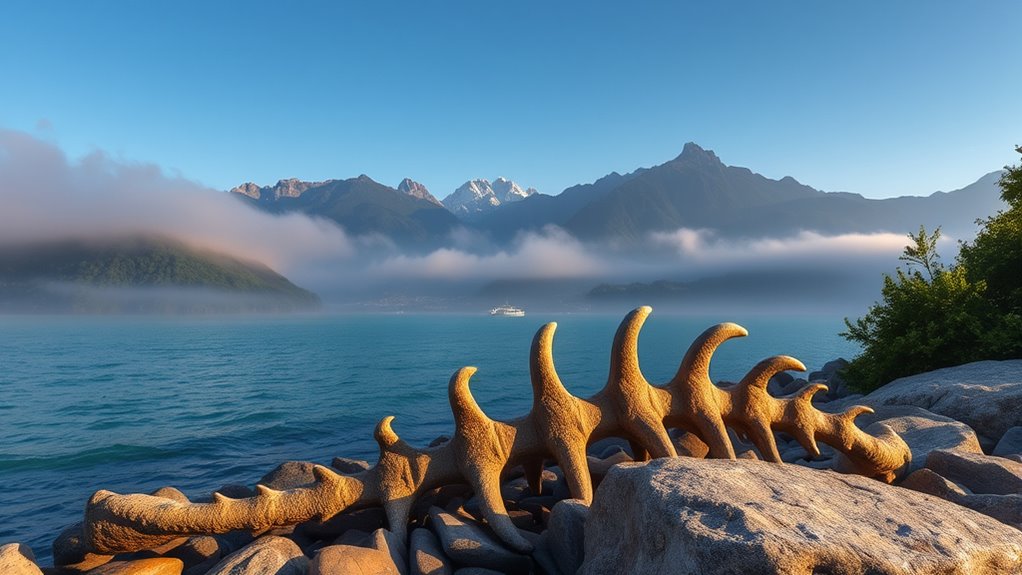
Nestled in the depths of Lake Como, the Lariosaurus is a fascinating prehistoric creature that once roamed these waters millions of years ago. As you explore the lake’s history, you’ll discover that this marine reptile belonged to a group known as prehistoric marine reptiles, which thrived during the Mesozoic era. These creatures were perfectly adapted to life in the ancient seas, with elongated bodies and powerful flippers that allowed them to glide effortlessly beneath the surface. The Lariosaurus’s fossils have become a key piece in understanding the prehistoric marine ecosystem of the region.
When it comes to fossil discovery methods, the process is both meticulous and exciting. Fossil hunters often begin with careful surveys of Lake Como’s shoreline and seabed, searching for signs of bones or fossilized remains. Since fossils are typically buried under layers of sediment, experts use tools like specialized drills, sieves, and even underwater excavation equipment to carefully extract the remains without damaging them. Once collected, these fossils undergo detailed cleaning and preparation in laboratories, where scientists use fine brushes and chemical treatments to reveal the intricate details of the bones. Through this painstaking process, you can appreciate how each fossil provides vital clues about the anatomy, behavior, and environment of prehistoric marine reptiles like the Lariosaurus.
The discovery of these fossils isn’t just accidental; it’s often the result of targeted excavation based on geological clues. Geologists analyze rock formations around Lake Como, looking for strata that date back to the Mesozoic era—when the Lariosaurus thrived. These layers often contain fossilized remains of marine life, indicating ancient seabeds where these creatures once swam. When fossils are found, they’re carefully documented and studied to piece together the creature’s physical features and its role within the prehistoric marine ecosystem. You might be surprised to learn that many of these fossils are remarkably well-preserved, offering detailed insights into the creature’s skull, teeth, and even soft tissue impressions. Additionally, size restrictions for fossils and excavations are often dictated by local regulations to ensure preservation and responsible research.
As an affiliate, we earn on qualifying purchases.
Frequently Asked Questions
Are Lariosaurus Fossils Unique to Lake Como?
No, lariosaurus fossils aren’t unique to Lake Como. Their geological uniqueness is mainly linked to the specific conditions that preserved these ancient creatures in this region. While Lake Como has a notable fossil distribution, similar fossils have been found in other parts of the world, indicating that these creatures once had a wider range. However, the fossils here are particularly well-preserved, offering valuable insights into prehistoric life.
How Old Are the Lariosaurus Fossils Found There?
Imagine uncovering ancient, muddy layers beneath shimmering lake waters—that’s where you find Lariosaurus fossils. These fossils date back to the Middle Triassic period, roughly 240 million years ago. Through fossil dating, scientists piece together this prehistoric puzzle, revealing that these creatures roamed the Earth during the early days of the age of dinosaurs. So, you’re looking at fossils that are over two centuries old, shaped by deep geological time.
What Other Prehistoric Creatures Lived Alongside Lariosaurus?
You discover that marine reptiles like the ichthyosaurs and plesiosaurs lived alongside Lariosaurus in prehistoric ecosystems. These creatures thrived in the same ancient waters, showcasing a diverse marine life. Their fossils reveal a vibrant, complex environment where different species interacted and evolved. Exploring these fossils helps you understand the rich tapestry of prehistoric ecosystems, illustrating how marine reptiles coexisted and adapted to their ancient world.
Have Any Legends Connected Lariosaurus to Local Folklore?
You’ll find that local legends and folklore stories often portray the Lariosaurus as a mysterious, ancient creature lurking in Lake Como’s depths. These tales describe sightings and encounters that spark imaginations, fueling stories of a prehistoric monster still haunting the waters. While there’s no scientific proof, these folklore stories keep the legend alive, making the Lariosaurus a enthralling part of local culture and a symbol of Lake Como’s mystique.
Can Visitors See Lariosaurus Fossils in Museums Nearby?
Yes, you can see Lariosaurus fossils in nearby museums. While the fossil display is often small, museum exhibits highlight the ancient creature’s significance, blending science with local history. You’ll find these fossils embedded in the story of Lake Como’s prehistoric past, offering a fascinating glimpse into a world long gone. Visiting these exhibits allows you to connect with the legendary creature and appreciate the region’s rich paleontological heritage.
As an affiliate, we earn on qualifying purchases.
Conclusion
As you plunge into Lake Como’s depths, the legend of Lariosaurus whispers like a hidden secret beneath shimmering waves. These ancient fossils are like scattered treasures, telling stories of a time when giants roamed the waters. Imagine the lake as a living history book, its surface glistening with mysteries waiting to be uncovered. With every ripple, you’re invited to become part of the enchanting saga that keeps Lake Como alive with wonder and legend.
As an affiliate, we earn on qualifying purchases.
prehistoric marine reptile model
As an affiliate, we earn on qualifying purchases.
As an affiliate, we earn on qualifying purchases.
Flea & tick season Picks
flea and tick prevention
As an affiliate, we earn on qualifying purchases.