
The Beast of Gévaudan refers to a series of deadly wolf attacks in 18th-century France that caused widespread fear, with legends suggesting a supernatural creature. Modern research indicates the attacks were likely caused by large or multiple wolves driven by hunger and frustration, not monsters. Although sightings and stories persist, they are often misidentifications or folklore. To truly understand what happened, explore the facts behind this haunting historical tale.
Key Takeaways
- The Beast of Gévaudan was a series of deadly wolf attacks in rural France between 1764 and 1767.
- Modern research suggests large or multiple wolves, not supernatural creatures, caused the attacks.
- The legend has been mythologized, blending fact with folklore and influencing local culture.
- Ongoing sightings are usually misidentifications but keep the myth alive today.
- Scientific investigations indicate wolf behavior driven by food scarcity or human interference likely led to the attacks.
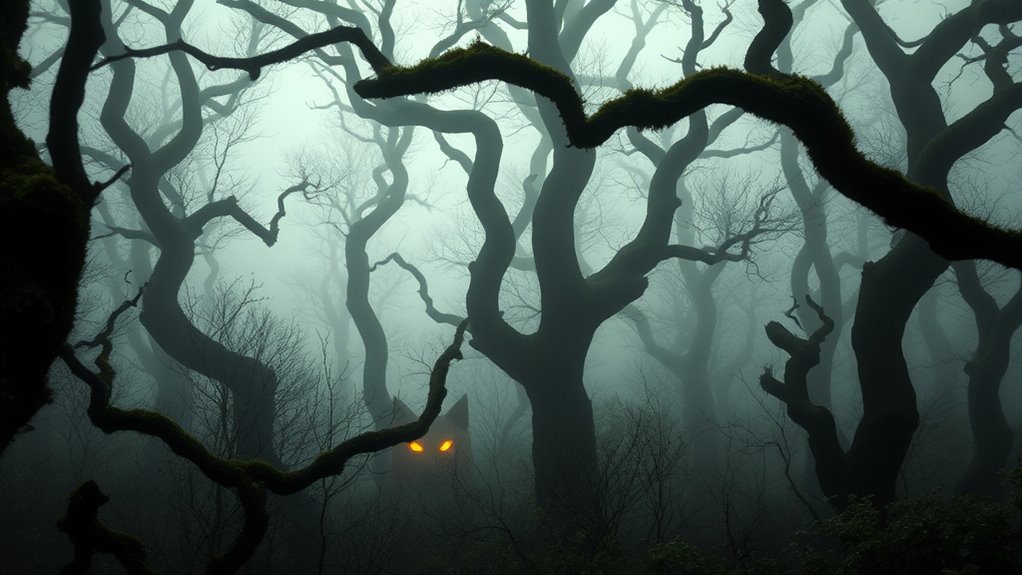
The Gévaudan wolf attacks remain one of the most infamous series of man-eating wolf encounters in history, terrorizing the rural region of France between 1764 and 1767. As you explore this chilling chapter, it’s essential to understand how myth and reality intertwine around these events. Many stories have grown over the centuries, blending fact with folklore to create a legendary creature that seemed almost supernatural. Some believe the beast was a massive wolf, a pack of wolves, or even a cunning human in disguise. Yet, modern research suggests that the attacks were likely caused by a large, aggressive wolf or a few wolves operating in a pack, rather than a supernatural monster. Still, the myth has persisted, fueled by local legends and sensationalized accounts that painted the creature as an unstoppable, almost demonic force. Today, some sightings of a mysterious beast in the Gévaudan region are reported, but these are often dismissed as misidentifications of wolves or even mistaken identity of other animals. Still, these modern sightings keep the legend alive, prompting people to wonder whether a creature of that magnitude could still lurk nearby or if it’s just the human tendency to mythologize the unknown. Modern investigations into historical wolf behavior help us better understand the context of these events and separate fact from fiction. You might find it fascinating how the story has evolved over the centuries, transforming from a series of terrifying attacks into a mythic tale that captures the imagination. The truth is, many of the details surrounding the attacks—such as the beast’s size, intelligence, and motives—are highly debated. Some accounts describe a monstrous, wolf-like creature with extraordinary strength, capable of taking down large prey and evading hunters. Others believe it was a pack of wolves that became unusually bold due to food scarcity or human interference. Despite the ongoing fascination, modern experts agree that the attacks were likely caused by wolves, possibly driven to desperation or aggression. The distinction between myth and reality becomes blurred, especially when sensationalized reports and local folklore distort the facts. Still, the legend persists, and sightings continue to be reported, often dismissed by authorities but adding fuel to the myth. These modern sightings, whether genuine or mistaken, serve to remind us how deeply the story has embedded itself into local culture. They also highlight how the line between myth and reality remains thin, with the legend of the Beast of Gévaudan continuing to haunt the collective imagination. Whether it’s a shadow in the woods or just a case of mistaken identity, the myth endures, keeping alive the terror and intrigue that first gripped the region over three centuries ago.
Frequently Asked Questions
What Was the True Identity of the Beast?
You might think the beast was a giant wolf or a supernatural creature, but historical accounts suggest it was likely a large wolf or a pack of wolves. Some experts believe it could have been a hybrid or a known predator exploited by fear. The true identity remains uncertain, but most researchers agree that beast identification points to wolves, possibly driven to attack by scarcity or human activities.
How Did Locals Respond During the Attacks?
When chaos erupts, people often band together. During the attacks, you’d see local panic ripple through villages, prompting residents to organize patrols and hunt the beast. The community response was swift, with villagers sharing information and strengthening defenses. Fear gripped everyone, yet their unity shone through as they refused to let the terror break them. They knew that facing danger head-on was their best shot at ending the nightmare.
Were There Any Official Investigations or Conclusions?
You’ll find that officials launched investigations into the Beast of Gévaudan, but many mystery theories and mythical origins surround the case. Some believed it was a supernatural creature, while others thought it was a wolf or a pack of wolves. Despite numerous efforts, no definitive conclusion emerged, leaving the true nature of the beast shrouded in legend. The mystery persists, fueling debates and stories for generations.
Did the Attacks Impact Regional Folklore or Legends?
You’ll find that the attacks heavily influenced regional folklore legends, shaping stories passed down through generations. The Beast became a symbol of fear and mystery, adding a layer of cultural impact that persists today. These legends often depict the creature as a supernatural or monstrous entity, reinforcing local beliefs and fears. As a result, the event’s mythic status continues to inspire stories, artworks, and cultural references in the region.
What Modern Theories Explain the Creature’s Behavior?
You might find it fascinating that around 80% of modern theories suggest the creature’s behavior was influenced by zoological or mythical explanations. Some argue it was a rogue wolf or a pack acting unusually, while others believe legends or mythical explanations fueled fears. These theories explore whether the Beast was a real animal, perhaps rabid, or a mythic entity inspired by local stories, adding depth to understanding these historic attacks.
Conclusion
As you reflect on the Gévaudan wolf attacks, it’s astonishing to realize that over a period of three years, the beast was believed to have killed around 100 people. This staggering number highlights the terror and chaos it caused in the region. Despite efforts to hunt it down, the creature remained elusive, fueling fear and fascination. The attacks remind you of how nature’s unpredictability can strike fear into even the most prepared communities.