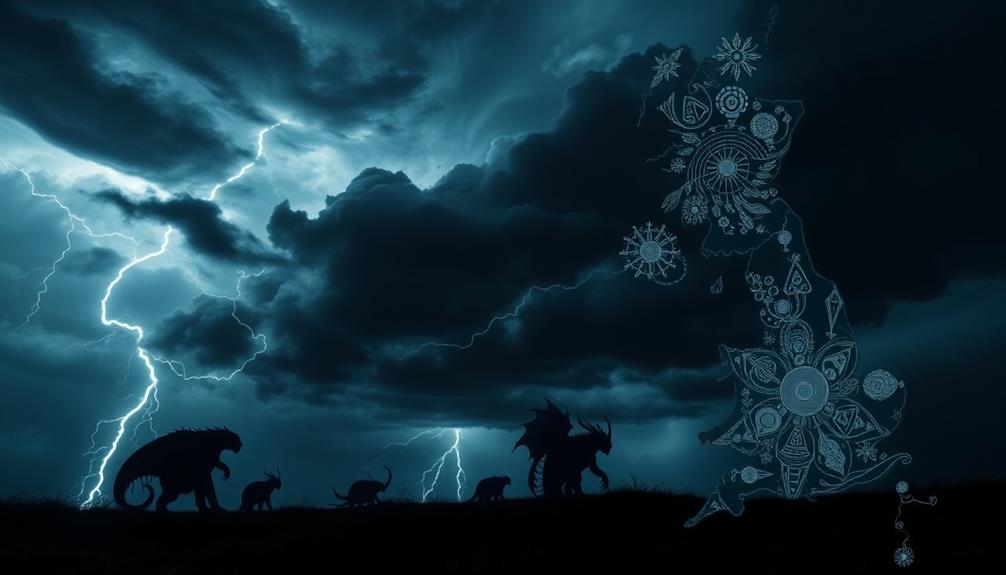

The Yeti, known as the Himalayan Snow Man, has fascinated explorers and locals alike for centuries, blending myth, spiritual belief, and elusive sightings. While many claim to have seen footprints, heard strange sounds, or taken blurry photos, concrete scientific proof remains absent. For some, it’s a guardian spirit; for others, an undiscovered creature. The legend endures, driven by curiosity and mystery. If you keep exploring, you’ll discover more about this intriguing mountain enigma.
Key Takeaways
- The Yeti is a legendary creature rooted in Himalayan folklore, blending myth, spiritual beliefs, and local cultural significance.
- Despite numerous sightings and technological investigations, no conclusive scientific evidence proves the Yeti’s existence.
- Many reports are blurry photographs, footprints, or sounds, fueling ongoing speculation and curiosity.
- The Yeti symbolizes the mystery and reverence of remote mountain environments, often considered a guardian or spiritual entity.
- Its enduring popularity reflects human fascination with the unknown, making it a captivating blend of myth and possible cryptid.

The Yeti, often called the Himalayan Snow Man, has captivated explorers and skeptics alike for centuries. You might have read stories, seen photographs, or even watched documentaries that attempt to prove its existence. Despite the lack of definitive evidence, numerous cryptid sightings have kept the legend alive, fueling curiosity and debate. Many believe that the Yeti isn’t just a myth but a creature lurking in the remote, snowy mountains of Nepal and Tibet. These sightings, whether blurry photographs or eyewitness accounts, serve to reinforce the mystery surrounding this elusive being. Over time, the Yeti has become more than just a cryptid; it holds deep cultural significance for local communities who see it as a symbol of the wild and mysterious mountain landscape. For them, the Yeti is intertwined with spiritual beliefs, stories, and traditions passed down through generations. These stories often describe the creature as a guardian or an ancestral spirit, embedding the Yeti into the cultural fabric of the region. This cultural significance influences how local people perceive the creature—sometimes as a protector, sometimes as a warning, but always as a part of their identity. As outsiders, you might view the Yeti through a lens of skepticism, dismissing it as folklore or a legend born from human imagination. Yet, for the local communities, the Yeti represents more than just a creature of myth; it’s woven into their understanding of the mountains and their environment. Many expeditions and research efforts have sought to find physical proof of the Yeti, yet concrete evidence continues to elude scientists and explorers alike. Still, the stories persist, fueled by cryptid sightings that range from fleeting footprints to unexplainable sounds in the night. These accounts, regardless of their authenticity, keep the legend alive and contribute to the creature’s enduring mystique. Advances in technologies such as thermal imaging and DNA analysis have been employed in recent attempts to uncover the truth behind the Yeti sightings. Whether you believe in the Yeti or not, its cultural significance endures, shaping local traditions and inspiring global fascination. Its legend reminds us that some mysteries remain untouched by science and that the mountains still hide secrets waiting to be uncovered. The ongoing fascination with the Yeti encapsulates our desire for discovery and the allure of the unknown, making it one of the most intriguing cryptids in modern folklore. Ultimately, whether it’s a creature of myth or a misunderstood animal, the Yeti continues to captivate minds and hearts across the world.

AGM Global Vision ObservIR LRF 25-256 Fusion Thermal Imaging & CMOS Binocular with Built-in Laser Range Finder, 12 Micron 256×192 (25 Hz), 4K, 25 mm Lens.
Dual-Spectrum Imaging Equipped with both thermal and digital day/night vision, this device provides clear imaging in any lighting,…
As an affiliate, we earn on qualifying purchases.
As an affiliate, we earn on qualifying purchases.
Frequently Asked Questions
Have Any Credible Scientific Studies Proven the Yeti’s Existence?
You won’t find any credible scientific studies proving the yeti’s existence. Cryptid research and folklore analysis have yet to produce concrete evidence, often relying on ambiguous footprints and local legends. Scientists remain skeptical, emphasizing the lack of verifiable data. While the lore persists, rigorous scientific investigation hasn’t confirmed the yeti as a real creature, leaving it firmly in the domain of myth and mystery.
What Recent Discoveries Have Been Made Related to the Yeti?
You’re chasing shadows with recent yeti findings, but nothing definitive has surfaced. While cryptid sightings continue to stir folklore legends, scientific evidence remains elusive. New footprints and hair samples have sparked interest, yet they lack conclusive proof. It’s like chasing a mirage — intriguing but ultimately unverified. Until credible discoveries emerge, the yeti stays entrenched in myth, reminding us that sometimes, the truth is stranger than fiction.
Are There Any Documented Yeti Sightings Outside the Himalayas?
You’ll find that Yeti sightings have been reported outside the Himalayas, fueling global legends about this creature. People in regions like North America and Europe have claimed mysterious encounters, but concrete evidence remains elusive. While some believe these sightings are misidentifications or folklore, others keep the legend alive, making the Yeti a fascinating part of worldwide myth and mystery. Despite the stories, no definitive proof has been confirmed outside its Himalayan origins.
How Do Local Cultures Perceive the Yeti Today?
You see, in many local cultures, the yeti remains a symbol of mystery and spiritual significance. For example, villagers in Nepal incorporate stories of the yeti into their folklore and cultural rituals, viewing it as a guardian spirit or a creature to respect. These traditions help preserve the yeti’s place in local identity, blending myth and reality. Today, the yeti’s perception continues to evolve, enriching cultural narratives rather than dismissing it as mere legend.
What Evidence Do Skeptics Cite to Dismiss the Yeti as a Myth?
Skeptics dismiss the yeti as a myth, citing fossil hoaxes and misidentification claims as key evidence. They point out that many supposed yeti fossils turned out to be fake or misidentified animal remains. Additionally, they argue that many sightings are likely misidentifications of bears or other animals, and lack credible scientific proof. This skepticism questions the existence of the yeti beyond folklore, emphasizing the absence of concrete, verifiable evidence.
GPS Navigator for Car Truck RV, 9-Inch HD Touchscreen GPS for Car with 2026 Maps Free Lifetime Updates, Voice Turn-by-Turn Guidance, Speed & Red Light Camera Alerts, Custom Truck Routing
【9-inch HD Large Screen】 The 9-inch HD touchscreen delivers a clearer and broader field of view. This car…
As an affiliate, we earn on qualifying purchases.
As an affiliate, we earn on qualifying purchases.
Conclusion
Ultimately, the Yeti remains a mystery wrapped in a fog of legends, like a shadow dancing at the edge of your vision. Whether it’s a real creature hiding in the Himalayan shadows or just a myth spun by wandering explorers, the legend continues to capture your imagination. As long as the mountains stand tall, the Yeti will linger in your mind, a elusive whisper of the wild, forever teasing you with promises of the unknown.

COROS Nomad GPS Outdoor Watch, Global Maps with Turn-by-Turn Navigation, 22-Day Battery Life, Voice-Pin Adventure Journal, Fishing Modes with Tides & Catch Logging, for Hiking, Fishing (Ash)
Rugged without the weight: With a dual-layer polymer and aluminum alloy bezel, and a 1.3" Memory in Pixel…
As an affiliate, we earn on qualifying purchases.
As an affiliate, we earn on qualifying purchases.

Misstech 4K UHD Solar Trail Camera, Outdoor Wildlife Cameras for Yard Monitoring, 0.1s Fast Motion-Activated to Record, 64MP/4K Clear Night Vision, No Monthly Fee, App Control, IP66, Local Storage
【Solar Powered Trail Camera – Set & Forget Power】Built-in rechargeable battery and solar panel keep this trail camera…
As an affiliate, we earn on qualifying purchases.
As an affiliate, we earn on qualifying purchases.