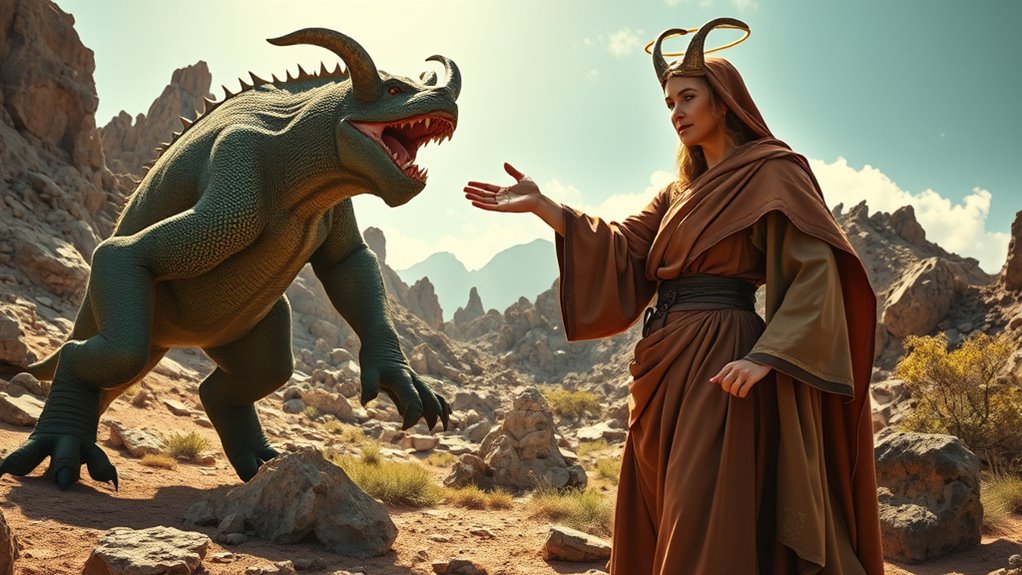

The legend of the Tarasque tells how Saint Martha defeated the fierce French dragon not with violence but through faith and compassion. You see, she tamed the beast by showing kindness and spiritual strength, transforming chaos into peace. This story highlights how virtues like faith and mercy can overcome even the most terrifying obstacles. If you want to learn more about how this ancient tale reflects deeper moral lessons, there’s much more to uncover.

Get school and study supplies delivered free — and shop member deals
- Fast, free delivery on millions of items
- Access to Prime Big Deal Days deals on October 6–7
- Prime Video, Amazon Music and more included
Key Takeaways
- Saint Martha tamed the Tarasque through faith and compassion, not violence, symbolizing spiritual victory over chaos.
- The Tarasque is a legendary French dragon representing primal fears and destructive forces in medieval folklore.
- The story highlights themes of moral virtue, faith, and the power of compassion to overcome evil.
- The legend serves as an allegory for spiritual triumphs and societal struggles against chaos and danger.
- The enduring tale emphasizes that even fearsome challenges can be defeated through virtue and moral strength.

Have you ever heard of the Tarasque, the legendary dragon from French folklore? This mythical creature has captured imaginations for centuries, woven into medieval legends that blend myth and morality. As you explore its story, you’ll notice how the Tarasque embodies powerful dragon symbolism, representing chaos, danger, and the primal forces that humans sought to understand and tame. In medieval times, dragons like the Tarasque often symbolized obstacles or evil that needed to be subdued, and their tales served as allegories for spiritual triumphs.
The legend tells of a fearsome beast terrorizing the region near what is now the town of Tarascon. This dragon was no ordinary creature; it was a monstrous, scaly beast with a formidable strength that left villagers trembling. Such stories were common in medieval legends, where dragons often personified the chaos threatening the orderly world of humans. The dragon’s fierce reputation made it a symbol of chaos and destruction, but also of the challenge that required courage and faith to conquer. Its presence in folklore reflects a broader cultural understanding of dragons as representations of dangerous forces, which must be faced and overcome through bravery and divine intervention.
Then, along comes Saint Martha, who, according to legend, tames the beast not with sword or fire but through her faith and compassion. Her approach contrasts sharply with the destructive chaos the dragon symbolizes. Instead of destruction, she brings salvation and peace, embodying the Christian virtues that medieval legends often highlight. This act of defeating the Tarasque is more than just a story of a beast subdued; it’s a metaphor for spiritual victory over chaos and evil. The story underscores how faith and virtue can triumph over seemingly insurmountable dangers, a recurring theme in medieval lore that reinforces moral lessons for believers.
Saint Martha’s faith and compassion tame chaos, symbolizing spiritual victory over evil and inspiring moral strength through virtue.
As you consider this legend, it’s clear how the story of the Tarasque reflects broader themes in dragon symbolism. The creature embodies primal fears, chaos, and challenges, but also the possibility of salvation and order through faith. The legend’s endurance shows how societies used such stories to teach moral values and to symbolize the ongoing struggle between good and evil. Today, the myth of the Tarasque continues to symbolize courage and faith, reminding us that even the most fearsome challenges can be overcome with compassion, faith, and resolve. Interestingly, the legend also highlights the importance of cultural storytelling in preserving moral lessons across generations. In summary, the legend captures the universal human experience of confronting chaos and emerging victorious through virtue.
As an affiliate, we earn on qualifying purchases.
Frequently Asked Questions
What Is the Origin of the Tarasque Legend?
The origin of the Tarasque legend comes from medieval storytelling, where legendary creatures symbolize fears and morals of the time. You’ll find the story evolving through local traditions, blending myth and history. The creature’s tale reflects cultural values and religious symbolism, representing chaos tamed by Saint Martha. Its legend has persisted, capturing imaginations and illustrating how communities used mythical creatures to convey lessons and entertain generations.
How Is the Tarasque Depicted in Art and Sculpture?
You see the Tarasque depicted in art and sculpture as a fearsome, mythical creature with a lion-like body, turtle shell, and massive horns. Artists use medieval sculpture styles, emphasizing its ferocity with detailed scales and expressive features. These mythical creature depictions often highlight its intimidating presence, blending elements of various beasts to create a formidable figure that captures the legend’s power and awe.
Are There Any Festivals Celebrating the Tarasque Today?
Yes, there are festivals celebrating the Tarasque today. You can experience the mythological creature’s historical symbolism during events like the annual Fête de la Tarasque in Nîmes, France. These festivals honor the legendary dragon, blending folklore and tradition. You’ll see parades, costumes, and storytelling that bring the myth to life, highlighting its significance as a symbol of protection and local heritage rooted in mythological creatures.
What Symbols Are Associated With the Tarasque?
You’ll notice that the Tarasque is associated with symbols like its fierce dragon body, horns, and a lion-like face, representing its mythical symbolism. These elements highlight its role in regional identity, especially in Provence, where the creature embodies local history and folklore. Its imagery often includes a castle or Saint Martha, emphasizing the legend’s cultural importance. These symbols connect the myth to regional pride and storytelling traditions today.
How Has the Legend Influenced Local Culture in Provence?
You’re influenced by how the legend shapes Provençal culture through medieval folklore and mythological symbolism. The story of the Tarasque inspires local festivals, art, and traditions, reminding you of the region’s rich mythic past. It fosters community pride and cultural identity, with the creature symbolizing strength and protection. These stories and symbols keep the myth alive, connecting you to history and reinforcing the unique character of Provence.
Christian virtues and moral stories
As an affiliate, we earn on qualifying purchases.
As an affiliate, we earn on qualifying purchases.
Conclusion
So, next time you hear about fearsome monsters, remember the tale of the Tarasque. This legendary creature, tamed by Saint Martha’s faith and courage, shows that even the greatest fears can be overcome with bravery and compassion. Don’t you think it’s a reminder that no obstacle is too mighty if you face it with faith? Embrace your inner strength and remember that sometimes, the smallest act of kindness can conquer the fiercest of dragons.
As an affiliate, we earn on qualifying purchases.
As an affiliate, we earn on qualifying purchases.
Halloween Picks
halloween
As an affiliate, we earn on qualifying purchases.