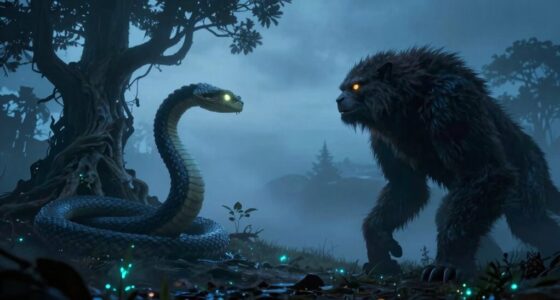
Folklore monsters hunt and eat in ways that reflect their mythic roots, often symbolizing fears or moral lessons. Some stalk prey silently, using stealth to ambush victims, while others chase relentlessly with brute force. They may lure victims with illusions or ambush from hiding spots like water or caves. Their feeding strategies mirror their origins, revealing fears and warnings embedded in stories. To uncover the full range of these behaviors and the stories behind them, keep exploring.
Key Takeaways
- Folklore monsters often hunt silently through stealth, reflecting their mythic origins as symbols of natural or moral threats.
- Many creatures employ ambush tactics from shadows, caves, or water, symbolizing deception or lurking danger.
- Feeding behaviors vary from quick consumption to playful torment, illustrating themes of destruction or vulnerability.
- Some monsters lure victims with illusions or enchanting calls, emphasizing cunning and psychological warfare.
- Hunting strategies mirror cultural lessons, with predators representing unstoppable forces or warnings against the unknown.
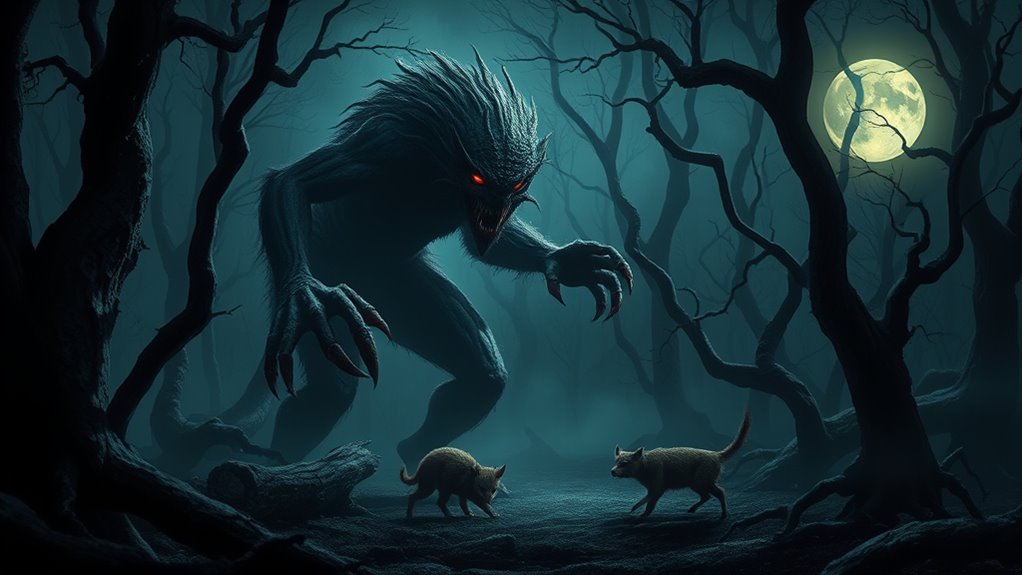
Monsters, often thought of as terrifying creatures from legends and stories, actually exhibit behaviors that can be surprisingly complex and varied. When you explore their mythic origins, you realize that many of these creatures are rooted in ancient symbolism, representing fears, natural threats, or moral lessons. Their mythical origins often shape how they hunt and feed, influencing their predator tactics. For instance, some monsters are depicted as cunning predators that stalk their prey silently, relying on stealth and patience. Others are aggressive and relentless, attacking with brute force once they spot their target. These predator tactics reflect the stories told about them—some monsters are said to lurk in shadows, waiting for the perfect moment to strike, while others actively chase their prey through dense forests or dark caves.
Their feeding behaviors are as diverse as their origins. Some monsters are depicted as solitary hunters, stalking their victims over long distances, using their keen senses to detect movement or scent. Others hunt in packs, working together much like predators in nature, coordinating their efforts to corner and overpower their prey. The mythic origins often give clues about their preferred hunting grounds—sea monsters might ambush sailors from beneath the waves, while mountain-dwelling beasts might ambush travelers from hidden mountain passes. These creatures often display a mixture of intelligence and instinct, adapting their strategies based on their environment and prey. Their feeding habits can also be influenced by symbolic meanings; a monster that devours entire villages might symbolize unstoppable destructive forces, while one that preys on isolated individuals could represent personal fears of vulnerability.
You might also notice that many of these creatures exhibit specialized methods of hunting that align with their mythic stories. Some are said to lure victims with enchanting calls or illusions, drawing prey into traps. Others rely on brute strength, overpowering victims with size and ferocity. In some tales, monsters consume their prey quickly to prevent escape, while in others, they toy with victims for sport, revealing a level of cunning and cruelty. Their predator tactics often mirror the lessons or warnings embedded in their stories—reminding us of the dangers lurking in the unknown or the consequences of moral failings. Additionally, the symbolism behind their feeding behaviors often emphasizes the moral or cultural lessons conveyed through folklore. Overall, understanding how monsters hunt and eat involves examining their mythic origins and predator tactics, which together reveal a fascinating blend of symbolism, strategy, and primal instinct that makes them enduring figures of folklore.
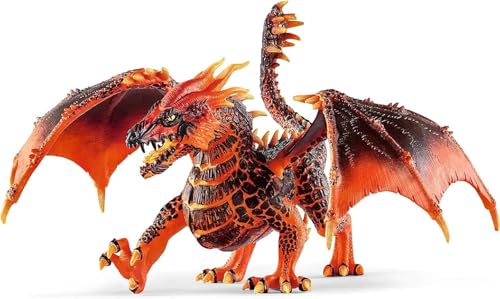
Schleich Eldrador Creatures – 8" Lava Dragon Toy – Movable Wing Action Figure for Boys and Girls – Mythical Creature Figures – Fantasy Beast Figurine – Red Monster Dragon Toys – Kids Ages 7+ | 70138
- Movable Wings for Dynamic Poses: Adjustable wings for flying and battle poses
- Detailed Lava Dragon Design: Molten scales, volcanic horns, and fiery mouth
- Epic Gift for Kids and Collectors: Perfect for play, display, and imaginative battles
As an affiliate, we earn on qualifying purchases.
As an affiliate, we earn on qualifying purchases.
Frequently Asked Questions
Do Folklore Monsters Hunt Humans Intentionally or Accidentally?
Folklore creatures generally hunt humans intentionally, driven by their monster motivation to feed, protect territory, or seek revenge. Their behavior reflects their mythic nature, often targeting humans as part of their lore. Sometimes, accidental encounters happen, but most folklore monsters actively pursue humans, showing a predatory instinct rooted in their mythic roles. Their behavior is shaped by stories that emphasize their dangerous, often vengeful, and predatory nature toward humans.
What Senses Do Monsters Primarily Rely on During Hunts?
You’ll find that folklore monsters primarily rely on their heightened sensory adaptations during hunts. They use sharp hearing and keen smell to track prey, often relying on their night vision or other specialized senses to locate victims in darkness. Their hunting strategies involve stalking silently or ambushing, depending on their sensory strengths. These adaptations make them formidable predators, allowing them to maximize their chances of catching prey efficiently.
Are Monster Hunting Patterns Consistent or Vary by Legend?
You’ll find that monster hunting patterns vary by legend, influenced by different behavior patterns attributed to each creature. Some legends depict monsters stalking their prey stealthily at night, while others chase openly or ambush victims. These variations reflect cultural stories and fears, making each legend unique. So, rather than a single pattern, monster hunting behaviors adapt to the myth, creating diverse and fascinating tales across different folklore traditions.
How Do Monsters Choose Their Prey?
You might notice that monsters choose their prey based on specific prey selection criteria, often influenced by their hunting strategies. They target vulnerable or isolated victims, using stealth or surprise to catch them off guard. Some prefer certain types of prey, while others adapt their strategies to chase or ambush. Their choices reflect a mix of instinct, legend, and the environment, making each creature’s hunting pattern unique yet purposeful.
Do Monsters Hunt Alone or in Groups?
You’ll find that some monsters hunt alone through solitary stalking, relying on stealth and patience to catch prey. Others prefer group hunting, coordinating their efforts in packs to corner or overwhelm victims. The choice depends on the creature’s size, strength, and tactics. Group hunting allows for teamwork and increased success, while solitary stalking offers stealth and surprise. Both methods showcase their adaptability in hunting strategies.

Disney Monsters Inc. Mike Wazowski Cuteeze Plush – Cute Cuddle Plushie Gift for Baby and Toddler Boys and Girls – 12 Inches
- ADORABLE MIKE WAZOWSKI PLUSH: This 12-inch Cuteeze plush features…
- SUPER SOFT AND CUDDLY: Made with extra soft plush…
- CHARMING DETAILS: With charmingly detailed features, including…
As an affiliate, we earn on qualifying purchases.
As an affiliate, we earn on qualifying purchases.
Conclusion
As you explore monster behavior, you realize these creatures’ hunting tactics are more intricate than you ever imagined. Their methods can make the most cunning predator seem like a clumsy amateur in comparison. By understanding their strategies, you gain a deeper appreciation for folklore’s vivid imagination. Remember, these legends aren’t just stories—they’re a mirror to our collective fears, so powerful that even the bravest would think twice before crossing their path.

Schleich Eldrador Creatures – 8" Stone Monster Toy with Crystal Set – Cool Movable Monster Action Figure for Boys and Girls – Fantasy Giant Rock Beast Figurine – Fun Scary Toys – Kids Ages 7+ | 70141
- Removable Crystal in Hand: Features a removable crystal with power
- Fully Poseable & Detailed: Movable arms, jaw, and torso for epic battles
- Ideal Gift for Kids: Perfect for play, display, and imaginative adventures
As an affiliate, we earn on qualifying purchases.
As an affiliate, we earn on qualifying purchases.

Persian Myths & Legends: Tales of Heroes and Legendary Creatures (Collectible Myths and Legends)
As an affiliate, we earn on qualifying purchases.
As an affiliate, we earn on qualifying purchases.