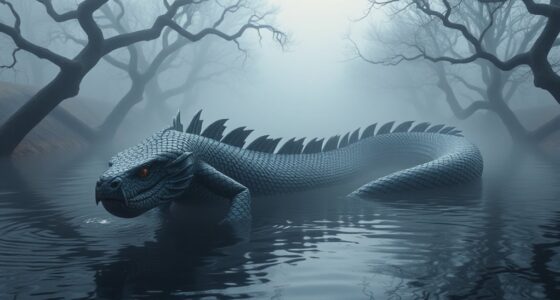
The Blue Men of the Minch are mythical Scottish sea spirits known for their blue skin and mischievous or menacing behavior in the waters between the Hebrides and mainland Scotland. They symbolize the sea’s unpredictable power, serving as warnings and guardians for sailors. These legends highlight themes of bravery, wit, and respect for nature’s forces. If you want to discover more about their fascinating stories and cultural significance, keep exploring these intriguing legends.
Key Takeaways
- The Blue Men of the Minch are mythical sea spirits from northern Scottish folklore, known for their blue skin and glowing eyes.
- They symbolize the unpredictable power of the sea, serving as warnings and guardians for maritime communities.
- Legends often depict them challenging sailors with riddles or feats, emphasizing bravery and maritime skill.
- These spirits play a cultural role by fostering storytelling, community bonds, and respect for the ocean’s dangers.
- Today, they continue as symbols of reverence for nature’s power and cultural identity in Scottish maritime traditions.
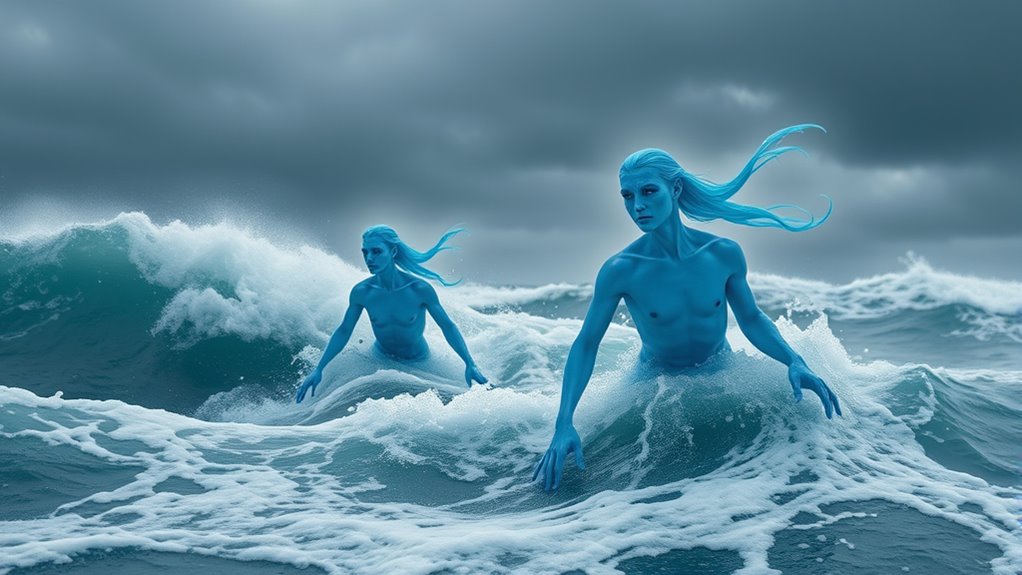
Have you ever heard of the Blue Men of the Minch? These mysterious sea spirits are a fascinating part of Scottish marine folklore, inspiring stories and legends that have persisted for centuries. As you explore their legend, you’ll discover that they embody more than just mythical beings; they serve as symbols deeply rooted in the cultural symbolism of the Scottish maritime community. The Blue Men are said to inhabit the treacherous waters of the Minch, a strait separating the northern Scottish mainland from the Isle of Lewis. Their appearance is described as having blue skin, glowing eyes, and a mischievous yet sometimes menacing demeanor. These stories have been passed down through generations, often told by sailors and coastal villagers who rely on the sea for their livelihood. The Blue Men act as both warnings and guardians, embodying the unpredictable power of nature and the sea’s mysterious depths. In marine folklore, tales of such spirits remind us of the dangers lurking beneath the waves and the importance of respecting the ocean’s moods. They also reflect a cultural symbolism that emphasizes the sea’s dual nature—beautiful yet dangerous. The Blue Men are often depicted as challenging sailors, testing their courage and skill with riddles or dangerous feats, underscoring themes of bravery and wit. Their presence in stories serves as a cultural reminder that the sea is not just a resource but a living, breathing entity with its own spirit. For the people living along the Scottish coast, these legends help forge a connection to the ocean, turning a seemingly hostile environment into a domain of myth and meaning. The Blue Men’s legend also underscores the importance of community and tradition, as stories about them are often shared during gatherings and storytelling sessions, strengthening collective cultural identity. By personifying the sea’s unpredictable temperament, these marine spirits symbolize the respect and awe the Scottish people have for their environment. Over time, the Blue Men of the Minch have become more than just figures of folklore—they are symbols of the enduring relationship between humans and the sea, a reminder that nature’s power commands both reverence and caution. Recognizing the cultural symbolism of these legends helps us understand how communities interpret and cope with natural forces. Whether seen as warning spirits or cultural icons, the Blue Men continue to captivate imaginations, embodying the mysteries of marine folklore and the cultural symbolism that keeps these ancient stories alive.

Laptop Backpack for Women Bag - 15.6 inch Work Travel Backpack with USB Charger College Bookbag Waterproof Business Computer Backpack Anti-theft Casual Backpacks for Nurse Teacher Beige Black Brown
【Large Capacity Backpack with Laptop Compartment】- This big laptop backpack Total 4 compartments 22 pockets. The laptop compartment...
As an affiliate, we earn on qualifying purchases.
Frequently Asked Questions
Are There Any Modern Sightings of the Blue Men?
You might wonder if there are any modern sightings of the Blue Men. Eyewitness reports are rare but occasionally surface, describing strange blue figures seen near the Minch. Some sailors and coastal residents claim to have seen mysterious blue shapes or heard unusual sounds, fueling speculation. While these reports aren’t scientifically verified, they keep the legend alive, suggesting that modern sightings still intrigue those who venture into these waters.
How Do Blue Men Communicate With Humans?
You might wonder how these sea creature symbolism figures communicate, and in maritime folklore traditions, the Blue Men use telepathy or song to interact with humans. They often convey warnings or messages through mystical sounds, blending into the sea’s mysteries. Their communication methods reflect deep-rooted maritime folklore traditions, emphasizing their role as guardians or omens at sea, making their encounters both fascinating and enigmatic.
What Is the Origin of the Blue Men Legend?
The legend of the blue men originates from Scottish folklore and maritime mythology, likely born from sailors’ tales of mysterious beings lurking in treacherous waters. These stories, passed down through generations, serve as warnings or explanations for strange phenomena at sea. The blue men symbolize the sea’s unpredictable and powerful nature, making them a enthralling part of Scotland’s rich maritime mythology and a vivid reflection of sailors’ fears and wonder.
Are the Blue Men Considered Benevolent or Malevolent?
You’ll find that the Blue Men are generally considered malevolent, embodying a mischievous or threatening moral alignment. They’re known for challenging sailors and testing their courage, which adds to their cultural significance as cautionary figures in Scottish folklore. While some stories depict them as playful or protective, most portray them as warnings about the dangers of the sea, emphasizing their complex role in local legends and maritime traditions.
Do Other Regions Have Similar Sea Spirits?
You’ll find similar sea spirits in many cultures, acting as symbolic guardians or warnings. Mythical mermaid legends and folklore sea monsters appear worldwide, embodying nature’s mystery and power. In Japan, Kappa lurk in rivers, while the Norse hold tales of Jörmungandr, the giant sea serpent. These spirits reveal universal fears and hopes, reminding you that across oceans, cultures see the sea as a domain of enchantment and danger.

JanSport SuperBreak Plus Backpack with Padded 15-inch Laptop Sleeve and Integrated Bottle Pocket - Spacious and Durable Daypack for Work and Travel - Black
SPACIOUS STORAGE: Roomy main compartment that fits books, clothes, and travel essentials, making it ideal for work or...
As an affiliate, we earn on qualifying purchases.
Conclusion
You might wonder if the Blue Men of the Minch are just legends, but think about how stories like these keep our connection to the sea alive. Maybe they’re not real in the way we imagine, but they remind us of the mysteries lurking beneath the waves. Perhaps, in some way, these spirits embody the ocean’s wild spirit—protecting and haunting it—making you feel a little closer to the ancient, untamed sea every time you hear their name.

JanSport Laptop Backpack - Computer Bag with 2 Compartments, Ergonomic Shoulder Straps, 15” Laptop Sleeve, Haul Handle - Navy
THE MOST TRUSTED NAME IN BACKPACKS - Every JanSport comes with a lifetime warranty. Carry your JanSport with...
As an affiliate, we earn on qualifying purchases.

JanSport Cool Backpack, with 15-inch Laptop Sleeve - Large Computer Bag Rucksack with 2 Compartments, Ergonomic Straps, Navy
THE COOL STUDENT BACKPACK: The Cool Student has the classic JanSport backpack look, but with more space, plus...
As an affiliate, we earn on qualifying purchases.