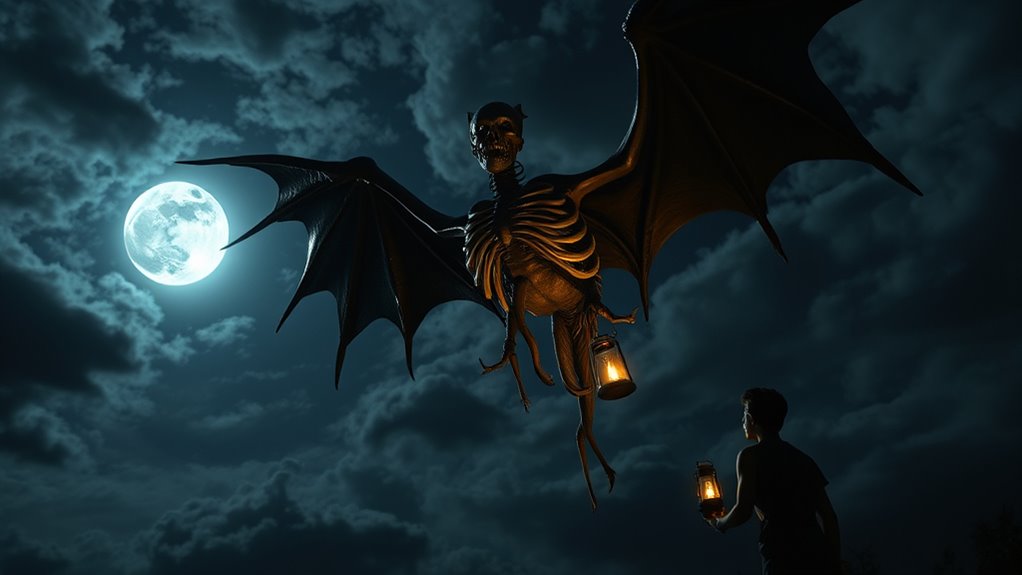
The Manananggal is a frightening creature from Philippine folklore that detaches its upper body at night to hunt pregnant women and children. It uses a long, proboscis-like tongue to pierce the abdomen and suck out internal organs and viscera, leaving victims helpless. Its grotesque form, flying silently through darkness, embodies fears of the unknown and supernatural dangers. To learn more about this terrifying predator and its cultural significance, keep exploring its mysterious origins and protective rituals.
Key Takeaways
- The Manananggal is a Philippine folklore creature known for detaching its upper body to hunt at night.
- It preys on pregnant women and children, piercing their abdomen to suck blood and viscera.
- Its supernatural ability to split and fly makes it a unique and terrifying vampire in Filipino culture.
- Villagers protect themselves by hanging garlic, salt, or bamboo sticks to ward off the creature.
- The myth reflects cultural fears about darkness, pregnancy safety, and unseen supernatural threats.
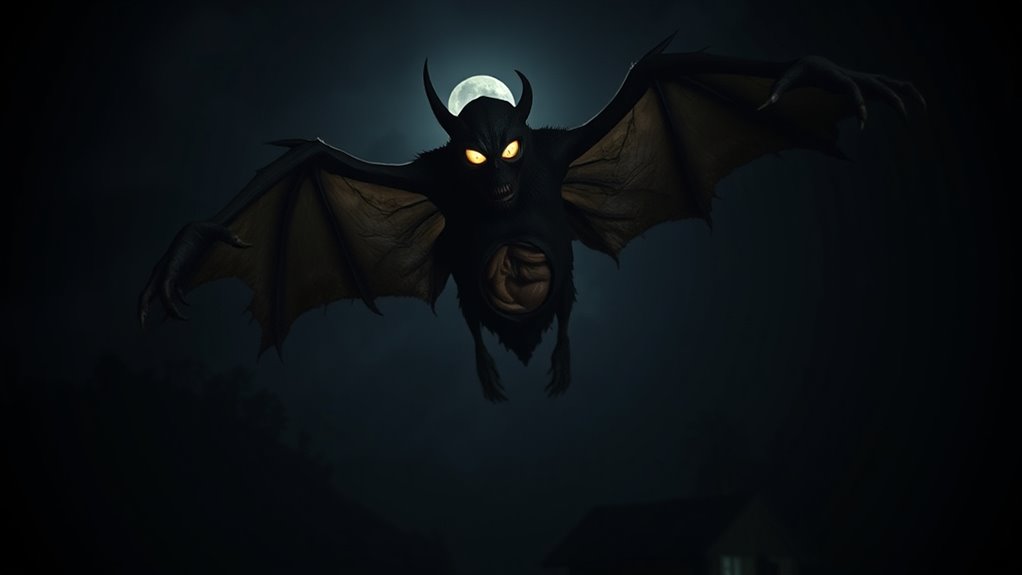
Have you ever heard of the terrifying creature known as the Manananggal? If not, you’re about to learn about one of the most chilling mythical creatures rooted deep in Philippine folklore. Unlike typical vampires, which are often depicted as blood-drinking undead, the Manananggal is a unique and terrifying entity that embodies the darker side of mythical creatures. Its story has been passed down through generations, and it continues to haunt the imaginations of those who hear about it.
The Manananggal is a half-bodied monster that can detach from its lower half, leaving its torso to hover and hunt for victims at night. This creature is often described as having a grotesque, almost human-like upper body, but with wings sprouting from its back, enabling it to fly silently through the darkness. Its appearance strikes fear because it combines familiar human features with unnatural, monstrous traits. In Philippine legend, the Manananggal preys on pregnant women and young children, seeking to suck their blood and viscera. The creature’s method of attack is both horrifying and bizarre, as it uses a long, proboscis-like tongue or a hollowed-out trunk to pierce the abdomen of its victims, devouring their internal organs.
This creature is a prime example of how mythical creatures like the Manananggal differ from Western vampire folklore. While vampires have become popular in many cultures worldwide, the Manananggal’s story is uniquely Filipino, rooted in local beliefs and superstitions. Its existence embodies fears of the dark, the unknown, and the vulnerability of pregnant women, which are prevalent themes in many mythologies. The Manananggal’s ability to split in two and fly is a supernatural trait that sets it apart from other vampire-like entities, emphasizing its status as a truly terrifying mythical creature. Interestingly, some believe that the creature is a manifestation of deeply ingrained cultural anxieties about pregnancy and health.
People in the Philippines believe that the Manananggal is a witch or a shape-shifter who uses dark magic to transform into this nightmarish form. To protect oneself from its attack, villagers often hang garlic, salt, or sharp objects like bamboo sticks around their homes, believing these can repel or harm the creature. The myth serves as a cautionary tale about staying vigilant at night and respecting the unseen forces that might lurk in the shadows. Such beliefs highlight how superstitions are woven into everyday life, especially in rural communities.
In essence, the Manananggal is a chilling example of how vampire folklore can take on different forms worldwide. It’s a vivid reminder of the rich, diverse ways cultures interpret the supernatural, blending fears of the unknown with vivid storytelling. As a mythical creature, it continues to inspire stories, warnings, and cultural beliefs, making it a haunting symbol of Philippine folklore’s dark and mysterious side.
Frequently Asked Questions
Are There Any Modern Sightings of the Manananggal?
Yes, there are recent reports of urban legends and supernatural sightings involving the manananggal. Some locals claim to have seen mysterious flying figures with bat-like wings at night, fueling tales of encounters with this supernatural creature. While these sightings are often dismissed as folklore or misidentified animals, they continue to excite curiosity and keep the legend alive in modern Filipino culture. Keep your eyes open on moonlit nights—you might just spot one!
How Do Locals Traditionally Ward off a Manananggal?
You can ward off a manananggal by using traditional talismans like garlic or salt, which are believed to repel evil spirits. Sacred herbs such as basil or holy water are also effective; sprinkle them around your home or carry them with you. People often hang sharp objects like knives or awls on windows, believing these tools can prevent the creature from entering. Stay vigilant and protect yourself with these cultural defenses.
Is the Manananggal Considered Purely Evil or Misunderstood?
You might think the manananggal is purely evil, but in Philippine culture, it’s seen as a symbol of moral ambiguity rather than outright villainy. notably, many locals believe it embodies fears and societal issues, making it a complex cultural symbol. This way, the creature isn’t simply misunderstood; it reflects deeper themes, challenging the idea of clear-cut good versus evil. It’s a reminder that folklore often holds layered meanings.
Are There Any Known Cases of Manananggal Attacks?
There are no verified cases of manananggal attacks, as most reports come from folklore documentation and supernatural encounters shared locally. You might hear stories or witness accounts, but these remain unproven and are often considered legends. If you’re curious, exploring folklore can be fascinating, but remember, the manananggal’s existence isn’t backed by scientific evidence. Stay cautious and enjoy these stories as part of cultural traditions.
Can the Manananggal Be Cured or Reversed Once Transformed?
If you encounter a manananggal, know that it can sometimes be cured or reversed through mythical vulnerabilities like holy objects, salt, or garlic, which are often used in modern folklore. For example, a woman believed to be possessed was saved using a mixture of salt and religious symbols, showing that these methods can help. While these stories are fictional, they reflect enduring cultural beliefs about controlling mythical creatures.
Conclusion
As you walk through the shadows of Philippine nights, remember the manananggal’s silent flight, a dark reminder that some creatures dwell just beyond your sight. Like the whisper of a lost soul, it lurks between worlds, waiting for the right moment to strike. Stay vigilant, for in the depths of folklore, even the most fantastical stories hold truths that can send a shiver down your spine. Beware, and keep your senses sharp.