
TL;DR

Prime made for students and young adults
- Fast, free delivery for dorm and study essentials
- Prime Video and Amazon Music included
- Member-only deals
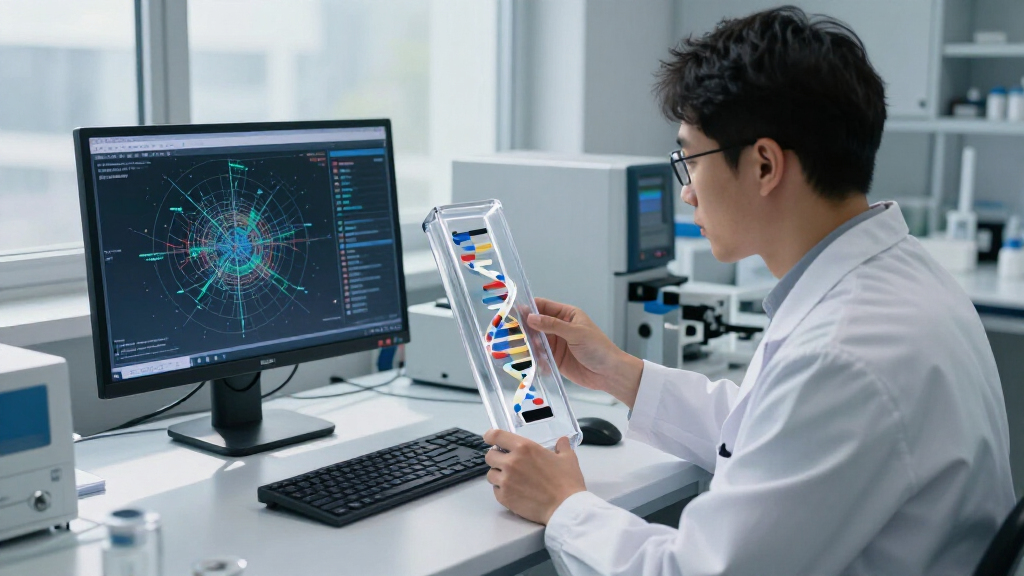
DeepMind has unveiled AlphaGenome Atlas, a comprehensive high-resolution map of human DNA. This development could transform genetics research and personalized medicine, though full details are still developing.
DeepMind has introduced the AlphaGenome Atlas, a high-resolution, comprehensive map of human DNA designed to detail every possible single-letter change in the genome. The announcement marks a notable development in genetic research, with potential implications for personalized medicine and disease understanding. While the project’s full scope and capabilities are still being revealed, the initiative represents a significant advancement in genomics technology.
The AlphaGenome Atlas, developed by DeepMind, aims to provide an unprecedented level of detail about human DNA, mapping all potential single-nucleotide variations (SNVs) across the entire genome. The project leverages advanced AI algorithms to predict and catalog every possible mutation at a nucleotide level, creating a comprehensive reference that could assist researchers and clinicians in identifying genetic variants linked to diseases.
DeepMind has stated that the Atlas is designed to serve as a predictive tool, enabling scientists to understand how specific DNA changes might influence gene function and disease risk. The company has not yet released full technical specifications or data sets, emphasizing that the project is still in its early phases of development. The announcement has generated interest within the scientific community, as it could contribute to ongoing efforts in genetic research.
Potential Impact on Genetics and Personalized Medicine
The AlphaGenome Atlas could provide detailed insights into genetic variation at an individual level, which may support more precise diagnosis and targeted treatments. It could also aid research into rare genetic disorders and common diseases by offering a comprehensive reference for genetic variation.
Experts suggest that this tool has the potential to accelerate the identification of disease-associated genetic mutations, which could support the development of gene therapies and diagnostics. The extent of its impact will depend on validation processes, integration with existing research, and accessibility for the scientific community.
genetics research DNA analysis kit
As an affiliate, we earn on qualifying purchases.
As an affiliate, we earn on qualifying purchases.
Background on Human Genome Mapping Efforts
The human genome was first sequenced in 2003 through the Human Genome Project, a landmark achievement in genetics. Since then, efforts have focused on cataloging genetic variation, such as the 1000 Genomes Project and other large databases, which identify common variants across populations. However, these efforts have not yet produced a comprehensive map predicting all possible single-letter mutations at a high resolution.
Recent advances in AI and computational biology have enabled more detailed modeling of genetic variation, leading to projects like DeepMind’s AlphaGenome Atlas. The initiative builds on prior work but aims to deliver a more exhaustive and predictive resource for understanding human genetic diversity.
personalized medicine genetic testing kit
As an affiliate, we earn on qualifying purchases.
As an affiliate, we earn on qualifying purchases.
Unconfirmed Details and Developmental Status
DeepMind has not yet released comprehensive datasets or technical specifics about the AlphaGenome Atlas, and it is unclear how the project will be validated or integrated into clinical practice. The full scope of its predictive accuracy and practical utility remains to be demonstrated, and independent validation is pending.
Additionally, the timeline for broader availability and the potential ethical or privacy considerations associated with such detailed genetic mapping are still unknown. The scientific community is awaiting further data releases and peer-reviewed validation.
As an affiliate, we earn on qualifying purchases.
Next Steps in Validation and Deployment
DeepMind is expected to publish detailed technical papers and datasets in upcoming scientific journals, along with validation studies to demonstrate the Atlas’s accuracy. The company may also collaborate with academic institutions and healthcare providers to test its practical applications.
Further developments will clarify how the Atlas can be used in clinical settings and whether it will become a standard reference in genomics research. Monitoring these releases will be important for understanding its potential impact in the field.
As an affiliate, we earn on qualifying purchases.
Key Questions
What is the AlphaGenome Atlas?
The AlphaGenome Atlas is a high-resolution, predictive map of human DNA developed by DeepMind, aiming to catalog all possible single-letter genetic variations across the human genome.
How could this map affect medical research?
If validated, it could support the discovery of disease-related genetic mutations, improve personalized treatments, and enhance understanding of genetic disorders.
Is the Atlas available for use now?
No, the Atlas has not yet been publicly released or validated; further research, validation, and peer review are expected before widespread adoption.
What are the potential ethical concerns?
Detailed genetic maps raise privacy and ethical questions about data use, consent, and potential misuse, which are still being discussed by experts and policymakers.
When will more details be available?
DeepMind is expected to publish further technical details and validation results in the coming months, but an exact timeline has not been announced.
Source: hn
Evergreen bestsellers Picks
bestsellers
As an affiliate, we earn on qualifying purchases.