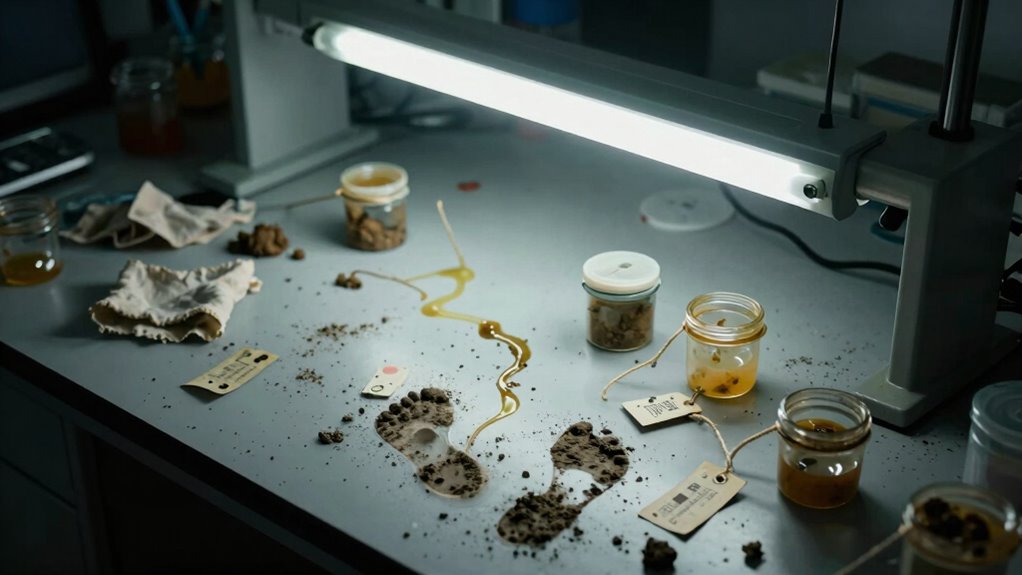

Many monster evidence cases fail chain-of-custody standards because procedural errors, poor documentation, and insufficient training lead to contaminations and tampering. When evidence isn’t stored properly or transfers aren’t documented, it raises doubts about authenticity. Mistakes by untrained personnel or broken links in the process weaken credibility and can cause evidence to be inadmissible. Curious how to prevent these issues? Continue exploring to uncover essential steps to maintain evidence integrity.

Prime made for students and young adults
- Fast, free delivery for dorm and study essentials
- Prime Video and Amazon Music included
- Member-only deals
Key Takeaways
- Improper evidence storage leads to contamination and questions authenticity, causing chain-of-custody failures.
- Inadequate documentation of transfers breaks the continuity needed for legal credibility.
- Lack of standardized procedures and personnel training increases handling errors and procedural lapses.
- Human memory limitations and poor eyewitness documentation undermine the reliability of testimony.
- Overall procedural weaknesses weaken evidence credibility, making it vulnerable to legal challenges.

When dealing with monster evidence, maintaining a strict chain-of-custody is essential to guarantee its integrity and admissibility in court. Without proper handling, even the most compelling proof can be dismissed. One common reason monster evidence fails chain-of-custody standards is poor evidence preservation. If the evidence isn’t stored correctly—exposed to contamination, tampering, or environmental damage—it loses its credibility. Proper sealing, labeling, and secure storage are non-negotiable steps. Any break in this process raises suspicions about the evidence’s authenticity. When preservation isn’t meticulously followed, the court may question whether the evidence was altered or compromised, rendering it inadmissible.
Proper evidence preservation is crucial to maintaining integrity and ensuring monster evidence remains admissible in court.
Another critical factor is eyewitness reliability. When eyewitness testimonies are involved in monster evidence, their credibility often becomes a focal point. Human memory isn’t infallible; it’s susceptible to suggestion, stress, and misinterpretation. If the chain-of-custody isn’t properly documented, or if eyewitness accounts are gathered without standardized procedures, their reliability is undermined. Inconsistent or poorly recorded witness statements can lead to challenges about whether the evidence truly represents what was observed. This is why thorough documentation, including who recorded the testimony, when, and under what conditions, is vital to uphold the chain’s integrity.
Failure to document every transfer of evidence also contributes to the downfall of monster evidence in court. Every person who handles it must sign off, noting the date, time, and purpose. If even one transfer is undocumented or mishandled, the entire chain can be questioned. This meticulous record-keeping ensures that the evidence remains untampered from collection to presentation. When the chain is broken, doubts about the evidence’s authenticity naturally arise, making it easier for opposing counsel to challenge its credibility.
Lastly, the failure often stems from a lack of training or awareness among personnel handling the evidence. If those involved aren’t fully educated about the importance of chain-of-custody protocols, mistakes happen. These mistakes can be innocent or malicious, but either way, they threaten the integrity of the evidence. To avoid this, everyone involved must understand that proper evidence preservation and accurate record-keeping aren’t just procedural formality—they’re the backbone of ensuring monster evidence can withstand legal scrutiny. Additionally, training protocols should be regularly reviewed and enforced to minimize errors. When these standards are overlooked, no matter how strong the evidence appears, it’s likely to fail in court.
Popular right now

Hisense 85 U6 Pro Series Mini-LED ULED 4K UHD HDR Gaming AI Smart Fire TV (85U6SF Pro)

Ninja DualZone Smart Air Fryer, 10 Qt, 6-in-1, DZ950

Dyson Big Ball Multi Floor Canister Vacuum, Yellow
As an affiliate, we earn on qualifying purchases.
Frequently Asked Questions
How Do Different Jurisdictions Handle Monster Evidence Legal Admissibility?
Different jurisdictions handle monster evidence legal admissibility through strict evidence preservation protocols and myth debunking efforts. You’ll find that some courts require meticulous documentation and secure storage to maintain chain-of-custody standards, while others emphasize scientific verification to debunk myths before admitting evidence. By prioritizing evidence preservation and myth debunking, jurisdictions aim to guarantee only credible, properly handled evidence influences legal outcomes.
What Technological Tools Are Used to Track Monster Evidence Chain-Of-Custody?
You use advanced technological tools like digital tracking systems and blockchain to guarantee cryptid tracking and evidence preservation. Barcodes, RFID tags, and GPS devices help monitor each piece of monster evidence in real-time, maintaining an unbroken chain of custody. Secure digital logs record every transfer or handling, reducing tampering risks. These tools streamline verification processes, enhance transparency, and ensure that evidence remains credible and admissible in court.
Are There Standard Protocols for Collecting Monster Evidence in Investigations?
Yes, there are standard protocols for collecting monster evidence, including cryptid documentation and eyewitness testimony. You should carefully document all findings, securely collect physical evidence, and record detailed eyewitness accounts. Using consistent procedures guarantees the chain-of-custody remains intact, preventing contamination or tampering. Following these protocols helps maintain credibility and supports the integrity of the investigation, making your evidence more reliable for analysis or potential validation.
How Often Is Monster Evidence Re-Evaluated for Authenticity?
You often re-evaluate monster evidence for authenticity during investigations, especially when new techniques or discoveries emerge. Monster validation is vital to confirm its credibility, so you prioritize evidence preservation to prevent contamination or loss. Regular re-evaluations help guarantee the evidence remains reliable, which is necessary for supporting or disproving claims. This ongoing process helps maintain the integrity of the investigation and strengthens the overall case.
What Are Common Reasons for Chain-Of-Custody Breaches in Monster Cases?
You’re asking about common reasons for chain-of-custody breaches in monster cases. Often, evidence tampering occurs when individuals mishandle or intentionally alter evidence, and chain disruptions happen due to poor documentation or accidental mishandling. These mistakes can happen when procedures aren’t strictly followed or when evidence isn’t secured properly. This “slip-up” can cast doubt on the evidence’s authenticity, making it harder to prove the case.
Conclusion
So, as you navigate the labyrinth of monster evidence, remember that chain-of-custody standards act like the vigilant guardians of truth, safeguarding each fragment from the shadows of doubt. When these standards falter, evidence becomes a fragile glass slipping from your grasp, shattering the illusion of certainty. To expose the real monster, you must guarantee every piece is meticulously tracked, like a detective following whispers in the fog, revealing the tangled web of truth beneath the chaos.