Crypto-archaeology involves uncovering digital relics hidden within blockchain data and online platforms, helping you explore lost civilizations through encrypted messages and unique artifacts. By analyzing anomalies, transaction histories, and smart contracts, you can find clues about ancient societies and technologies. These digital remnants act like modern archaeological finds, revealing secrets of the past often buried in complex cryptography. If you want to uncover how these secrets connect to history, there’s much more to discover ahead.

Get school and study supplies delivered free — and shop member deals
- Fast, free delivery on millions of items
- Access to Prime Big Deal Days deals on October 6–7
- Prime Video, Amazon Music and more included
Key Takeaways
- Crypto-archaeology uncovers digital relics and encrypted messages embedded in blockchain data to explore ancient civilizations.
- It analyzes anomalies, transaction histories, and smart contracts to find hidden artifacts indicative of lost societies.
- Deciphering ancient encryption techniques within digital artifacts helps reveal historical secrets and cultural insights.
- Digital relics serve as modern archaeological finds, providing clues to civilizations lacking physical records.
- Combining cryptography, data analysis, and digital forensics, crypto-archaeology broadens understanding of ancient societies.
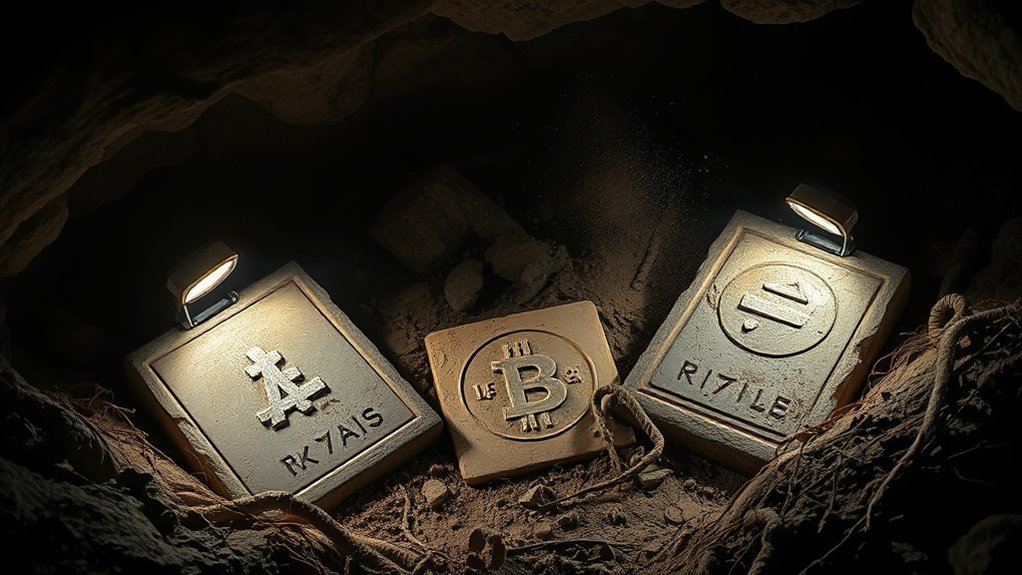
Have you ever wondered how remnants of lost digital worlds can be uncovered? In the realm of crypto-archaeology, you’re exploring a fascinating intersection of technology and history. This field aims to unearth digital relics—ancient encryption and artifacts from civilizations long gone—hidden within the vast, obscure corners of the internet and blockchain. By analyzing these digital relics, you can piece together stories of societies that thrived centuries ago or even millennia, long before written records.
Ancient encryption plays an essential role in this quest. These cryptographic methods, once used to safeguard secrets, now serve as clues for crypto-archaeologists. You might find encrypted messages embedded in blockchain transactions or digital artifacts that, once deciphered, reveal insights into lost cultures or forgotten technologies. These encryptions act as digital time capsules, preserving knowledge and secrets that, if decoded, can open the history of civilizations that left no physical records. The challenge lies in understanding the encryption techniques used and recognizing patterns that hint at their origins.
To uncover these digital relics, you must develop a keen eye for anomalies and encoded messages buried within seemingly random data. Blockchain, with its transparent yet complex structure, offers a treasure trove of clues. You might discover hidden messages in transaction histories, digital artifacts stored on decentralized platforms, or remnants of ancient digital scripts embedded in smart contracts. Each piece of data could be a fragment of a lost civilization’s story, waiting for you to interpret its significance. Additionally, leveraging data analytics can enhance your ability to identify subtle patterns and anomalies indicative of cryptographic artifacts.
Crypto-archaeology isn’t just about decoding messages; it’s about understanding the context behind these digital relics. You need to analyze the cryptographic techniques used, their historical significance, and how they connect to broader cultural or technological developments. This process involves a combination of cryptography, archaeology, and digital forensics. Every encrypted message or artifact you find could redefine your understanding of history, revealing connections between past societies and modern digital innovations.
digital forensics tools for blockchain analysis
As an affiliate, we earn on qualifying purchases.
As an affiliate, we earn on qualifying purchases.
Frequently Asked Questions
What Tools Do Crypto-Archaeologists Use to Discover Ancient Data?
You use digital forensics tools and data mining techniques to uncover ancient data. Digital forensics helps you recover and analyze digital artifacts, while data mining allows you to sift through vast datasets for hidden patterns. These tools enable you to locate and interpret encrypted or obscured information from old digital sources, helping you piece together lost civilizations’ stories buried in the digital domain.
How Reliable Are Digital Reconstructions of Lost Civilizations?
Digital reconstructions of lost civilizations can be quite reliable if you focus on digital authenticity and data preservation. When properly verified and sourced from well-preserved data, these reconstructions offer accurate insights into ancient societies. However, keep in mind that some reconstructions may involve interpretation or gaps, so always consider the quality of the original data and the methods used. Trustworthy digital models can be valuable tools, but they’re not infallible.
Can Crypto-Archaeology Uncover Civilizations Before Written History?
A picture is worth a thousand words, and crypto-archaeology could reveal civilizations predating written history. By analyzing cryptocurrency origins and digital artifact preservation, you can uncover hidden traces of ancient societies long before records existed. This innovative approach helps you piece together humanity’s earliest chapters, offering insights that traditional archaeology might miss. So, yes, crypto-archaeology has the potential to uncover the secrets of our deepest past.
What Are the Ethical Concerns Surrounding Crypto-Archaeological Excavations?
You should consider that crypto-archaeological excavations raise ethical concerns like respecting digital privacy and cultural preservation. When accessing ancient sites or data, you might unintentionally disturb sacred grounds or sensitive information. It’s vital to obtain proper permissions and work collaboratively with local communities. Balancing scientific discovery with respecting cultural heritage ensures your work doesn’t harm the very civilizations you’re trying to uncover, maintaining ethical integrity in your efforts.
How Does Blockchain Technology Facilitate Archaeological Research?
Blockchain technology facilitates archaeological research by providing secure, transparent records through digital provenance. You can verify the history and authenticity of artifacts easily, thanks to cryptographic dating that guarantees precise, tamper-proof timelines. This technology helps prevent forgery and enhances trust among researchers and collectors. By recording every step on an immutable ledger, blockchain streamlines collaboration, preserves data integrity, and accelerates discoveries in the field of archaeology.
As an affiliate, we earn on qualifying purchases.
Conclusion
Just like unearthing ancient ruins reveals forgotten stories, crypto-archaeology uncovers hidden digital civilizations. Imagine discovering a lost civilization buried beneath layers of code, waiting to tell its story. One cryptic wallet once held millions, a digital tombstone echoing a vanished society’s rise and fall. As you explore these virtual relics, remember you’re reviving whispers from the past, bridging history and innovation—reminding us that even digital worlds hold secrets waiting to be rediscovered.
As an affiliate, we earn on qualifying purchases.
As an affiliate, we earn on qualifying purchases.
Halloween Picks
halloween
As an affiliate, we earn on qualifying purchases.