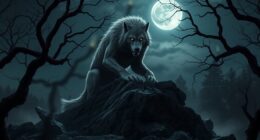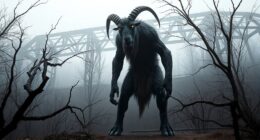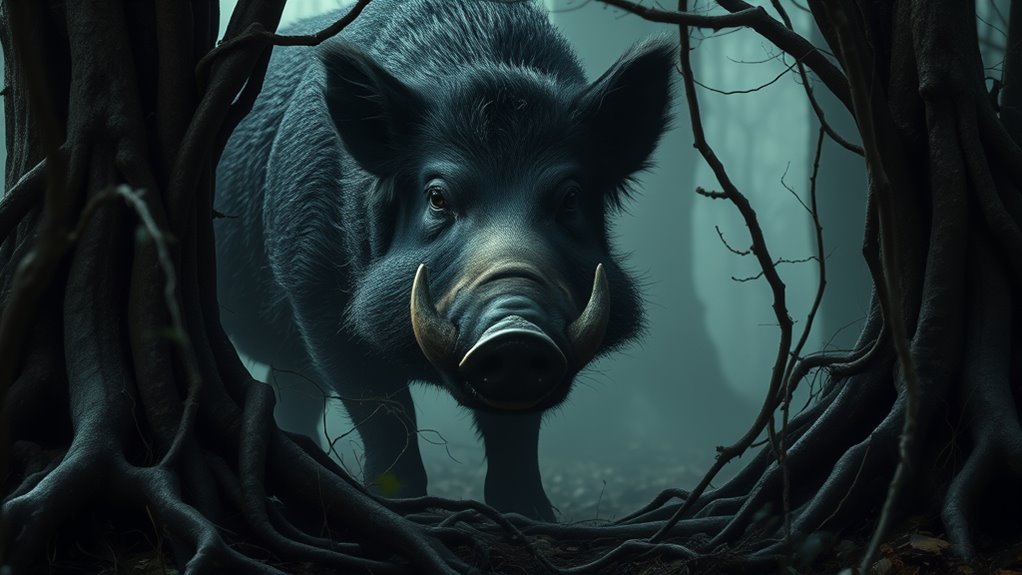
The Beast of Dean is a long-standing legend in Gloucestershire, often described as a large, boar-like creature seen in the dense forests. Sightings typically happen at night, with witnesses reporting strange shapes, footprints, and eerie sounds. While many believe it’s just a wild boar or misidentification, the myth persists, fueling local folklore and curiosity. To discover the real story behind this mysterious creature, explore the legend and local stories that keep it alive.
Key Takeaways
- The Beast of Dean is a legendary, large boar-like creature reported in Dean Forest, fueling local myths and folklore.
- Sightings typically occur at night in remote forest areas, describing strange shapes, footprints, and eerie sounds.
- Skeptics believe sightings are misidentified wild boars or other wildlife, with little concrete evidence supporting the creature’s existence.
- The legend has cultural significance, influencing local stories, festivals, and tourism, reinforcing the area’s mysterious reputation.
- Wildlife experts suggest that large wild boars in the UK could explain many sightings, blending myth with real animal behavior.
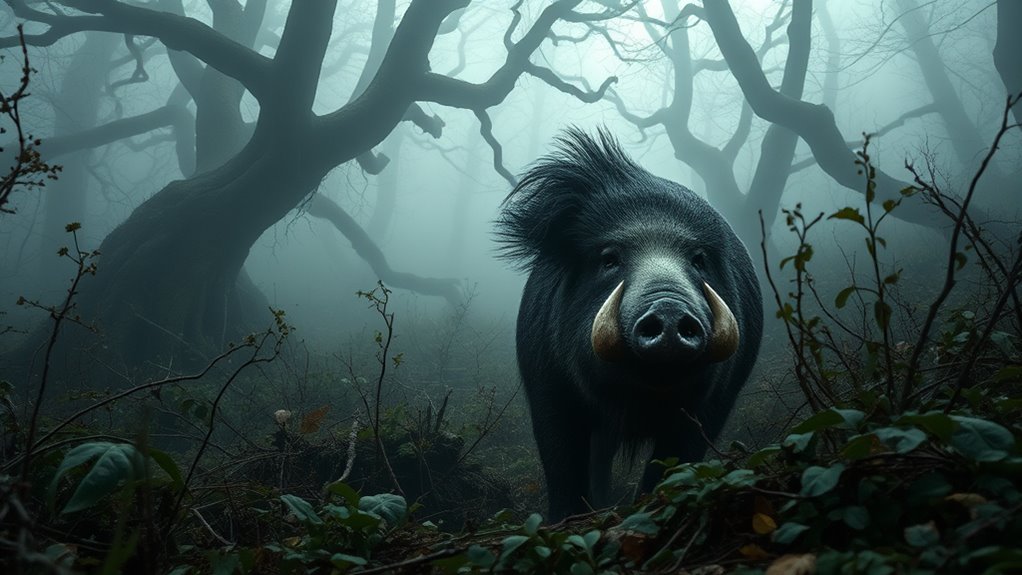
Have you ever wondered if the mysterious creature lurking in the Dean Forest is real or just a legend? The Beast of Dean has long captured the imagination of locals and visitors alike, fueling countless urban legends about a creature roaming the wooded landscape. Over the years, numerous wildlife sightings have been reported—strange shapes moving between trees, large footprints in the mud, and eerie sounds echoing through the night. But are these sightings proof of something extraordinary, or are they just stories spun by the imagination or misidentified animals? The debate continues, but what’s undeniable is that the legend persists, and many swear they’ve seen something unusual.
People who claim to have encountered the Beast often describe it as a large, boar-like creature, but its size and features vary widely. Some say it’s a massive wild boar, possibly a relic of escapee livestock or a feral animal that’s grown beyond normal proportions. Others argue it’s something more mysterious—perhaps a creature from ancient times, long thought extinct, hiding in the shadows of the forest. Sightings tend to cluster around specific areas, like the more remote parts of Dean Forest, where dense foliage provides ample cover. These reports often come from hikers, hunters, or those out late at night, adding to the allure of danger and secrecy surrounding the beast.
Eyewitnesses describe it as a large, boar-like creature, often seen near remote areas of Dean Forest at night.
Despite the many accounts, there’s little concrete evidence to support the existence of such a creature. Wildlife sightings can be tricky to interpret, especially in low-light conditions or when animals are startled. Many skeptics believe that what people see are just large wild boars, which are known to inhabit parts of the UK, or perhaps misidentifications of other animals like deer or badgers. Still, the stories persist, fed by eyewitness accounts, blurred photographs, and local folklore. Some locals even claim that the creature has been seen for generations, a living link to the area’s mysterious past. Additionally, behavioral support strategies for managing wildlife sightings can help clarify the nature of such creatures in the forest.
The myth of the Beast of Dean has become a staple of local culture, inspiring stories, festivals, and even some tourist interest. Whether it’s a true cryptid or simply a product of urban legends and wildlife sightings, it serves as a reminder of how powerful storytelling can be. It keeps the wilderness feeling wild and unknowable, inviting curiosity and sparking imaginations. So, the next time you’re wandering through Dean Forest, keep your eyes peeled—you never know when you might catch a glimpse of the legendary beast or just another story in the making.
Frequently Asked Questions
Are There Any Recent Sightings of the Beast of Dean?
Recent sightings of the Beast of Dean are rare, but urban legends and media sensationalism keep the legend alive. You might hear stories from locals or see sensational headlines, but there’s no solid evidence to support recent encounters. The media tends to amplify these tales, making it seem like the beast’s still active. If you’re curious, approach these stories skeptically and remember they often thrive on myth rather than fact.
What Evidence Supports or Refutes the Existence of the Creature?
You might wonder if there’s real evidence supporting the beast’s existence. Historical documentation hints at sightings, but scientific skepticism questions their authenticity. No conclusive proof like captured footage or remains has surfaced, leaving many to believe the stories are just myths or misidentifications. While some claim fresh sightings, the lack of solid evidence suggests the creature’s existence remains unproven, making it more of a local legend than a verified creature.
How Has Local Folklore Evolved Over the Centuries Regarding the Beast?
You’ll find that folklore evolution shows how stories about the beast have changed over centuries, shaped by cultural influences like local legends, media, and community fears. As time passes, details shift, sometimes becoming more fantastical or exaggerated, reflecting societal values or anxieties. This continual adaptation helps keep the myth alive, blending historical facts with cultural storytelling, so the legend maintains its relevance and mystery in local consciousness.
Were There Any Official Investigations Into the Alleged Attacks?
Yes, official inquiries and police reports were made when concerns arose about the creature. Authorities investigated the incidents, often seeking to understand the nature of the unusual events. They examined evidence and interviewed witnesses, trying to piece together what might have caused the mysterious disturbances. While no definitive proof was found, these formal investigations helped shape the ongoing story, adding layers to the folklore surrounding the so-called beast in the woods.
Could the Legend Be Influenced by Other Similar British Cryptids?
Yes, the legend could be influenced by cryptid comparisons and folklore influences from other British cryptids. You might see similarities with creatures like the Black Shuck or the Beast of Bodmin Moor, which share eerie, mysterious qualities. These stories often blend local folklore with cryptid tales, shaping the Beast of Dean legend. Such influences help create a compelling narrative that resonates with cultural fears and the unknown.
Conclusion
So, next time you hear whispers of the Beast of Dean lurking in the shadows, remember it’s just a tale spun from fear and folklore. Like a shadow dancing on the edge of reality, the myth feeds on imagination, blurring truth and legend. Don’t let it trap you in a web of fear—sometimes, stories are just echoes of our own fears, echoing through time, hiding the truth behind a veil of mystery.