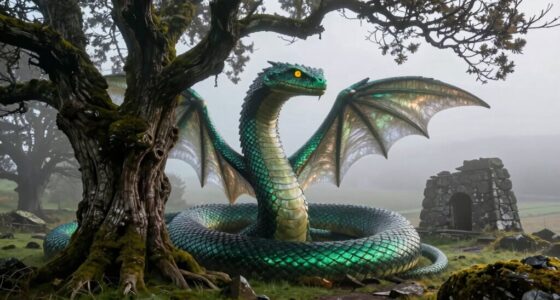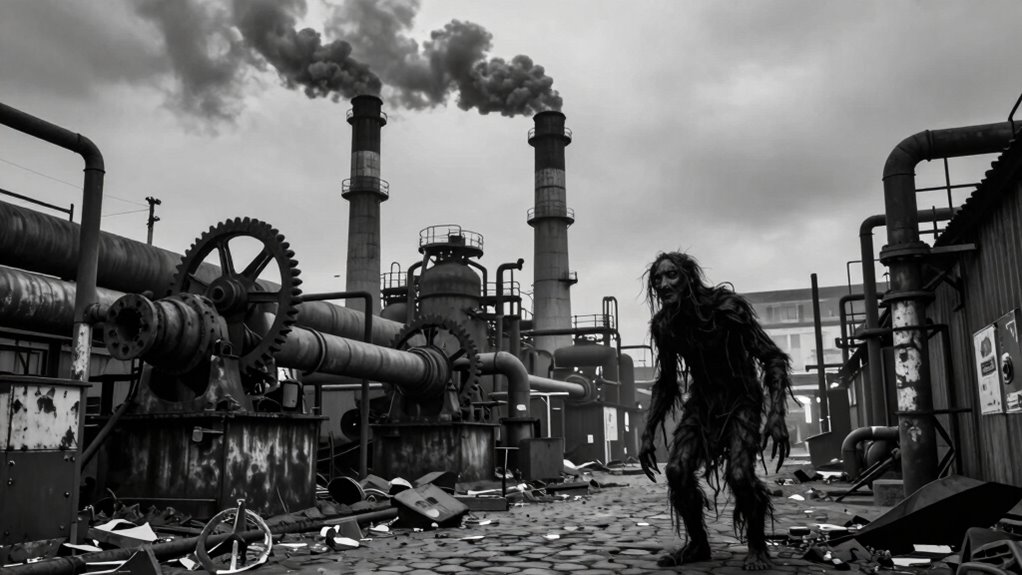

As you explore Industrial England, you’ll see how rapid factory growth and technological change sparked new urban monster stories. Workers and city folk shared tales of massive, steel monsters that seemed alive, symbolizing fears of losing human control to machines. These myths helped people cope with dangerous work and societal upheaval, reflecting deeper worries about dehumanization. If you keep exploring, you’ll uncover how these legends reveal society’s complex feelings about progress and technology’s dark side.

Prime made for students and young adults
- Fast, free delivery for dorm and study essentials
- Prime Video and Amazon Music included
- Member-only deals
Key Takeaways
- Rapid industrial expansion transformed rural villages into urban centers, inspiring stories of mechanized monsters emerging from new factory environments.
- Workers’ fears of dehumanization and loss of control fueled legends of rebellious, soulless machines with destructive power.
- Factory myths provided a psychological outlet to express anxieties over technological change and societal upheaval.
- Legends reflected broader societal fears about progress, automation, and the potential for machines to turn against humans.
- These urban monster stories served as cautionary tales, symbolizing the darker side of industrial progress and modernization.

Have you ever wondered how the rapid expansion of industrial England gave rise to the eerie urban legends that haunt its cities? As the country transformed from rural villages into bustling industrial hubs, a new kind of myth emerged—one fueled by the strange, often terrifying machinery that dominated the landscape. Factory myths began to circulate among workers and city dwellers, stories that blurred the line between human and machine, reality and nightmare. These tales often centered on mechanized monsters—hulking, soulless beings forged from steel and smoke—that seemed to have a life of their own. The machines, once symbols of progress, became the stuff of legend, embodying fears of dehumanization and uncontrollable technological power.
You might hear stories about factory workers who claimed to see these mechanized monsters lurking in the shadows of the mills after hours. Some legends spoke of giant, metallic beasts that roared and moved with unnatural agility, crushing everything in their path. Others described robots or automata that had somehow gained consciousness, turning against their creators in a terrifying rebellion. These stories weren’t just idle fears; they reflected real anxieties about losing control over the machines that now dictated daily life. As factories multiplied, so did the stories—each one feeding into a collective dread that the very engines meant to propel society forward could turn against it, becoming monsters in their own right. The rise of industrial machinery also introduced new urban legends that captured the imagination and fears of the populace.
The myth of mechanized monsters also served as a way for workers to cope with their harsh realities. Factory work was grueling and often dangerous, and imagining these machines as living, breathing monsters helped articulate feelings of powerlessness. It’s as if the machines symbolized a force beyond human control—an unstoppable, cold entity that could consume everything in its path. These stories spread quickly among workers, whispered during breaks or shared in taverns, growing more elaborate with each retelling. Over time, they became a form of urban legend, warning of the dehumanizing effects of industrialization while also serving as cautionary tales about the unchecked rise of mechanized power. Interestingly, the technological anxieties expressed through these stories mirrored broader societal fears about the rapid pace of change and the loss of traditional ways of life. The stories also reflected the public perception of emerging scientific discoveries, which often fueled both hope and fear about the potential of technology.
In the end, the factory myths and mechanized monsters reveal more than just fear of machinery—they expose the anxieties and hopes of a society caught between tradition and modernity. The stories reflect a world in flux, where the very tools meant to elevate human life could also threaten to transform humans into monsters themselves. As you walk through the modern cities shaped by those old factories, remember that beneath the surface of steel and smoke, these legends still echo—reminding us of the monsters that might lurk behind progress.
industrial factory machinery replica
As an affiliate, we earn on qualifying purchases.
As an affiliate, we earn on qualifying purchases.
Frequently Asked Questions
How Did Industrial Pollution Influence Monster Mythologies?
Industrial pollution influenced monster mythologies by fueling industrial folklore, where monsters symbolize the dark side of pollution. You see, as factories released smoke and waste, communities began imagining creatures lurking in polluted waters and skies, embodying fears of environmental destruction. These monsters serve as pollution symbolism, warning society about unchecked industrial greed. You start viewing these stories as allegories for environmental degradation, reflecting anxieties about losing nature’s purity to human-made horrors.
Were Specific Factories Linked to Particular Urban Monster Stories?
Certain factories, like the chemical plants and textile mills, became the focus of factory folklore and urban legends. You might hear tales of monstrous creatures lurking near these sites, symbolizing fears about pollution and industrial change. These stories served as warnings or reflections of community anxieties, linking specific factories to particular urban monster stories. Such legends reveal how industrial spaces transformed into mythic landscapes, embodying societal concerns about progress and its hidden costs.
How Did Working-Class Communities Contribute to Monster Legends?
You see, working-class communities played a big role in shaping monster legends through their folklore and community storytelling. They shared stories to explain strange happenings or fears rooted in industrialization and urban life. These tales often reflected their struggles, creating monsters that symbolized social anxieties. By passing stories orally, they kept their folklore alive, which influenced urban legends and contributed to the rich tapestry of monster stories in industrial England.
Did Technological Advancements Alter Urban Monster Narratives?
Yes, technological advancements definitely altered urban monster narratives. You see, they fueled industrial folklore and urban legends by creating new fears and mysteries. As factories and machines transformed cities, stories about mechanical monsters or ghostly apparitions in industrial settings emerged. These narratives reflected societal anxieties and innovations, giving urban legends fresh, modern twists. You can trace how progress shaped the monsters we tell stories about, blending old fears with new technological realities.
How Did Media Shape Public Perception of Monsters in Industrial Cities?
You see, media shaped your perception of monsters in industrial cities by transforming fantasy fabrications into vivid, sensational stories, influencing how you view urban threats. It amplified folklore evolutions, making monsters seem more real and immediate. Through newspapers, images, and stories, media fueled fears and fascination, blurring the lines between myth and reality. This manipulation helped create a sense of danger, shaping public attitudes toward urban monsters during that transformative era.
As an affiliate, we earn on qualifying purchases.
Conclusion
As you see, industrial England transformed cities into breeding grounds for urban monster stories, turning factories and smog into monsters lurking behind every corner. These tales are like shadows cast by progress, whispering fears of dehumanization and chaos. You can’t help but feel that, just like a beast hiding in plain sight, these stories reveal the darker side of progress—reminding you that every shining invention has a shadow waiting to emerge.
urban legend book about industrial revolution
As an affiliate, we earn on qualifying purchases.
As an affiliate, we earn on qualifying purchases.
As an affiliate, we earn on qualifying purchases.
Fall Picks
fall essentials
As an affiliate, we earn on qualifying purchases.