

TL;DR
Listen free for 30 days with Audible
Thousands of audiobooks and originals — cancel anytime.
Start your free trialAs an affiliate, we earn on qualifying purchases.
Scientists and space agencies have proposed a cap of 100,000 faint satellites orbiting Earth to manage congestion and debris. The recommendation aims to balance satellite deployment with sustainable space use. The proposal is currently under review by international authorities.
Scientists and international space agencies have proposed limiting the total number of faint satellites orbiting Earth to no more than 100,000. The recommendation aims to mitigate risks associated with space congestion, debris, and collision hazards, marking a significant shift in satellite deployment policies.
The proposal was put forward by a coalition of space scientists, environmental experts, and agencies including the European Space Agency (ESA) and NASA. It suggests that the current trend of rapid satellite deployment, especially for global internet coverage, could lead to unsustainable congestion in low Earth orbit (LEO).
According to the proposal, the cap of 100,000 faint satellites would be a global limit, intended to preserve the long-term sustainability of space activities. The recommendation emphasizes the importance of responsible satellite deployment, improved tracking, and debris mitigation measures.
While the proposal is not yet binding, it has garnered support from several international organizations and is now under review by the United Nations Office for Outer Space Affairs (UNOOSA). The initiative aims to establish a framework for future satellite launches and orbital management.
Implications for Space Traffic Management and Sustainability
This proposal matters because it addresses the growing concern over space congestion and debris, which pose risks to both operational satellites and crewed space missions. Limiting the number of faint satellites could reduce collision risks, decrease space debris, and promote sustainable use of Earth’s orbit.
For satellite operators and manufacturers, the cap could influence future deployment strategies, possibly leading to more rigorous approval processes and international cooperation. It also signals a shift toward more responsible space governance, which is critical as commercial and governmental satellite constellations expand.

ZOLEO Satellite Communicator
- Global Satellite Messaging: Text and email via satellite, cellular, Wi-Fi
- Emergency SOS Alerts: Send GPS location SOS to emergency center
- Medical Assistance Access: Get non-emergency medical help when needed
As an affiliate, we earn on qualifying purchases.
As an affiliate, we earn on qualifying purchases.
Rising Satellite Deployments and Space Debris Concerns
Over the past decade, the number of satellites in orbit has increased rapidly, driven by initiatives to provide global internet coverage, Earth observation, and scientific research. Currently, there are over 4,000 operational satellites, with thousands more planned or in development.
This growth has raised alarms about space congestion, especially in low Earth orbit (LEO), where most satellites operate. The proliferation of small, faint satellites—often called “smallsats”—has contributed significantly to the problem, as these objects are difficult to track and can collide with other space debris or operational satellites.
Previous efforts, such as the Space Sustainability Rating and debris mitigation guidelines, have aimed to address these issues. However, experts argue that more definitive measures, like caps on satellite numbers, are needed to prevent a “Kessler syndrome” scenario, where debris collisions cascade uncontrollably.
“Limiting the total number of faint satellites to 100,000 is a necessary step to ensure the long-term sustainability of space activities and prevent catastrophic collisions.”
— Dr. Maria Lopez, ESA Satellite Policy Lead

1-1/2 Inch Double Kitchen Sink Drain Kit, Anti-Odor Clear Bottle Trap
- Versatile Compatibility for Double Sinks: Includes seals, connectors, pipes, and rings
- Easy No-Tool Installation: Complete kit with instructions included
- Adjustable for Various Sink Spacing: Fits 10-20 inch sink gaps with flexible design
As an affiliate, we earn on qualifying purchases.
As an affiliate, we earn on qualifying purchases.
Details of Implementation and Enforcement Still Unclear
It is not yet clear how the proposed cap will be enforced or monitored globally. The proposal is currently under review by international bodies, and binding regulations have not been established.
Questions remain about how to allocate satellite launch permissions, how to handle existing satellites beyond the limit, and what penalties or incentives might be introduced to ensure compliance.
Further discussions are needed to determine whether the cap applies only to new launches or also involves deorbiting older satellites.
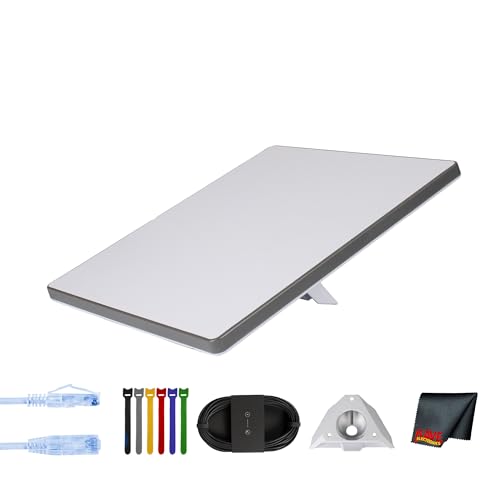
Starlink Mini Kit – Compact Dual-Band AC Wi-Fi Router and Satellite Dish System – High-Speed Portable Internet for and Mobile Use- Bundle (White)
- Bundle Includes: Wi-Fi system, cables, cleaning cloth
- High-Speed Satellite Internet: Global, low-latency connectivity in remote areas
- Portable and Compact Design: All-in-one, lightweight for travel and outdoor use
As an affiliate, we earn on qualifying purchases.
As an affiliate, we earn on qualifying purchases.
Next Steps in International Space Governance Discussions
The proposal will undergo review by the United Nations Office for Outer Space Affairs (UNOOSA) and other international bodies. Stakeholders, including satellite companies, governments, and environmental groups, are expected to debate the specifics of implementation in upcoming months.
If adopted, the cap could influence future satellite licensing, with potential for phased implementation over the next few years. Ongoing efforts to improve satellite tracking and debris removal will likely complement this initiative.
Monitoring and compliance mechanisms are expected to be developed to ensure the cap’s effectiveness and fairness across nations and private operators.
orbital debris mitigation equipment
As an affiliate, we earn on qualifying purchases.
As an affiliate, we earn on qualifying purchases.
Key Questions
Why is limiting the number of satellites necessary?
Limiting satellites aims to reduce space congestion, lower collision risks, and prevent debris accumulation that could threaten both space operations and future exploration efforts.
Will existing satellites be affected by this cap?
It is currently unclear. The proposal primarily targets new satellite launches, but discussions are ongoing about how to manage or deorbit existing satellites beyond the limit.
How will compliance be enforced internationally?
There are no binding enforcement mechanisms yet. The proposal is under review, and future regulations will depend on international consensus and cooperation.
What impact could this have on satellite companies?
Companies may need to alter deployment plans, increase collaboration, and participate in licensing processes to stay within the new limits, possibly affecting costs and timelines.
When will the cap be implemented?
There is no fixed timeline yet. If adopted, phased implementation could occur over several years, allowing operators time to adjust.
Source: hn
Fall Picks
fall essentials
As an affiliate, we earn on qualifying purchases.