
TL;DR

Prime made for students and young adults
- Fast, free delivery for dorm and study essentials
- Prime Video and Amazon Music included
- Member-only deals
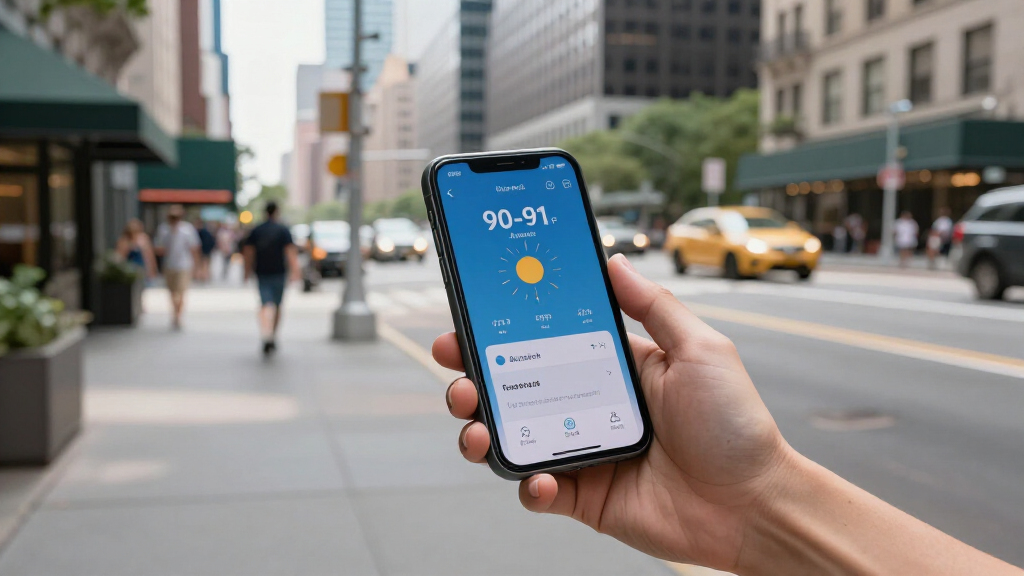
A betting market indicates a likelihood that New York City will experience a high temperature of 90-91°F on August 9, 2026. However, no official meteorological forecast has confirmed this prediction. The outcome remains uncertain, and more data is needed to assess the accuracy of these market signals.
Market activity indicates a significant probability that New York City will experience a high temperature of 90-91°F on August 9, 2026. Learn more about temperature predictions for NYC. This prediction is based on recent trades in a weather-related betting market, but no official meteorological forecast has confirmed this temperature range. The development matters because it reflects public and market expectations about future weather patterns, which can influence planning and perceptions of climate trends. For example, you can check how temperature forecasts vary across cities.
Recent trades in a market platform focused on weather outcomes suggest that there is a perceived likelihood of NYC reaching temperatures between 90 and 91 degrees Fahrenheit on August 9, 2026. The market activity indicates a level of confidence among traders, but it is important to note that these are speculative bets, not official weather forecasts.
As of now, no official meteorological agency or weather modeling service has issued predictions for temperatures on that specific date in 2026. Long-range weather forecasts typically extend up to 7-10 days, making predictions nearly four years in advance highly uncertain and speculative. To understand how climate predictions are made, visit our section on climate modeling and forecasting.
Experts caution that while market signals can sometimes reflect emerging climate trends or collective expectations, they do not replace scientific weather forecasts, which rely on complex models and real-time data. The current market activity should be viewed as an indicator of perceived probability, not a confirmed forecast.
Implications of Market-Based Temperature Predictions
The activity in the betting market highlights how public perception and speculative trading can influence or reflect expectations about future weather conditions. While not a scientific forecast, such market signals can sometimes indicate emerging climate trends or collective sentiment about upcoming weather patterns. For residents and planners in NYC, understanding the difference between market speculation and scientific prediction is crucial, especially as climate variability increases.
This development underscores the importance of relying on official meteorological sources for accurate weather information, but also illustrates how climate-related markets are growing as tools for gauging public perception and potential future scenarios.
As an affiliate, we earn on qualifying purchases.
Long-Range Weather Forecasting and Market Indicators
Forecasting weather nearly four years in advance is inherently uncertain. Scientific models typically provide reliable predictions up to about 10 days ahead. Beyond that, predictions become increasingly speculative due to the complexity of climate systems and the influence of numerous variables.
The recent activity in a market platform, where traders bet on specific temperature ranges for August 9, 2026, is part of a broader trend where financial instruments are used to gauge expectations about future climate conditions. Such markets have been used in other contexts, like predicting hurricane activity or temperature extremes, but their accuracy remains a subject of debate among scientists and economists.
Historically, long-range climate predictions focus on trends and averages over seasons or decades, rather than specific daily temperatures. The current market activity is a novel indicator but should be interpreted with caution, as it does not replace scientific methodologies.
portable misting fan for outdoor heat
As an affiliate, we earn on qualifying purchases.
As an affiliate, we earn on qualifying purchases.
Unconfirmed Nature of Long-Term Temperature Predictions
It is not yet clear whether the market activity accurately reflects likely weather conditions or if it is driven by speculation and market sentiment. No official weather models or climate forecasts currently support the prediction of a 90-91°F high in NYC on August 9, 2026. The long-term nature of this forecast introduces significant uncertainty, and the actual weather could differ substantially from these market-based expectations.
As an affiliate, we earn on qualifying purchases.
Monitoring Scientific Forecasts and Market Trends
The next step involves waiting for official weather forecasts from agencies like the National Weather Service or global climate models as the date approaches. These will provide more reliable data on expected temperatures. Meanwhile, market activity may continue to reflect evolving perceptions, but should be regarded as speculative until confirmed by scientific sources.
Researchers and meteorologists will also analyze climate data to identify any emerging long-term trends that could influence future temperature patterns in NYC, which may inform both scientific understanding and market expectations.
UV protection sunglasses for summer
As an affiliate, we earn on qualifying purchases.
As an affiliate, we earn on qualifying purchases.
Key Questions
Can market activity reliably predict weather conditions four years in advance?
No, market activity is speculative and not a scientific method for long-term weather prediction. It reflects perceptions and probabilities, not certainties.
Has any official agency predicted that NYC will reach 90-91°F on August 9, 2026?
No, official weather forecasts do not extend that far into the future and have not predicted specific temperatures for that date.
Why do people trade on weather outcomes in markets?
Such markets are used to gauge public perception and expectations about future climate conditions, which can sometimes inform risk management and planning.
How reliable are long-term climate predictions?
Long-term climate predictions are generally focused on trends and averages over seasons or decades. Specific daily temperature predictions years in advance are highly uncertain.
Source: kalshi
Fall Picks
fall essentials
As an affiliate, we earn on qualifying purchases.