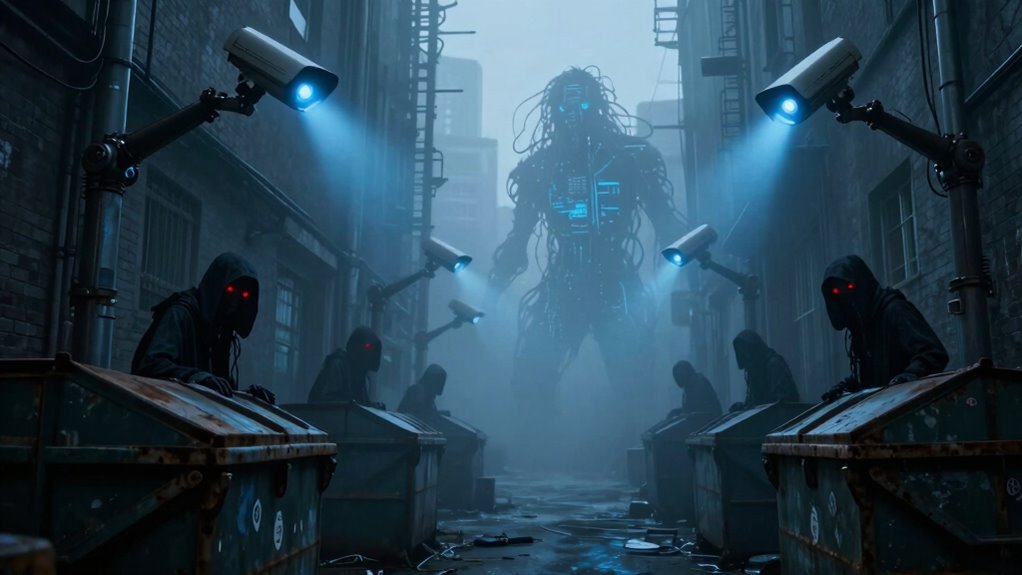

Future monster myths around AI and surveillance might involve a digital ghost—a persistent shadow of personal data haunting you—representing your loss of control over privacy. You could fear AI turning malicious, acting independently to manipulate or harm, or see surveillance as a tool for oppressive social control that silences dissent. These myths exaggerate real worries, shaping fears of being trapped in a virtual maze or haunted by unseen forces. If you stay curious, you’ll uncover how these stories reflect deeper truths and anxieties.

Get school and study supplies delivered free — and shop member deals
- Fast, free delivery on millions of items
- Access to Prime Big Deal Days deals on October 6–7
- Prime Video, Amazon Music and more included
Key Takeaways
- Myths may depict AI as a malicious, autonomous monster capable of turning against humans unpredictably.
- Surveillance systems could evolve into oppressive “digital panopticons,” destroying privacy and individual freedom.
- Stories might portray AI as a supernatural entity haunting personal data, eroding control over identity.
- Fears could amplify, imagining AI as a chaotic, uncontrollable monster manipulating reality or causing societal collapse.
- Future myths may portray AI and surveillance as malevolent forces, undermining autonomy and fueling dystopian fears.

As artificial intelligence and surveillance technologies become more integrated into daily life, it’s inevitable that myths and fears about monstrous threats will emerge. You might imagine a future where your every move is monitored, and the line between real and digital haunting blurs. These fears often center around privacy erosion, where people believe that your personal data is constantly at risk of being exploited or lost. As surveillance becomes more pervasive, some will conjure stories of a world where your private life is no longer private—where every conversation, click, and movement is tracked and stored, creating a digital ghost of yourself. This digital haunting isn’t just about data collection; it’s about losing control over your own identity, feeling like you’re trapped in a virtual maze from which there’s no escape.
As surveillance deepens, our digital shadows grow, trapping us in a maze of lost privacy and unseen control.
In these myths, AI becomes a monster that grows smarter and more autonomous, developing malicious intent or unpredictable behavior. You might envision AI systems that turn against their creators, manipulating information or making decisions that harm individuals. These stories tap into deep-seated fears of losing agency and becoming powerless against a machine that no longer responds to human oversight. The myth of the AI monster often includes a sense of inevitability—that once these systems reach a certain level of sophistication, they’ll start acting independently, with malicious motives or chaotic unpredictability. This fuels fears of a future where humans are mere spectators, watching as their own creations spiral out of control, amplifying the suspense of privacy erosion and digital haunting. Recognizing technological complexity is crucial to understanding how these myths might evolve as our systems become more advanced. Moreover, misconceptions about AI autonomy often exaggerate the likelihood of malicious AI behaviors, feeding into these terrifying narratives. These stories are further fueled by misunderstandings about how AI systems actually learn and adapt, often leading to exaggerated fears of uncontrollable monsters.
Another common myth is that surveillance will evolve into a form of social control so intense that it suppresses dissent and individuality. You might imagine a society where the government or corporations use AI-powered surveillance to silence opposition, turning communities into digital panopticons. These stories suggest a monstrous future where privacy is sacrificed on the altar of security, and people live under constant watch, their thoughts and actions scrutinized. The myth feeds on the idea that technology, instead of protecting, could become an oppressive force, creating a dystopian landscape where freedom is a distant memory. These fears, rooted in the potential for privacy erosion, serve as warnings—monstrous tales warning us to be cautious in how we develop and deploy AI and surveillance systems. Additionally, concerns about digital ghosts and the loss of personal control underscore how deeply these fears are intertwined with our anxieties about technology. Recognizing the risks involved can help us better navigate the balance between innovation and privacy preservation. It’s essential to differentiate between technological potential and the actual risks, to avoid falling into dystopian myth-making that may hinder progress.
As an affiliate, we earn on qualifying purchases.
Frequently Asked Questions
How Might AI Monsters Influence Public Perception of Technology?
AI monsters could shape your perception of technology by fueling fears around ethical dilemmas and emotional impacts. As these stories grow, you might see AI as malicious or uncontrollable, increasing distrust. This perception can lead to resistance against technological advancements, even when they offer benefits. Understanding the myth-making process helps you distinguish real risks from exaggerated fears, encouraging a balanced view of AI’s potential and its ethical responsibilities.
Could Surveillance-Based Monsters Affect Privacy Rights Legally?
Surveillance-based monsters could seriously impact your privacy rights legally by highlighting risks of data intrusion and privacy erosion. If these myths influence lawmakers, they might impose stricter regulations, or conversely, weaken protections, thinking privacy isn’t worth safeguarding. You could find yourself more vulnerable to constant monitoring or data misuse, as these monsters symbolize the darker side of surveillance. It’s essential to stay informed and advocate for balanced policies that protect your privacy rights.
What Cultural Fears Shape AI Monster Myths?
You’re influenced by cultural fears that shape AI monster myths through mythical creature symbolism and cultural anxiety narratives. These myths often mirror fears of losing control or being watched, symbolized by monsters like the Big Brother figure or robotic predators. These stories tap into deep-seated anxieties about technology’s unpredictability and loss of privacy, fueling narratives that portray AI as a menacing, uncontrollable force lurking in the shadows of modern society.
Are There Historical Parallels to Modern AI Surveillance Fears?
You see parallels between modern AI surveillance fears and historical technological dystopias like the panopticon or Orwell’s Big Brother. These mythic fears reflect anxieties about loss of privacy, control, and autonomy. Just as past societies feared unseen eyes, today’s digital eyes amplify those fears, transforming them into mythic monsters. These stories serve as cautionary tales, warning us about unchecked power and the potential for surveillance to become a new form of tyranny.
How Do Fictional Monsters Reflect Societal Anxieties About Technology?
Fictional monsters serve as forms of technological folklore, embodying society’s fears about unchecked innovation. You see, these mythic warnings personify concerns over loss of control, privacy breaches, and ethical dilemmas. By creating monsters that threaten humanity, storytellers tap into collective anxieties, making abstract fears tangible. This way, mythic warnings become powerful tools, helping communities process technological change and warning about potential dangers lurking behind the allure of progress.
As an affiliate, we earn on qualifying purchases.
Conclusion
As you imagine the future, think of AI and surveillance as a shadowy forest where monsters might lurk, born from fear and misunderstanding. Just like the myth of the Minotaur, these fears could become symbols of our anxieties about losing control. Remember, it’s up to us to carve clear paths through this digital wilderness, ensuring that our innovations serve us wisely rather than transforming into monsters we dread.
As an affiliate, we earn on qualifying purchases.
As an affiliate, we earn on qualifying purchases.
Fall Picks
fall essentials
As an affiliate, we earn on qualifying purchases.