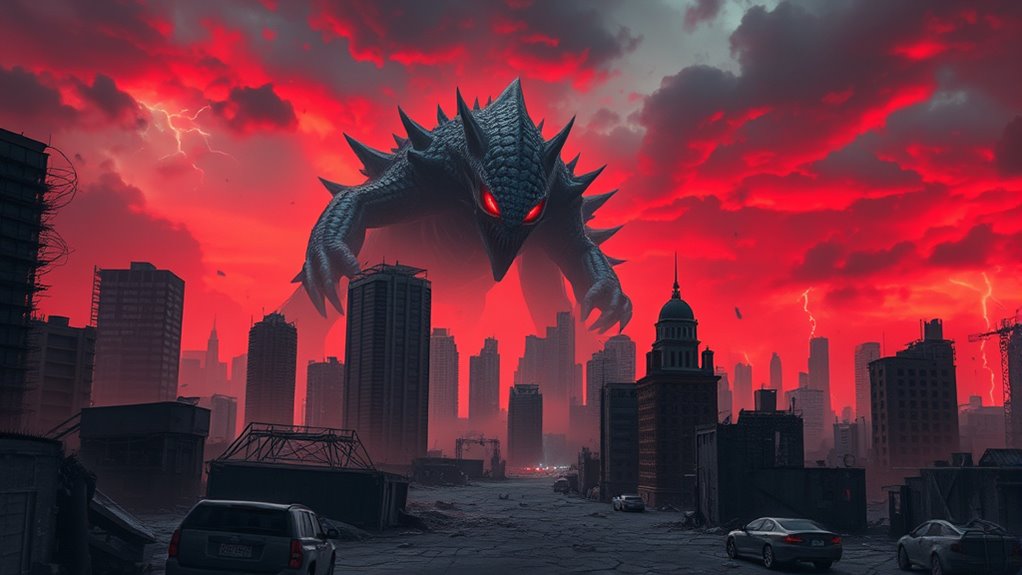

Doomsday predictions and apocalyptic monsters symbolize humanity’s deep fears of chaos and destruction. These fears often stem from religious prophecies, cultural symbols, and collective anxieties about disasters, invasion, or environmental collapse. Monsters and end-time scenarios serve as warnings and reflections of societal fears, blending ancient symbols with modern concerns. If you want to uncover more about how these fears shape us, keep exploring the stories and symbols that fuel these apocalyptic visions.
Key Takeaways
- Religious prophecies often depict apocalyptic monsters symbolizing chaos and divine judgment.
- Cultural fears of invasion, disease, and environmental collapse are personified as monsters in folklore and media.
- Doomsday predictions frequently incorporate symbols of destruction and renewal rooted in religious or cosmic themes.
- Modern fears blend ancient apocalyptic imagery with technological threats, amplifying concerns about global catastrophe.
- Collective anxieties about end times are reflected in myths, media, and popular culture as symbols of impending doom.
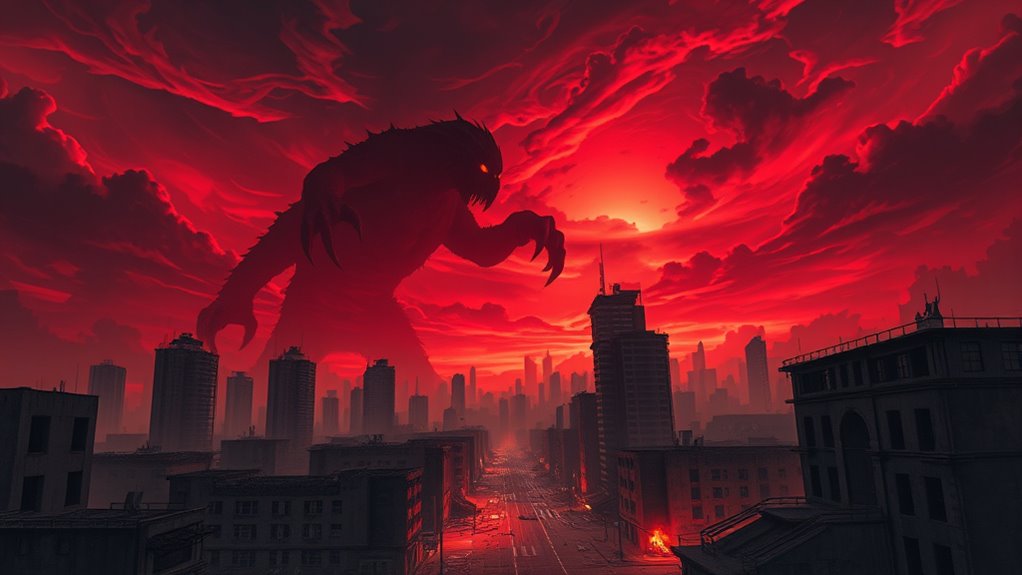
Throughout history, people have constantly feared impending doom, often turning to predictions of doomsday and apocalyptic monsters to explain the chaos around them. These fears aren’t random; they’re deeply rooted in religious prophecies and cultural fears that shape societies’ perceptions of the future. Religious prophecies, in particular, have played a significant role in fueling apocalyptic anxieties. Many faiths contain visions of an end times, with symbols of destruction and renewal that resonate through generations. These prophecies offer a framework for understanding catastrophic events, suggesting that chaos is part of a divine plan. When disasters occur—whether natural, social, or political—people often interpret them through this religious lens. It’s as if they’re waiting for a divine signal that the end is near, which amplifies their fears and creates a sense of inevitable doom.
Cultural fears also heighten these anxieties. Societies develop their own monsters—both literal and metaphorical—that embody their deepest concerns. For example, fears of invasion, disease, or environmental collapse become personified as apocalyptic monsters in stories, movies, and legends. These creatures symbolize the chaos that threatens societal stability and individual safety. When these fears are amplified by media and folklore, they reinforce the idea that catastrophe is imminent. You might see this in the way popular culture depicts monsters or disasters as unavoidable forces of destruction, reflecting collective anxieties about the future. These cultural narratives serve to prepare, or sometimes panic, communities, shaping their responses to real-world threats.
The intertwining of religious prophecies and cultural fears creates a potent mix that fuels doomsday predictions. When people believe that a divine or cosmic force is guiding the end of the world, it becomes easier to accept apocalyptic scenarios as inevitable. This belief can lead to widespread panic, as communities brace for the worst, sometimes even accelerating destructive behaviors. At the same time, these fears can serve as cautionary tales, urging societies to change their ways to avoid catastrophe. Moreover, technological advancements have introduced new dimensions to apocalyptic fears, blending ancient symbols with modern anxieties. Whether through religious teachings or cultural stories, the idea of an impending end keeps a constant presence in human consciousness. It’s a reflection of our collective anxieties—an attempt to make sense of chaos by projecting it onto symbols of destruction and renewal.
Frequently Asked Questions
How Do Apocalyptic Monsters Influence Modern Pop Culture?
Apocalyptic monsters influence modern pop culture by embodying fears through monster symbolism, making them central to storytelling. You see them drive genre evolution, shifting from simple villains to complex symbols of societal anxieties. These monsters challenge your perceptions, reflect current issues, and inspire movies, games, and books. Their evolving nature keeps audiences captivated, allowing you to explore deeper themes while enjoying thrilling, genre-bending narratives that resonate with modern fears and hopes.
Are There Scientific Theories Supporting Doomsday Predictions?
You’ll find that some scientific models, such as climate change projections, support doomsday predictions with strong empirical evidence. Studies show a 97% consensus among climate scientists regarding human impact on global warming. While these models don’t predict exact apocalyptic events, they highlight serious risks, making it clear that scientific theories do provide support—though they focus on plausible scenarios based on current data.
What Are the Psychological Effects of Apocalyptic Fears?
You experience psychological trauma and heightened fear responses when apocalyptic fears dominate your mind. These intense emotions can lead to anxiety, helplessness, and difficulty concentrating. You might find yourself obsessively checking news or feeling overwhelmed by the perceived threat. Over time, such fears can erode your mental well-being, making it harder to focus on daily activities. Recognizing these effects helps you seek support and develop coping strategies to regain emotional stability.
How Have Historical Doomsday Predictions Impacted Societies?
You see that historical doomsday predictions, often rooted in religious prophecy, have historically triggered societal panic. When these predictions gain traction, you might notice increased anxiety, social upheaval, or even mass hysteria. Communities often respond with heightened religious activity or withdrawal from daily life. These events can leave lasting scars, shaping cultural attitudes toward future warnings and fostering skepticism or fear about impending catastrophe.
Are There Common Patterns in Apocalyptic Monster Stories Worldwide?
You’ll notice that apocalyptic monster stories worldwide share common patterns, like mythical archetypes and cultural symbolism, as if humanity’s fear of destruction follows a global blueprint. From fire-breathing dragons to zombie hordes, these monsters embody universal anxieties. They symbolize chaos, moral decay, or an inevitable end—reminding us that no matter where you’re from, our collective psyche gravitates toward familiar symbols of doom and despair.
Conclusion
As you navigate the stories of doomsday predictions and apocalyptic monsters, remember they’re like shadows in the corner of your mind—faint, fleeting, and often exaggerated. While they may whisper warnings or stir fears, they rarely hold the truth. Instead, stay grounded, find hope in the ordinary, and trust that the calm after the storm is where your strength truly lies. After all, it’s in resilience that you discover your brightest tomorrow.