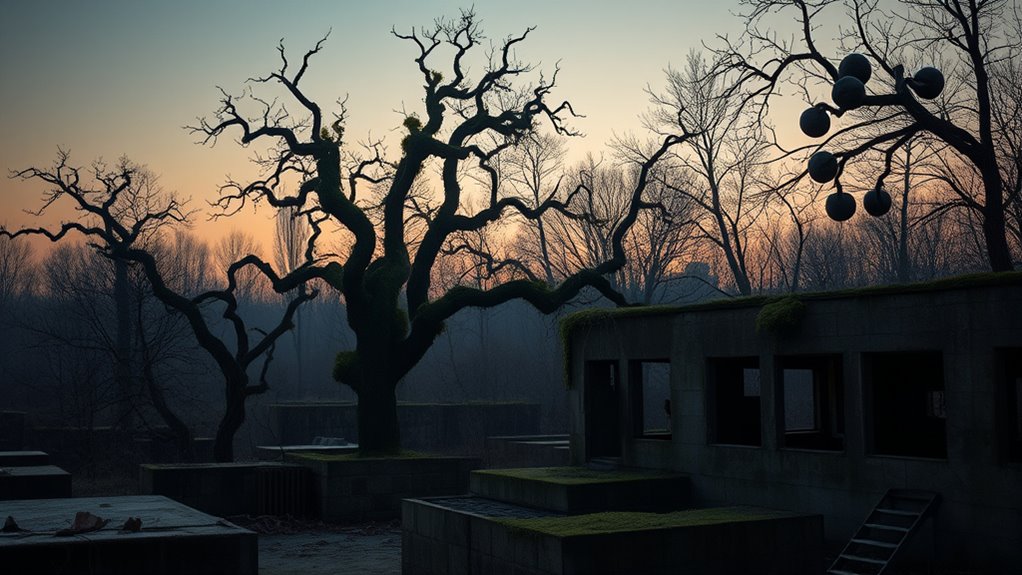

In the Chernobyl Exclusion Zone, myth and reality intertwine as wildlife thrives amidst radioactive decay, with stories of mutants capturing imaginations. You’ll see animals like wolves and birds living in a landscape of haunting ruins and overgrowth, showing remarkable resilience. While some myths suggest mutants roam freely, the true story highlights nature’s ability to adapt in extreme conditions. Keep exploring to discover how this zone transforms tragedy into a symbol of survival and renewal.

Prime made for students and young adults
- Fast, free delivery for dorm and study essentials
- Prime Video and Amazon Music included
- Member-only deals
Key Takeaways
- The zone hosts wildlife that exhibits genetic mutations due to radiation, fueling myths of mutants.
- Many mutated animals are natural adaptations, not necessarily harmful or abnormal, challenging sensationalized stories.
- Urban decay and environmental resilience create a mythic landscape of human tragedy and nature’s rebirth.
- Scientific studies show some mutations are minor or beneficial, contradicting exaggerated mutant myths.
- The zone symbolizes both the dangers of nuclear power and the resilience of life in extreme conditions.
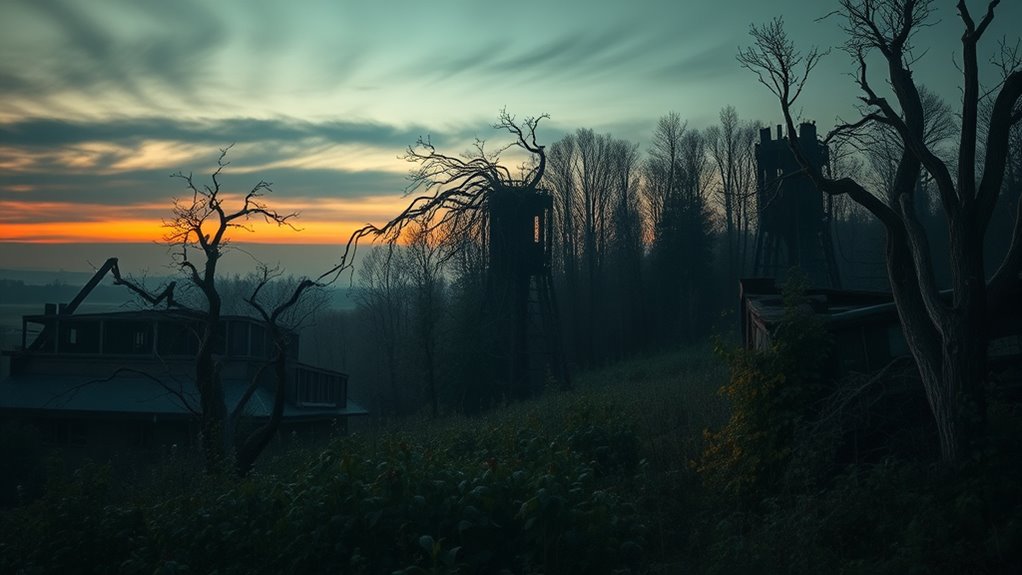
The Chernobyl Exclusion Zone is a 30-kilometer radius around the site of the 1986 nuclear disaster, where radioactive contamination has made it unsafe for long-term human habitation. Despite this, nature has begun to reclaim the area, leading to a fascinating blend of urban decay and unexpected wildlife resurgence. As you explore this zone, you’ll notice that the abandoned buildings and deserted towns stand as haunting reminders of human absence, their windows shattered and walls crumbling under the relentless march of time. This decay creates a surreal, almost dystopian landscape where every corner tells a story of abandonment and nature’s quiet takeover.
The abandoned towns within the Chernobyl Zone tell haunting stories of decay and nature’s quiet resurgence.
Amidst this decay, a surprising phenomenon has emerged: radioactive wildlife thriving in the zone. You might spot wolves prowling through overgrown streets, deer grazing in fields once cultivated by humans, or birds nesting in the ruined structures. The absence of human activity has allowed these animals to flourish, and they’ve adapted remarkably well to the lingering radiation. In some cases, they’ve developed genetic mutations, sparking myths about mutants roaming the zone. While these stories often border on exaggeration, they highlight how nature adapts to extreme environments, sometimes in unexpected ways. The animals here seem to have developed resistance, thriving where humans cannot survive, creating a unique ecosystem that’s both resilient and peculiar.
The urban decay adds a haunting beauty to the zone. The skeletal frames of buildings covered in vines and moss evoke a sense of nature’s slow reclaiming of space. Vehicles left in streets sit rusted and abandoned, a memorial to the suddenness of the disaster. As you walk through the empty towns, you feel a strange mixture of eeriness and awe, witnessing how life persists despite the radioactive chaos. The decay doesn’t just serve as a backdrop; it shapes the environment where radioactive wildlife now roam freely. This decay also acts as a reminder of human hubris and the importance of respecting the power of nuclear energy.
Additionally, radioactive wildlife has been observed exhibiting signs of adaptation, which is a remarkable example of resilience in a highly contaminated environment. The urban decay adds a haunting beauty to the zone. The skeletal frames of buildings covered in vines and moss evoke a sense of nature’s slow reclaiming of space. Vehicles left in streets sit rusted and abandoned, a memorial to the suddenness of the disaster. As you walk through the empty towns, you feel a strange mixture of eeriness and awe, witnessing how life persists despite the radioactive chaos. The decay doesn’t just serve as a backdrop; it shapes the environment where radioactive wildlife now roam freely. This decay also acts as a reminder of human hubris and the importance of respecting the power of nuclear energy.
In exploring the zone, you realize that the interplay between urban decay and radioactive wildlife creates a stark narrative of resilience and decay. Nature has adapted in ways that defy expectations, turning a site of catastrophe into an unintended wildlife sanctuary. While the myths of mutants persist, the reality is more compelling: life finds a way, even in places scarred by radiation, and the remnants of human civilization stand as silent witnesses to a history that continues to evolve.
Top picks for "chernobyl exclusion zone"
As an affiliate, we earn on qualifying purchases.
Frequently Asked Questions
Are There Any Confirmed Human Mutants Living in the Zone?
There are no confirmed human mutants living in the zone. While some residents and workers have experienced radiation sickness or genetic anomalies due to prolonged exposure, these conditions don’t create true mutants. Instead, radiation can cause mutations, but most changes are minor or unnoticeable. You should understand that the idea of confirmed mutants is a myth; radiation’s effects are more about health risks than creating actual mutants.
What Are the Long-Term Health Effects for Visitors?
Visiting the zone might lead to subtle changes in your health over time. You could experience mild symptoms resembling radiation sickness, such as fatigue or nausea, and there’s a small chance of genetic mutations affecting future generations. While immediate effects are rare with proper precautions, prolonged exposure could increase risks. It is crucial to follow safety guidelines, limit exposure, and understand that long-term impacts vary based on individual circumstances.
Do Radioactive Mutations Affect Local Wildlife Genetics?
Radioactive mutations do affect local wildlife genetics through radiation-induced changes, leading to genetic diversity shifts. These changes can cause mutations in DNA, sometimes resulting in deformities or altered traits. While some animals adapt, others may struggle with reproductive success. Overall, radiation exposure influences the genetic makeup of species in the zone, creating a unique environment where evolutionary processes are affected by the ongoing impact of radiation.
Are There Any Secret Government Experiments in the Zone?
Imagine you’re in the year 1920, but conspiracy theories swirl about secret facilities in Chernobyl. While no credible evidence confirms secret government experiments there today, many believe these myths fueled by government secrecy and misinformation. Some speculate covert projects, but official reports deny any clandestine activities. You might find these stories intriguing, yet they remain unproven, keeping the zone shrouded in mystery and myth.
Can You Find Undiscovered Mutations Hidden From Sight?
You can’t definitively find undiscovered mutations hidden from sight, but radiation-induced anomalies suggest unseen genetic alterations might exist. These unseen changes could affect plants, animals, or microbes, making them harder to detect without detailed scientific analysis. While some mutations are visible or measurable, many remain concealed beneath the surface, waiting for researchers to uncover the subtle signs of radiation’s impact on DNA and genetics in the zone.
Conclusion
As you wander through the Chernobyl Exclusion Zone, you’ll realize it’s a haunting mirror of human hubris and nature’s resilience. The myths swirling like ghostly whispers blur fact from fiction, revealing a landscape both scarred and reborn. It’s a place where mutants and myths dance in shadows, reminding you that even in devastation, life finds a way to weave its silent, persistent song. In Chernobyl’s ghostly silence, stories of caution and wonder intertwine.
Halloween Picks
halloween
As an affiliate, we earn on qualifying purchases.