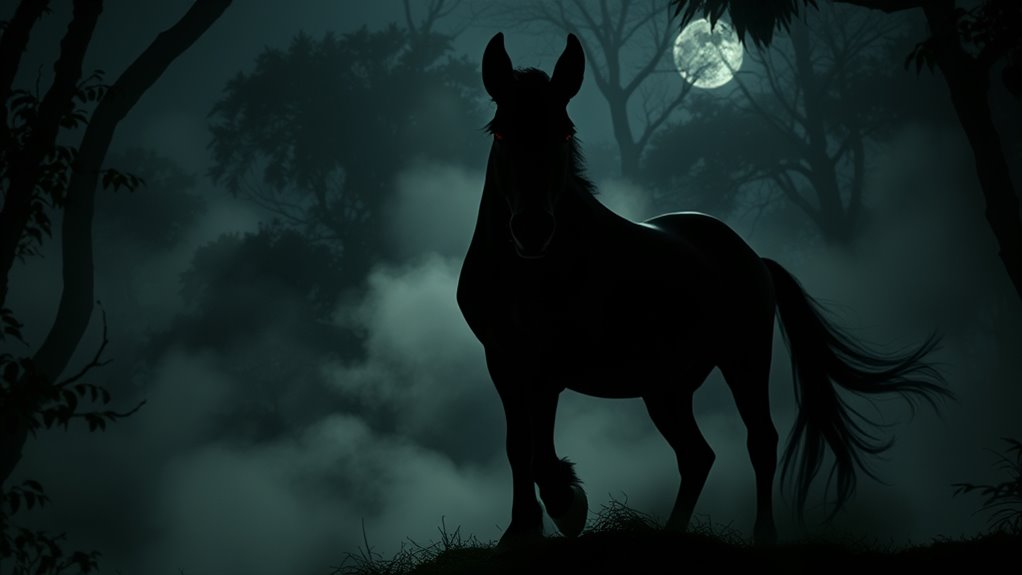

The Legend of the Headless Mule is a powerful part of Brazilian folklore that teaches important lessons about morality, justice, and social order. It symbolizes divine retribution for immoral actions like greed and infidelity. As you explore this myth, you’ll see how it reflects Brazil’s rich cultural blend of indigenous, African, and European influences. To discover more about this enthralling story and its significance, keep exploring its deeper meanings and cultural roots.

Get school and study supplies delivered free — and shop member deals
- Fast, free delivery on millions of items
- Access to Prime Big Deal Days deals on October 6–7
- Prime Video, Amazon Music and more included
Key Takeaways
- The Headless Mule symbolizes justice and divine retribution for moral transgressions in Brazilian folklore.
- Its story serves as a moral warning against sins like greed and infidelity.
- The legend reflects Brazil’s diverse cultural influences—indigenous, African, European.
- It functions as a cultural symbol reinforcing social norms and moral values across generations.
- The myth is celebrated in festivals, storytelling, and songs, highlighting its cultural significance.

In Brazilian folklore, the legend of the Headless Mule is a chilling tale that warns of the consequences of wrongdoing. This story isn’t just a spooky narrative; it holds deep symbolism of folklore and carries significant cultural weight. The Headless Mule, often depicted as a fiery, headless horse with a woman’s torso, embodies the idea of justice and punishment for moral transgressions. You might see this figure as a powerful symbol that echoes through generations, serving as a reminder to adhere to societal norms. Its presence in folklore reflects broader themes of morality, divine retribution, and social order, making it more than just a ghost story—it’s a cultural signpost.
The Headless Mule symbolizes justice, morality, and social order in Brazilian folklore, warning of divine retribution for moral transgressions.
The symbolism of folklore in this legend underscores the importance Brazilians place on moral integrity. The mule itself, a resilient and hardworking animal, becomes a vessel for moral lessons. When corrupted by greed, infidelity, or other sins, the woman is cursed to become the Headless Mule, a creature that haunts the forests and rural areas at night. The story warns that immoral actions have consequences that extend beyond the individual, affecting not only one’s spiritual state but also the community’s harmony. The headless aspect of the mule signifies the loss of reason and morality, emphasizing that actions driven by vice can lead to a loss of identity and humanity. Additionally, the cultural significance of the legend demonstrates how folklore functions as a means of social cohesion and moral education.
Culturally, the legend of the Headless Mule holds a significant place in Brazilian life, especially in rural regions where folklore is deeply woven into daily existence. It functions as a moral cautionary tale, often told to children and adults alike, reinforcing the importance of honesty, fidelity, and respect. You’ll find this story referenced in local festivals, storytelling sessions, and even in songs, illustrating its enduring cultural significance. It’s a vivid reminder that folklore isn’t just entertainment but a crucial part of cultural identity, preserving collective values and lessons.
Moreover, the legend reflects Brazil’s rich blend of indigenous, African, and European influences, each contributing layers of meaning to the story. The Headless Mule symbolizes the complex moral universe that Brazilians have cultivated over centuries—one where justice is ultimately served, often through supernatural means. As a symbol of folklore, the Headless Mule also reinforces the idea that moral failings are noticed and judged by forces beyond human understanding. Its cultural significance lies in its ability to transmit timeless lessons in morality and social cohesion, ensuring that the story remains relevant and powerful across generations.
Brazilian folklore storytelling book
As an affiliate, we earn on qualifying purchases.
As an affiliate, we earn on qualifying purchases.
Frequently Asked Questions
What Is the Origin of the Headless Mule Legend?
You might find that the origin of the headless mule legend stems from Brazilian folklore, where it symbolizes mythical symbolism of justice and retribution. As you explore its cultural significance, you’ll see how stories about the headless mule serve to warn against moral transgressions. Its eerie presence embodies the consequences of wrongdoing, making it a powerful figure in local traditions and oral storytelling, connecting community values with supernatural elements.
Are There Any Real-Life Sightings of the Headless Mule?
You might hear stories of supernatural encounters involving the headless mule, but there’s no verified sighting of it in real life. These tales are part of folklore preservation passed down through generations, often serving as cautionary stories or cultural symbols. While they spark curiosity and intrigue, they remain legends, not documented encounters. Enjoy the myth for its cultural significance, but remember, it stays within the domain of folklore and imagination.
How Does the Legend Vary Across Different Brazilian Regions?
You’ll notice regional variations in the legend across Brazil, as each area adapts the folklore to local culture and beliefs. In some regions, the headless mule is seen as a omens, while in others, it’s a symbol of justice or punishment. These folklore adaptations reflect local traditions, making the myth unique to each community. The story evolves with the culture, highlighting Brazil’s rich and diverse mythological landscape.
What Moral Lessons Does the Myth Convey?
You learn that the myth teaches moral lessons about honesty, humility, and respecting cultural values. It warns you to avoid arrogance and deceit, emphasizing that true virtue brings peace and prosperity. The legend encourages you to cherish traditions, stay truthful, and honor community bonds. By embodying these values, you foster fairness and faithfulness, ensuring harmony and happiness within your culture and personal life.
Has the Legend Influenced Brazilian Literature or Art?
You see that the legend has considerably influenced Brazilian literature and art through its rich cultural symbolism. Artists and writers incorporate the headless mule’s mysterious image into paintings, stories, and performances, creating powerful visual and narrative representations. This myth’s vivid symbolism fuels creative expression, inspiring new interpretations and keeping its cultural significance alive in contemporary Brazilian art and literature.
Mythology and folklore educational kits
As an affiliate, we earn on qualifying purchases.
As an affiliate, we earn on qualifying purchases.
Conclusion
As you hear the tale of the headless mule, remember it’s more than just a story—it’s a haunting reminder of the power of legend. Like a shadow lurking in the night, it warns you to respect the mysteries that swirl beyond the veil of the known. Embrace the myth, for in its darkness lies a truth that keeps our culture alive, whispering through time, daring you to believe in the extraordinary.
Brazilian cultural festival costumes
As an affiliate, we earn on qualifying purchases.
As an affiliate, we earn on qualifying purchases.
As an affiliate, we earn on qualifying purchases.
Halloween Picks
halloween
As an affiliate, we earn on qualifying purchases.