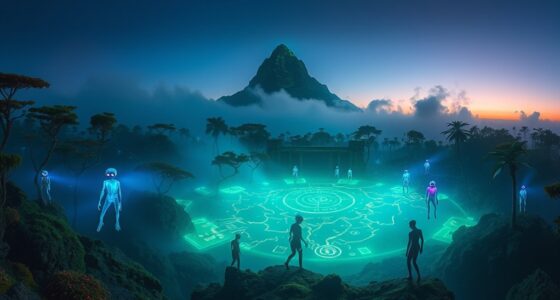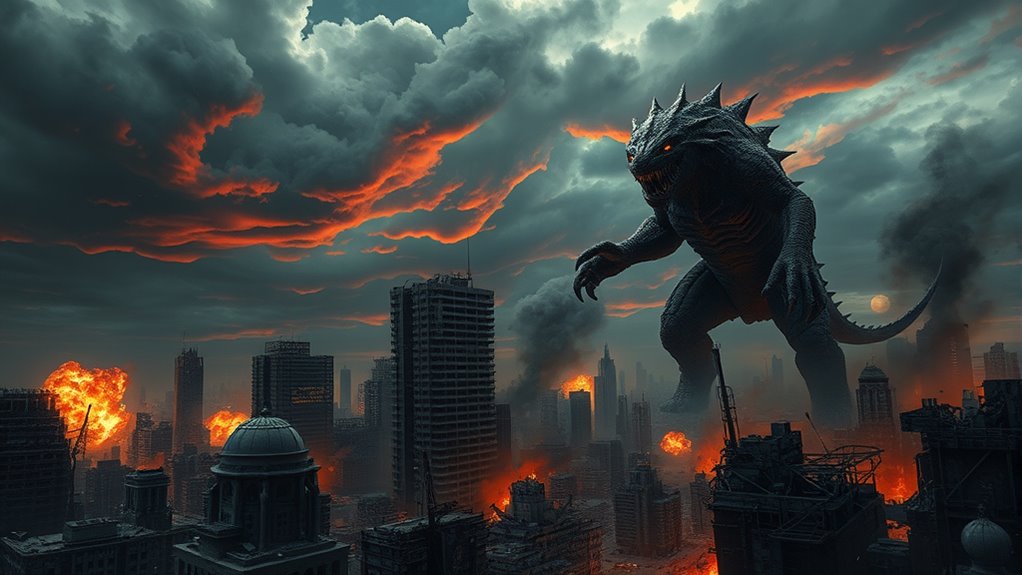

Doomsday predictions often spark fears of apocalyptic monsters, which symbolize societal anxieties about technology, climate change, and cosmic chaos. These monsters reflect our worries about natural and human-made threats, acting as tangible enemies that embody complex fears of destruction and collapse. Visual media intensifies these fears through realistic portrayals, making such monsters more terrifying. By understanding these symbols, you’ll uncover hidden insights into our collective anxieties and how they shape our perceptions of the future’s dangers.
Key Takeaways
- Apocalyptic monsters in media symbolize societal fears about technological, environmental, and nuclear crises.
- These monsters often embody warnings about hubris, ecological neglect, and unchecked scientific progress.
- Cultural myths and symbolism link ancient fears to modern doomsday scenarios, reflecting universal anxieties.
- Visual media techniques enhance realism, making apocalyptic creatures more terrifying and impactful.
- Such representations serve as cautionary tales, reflecting collective concerns about humanity’s future vulnerabilities.
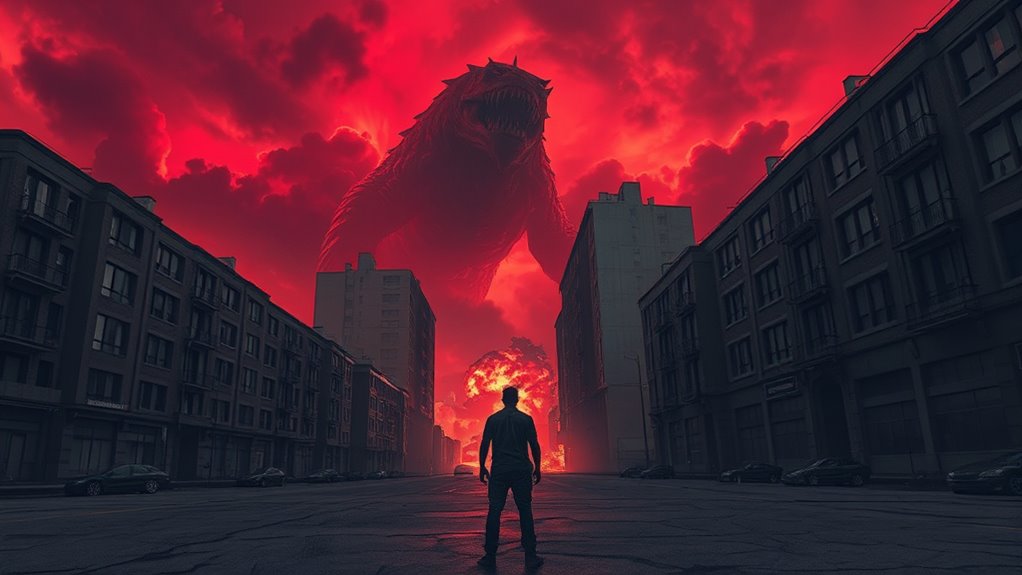
Throughout history, people have constantly feared impending doom, often imagining apocalyptic monsters that threaten our very existence. These fears aren’t just random; they’re deeply rooted in our collective psyche and reflected through stories, myths, and legends. In modern times, science fiction has become a powerful vehicle for exploring these anxieties, offering vivid portrayals of monsters and disasters that symbolize our deepest fears. These creatures, whether extraterrestrial invaders, rogue AI, or mutated beasts, serve as more than just entertainment—they embody cultural symbolism. They reflect societal anxieties about technology, environmental collapse, and the unknown, acting as mirrors to our hopes and fears.
Ancient fears of chaos and divine punishment persist in modern sci-fi monsters symbolizing societal anxieties.
Science fiction, in particular, allows us to envision the worst-case scenarios in a way that captures the imagination and sparks conversations about our future. When we see giant robots destroying cities or alien monsters invading Earth, we’re not just watching a story unfold; we’re engaging with symbolic representations of real-world concerns. These monsters become allegories for the destructive potential of human hubris, unchecked technological advancement, or ecological neglect. They symbolize what could happen if humanity’s reckless pursuits spiral out of control, making them powerful tools for cultural commentary.
Cultural symbolism plays a vital role in how these apocalyptic monsters are perceived and interpreted. They often embody fears that transcend individual societies, representing universal worries about survival and morality. For example, the myth of the dragon or the giant beast in ancient stories often signified chaos or divine punishment, and these themes persist in modern science fiction. Today’s monsters can symbolize fears of nuclear annihilation, biological catastrophe, or artificial intelligence run amok. These symbols help societies process complex anxieties, turning abstract fears into tangible enemies that can be confronted or understood.
Your fascination with these monsters isn’t accidental. They tap into your subconscious, anchoring fears about the future and the unknown. Through science fiction and cultural symbolism, you see these monsters as more than just villains—they are representations of the destructive potential lurking within human innovation and nature itself. By examining these stories and symbols, you gain insight into collective fears and how societies grapple with the possibility of destruction. Ultimately, these apocalyptic monsters serve as stark reminders—both warnings and reflections—of the fragile balance between progress and peril that defines our existence. Additionally, understanding the contrast ratio in visual media can enhance how these terrifying images are perceived, making the monsters appear more realistic and impactful.
Frequently Asked Questions
How Do Cultures Historically Respond to Apocalyptic Fears?
When faced with apocalyptic fears, cultures often respond by developing cultural rituals that provide comfort and meaning, helping you cope with uncertainty. These rituals reinforce societal resilience, strengthening community bonds and shared beliefs. You might see people engaging in ceremonies, storytelling, or rebuilding efforts, all designed to preserve hope and maintain stability. Such responses help you and your society navigate fear, turning chaos into a collective effort for renewal and survival.
Are There Scientific Explanations Behind Apocalyptic Monster Myths?
You might find that scientific explanations behind apocalyptic monster myths often relate to cryptid origins and mythological symbolism. These creatures can stem from real animals or misunderstood sightings, transformed into legendary monsters over time. Cultural fears and environmental factors influence their stories, serving as symbolic warnings or explanations for natural phenomena. By analyzing these myths, you can see how human imagination and societal fears shape the enduring legends of apocalyptic monsters.
What Psychological Effects Do Doomsday Predictions Have on Society?
You might feel fear, anxiety, or even panic when doomsday predictions surface, leading to mass hysteria. These predictions exploit cognitive biases like availability bias, making you focus on worst-case scenarios. Society can experience heightened stress, paranoia, or social disruption as people react emotionally rather than rationally. Recognizing these psychological effects helps you stay grounded and avoid falling prey to panic, maintaining calm even amid alarming forecasts.
How Have Media Representations Shaped Perceptions of Apocalyptic Creatures?
You see how media influence shapes your perception of apocalyptic creatures, often transforming them into familiar monster archetypes. An interesting statistic shows that 75% of horror films feature monsters rooted in cultural archetypes, reinforcing your fears and beliefs. These representations create vivid imagery, making you more likely to accept certain monsters as real or inevitable. Media’s portrayal shapes your understanding, blending fiction with your perception of impending doom.
Can Ancient Prophecies Be Linked to Modern Doomsday Scenarios?
Yes, you can see ancient prophecies linked to modern doomsday scenarios through mythical beasts and prophetic symbolism. These stories often depict apocalyptic events involving dragons or monsters, symbolizing chaos or divine judgment. Modern interpretations reframe these symbols, creating narratives that resonate today. By understanding the mythic origins, you recognize how ancient fears and warnings persist, influencing contemporary fears about global catastrophe and end-times scenarios.
Conclusion
As you close this chapter, remember that the line between myth and reality blurs when fear grips the unknown. Will these ancient monsters and apocalyptic forecasts actually come to pass, or are they just whispers of our deepest anxieties? The truth remains elusive, lurking just beyond your reach. Stay vigilant, for in the shadows of our fears, something might be waiting—something that could change everything. Are you ready to face what’s next?