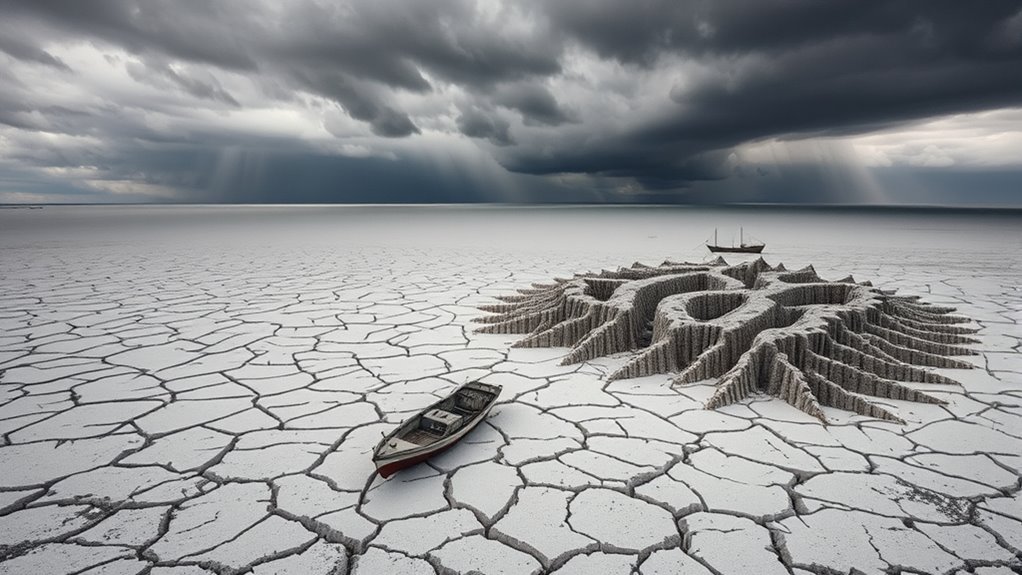

The Monster of the Aral Sea symbolizes the region’s ecological disaster, blending environmental collapse with cultural storytelling. It reflects fears of unseen hazards lurking beneath the dried seabed caused by human mismanagement and industrial pollution. This myth acts as a warning about nature’s fury when neglected, emphasizing the importance of sustainable resource use. Keep exploring, and you’ll discover how this legend encapsulates both environmental tragedy and lessons for the future.
Key Takeaways
- The monster legend emerged from the ecological disaster of the Aral Sea’s drastic shrinkage.
- It symbolizes nature’s wrath caused by human mismanagement and environmental degradation.
- The myth functions as a cautionary tale warning about unseen dangers in polluted waters.
- The legend reflects cultural resilience and serves as a reminder of ecological imbalance and its consequences.
- The myth underscores the importance of sustainable resource use to prevent future environmental catastrophes.

Environmental disasters often become the stuff of legend, inspiring stories that blend fact and myth. The story of the Monster of the Aral Sea is no exception. Over the decades, this tale has evolved into a toxic folklore that captures the imagination, shaping perceptions of the region’s ecological decline. You might hear locals and travelers talk about a monstrous creature lurking beneath the dried-up seabed, a guardian or a vengeful spirit born from the environmental catastrophe. This myth isn’t just entertainment; it reflects a deeper ecological myth rooted in the land’s tragic history. As the once-vast Aral Sea shrank to a fraction of its former size, the landscape transformed into a barren wasteland, exposing toxic sediments and salt flats that now define the region. The legend of the monster springs from these harsh realities, blending environmental tragedy with cultural storytelling. This myth also serves to symbolize the ecological imbalance caused by human activity, emphasizing the importance of sustainable resource management. You may wonder how such a myth develops in a place scarred by ecological disaster. The story functions as a form of toxic folklore—an oral tradition that warns about the dangers lurking beneath the surface, both literal and metaphorical. It embodies fears of unseen hazards, contaminated waters, and the unpredictable forces *unleashed* by human neglect. This ecological myth serves as a cautionary tale, warning future generations of the consequences of environmental mismanagement. The monster symbolizes the wrath of nature, awakened by the reckless exploitation of water resources and industrial pollution. It’s a vivid reminder that nature’s fury isn’t always visible on the surface; sometimes, it manifests in stories, legends, and cultural beliefs that persist long after the physical scars have formed.
You might also notice how this myth has taken on a symbolic role within the community’s collective consciousness. It’s not just a tale of a creature lurking in the depths but a reflection of the land’s suffering and resilience. The ecological myth of the monster invites you to see beyond the myth itself—to understand the broader context of ecological imbalance, pollution, and environmental neglect that led to the sea’s demise. It turns a tragic environmental disaster into a narrative that warns, mystifies, and preserves the memory of what once was. In that way, the legend of the monster acts as both a cultural artifact and a stark reminder of the importance of ecological stewardship. It’s a haunting reminder that, sometimes, stories are the only way to grapple with the scars left by environmental disasters.

All-New 23 in 1 Drinking Water Testing Kit 158 Strips,Well Water Testing Kit & Water Test Strip for House Water for Hardness,Chlorine,Copper,Iron,Lead,pH and More
- Comprehensive Water Testing: Tests 23 water quality parameters
- Includes 158 Test Strips: For regular water quality monitoring
- E. coli Detection: Ensures safety with bacterial testing
As an affiliate, we earn on qualifying purchases.
As an affiliate, we earn on qualifying purchases.
Frequently Asked Questions
What Is the Current Status of the Monster’s Sightings?
Fishermen still report sightings of the monster, though these claims are rare and often dismissed as folklore stories. You might hear locals or travelers share tales of strange shapes or movements in the desolate waters, but no concrete evidence supports these sightings anymore. The legend persists, fueled by past fishermen’s stories, yet most consider it a part of regional folklore rather than an ongoing mystery.
Are There Any Scientific Explanations for the Monster?
Imagine it’s 1969, and you’re watching the moon landing, yet here, scientists remain skeptical about the Aral Sea monster. Scientific skepticism suggests the creature is likely a misidentified aquatic animal, debris, or a product of myth-making. While some claim sightings, no concrete evidence supports the existence of mythical creatures. Most explanations point to natural phenomena or hallucinations, dismissing the legend as a cultural myth rather than a biological reality.
How Has the Local Community Been Affected Culturally?
You feel how local folklore surrounding the monster shapes your community’s cultural identity, fostering a sense of shared history and mystery. The legend unites residents, inspiring stories, traditions, and even local pride. It also serves as a reminder of environmental changes and their impact on your culture. This myth becomes a symbol of resilience, connecting past and present, and helping you preserve your unique cultural heritage amidst the ecological challenges.
What Efforts Are in Place to Restore the Aral Sea?
Imagine you’re witnessing a team working tirelessly on restoration initiatives in the Aral Sea. These efforts focus on environmental recovery through projects like water management, dam construction, and sustainable irrigation. Local governments, international organizations, and communities collaborate to revive the shrinking sea, aiming to restore its ecosystem. Your involvement supports ongoing initiatives that seek to bring back water levels, improve local livelihoods, and heal this once-vibrant body of water.
Is There Ongoing Research Into the Monster’s Origins?
Yes, ongoing research into the mythical creature’s origins continues through folklore research. You’ll find that experts analyze local stories, legends, and historical accounts to understand how the creature became part of Aral Sea folklore. This research helps uncover cultural beliefs and possible explanations behind sightings or stories. By studying these tales, you gain insights into the local community’s history and how myths evolve over time, maintaining the creature’s legendary status.

Toxic & Essential Elements Test – Urine Analysis for 8 Elements and Heavy Metals Including Mercury, Arsenic and Cadmium – Verisana
- Simple urine test for 8 elements: Determine toxic and essential elements easily
- Health screening for heavy metals: Identify exposure to mercury, arsenic, cadmium
- Easy home testing process: Collect sample and send to lab
As an affiliate, we earn on qualifying purchases.
As an affiliate, we earn on qualifying purchases.
Conclusion
You see the Aral Sea’s tragic decline, the monster’s legend, and the lessons they teach. You recognize the power of nature, the danger of neglect, and the importance of action. You understand that history repeats itself when we ignore warning signs, and that hope endures when we choose to change. You realize that the monster isn’t just a legend, but a mirror reflecting our choices, reminding you that awareness, responsibility, and effort can restore what was lost.

The Water Resource Sustainability Model: A pragmatic tool for sustainable water management
As an affiliate, we earn on qualifying purchases.
As an affiliate, we earn on qualifying purchases.

As an affiliate, we earn on qualifying purchases.