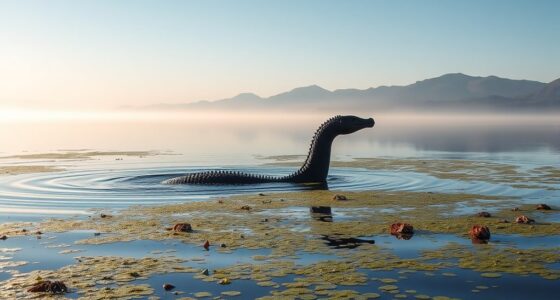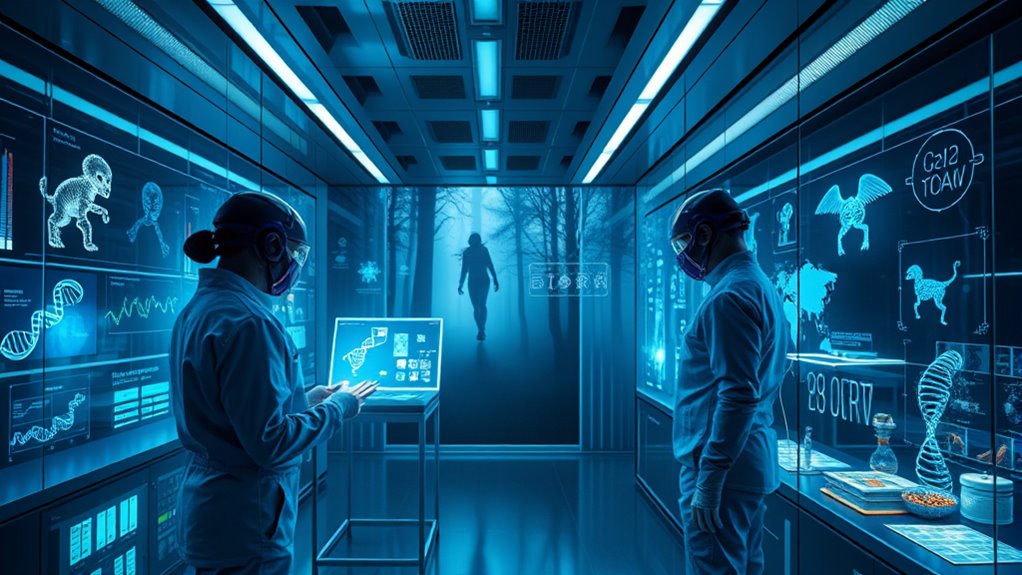

The future of cryptid research combines cutting-edge technology with ethical practices to enhance discovery efforts. Advanced tools like drones, thermal imaging, and AI make it easier and more responsible to explore remote habitats and analyze findings. These innovations can deepen your understanding of new species while respecting local cultures and ecosystems. Staying mindful of ethical considerations guarantees research benefits both science and society. Keep exploring to see how technology and ethics will shape this fascinating field ahead.
Key Takeaways
- Advancements in drone, thermal imaging, and AI will make cryptid detection more efficient and accurate.
- Ethical research practices are vital to respect local cultures and prevent environmental disturbance.
- Technology enables uncovering new species, challenging existing biodiversity and ecological understanding.
- Responsible exploration balances scientific discovery with societal values and cultural sensitivities.
- Future research will shape ecological, cultural, and scientific landscapes through innovative, ethical approaches.
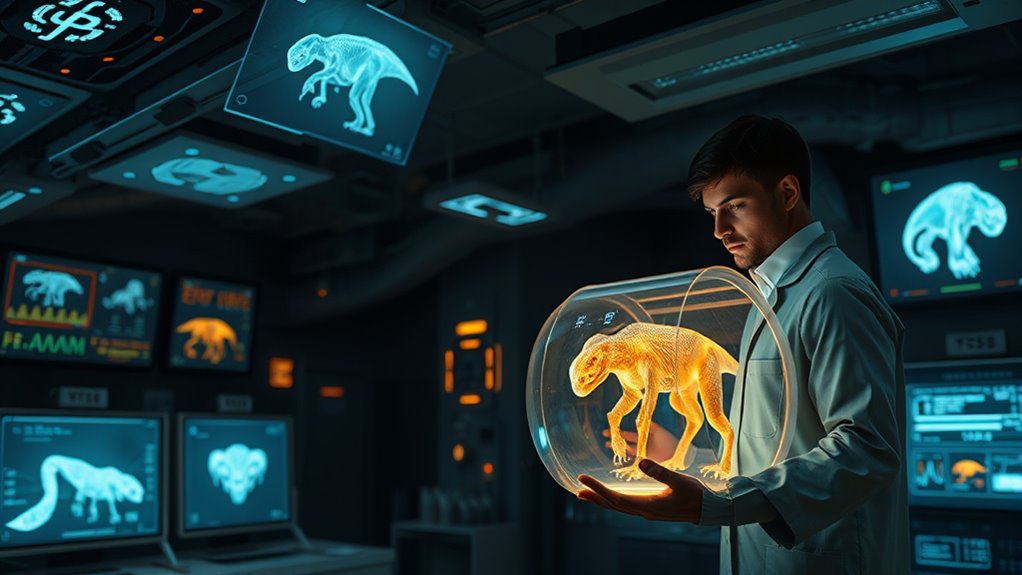
The future of cryptid research is poised for exciting advancements as technology continues to evolve. With innovations like high-resolution drones, thermal imaging, and advanced AI analysis, you’ll find it easier than ever to explore remote habitats and uncover new evidence. These tools don’t just boost your chances of discovering elusive creatures; they also open up important discussions about the biological implications of such findings. When you identify potential cryptids, you’re stepping into a complex scientific arena where understanding their biology could reshape existing ecosystems and evolutionary theories. For example, confirming the existence of a new species might challenge what we know about biodiversity, adaptation, and survival strategies. But it’s essential to consider how these discoveries influence broader ecological contexts, especially if cryptids are interconnected with sensitive environments or endangered species. Your work could help inform conservation efforts or highlight previously overlooked ecological relationships, emphasizing the importance of responsible research that respects natural habitats. Additionally, advancements in surgical insurance can support researchers facing unexpected health issues during fieldwork, ensuring safety and continuity. Alongside biological implications, you must also recognize the profound cultural impacts associated with cryptid discoveries. These creatures often hold deep significance within local legends, folklore, and national identities. When you validate the existence of a cryptid, it’s not just a scientific breakthrough; it can ignite cultural pride or challenge long-held beliefs. This can lead to both positive and negative consequences—strengthening community ties or sparking controversy and skepticism. As technology makes it easier to substantiate or debunk cryptid claims, you’ll need to navigate this delicate balance carefully. Respect for local traditions and acknowledgment of cultural sensitivities become essential, especially when your findings attract media attention or influence tourism. Your role isn’t just that of a scientist but also a cultural mediator who can help bridge the gap between myth and reality, ensuring that discoveries are shared thoughtfully and ethically. Looking ahead, the integration of cutting-edge tech with ethical considerations will shape the future of cryptid research. You’ll be at the forefront of a field where scientific curiosity meets societal values, requiring you to weigh the potential benefits of new knowledge against the risks of sensationalism or cultural insensitivity. As you push the boundaries of what’s possible, remember that your work can impact ecosystems, influence cultural identities, and reshape our understanding of the unknown. The responsible use of technology and a respectful approach to cultural contexts will be essential for advancing cryptid research in a way that benefits both science and society. Ultimately, your efforts could open new chapters in human understanding—about the natural world and the stories that define us.
Frequently Asked Questions
How Can AI Improve Cryptid Detection Methods?
AI can improve cryptid detection by leveraging machine learning to analyze vast amounts of data quickly and accurately. You can use AI-powered algorithms to identify patterns or anomalies in photos, sounds, or videos that might indicate cryptid presence. Data analysis helps filter out false positives, making your searches more effective. By continuously learning from new evidence, AI enhances your chances of discovering cryptids and deepens your understanding of unexplained phenomena.
Are There Ethical Concerns About Exposing Cryptids Publicly?
Yes, exposing cryptids publicly raises ethical concerns, especially regarding privacy and scientific responsibility. You might worry that revealing these mysterious creatures could invade their habitats and disrupt ecosystems. You also hold a responsibility to balance curiosity with caution, ensuring that research respects both the creatures’ wellbeing and ecological integrity. Protecting their privacy isn’t just polite; it’s essential to preserve natural balance and uphold ethical standards in cryptid exploration.
Will Blockchain Help Verify Cryptid Sightings?
Yes, blockchain can help verify cryptid sightings by providing digital verification and eyewitness authentication. You can record sightings on an immutable ledger, ensuring the data remains tamper-proof and transparent. This technology enables you to trace the origin of reports, validate witness credibility, and build a trustworthy database. By leveraging blockchain, you improve the reliability of cryptid evidence and foster greater scientific interest and public confidence in cryptid research.
Can Biotechnology Create Realistic Cryptid Models?
Yes, biotechnology can create realistic cryptid models through genetic engineering. By manipulating DNA, you could potentially bring mythical creatures to life or develop highly detailed models for research and entertainment. However, ethical considerations are vital, as altering genetic material raises concerns about unintended consequences, animal welfare, and ecological impacts. You should carefully weigh the scientific possibilities against these ethical issues before pursuing such projects.
How Might Citizen Science Influence Cryptid Research?
You can greatly influence cryptid research through citizen science by engaging in public participation, which helps gather diverse observations and reports. Your involvement can lead to more data collection from remote or underrepresented areas. Additionally, you play an essential role in data validation, helping scientists verify or dismiss cryptid sightings, ensuring the research remains credible and accurate. Your contributions make the search for cryptids more thorough and scientifically grounded.
Conclusion
As you venture into the future of cryptid research, imagine technology as a lantern illuminating hidden shadows and ethics as the steady compass guiding your steps. With each discovery, you’re painting a vivid tapestry of the unknown, where mysteries shimmer like stars in a dark sky. Embrace innovation responsibly, for it’s the brush that colors your quest, ensuring that every shadow uncovered shines with integrity and wonder, leading you deeper into the enchanted forest of the unexplained.