
As you explore future cryptids, you’ll see how climate chaos and pollution spark the emergence of terrifying and fascinating creatures. These legends often stem from mutated animals living in abandoned urban zones or mutated by environmental toxins, blending myth and reality. They symbolize Earth’s resilience and uncertainty, embodying fears and hopes during global upheaval. Keep exploring, and you’ll discover how these legends reflect our changing world and collective fears.
Key Takeaways
- Future cryptids may evolve from environmental mutations, blending mythological traits with real animal adaptations caused by climate change.
- Urban legends will feature mutated, supernatural creatures lurking in abandoned or hidden areas affected by pollution and habitat disruption.
- Climate chaos could produce bioluminescent, heat-resistant, or grotesquely altered beings embodying nature’s resilience amid environmental upheaval.
- These cryptids symbolize societal fears and hopes, reflecting collective consciousness and environmental anxieties during ecological crises.
- Legends and sightings will be shaped by environmental chaos, evolving as myths that mirror humanity’s uncertain relationship with a transforming planet.
As technology advances and our understanding of the natural world deepens, the idea of future cryptids—creatures yet to be discovered or even imagined—becomes increasingly plausible. You might wonder how these mysterious beings could emerge in a world shaped by climate chaos and human influence. One compelling avenue is through urban legends that evolve over time, blending fear, folklore, and new scientific possibilities. These stories often serve as modern myths, hinting at creatures born from the chaos or the unknown. In a world experiencing rapid environmental shifts, genetic mutations can give rise to entirely new life forms, some of which could develop into cryptids lurking in the shadows of our understanding.
Imagine a creature that has adapted to urban environments, perhaps a hybrid of human and animal traits resulting from accidental or experimental genetic mutations. As cities expand and ecosystems become increasingly fragmented, such beings could evolve in hidden corners—abandoned subway tunnels, underground lakes, or dense urban jungles. These urban legends could be rooted in real sightings, exaggerated over time as fear and imagination take hold. You might hear stories of strange, malformed animals that appear after storms or in the dead of night, their origins obscured by the chaos of a disrupted environment. Over generations, these stories could evolve into legends of cryptids, fueling curiosity and fear alike.
Urban legends of mutated creatures lurking in abandoned tunnels and jungles reflect fears and stories born from environmental chaos.
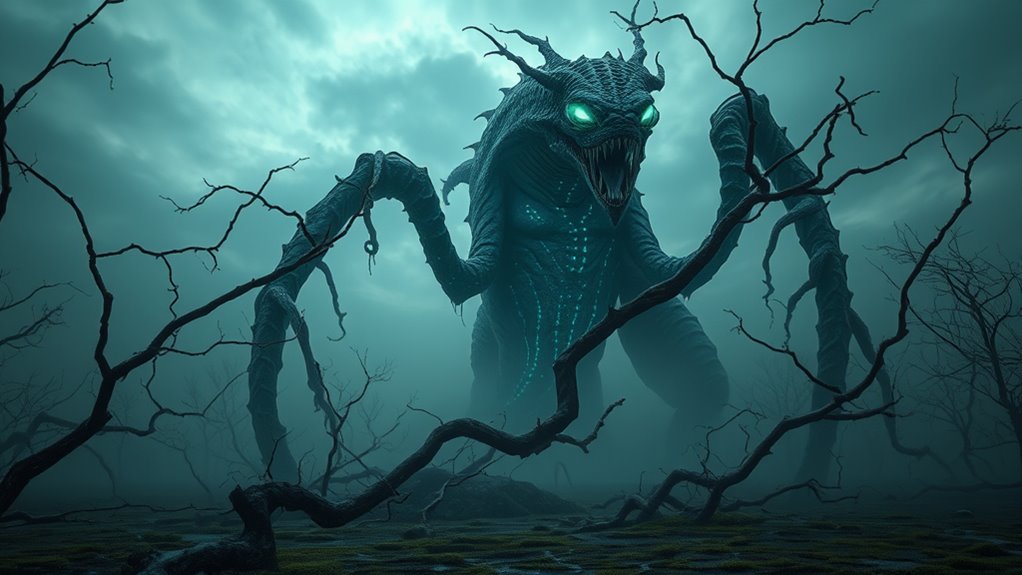
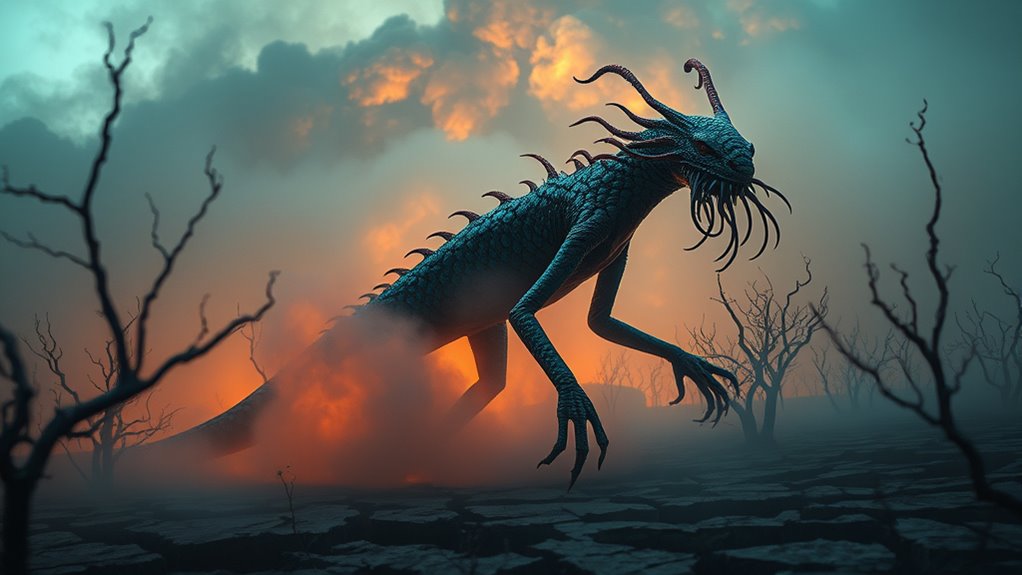
Genetic mutations driven by pollution, radiation, or chemicals released into the environment can produce bizarre and unpredictable creatures. In a climate-changed world, animals might develop traits that seem almost supernatural—scaly skin resistant to heat, bioluminescent features, or altered senses. Some of these mutations could be so drastic that they seem like entirely new species, or even mythical beings. These mutated creatures might be mistaken for cryptids, especially if their appearance or behavior defies conventional understanding. You might encounter tales of glowing monsters in the wetlands or giant, mutated predators stalking the outskirts of human settlements. Such stories feed our fascination with the unknown and reinforce the idea that nature, in its chaos, could produce beings that challenge our perception of reality.
In this future, cryptids are more than just folklore—they could be tangible, evolving entities shaped by the complex interplay of climate change and genetic experimentation. As you explore urban legends and scientific breakthroughs, you realize that the line between myth and reality blurs. These creatures, born from mutations or myth-making, embody the uncertainties of a planet in turmoil. Whether they’re real or imagined, they serve as a reflection of human fears and hopes, a testament to nature’s resilience—and its capacity for strange, unforeseen change.
By studying the Law of Attraction, we can better understand how perceptions of these creatures are influenced by collective belief and imagination, shaping the legends that emerge from environmental chaos.
Frequently Asked Questions
How Do Future Cryptids Adapt to Extreme Climate Conditions?
You see, future cryptids adapt through evolutionary survival strategies, evolving traits that help them withstand extreme climate conditions. They might develop thicker skins or antifreeze-like fluids to survive freezing temperatures, or evolve specialized lungs for high-altitude, low-oxygen environments. As habitats transform, they shift behaviors or migrate to more sustainable areas, ensuring their survival amidst the chaos. These adaptations help them thrive despite the rapidly changing Earth around them.
Will These Cryptids Impact Human Settlements or Agriculture?
These cryptids will likely impact your life, altering urban sprawl and causing crop devastation. As they adapt to extreme climates, they may invade human settlements, disrupting agriculture, damaging infrastructure, and challenging your daily routines. You might see more encounters, more conflicts, and more unpredictable changes. Prepare for a future where these creatures aren’t just myths but real threats to your environment, economy, and safety, forcing you to rethink coexistence strategies.
Are Future Cryptids Based on Scientific Predictions or Folklore?
Future cryptids are inspired by both mythical origins and scientific plausibility. While some creatures draw from folklore and traditional stories, others are imagined based on scientific predictions about how climate change might drive evolution or adaptation. You can think of them as a blend of myth and science, where scientific plausibility guides the idea of new creatures emerging, but their origins often still carry a mythical or fantastical element.
What Ecological Roles Might These Creatures Play in Their Environments?
You might see future cryptids filling essential ecological roles, like establishing mutualistic relationships with other species that help sustain ecosystems. They could also influence predator-prey dynamics, either controlling prey populations or becoming prey themselves, maintaining balance. These creatures could adapt uniquely to climate change, acting as keystone species that shape their environments and promote biodiversity amid Earth’s ongoing climate chaos.
Could Future Cryptids Influence Future Biodiversity Conservation Efforts?
Future cryptids could dramatically reshape your approach to biodiversity conservation efforts, turning cryptid myths into powerful symbols for protecting ecosystems. These creatures might inspire new conservation strategies by capturing public imagination and raising awareness about climate change impacts. By integrating cryptids into conservation messaging, you could evoke emotional connections, motivate action, and mobilize resources—making the fight to preserve Earth’s biodiversity feel like a legendary quest worth undertaking.
Conclusion
As you imagine these future cryptids, remember that nature’s surprises can catch you off guard. Climate chaos may bring creatures we’ve never seen, proving that truth can be stranger than fiction. Keep your eyes open and your mind flexible, because the world’s mysteries often hide just around the corner. In the end, you never know what’s lurking in the shadows, waiting to remind us that sometimes, the most unlikely stories are the real deal.